
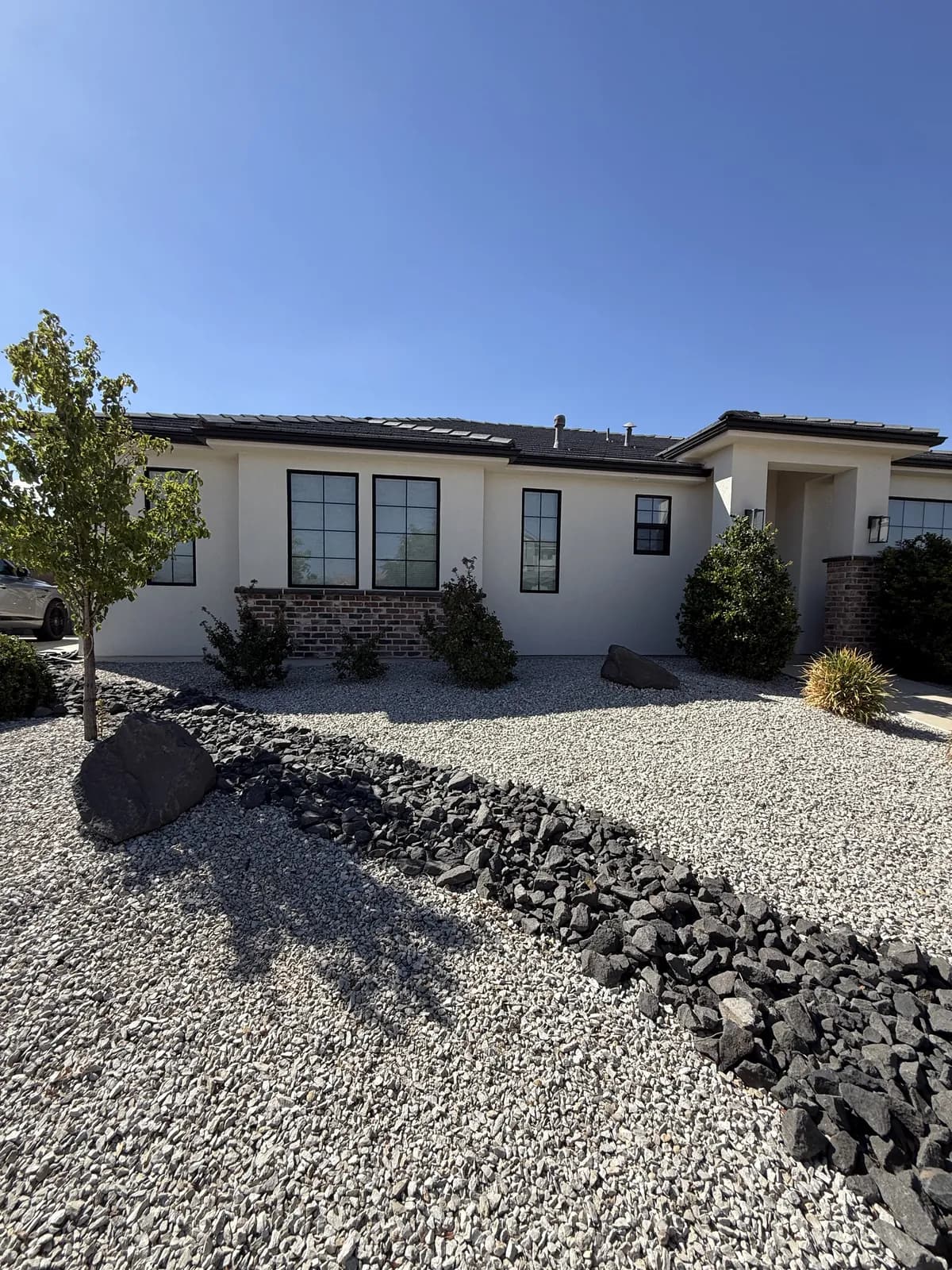
What the work is
Most rejected applications fail on evidence rather than on eligibility: measurements that do not match, photographs taken after the fact, or an area that does not meet the program's conditions.
We do the documentation to the standard the program asks for and we submit it. What we do not do is sign for you, because the agreement binds the property and it should be read by the person it binds.
We will tell you plainly what is in it before you sign.
What is included
- Pre-work measurement and photographs to the program's standard
- Preparing and submitting the application
- Post-work documentation
- Following up until it is decided
- Explaining the agreement's conditions to you in plain words before you sign
What is not
- Signing on your behalf
- Any guarantee of approval or of amount
- Applications to programs we have not agreed to handle
- The work itself, which is quoted separately
The parts people get wrong
The Washington County Water Conservancy District pays a base rate per square foot of live turf removed, with an additional amount on the first 1,000 square feet running to June 1, 2027. The cap is per property per calendar year. There is no five-year rule on the district's program; that condition belongs to the state program and gets attributed to the district's constantly.
Common-area turf is eligible with the association as the applicant, which is worth knowing if you are on a board. The guide for boards is linked below.
Read the agreement
The rebate agreement is not just a check. It carries conditions on the converted area, and in the district's case a right of physical entry to inspect. Read it before you sign it, and read the guide below if you would rather have it explained first.
What to ask anyone quoting this, us included
- What exactly does the agreement commit my property to?
- What is the cap for my property this year?
- What would cause this to be rejected?