
Where we work · Ivins, Utah
Plumbing, accessible living and water-wise landscape in Ivins.
What follows is only what is true of Ivins: the water, the city's rules, the ground and the associations. 118 checkable facts, each with its source.
Same crew, same rate card, in every town we cover. Read our Plain Terms
What we do in Ivins
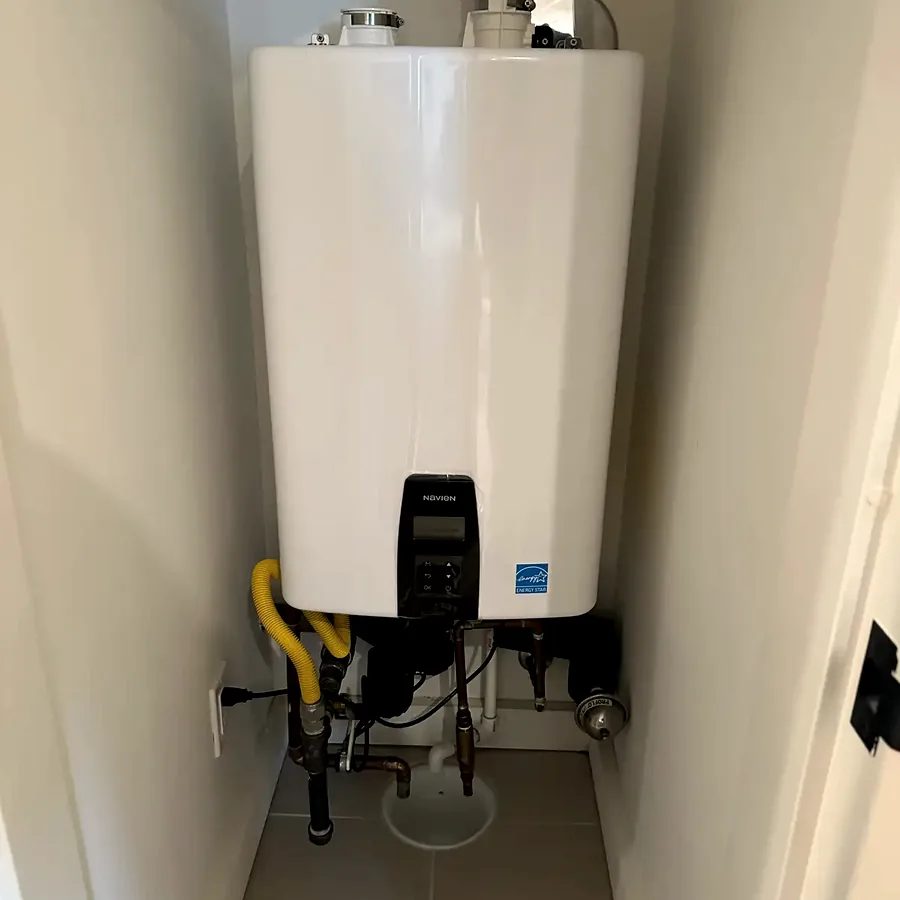
Plumbing
The systems that make the house work, and the bath and kitchen work that touches them.
- Water heaters and tankless
- Softeners and filtration
- Drains and sewer lines
- Leak detection and repipes
- Bath and kitchen work
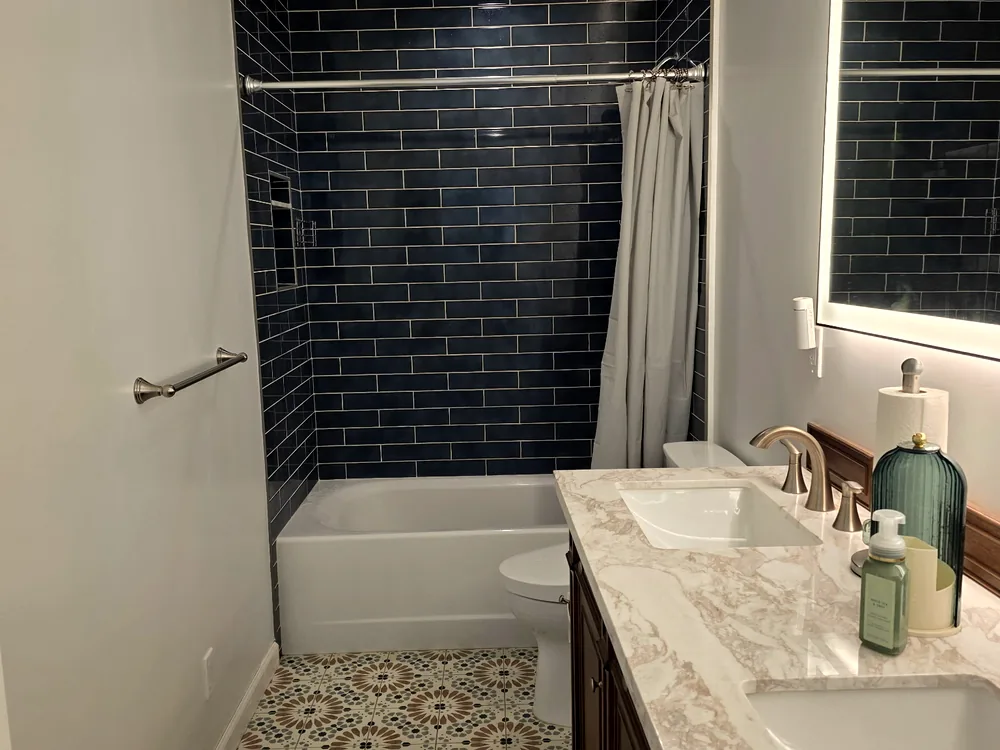
Accessible living
Built so you can stay in the house. Built so it doesn’t look built.
- Grab bars with wall blocking
- Curbless showers
- Walk-in tubs
- Doorway widening
- Home accessibility assessment
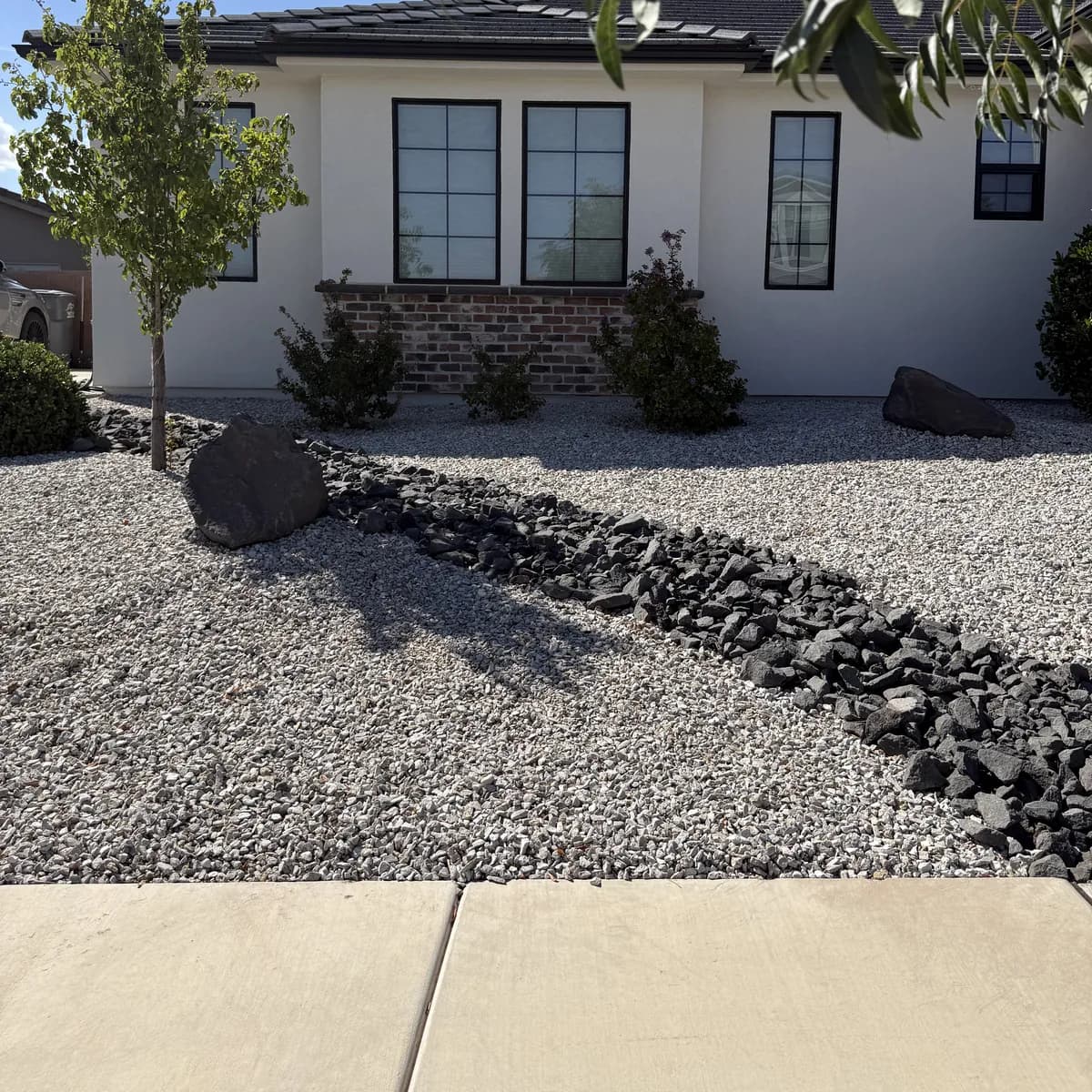
Water-wise landscape
Lawn out, desert in, with the rebate paperwork handled for you.
- Lawn removal
- Drip irrigation
- Desert planting
- Washington County rebate paperwork
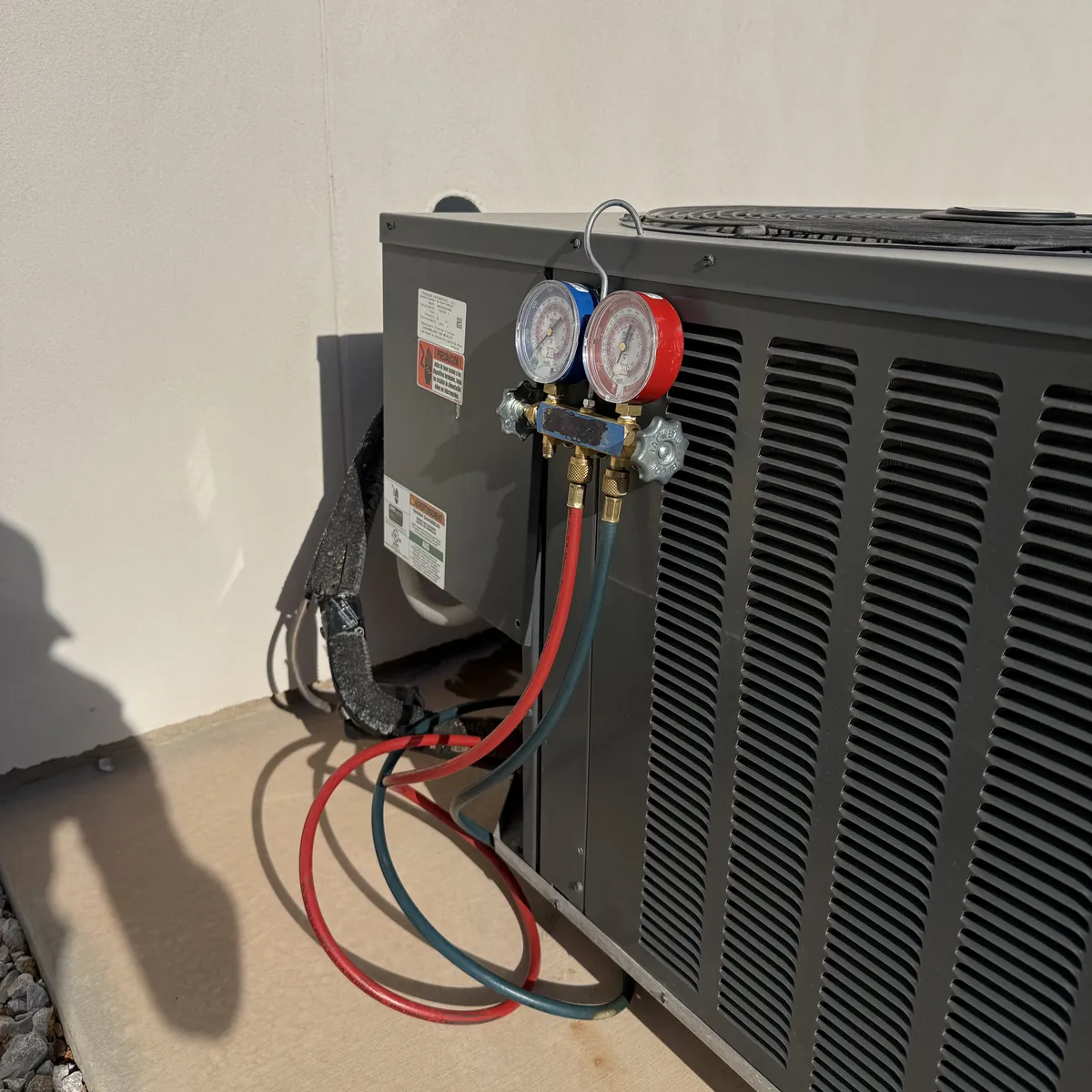
Heating and air
The system that keeps the house liveable in July, and the one thing in it you cannot put off.
- Emergency repair, any hour
- Air conditioning repair and replacement
- Furnaces, heat pumps and mini-splits
- Duct sealing and system sizing
- Tune-ups with the readings written down
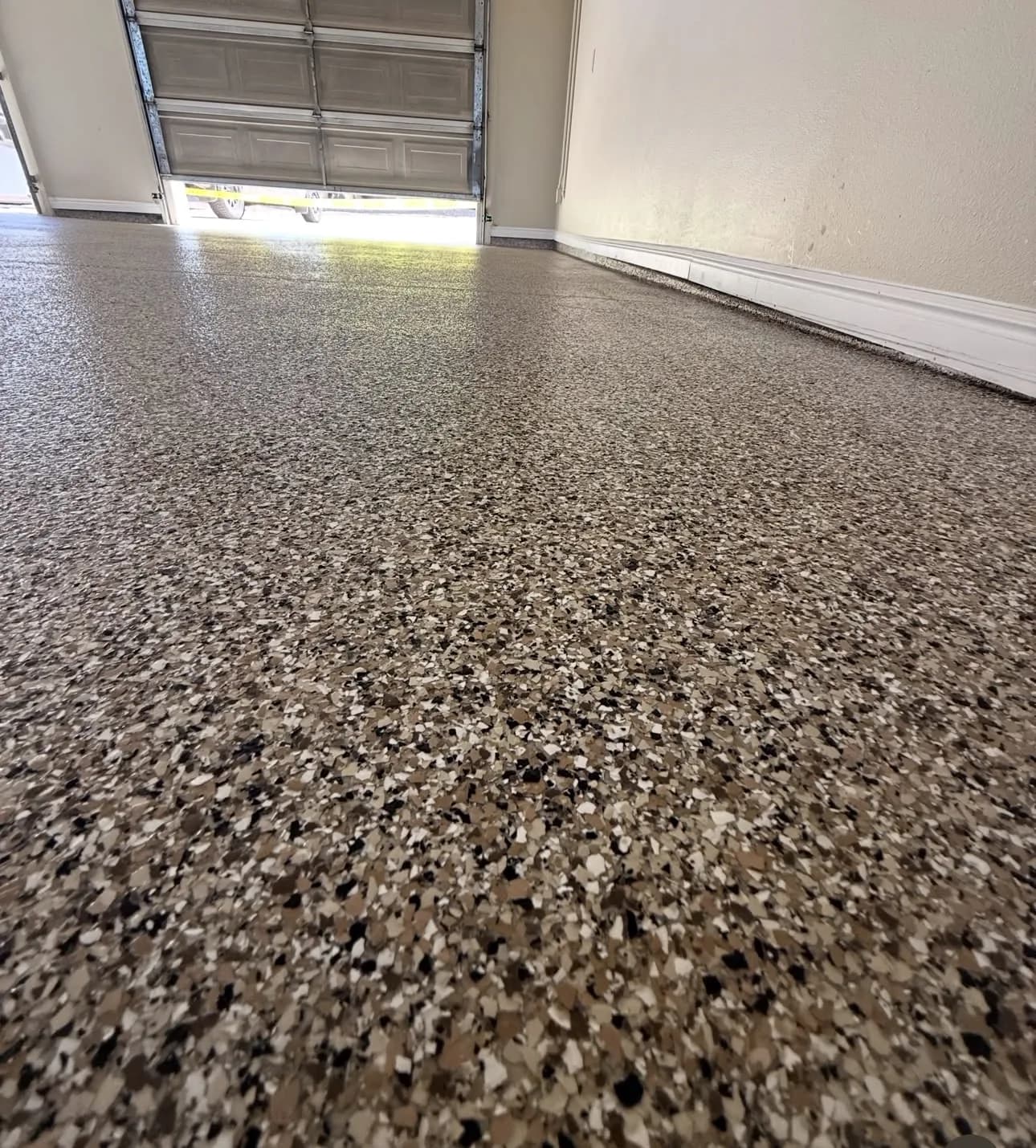
Concrete coatings
The floor you already own, ground back and finished. Garages, patios, driveways and shop floors.
- Garage floors, flake and solid color
- Driveways, patios and pool decks
- Basements and interior slabs
- Warehouse and shop floors
- The slab tested before anything is quoted
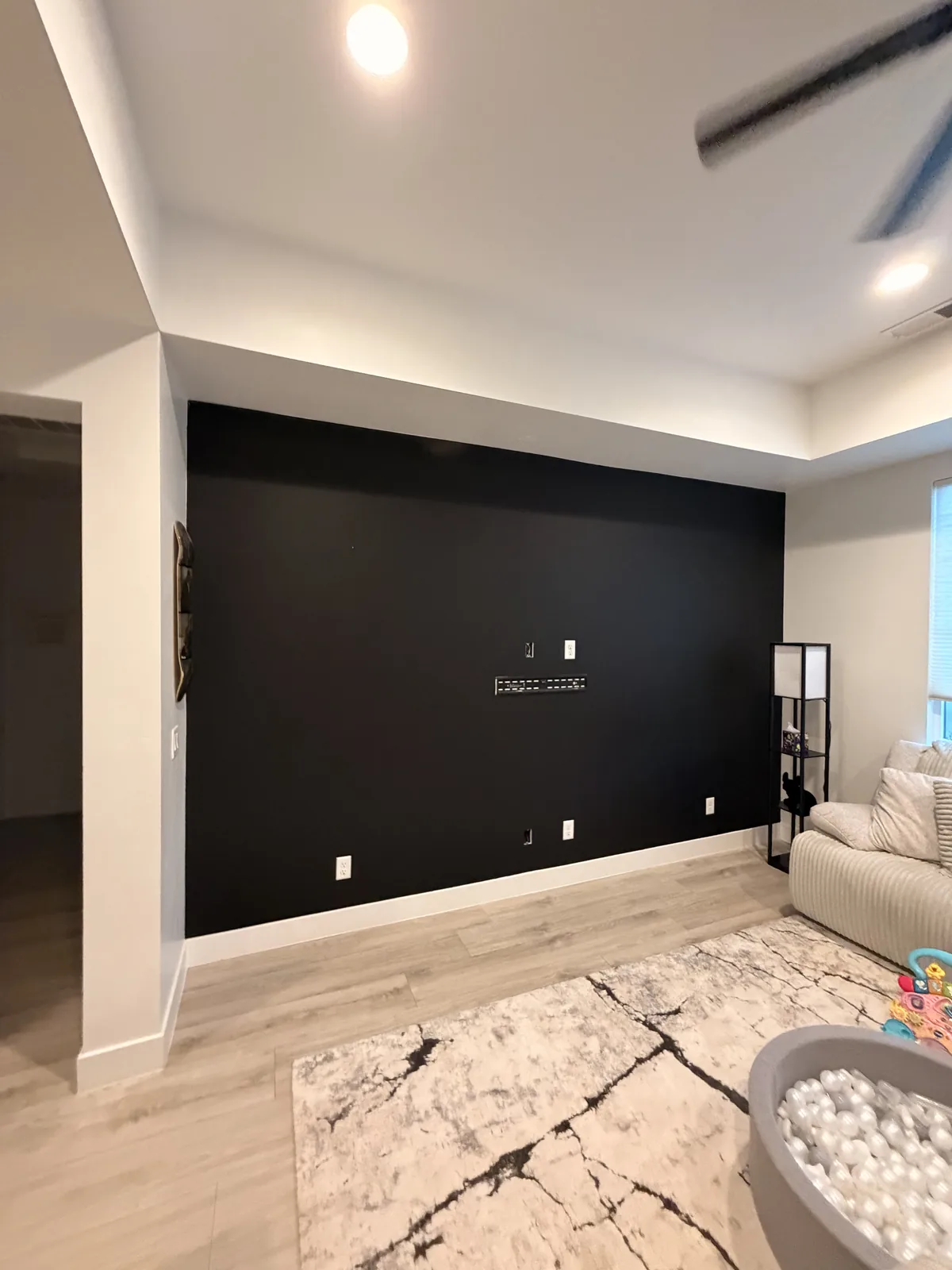
Painting
Inside, outside, and the wall repair that has to happen before either one.
- Interior walls, ceilings and trim
- Exterior repaints, including stucco
- Kitchen and bath cabinets
- Drywall repair and texture matching
- Popcorn ceiling removal
Ivins, in detail
118 things that are true here, each with its source.
Read the part you came for. Every line traces to a document we read in full, numbered in where this comes from.
The water
What comes out of the tap here, and what it does to a water heater.
- Ivins' 2024 Consumer Confidence Report shows total dissolved solids ranging from 136 to 564 ppm.1
- Ivins' 2024 report shows sulfate ranging from 1 to 273 ppm.1
- Ivins' 2024 report shows calcium from not-detected to 65 ppm and magnesium from not-detected to 38 ppm.1
- Ivins' 2024 report shows sodium ranging from 9 to 55 ppm.1
- Ivins' 2024 report shows arsenic ranging from 2.8 to 8.7 ppb, below the 10 ppb federal maximum contaminant level.1
- Ivins draws 60 to 75 percent of its water from the Quail Creek Water Treatment Plant (surface water), 15 to 25 percent from the Gunlock wells, and 10 to 15 percent from the Snow Canyon wells.1
9 more facts, with sources
- Both of Ivins' well sources, Gunlock and Snow Canyon, have arsenic removal treatment.1
- Ivins disinfects with chlorine, not chloramine, with a reported residual of 0.1 to 0.4 ppm.1
- Ivins' 2024 report shows fluoride of 0.2 to 0.5 ppm and nitrate-nitrogen from not-detected to 4.0 ppm.1
- Ivins' 2024 report shows combined radium 226/228 of 0.6 to 2.6 pCi/L and gross alpha of 1 to 7 pCi/L.1
- Ivins' 2024 report shows total trihalomethanes of 5.5 to 12.6 ppb and HAA5 from not-detected to 2.2 ppb, both well under the 80 ppb TTHM federal limit.1
- EWG's record for the Ivins system shows no chromium-6, arsenic, radium, or uranium detected.1
- Ivins' water is in compliance with federal drinking-water law; EWG's health guidelines are EWG's own values set far below federal limits.1
- A water softener does not remove arsenic; cation exchange has no effect on it.2
- Chlorine is the disinfectant implicated in polybutylene pipe failure and in accelerated degradation of rubber seals, washers, and some flexible supply lines.1
The city's rules
Lawn, irrigation, lighting and permits, from the municipal code.
- Ivins City Code § 10.01.125 prohibits sprinkler irrigation of all lawns and landscapes using potable water between 8 a.m. and 8 p.m., with no calendar limit, so it runs year-round.3
- Ivins' watering restriction exempts new lawn within 90 days of planting, short test and inspection cycles, and secondary or untreated water.4
- Ivins City Code § 14.11.303 caps grass at 8 percent of the lot up to a maximum of 2,000 square feet, permits 600 square feet on any lot even where 8 percent is less, requires a minimum grass width of eight feet, and prohibits grass in park strips, landscape buffers and on any slope over 10 percent.5
- Ivins City Code § 16.23.105(3)(b) caps the correlated color temperature of all outdoor lamps on residential property at 3,000 Kelvin or less, and § 16.23.108(1) applies the chapter to every single-family home.6
- Ivins requires all exterior luminaires on porches, garages and entryways to be fully shielded, aimed at walkways or entries and never upward, and residential security lighting to be fully shielded on a five-minute motion sensor.7
- Kayenta's own lighting rules conform to the Ivins City lighting ordinance.8
7 more facts, with sources
- Utah adopts construction code statewide under Title 15A, so the plumbing code does not differ between Ivins and neighboring cities; what varies is permit triggers, fees, process, irrigation rules, and lighting.9
- Utah H.B. 215 (2026) amended Utah Code 10-20-619 so that a municipality may not require a property owner to install or keep lawn or turf in an area less than eight feet wide, and may not block vegetation removal required for defensible space under the Wildland Urban Interface Code.8
- Utah H.B. 48 took effect January 1, 2026 and requires each municipality to adopt and enforce the Utah Wildland Urban Interface Code for its incorporated area.10
- WCWCD's Water Efficiency Standards (October 2023) require that all non-lawn plant material be irrigated by drip with a pressure regulator, filter, flush-end assembly, and emitters rated 20 gallons per hour or less, and that drip and spray never share a valve.10
- WCWCD's Water Efficiency Standards apply to landscape installation, not just new construction, and where they conflict with a city ordinance or HOA requirement the regulation providing the greatest water conservation benefit applies.10
- WCWCD's Water Efficiency Standards limit ornamental water features to 25 square feet per parcel.10
- Ivins prohibits grass in the common areas of a development unless it is an active recreation area, and limits water features to 300 gallons and 25 square feet per parcel with recirculating pumps, deducted from the grass allowance.5
Who serves the house
Water and power providers, which changes what a rebate is worth.
- Ivins operates its own culinary water system and publishes an annual Consumer Confidence Report at ivinsutah.gov.1
- The Washington County Water Conservancy District's Quail Creek Water Treatment Plant and Sand Hollow Wells regional system supplies Ivins, alongside St. George, Washington, Hurricane, and Santa Clara.1
- The Washington County Water Conservancy District's Ence Wells serve Kayenta.1
- More than 80 percent of the drinking water the Washington County Water Conservancy District delivers is Virgin River surface water stored in Sand Hollow and Quail Creek reservoirs; the rest is Navajo aquifer groundwater.1
- Ivins is listed on the Utah Water Savers landscape-incentive eligibility page, and its link routes applicants to the Washington County Water Conservancy District rebate page rather than a state application.10
- The Washington County Water Conservancy District residential water impact fee is $13,500.9
The associations
What the documents say, by community. Confirm with your own.
- Kayenta is governed by a master Architectural Control Committee serving multiple sub-HOAs, Shonto (Shonto Point), Taviawk, and Kwavasa/Posovi, each with its own Supplemental Declaration and deposit schedule.8
- The Kayenta ACC meets the third Tuesday of each month at 1:00 p.m.8
- Kayenta ACC applications and preliminary plans are due at least 7 days before the meeting to be placed on the agenda.8
- At Kayenta the owner or the owner's representative must present in person, and a presentation that is not ready is postponed.8
- The Kayenta ACC mails or emails a written decision within 10 days, and the owner must have written approval before starting any work.8
- Kayenta's ACC Handbook expressly states that failure of the ACC to act within the 10-day period does not count as deemed approval.8
34 more facts, with sources
- Kayenta requires a Neighbor Notification form mailed to neighboring owners 15 days before review, and story poles in place 7 days before the meeting and removed within 7 days after.8
- Kayenta construction is observed a minimum of 4 to 5 times by a two-person Observation Team appointed by the HOA board.8
- Kayenta charges a $1,000 ACC application fee for a new residence, with an HOA deposit of $2,500 plus $0.75 per square foot in Taviawk and $2,500 plus $0.40 per square foot in Shonto (fee schedule dated August 18, 2020).8
- At Kayenta an addition or modification involving structural change, added square footage, a casita, use of heavy equipment, disturbance of the natural area, or a municipal permit carries a $500 ACC fee and a $1,250 HOA deposit.8
- At Kayenta, repainting, reroofing, changing doors or windows, driveway changes (including gravel color), drainage changes, courtyard modifications, and landscape changes from the original plan carry no fee and no deposit but still require an approved application.8
- Kayenta requires a $500 HOA deposit for solar panels and a $1,500 encroachment permit deposit for cutting a street.8
- A Kayenta Conditional Improvement Permit carries a $200 nonrefundable fee plus a deposit of 10 percent of project cost, with restoration required within 30 days of expiration or revocation.8
- Kayenta requires a landscape plan with Form L for written ACC approval before any dwelling is completed; the plan must show courtyard, transitional, and natural areas with species location and quantity, and all hardscape including chat and boulder placement.8
- Kayenta prohibits cinders in landscaping, requires approval for non-indigenous stone, and gives the owner one year from approval to implement the landscape plan.8
- Kayenta's approved indigenous stones are Kayenta Sandstone, Navajo Sandstone, and Shinarump Sandstone, provided 90 percent of the surface is a reddish hue.8
- Kayenta publishes Landscape Regulations, a User-Friendly Guide to Kayenta Plants (latest version July 2025), a Landscape Plan Submittal Process, and Form Q for new or modified landscape plans.8
- Kayenta construction hours are 6:30 a.m. to 5:00 p.m. May through September and 7:30 a.m. to 5:00 p.m. October through April, on weekdays and Saturdays except holidays.8
- Kayenta permits concrete pours from 5:30 a.m. to 5:00 p.m. May through September and 7:00 a.m. to 5:00 p.m. October through April.8
- Kayenta requires substantial completion within 15 months of commencement, extendable at the ACC's sole discretion.8
- Kayenta requires a refundable security deposit posted with the HOA before work begins, covering street and landscape repair, debris removal, and CC&R compliance; damage by construction-related vehicles must be promptly repaired.8
- At Kayenta, immediately after the floor slab is complete, the contractor must place and compact 4 inches of approved road base at least 30 feet from the road and at least 14 feet wide, and keep it in place so mud is not tracked into the street.8
- Kayenta limits construction vehicle street parking to 12 hours in a construction day, on one side of the street only, with no after-hours parking and no materials, equipment, or trailers stored on streets at any time.8
- Kayenta requires a lidded dumpster on site before any construction work begins, kept out of the undisturbed natural area and closed daily; burning is absolutely prohibited and debris may not be buried on site.8
- Kayenta requires a commercial portable toilet on site before any work including excavation and grading, serviced at least weekly, secured with metal stakes, and colored brown or beige.8
- Before excavation or material delivery at Kayenta, a 4-foot barrier fence with metal stakes must be installed along the non-disturbance line; approved colors are black, green, or orange in Shonto and Kwavasa/Posovi, and black or green in Taviawk.8
- Kayenta allows one construction sign per lot, at most 18 by 24 inches and 28 inches above grade, sage green with white lettering; subcontractor and supplier signs are never permitted.8
- At Kayenta the HOA or the City owns the asphalt plus roughly 6 feet adjacent to it, and any modification in that strip, including rockwork, gravel, walls, landscape, address boulders, lighting, and driveway aprons, requires ACC approval at the owner's liability.8
- Kayenta's contractor expectations include painting all dishes, vents, and rooftop equipment matte brown as soon as installed, general contractors visiting every site every day, no disturbance of the natural area by subcontractors, and all lights off at end of day.8
- Kayenta requires all exterior light to be 2700K or less, directed downward with no direct point source.8
- Kayenta limits pathway, landscape, and driveway fixtures to 120 to 150 lumens each, mounted no more than 24 inches above the surface, at least 12 inches from a vertical surface, and staggered at least 20 feet apart.8
- Kayenta limits wall sconces to 200 lumens and one fixture per 400 square feet of structure footprint, recessed overhead fixtures to 1,100 lumens and one per 100 square feet of overhead structure, and the street-side address spotlight to 200 lumens.8
- Kayenta prohibits exterior lighting between 11:00 p.m. and sunrise except the address marker, requires ACC approval for solar lights, and mandates window shades where needed to keep interior light from being directly visible outside.8
- Kayenta requires trash and recycling containers, heat pumps, and propane tanks to be screened, and prohibits leaving Styrofoam insulation exposed for more than 45 days.8
- Kayenta's pre-approved exterior shade-cloth colors are Weathershade Solartex Smoke Blue, Jade Green, Salmon, and Brown.8
- Kayenta ACC submissions are dropped at Gulch Design Group, 800 Kayenta Parkway, and forms, agendas, and minutes are published at kayentahoa.com.8
- Under Utah Code 57-8a-231, an HOA may not require a lot owner to install or keep lawn or turf in an area less than eight feet wide, except where reasonably necessary for erosion control.8
- Under Utah Code 57-8a-231(2), an HOA may not prohibit a lot owner of a detached dwelling from incorporating water-wise landscaping, though it may still require site-plan review and its own water-wise design standards.8
- Under Utah Code 57-8a-109(4), an HOA denial must state in writing each governing-document provision relied on and the specific aspect of the plan that does not conform, and under 57-8a-109(2) a plan fee may not exceed the actual cost of review.8
- Under Utah Code 57-8a-212(4), effective May 6, 2026, an HOA declaration may not restrict the interior of a dwelling except as reasonably necessary for the safety of adjacent lots, and may not bar an owner from hiring a contractor solely because the contractor is not on the association's preferred vendor list.8
The ground
Soils, faults, flood and rockfall, from the state's hazard mapping.
- Utah Geological Survey Special Study 127 maps geologic hazards and adverse construction conditions across 366 square miles including Ivins, at 1:24,000 scale.1
- The Utah Geological Survey calls flooding the most widespread and damaging geologic hazard in southwestern Utah.1
- The Utah Geological Survey calls expansive soil and rock the most troublesome construction condition in the St. George area.1
- Special Study 127 maps nine adverse construction conditions: expansive soil and rock, collapsible soil, gypsiferous soil and rock, shallow bedrock, caliche, wind-blown sand, breccia pipes and paleokarst, soil piping and erosion, and shallow ground water.1
- The Utah Geological Survey defines collapsible soil as soil with considerable strength when dry that settles significantly by hydrocompaction when wetted.1
- The Utah Geological Survey describes caliche as calcareous material in the shallow subsurface of arid soils that can be very difficult to excavate.1
7 more facts, with sources
- Special Study 127 states that rockfall has widespread favorable conditions in the area and that damage is expected to increase with hillside development.1
- Wind-blown sand is mapped as one of the nine adverse construction conditions and published as Washington County GIS hazard layer 21.1
- Washington County publishes 24 free public hazard map layers, including FEMA flood hazard, erosion hazard boundary, faults, liquefaction, rockfall, collapsible soils, expansive rock and soil, gypsiferous soil, wind-blown sand, piping and erosion, and wildfire history.1
- The EPA maps Washington County as Radon Zone 2, the middle of its three categories, meaning a predicted average indoor screening level between 2 and 4 picocuries per liter. The action level is 4, and a zone map is a geological prediction that does not describe any individual house.11
- Long-term home radon tests average 2.8 pCi/L in Washington County against a Utah statewide average of 3.2 pCi/L, so county averages do not predict an individual house.1
- The 1992 St. George earthquake was magnitude 5.8 on September 2, 1992, and Special Study 127 says the Hurricane fault is capable of earthquakes as large as magnitude 6.5 to 7.1
- Utah State University Extension states that termites are most common in Utah's southern counties, and lists repairing water leaks and sealing foundation cracks among preventions.1
The seasons
Heat, monsoon, wind and freeze, and how they set the calendar.
- WCWCD advises that neighborhoods at low elevations near rivers and drainages are cooler because cold air settles at the lowest points, so marginally hardy plants are more likely to freeze there.10
- WCWCD states that several zone 9 plants have grown in popularity locally but homeowners planting them are taking a risk.10
- Most of Washington County falls in Sunset climate zone 10, with hot summers, cold winters, up to 300 growing days a year, and elevations from 3,300 to 5,000 feet.10
- Snow Canyon State Park received International Dark Sky designation in December 2025, which directly affects lighting expectations in Ivins.9
- Kayenta is a dark-sky community.8
- Southwest Utah has a defined monsoon season that generates flash flooding, with abrupt transitions from long dry spells; St. George recorded a 78-day dry spell that ended with monsoon onset in one recent year.1
3 more facts, with sources
- The nearby St. George station recorded an all-time high of 117°F, set in July 1985 and matched on July 11, 2021, 98 days at or above 100°F in 2024, and an all-time low of −11°F on January 26, 1937.1
- Penn State's Center for Sports Surface Research measured synthetic turf at 200°F on a 98°F day in Provo, Utah, and found that 30 minutes of watering dropped turf from 174°F to 85°F only for it to rebound to 120°F within 5 minutes.1
- WCWCD states that shade keeps areas up to 25 degrees cooler, shade trees can lower surface temperatures by up to 50 degrees, and grass uses four times more water than trees and shrubs.10
The houses
How homes here were built, and what that means for the pipes.
- The Ivins water system (PWS UTAH27008) serves a population of about 10,265 according to EWG's listing.1
- Kayenta comprises multiple sub-associations, Shonto (Shonto Point), Taviawk, and Kwavasa/Posovi, under one master architectural committee, and its roads are partly HOA-owned.8
- Washington County had 91,460 housing units as of July 2025, 69,786 households, 71.6 percent owner-occupied, a median home value of $510,700, a population of 213,670, and 2,857 building permits in 2025.1
- The EPA Renovation, Repair and Painting Rule applies to homes built before 1978 and requires contractors to be trained and certified in lead-safe work practices; it has no small-residential exemption.1
Rebates and easements
The conversion program as it applies here.
- Ivins residents do not apply to the state landscape program; the Utah Water Savers eligibility page routes Ivins applicants to the Washington County Water Conservancy District, whose rate already includes the state money plus a local enhancement.10
- The WCWCD Water Efficient Landscape rebate pays $3 per square foot on the first 1,000 square feet of lawn removed and $2 per square foot after that, for projects completed before June 1, 2027.10
- WCWCD's smart-controller rebate of up to $100 and toilet-replacement rebate of up to $150 (up to 2 toilets, manufactured before 1994) are separate applications and can be claimed alongside a landscape conversion.10
- The Washington County Water Conservancy District caps the landscape rebate at $100,000 per property per calendar year. There is no five-year waiting rule on the district side; that limit belongs to the separate state program, which Washington County applicants are routed away from.12
- Demolishing the lawn before receiving WCWCD's written approval email and a pre-conversion site visit permanently voids rebate eligibility.10
- Living grass must be present at the WCWCD inspection; irrigation may be shut off for up to a month beforehand as long as grass blades remain visible, but the grass may not be removed.10
12 more facts, with sources
- WCWCD requires the converted area to have 50 percent living plant and tree cover at maturity and assigns each tree 350 square feet of cover and each shrub or perennial 35 square feet; existing trees inside the conversion count.10
- WCWCD does not dictate plant species for the rebate and publishes no approved plant list; it requires only 50 percent mature coverage.10
- Every rebated conversion attaches a perpetual conservation easement, recorded with the Washington County Recorder, that forever prohibits irrigated grass, spray irrigation, pools, ponds, and water features in the converted area only.10
- WCWCD enforces the easement by aerial imagery; a violation brings written notice, 45 days to cure, then repayment of the full rebate plus administrative costs plus 5 percent annual interest.10
- Release of the easement is discretionary with WCWCD, must be written and recorded, and the price is repayment of the full rebate plus administrative costs and 5 percent per year interest; the easement must be granted before the incentive is issued.10
- Ungrouted pavers and dry-set flagstone count as mulch inside a rebated area, while poured concrete and mortared work are subtracted from the incentive calculation.10
- WCWCD accepts permeable artificial turf only in lieu of mulch as a component of a conversion; it does not rebate an artificial-turf lawn.10
- WCWCD pays landscape rebates within 60 days of project completion and paperwork submission.10
- WCWCD says a typical contractor conversion costs $4 to $6 per square foot, rebates commonly cover 30 to 50 percent of the cost, and a typical residential conversion saves up to $300 a year in water.10
- WCWCD does not require a W-9 or issue a 1099 for owner-occupied primary residences; secondary residences, rentals, and commercial properties are issued a 1099.10
- Plastic weed barriers are not permitted in a rebated conversion; any barrier used must be permeable, and WCWCD says a few inches of mulch usually suppresses weeds adequately.10
- Under Utah Code 57-8a-218(15), an HOA where owners maintain their own landscaping must adopt rules supporting water-wise landscaping and may not prohibit conversion of a grass park strip to water-efficient landscaping.8
Something on this page describe your house?
Tell us what you’re seeing. We’ll say on the phone whether it can wait, and what it costs to find out.
Associations in Ivins
What each community’s own documents say about design review, landscape and working on your house, with the section numbers. All communities.
Kayenta
What the Kayenta ACC Handbook actually requires — meeting dates, fees, deposits, construction hours, dumpsters, lighting and stone.
Read before you decide
Artificial turf, measured: 200 degrees on a 98 degree day
The highest published synthetic turf surface temperature was recorded in Utah. Watering cools it for about five minutes. Here is where turf still makes sense, and what planted conversion does instead.
Your backflow test notice, explained
St. George requires an approved assembly on every outside watering system, protected from freezing, and tested every year. Here is what that device does.
A pipe broke in the wall of your condo. Who pays?
Utah Code § 57-8-7.2 draws the line at the finished surface. Everything behind it is common area, and a pipe gets sorted by how many units it serves.
Curbless walk-in showers: the complete guide
A standard 60-inch tub occupies the same footprint as a 60 by 30 roll-in shower. The numbers, the slab, the hard water, and what the research honestly says.
Where this comes from
Every line above traces to a document we read in full. The number after a sentence points to the research below; hover it for the section. If you find a line wrong, tell us and we will fix it and say so.
- Environment, water and ground research, August 2026 Compiled from the cities' own water quality reports, Utah Geological Survey Special Study 127, the Utah State Hazard Mitigation Plan, Washington County GIS hazard layers, NOAA climate records, EPA radon zones and Census QuickFacts. 35 sections cited. Hover a number above for the section.
- Plumbing research, August 2026 Compiled from manufacturer warranty documents and installation manuals (A.O. Smith, Noritz, Rinnai, Rheem, Navien, Bradford White), the Battelle / Water Quality Research Foundation study, the Utah Code and DOPL rules. 1 section cited. Hover a number above for the section.
- Ivins City Code § 10.01.125 (Ord. 2021-06), retrieved September 2, 2026
- Ivins City Code § 10.01.125(1)(b), retrieved September 2, 2026
- Ivins City Code § 14.11.303, Title 14 Ch. 11 Part 3, 2026 S-11, retrieved September 2, 2026
- Ivins City Code Title 16 Ch. 23 Outdoor Lighting, retrieved September 2, 2026
- Ivins City Code § 16.23.105(19)(a) and (13)(b), retrieved September 2, 2026
- HOA research, August 2026 Compiled from Utah Code Title 57 Chapters 8 and 8a, Title 13 Chapter 79, HOA Ombudsman advisory opinions, and the recorded CC&Rs and design guidelines of the named communities. 43 sections cited. Hover a number above for the section.
- The Washington County playbook, September 2026 Our own working document, compiled from the same primary sources: municipal codes, the Utah Code, Washington County Water Conservancy District documents and the recorded CC&Rs of the named communities. 3 sections cited. Hover a number above for the section.
- Landscape and hardscape research, August 2026 Compiled from Washington County Water Conservancy District program documents, its sample conservation easement and FAQ, Utah Water Savers, the 2023 USDA hardiness map, USU Extension, and St. George City Code, Title 10. 25 sections cited. Hover a number above for the section.
- EPA Map of Radon Zones, Utah, read from the map itself September 2, 2026
- WCWCD Water Efficient Landscape Program agreement, wcwcd.gov, retrieved September 2, 2026
Work we do in Ivins
Everything above is about Ivins specifically. These are six of the jobs behind it, each with its own page saying what is included and what is not.
Air conditioning replacement
The outdoor unit and matched indoor coil, on the existing heat.
Water softener, installed
Unit, install, bypass, drain and brine line.
Furnace replacement
The heat only, where the cooling side has life left in it.
Gas line install and repair
New runs, resizing for tankless, and leak testing.
Paver patio
Excavate, compacted base, bedding sand, pavers and edge restraint.
Exterior repaint
The whole envelope, prepared and coated in the order and the weather the manufacturer publishes.
The quote is the number. There is no second number.
Call (435) 850-0053
7 a.m. to 5 p.m., weekdays. Emergency calls answered any hour, every day.