
Where we work · Washington City, Utah
Plumbing, accessible living and water-wise landscape in Washington City.
What follows is only what is true of Washington City: the water, the city's rules, the ground and the associations. 108 checkable facts, each with its source.
Same crew, same rate card, in every town we cover. Read our Plain Terms
What we do in Washington City
Something wrong right now in Washington City? What to shut off first, and what is different about the water here.
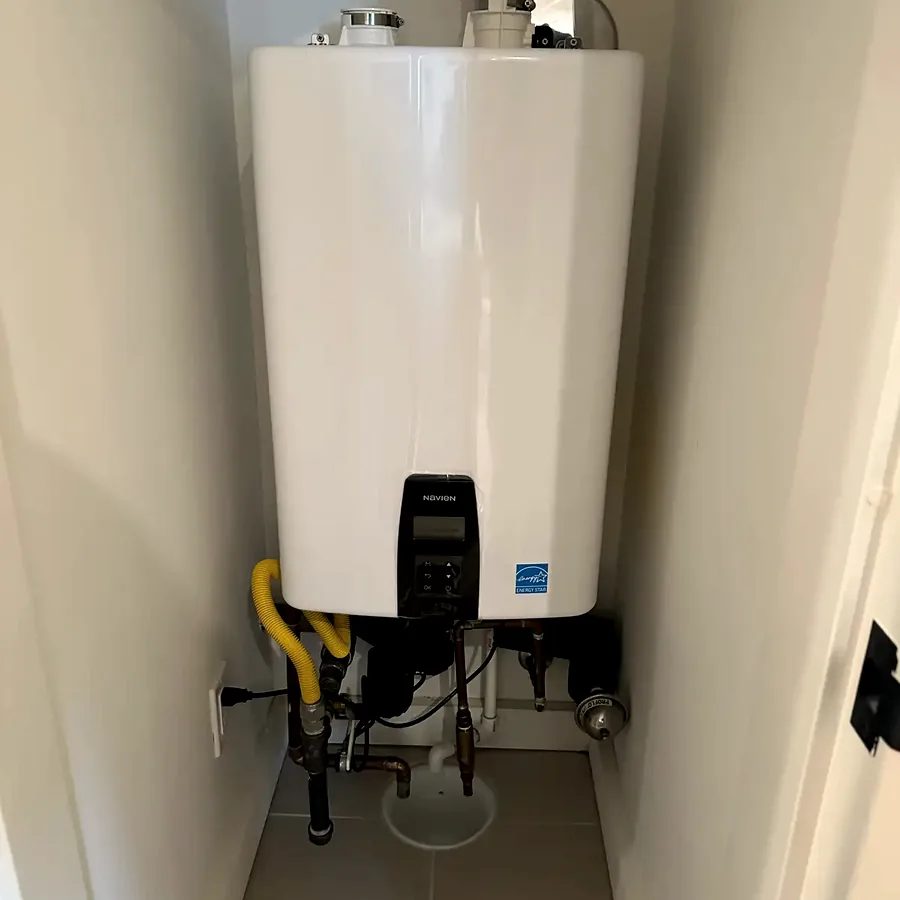
Plumbing
The systems that make the house work, and the bath and kitchen work that touches them.
- Water heaters and tankless
- Softeners and filtration
- Drains and sewer lines
- Leak detection and repipes
- Bath and kitchen work
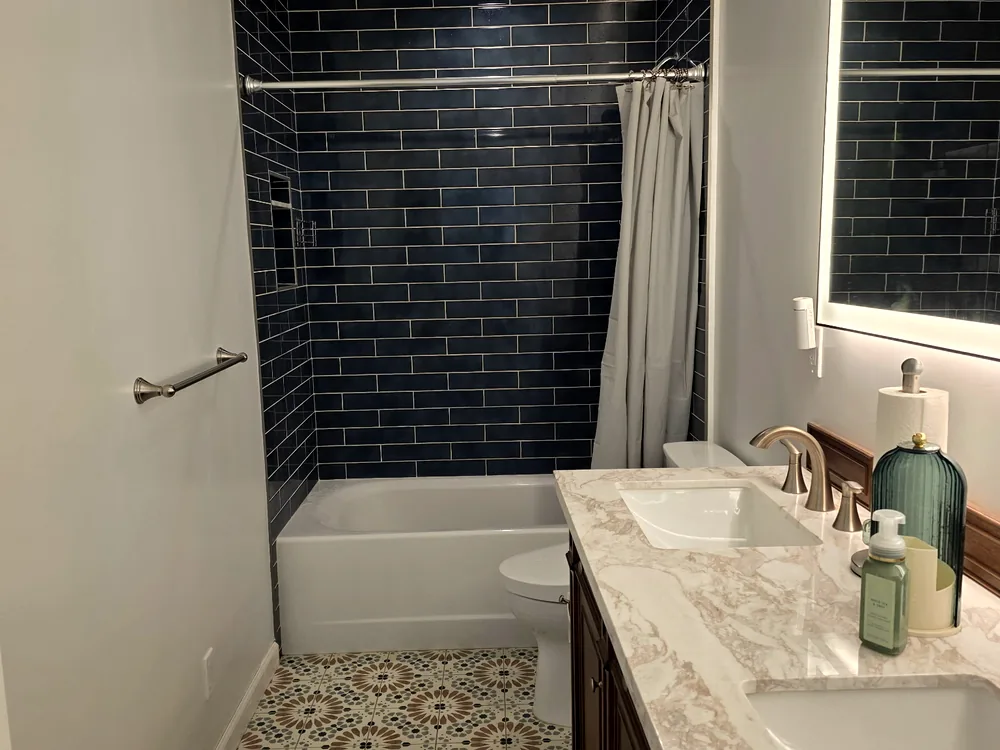
Accessible living
Built so you can stay in the house. Built so it doesn’t look built.
- Grab bars with wall blocking
- Curbless showers
- Walk-in tubs
- Doorway widening
- Home accessibility assessment
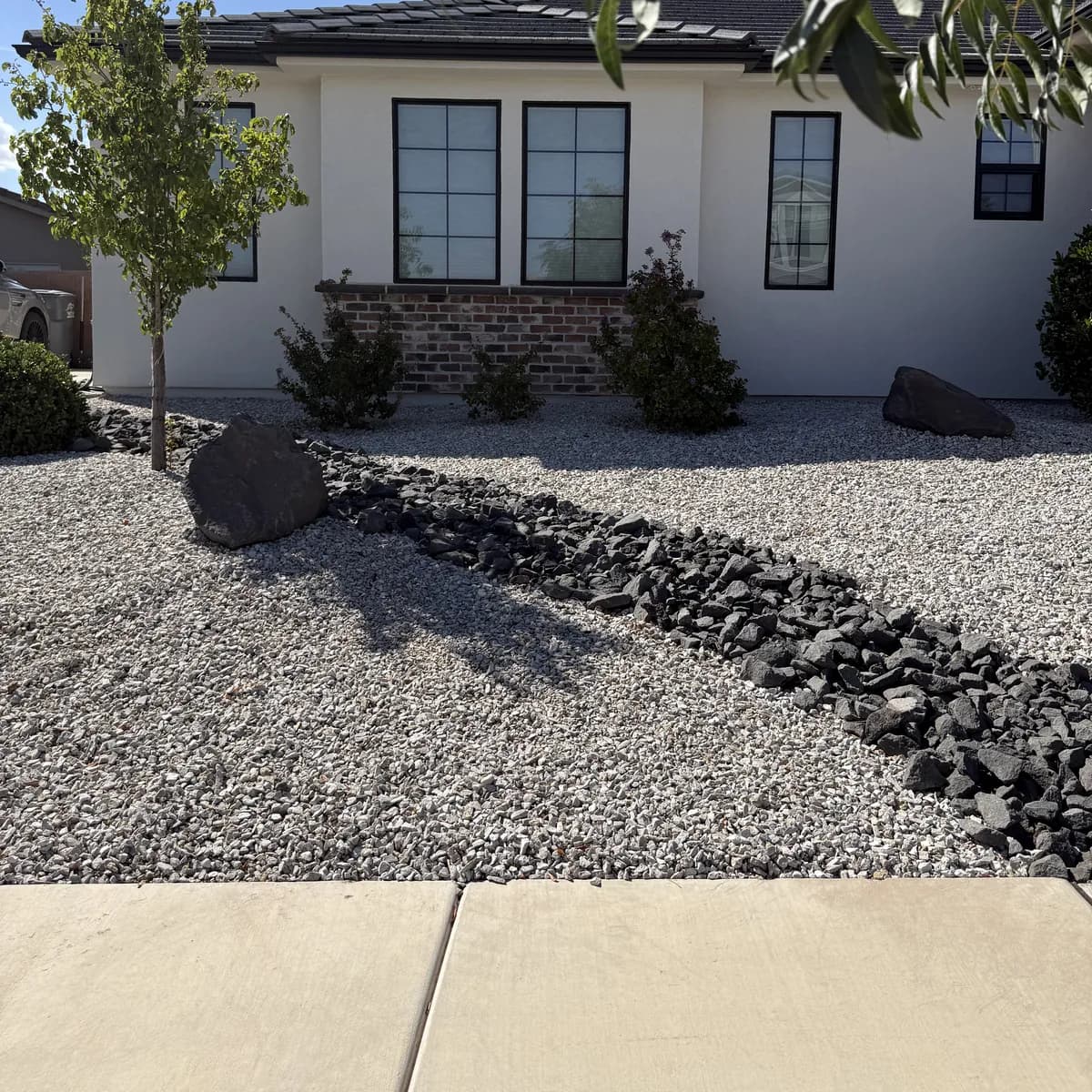
Water-wise landscape
Lawn out, desert in, with the rebate paperwork handled for you.
- Lawn removal
- Drip irrigation
- Desert planting
- Washington County rebate paperwork
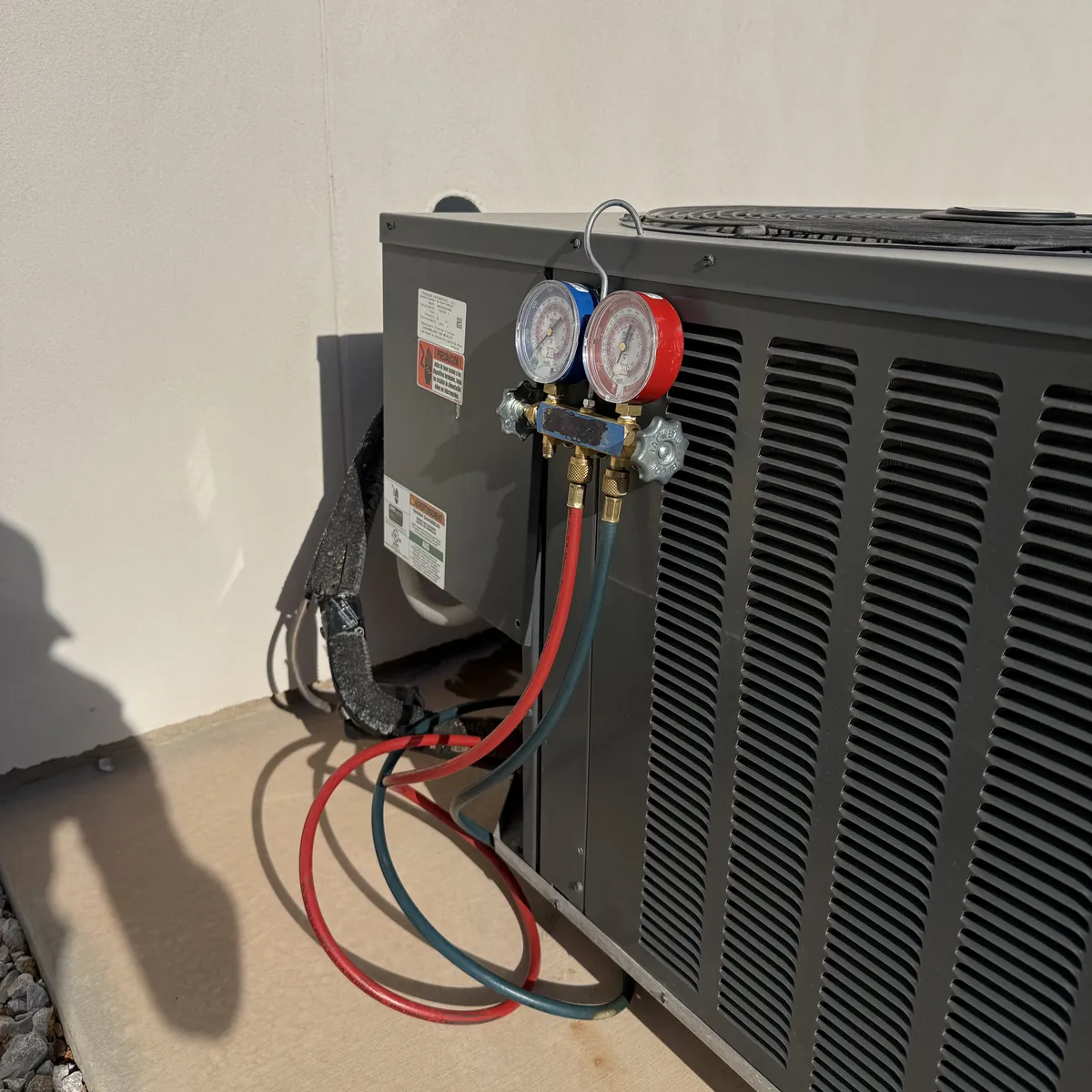
Heating and air
The system that keeps the house liveable in July, and the one thing in it you cannot put off.
- Emergency repair, any hour
- Air conditioning repair and replacement
- Furnaces, heat pumps and mini-splits
- Duct sealing and system sizing
- Tune-ups with the readings written down
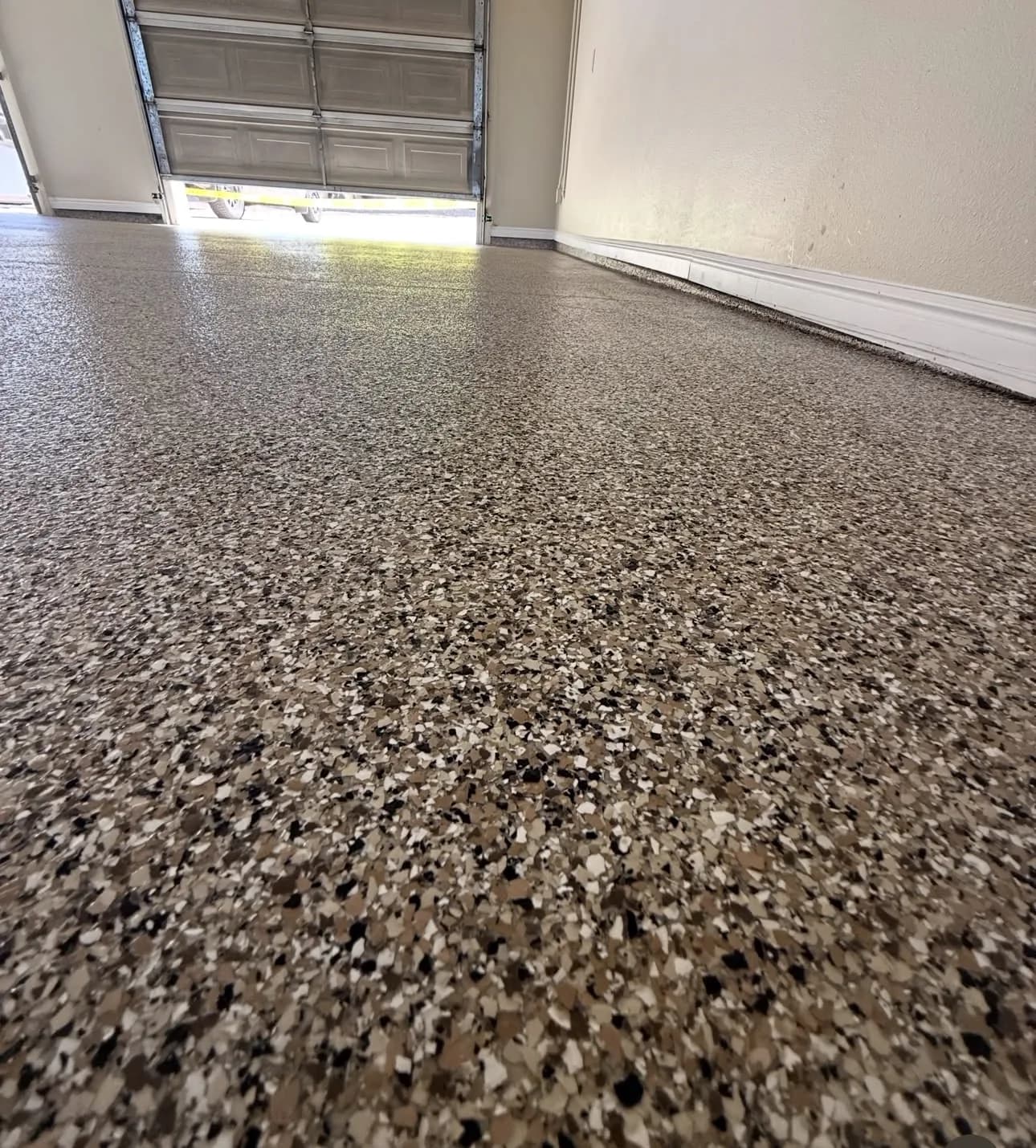
Concrete coatings
The floor you already own, ground back and finished. Garages, patios, driveways and shop floors.
- Garage floors, flake and solid color
- Driveways, patios and pool decks
- Basements and interior slabs
- Warehouse and shop floors
- The slab tested before anything is quoted
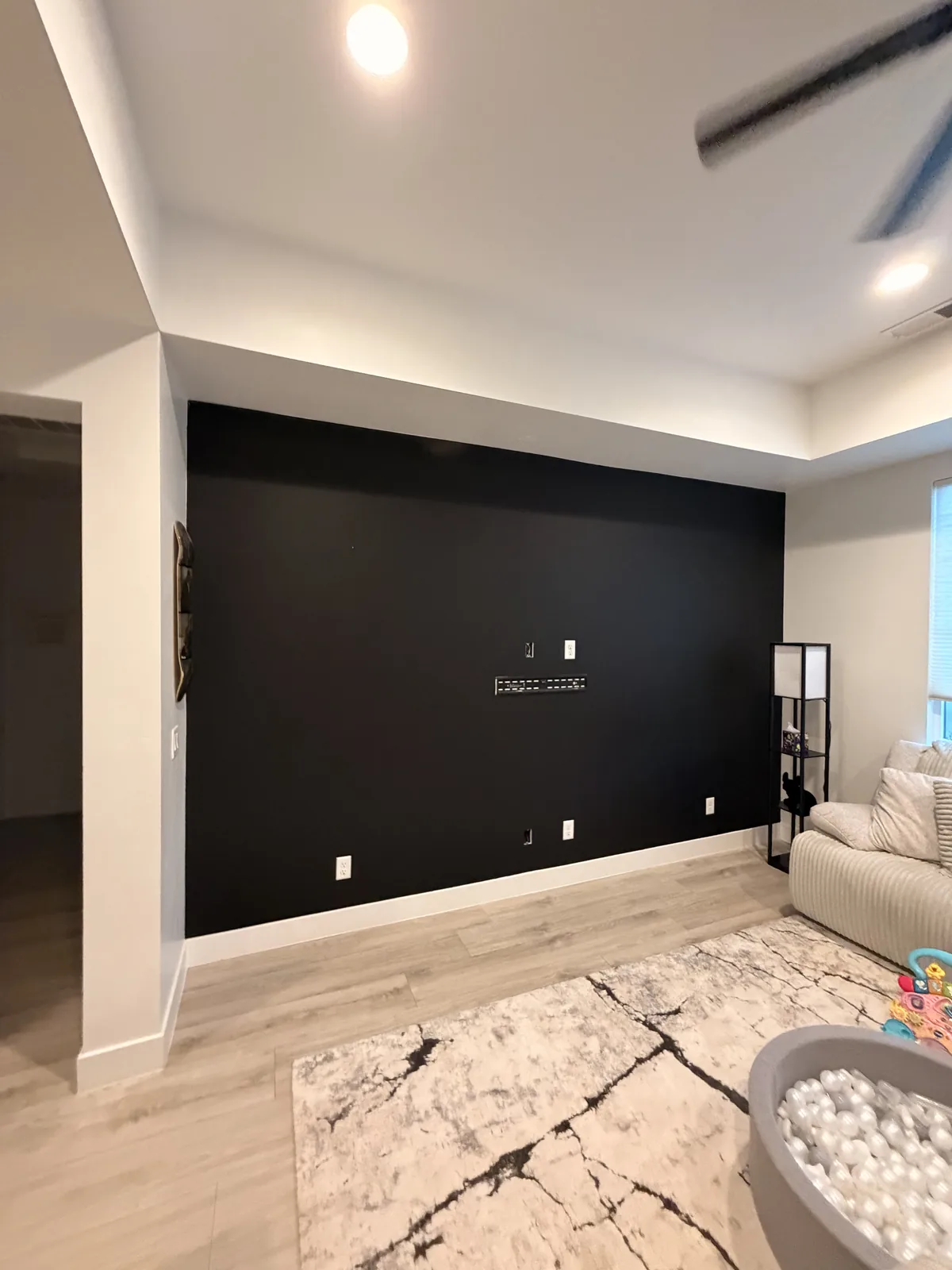
Painting
Inside, outside, and the wall repair that has to happen before either one.
- Interior walls, ceilings and trim
- Exterior repaints, including stucco
- Kitchen and bath cabinets
- Drywall repair and texture matching
- Popcorn ceiling removal
Washington City, in detail
108 things that are true here, each with its source.
Read the part you came for. Every line traces to a document we read in full, numbered in where this comes from.
The water
What comes out of the tap here, and what it does to a water heater.
- Washington City's 2025 water quality report shows total dissolved solids ranging from 210 to 656 ppm.1
- Washington City's 2025 water quality report shows sulfate ranging from 32 to 198 ppm.1
- Washington City's 2025 water quality report shows arsenic ranging from 1.3 to 3.8 ppb, against a federal limit of 10 ppb.1
- Washington City's 2025 water quality report shows sodium ranging from 8 to 53.4 ppm.1
- Washington City's 2025 water quality report shows fluoride ranging from 28 to 253 ppb and nitrate-nitrogen at 1.9 ppm.1
- Washington City's 2025 water quality report shows combined radium 226/228 at 0.03 to 2.41 pCi/L and uranium at 0.69 to 2.7 ppb.1
8 more facts, with sources
- Washington City's 2025 water quality report shows total trihalomethanes at 5 to 48 ppb and HAA5 at non-detect to 17.4 ppb; the federal TTHM limit is 80 ppb.1
- No Washington County water quality report, including Washington City's, publishes hardness, pH, chloride or iron, because they are not federally required reporting parameters.1
- Washington City's drinking water is supplied through WCWCD's Quail Creek Water Treatment Plant and Sand Hollow Wells, the same regional system that serves St. George, Hurricane, Ivins and Santa Clara.1
- More than 80% of the drinking water WCWCD delivers is Virgin River surface water stored in Sand Hollow and Quail Creek reservoirs; the rest is groundwater from the Navajo aquifer.1
- Washington City's residential water rate roughly doubles from tier 1 at $2.41 to tier 9 at $5.03.2
- Rinnai and Rheem tankless water heaters both cap total hardness at 200 mg/L (about 11.7 grains per gallon) and total dissolved solids at 500 mg/L in their warranty and installation documents.3
- Noritz's tankless warranty excludes damage from hardness above 12 grains per gallon (200 mg/L), and Rinnai, Rheem and Navien all cap total hardness at 200 mg/L. A.O. Smith's current gas tankless warranty publishes no hardness figure at all.4
- A water softener does not remove arsenic; cation exchange does nothing to it.3
The city's rules
Lawn, irrigation, lighting and permits, from the municipal code.
- Washington City Code § 8-9-3-2 caps irrigated lawn at 8 percent of the lot up to 1,500 square feet, allows 600 square feet on lots under 7,500 square feet, and applies a hard 1,500 square foot ceiling to every lot regardless of size.5
- Washington City's landscape standards reach rehabilitated landscaping, defined as a landscape area where over 75 percent of the existing landscaping is removed and replaced, and the definition expressly includes any landscaping funded in whole or in part by the Washington County Water Conservancy District's conversion program.6
- Washington City Code § 8-9-3-2 prohibits grass in park strips, in any landscape area under eight feet wide, and on any slope over 15 percent.5
- Washington City requires all planting beds to be mulched.2
- Washington City limits fences to 3 feet within the first 10 feet of the front yard.2
- Washington City Code § 7-5-14-7 requires grease traps to be cleaned no less than weekly and adds monthly inspections.2
13 more facts, with sources
- Utah adopts construction code statewide under Title 15A, so the plumbing code in Washington City is the same as in St. George; what varies by city is permit triggers, fees, process, irrigation rules and lighting.2
- Utah moved to the 2024 IBC, IECC and IEBC on July 1, 2026 under HB 65, while the electrical code remains the 2023 NEC and the residential code remains the 2021 IRC.7
- The WCWCD Water Efficiency Standards (October 2023) apply to any landscape installation using District or municipal-partner water, whether potable, secondary or reuse, and where they conflict with a city ordinance or HOA rule, the regulation giving the greatest water conservation applies.8
- Under the WCWCD Water Efficiency Standards, single-family lawn is capped at 8% of the lot or 2,500 sq ft, whichever is less; lots under 7,500 sq ft may have up to 600 sq ft; no lawn may be less than 8 feet in any dimension; and no lawn is allowed on slopes over 25%.8
- Under the WCWCD Water Efficiency Standards, every drip zone must have a pressure regulator, a filter, a flush-end assembly and emitters rated 20 gallons per hour or less; drip and spray may not share a valve; automated systems must use an EPA WaterSense smart controller; and all planting beds must be mulched.8
- Under the WCWCD Water Efficiency Standards, ornamental water features are limited to 25 sq ft per parcel, misting systems are permitted May through September when temperatures exceed 90°F, and homes over 1,400 sq ft need hot-water recirculation unless hot water arrives within 0.6 gallons.8
- Under H.B. 215 (2026), a Utah city may not require a property owner to install or keep lawn in an area less than 8 feet wide, and may not block vegetation removal required for defensible space under the Wildland Urban Interface Code.9
- A new 240-volt branch circuit or a panel change requires an electrical permit and inspection in every Utah jurisdiction, and the permit must be pulled by a licensed electrical contractor.7
- Under Utah H.B. 48, effective January 1, 2026, each municipality must adopt and enforce the Wildland Urban Interface Code, and counties annually assess a fee on high-risk WUI property that is based on structure square footage and may be tiered by triage classification.8
- Washington City has no tree or caliper requirement in its residential landscape section, and its residential standards carry no decorative water feature limit; those provisions sit in the non-residential standards.5
- Washington City Code § 7-1-14 prohibits sprinkler irrigation of all lawns and landscapes between 10 a.m. and 8 p.m. from the first Sunday of April to the last Sunday of October, and it is enforced with a warning, then fines rising to $500.10
- Washington City's watering restriction exempts hand-held hoses, soaker hoses, buckets of five gallons or less, watering cans, bubblers and drip irrigation, and new lawns within 90 days of planting.11
- Under Washington City Code § 8-9-3-3, an HOA covenant recorded after the chapter that conflicts with it is preempted and unenforceable.12
Who serves the house
Water and power providers, which changes what a rebate is worth.
- Washington City's electric service is split: Washington City Power serves north of the Virgin River and Dixie Power serves the rest of the city limits.7
- Rocky Mountain Power is not the electric utility for any part of Washington City.7
- Dixie Power is a cooperative with about 25,000 members in Southern Utah and Northern Arizona, with offices in St. George and Beryl.7
- Washington City publishes its own annual water quality report through its Public Works water division.1
- The WCWCD residential water impact fee on new construction is $13,500.2
- WCWCD offers a 2019 water conservation easement that waives part of its water impact fee on new construction in exchange for capping irrigated landscape at 5,000 sq ft; it is a different instrument from the rebate easement.8
The associations
What the documents say, by community. Confirm with your own.
- Coral Canyon is managed by CCMC, reachable at CoralCanyonHOA@CCMCnet.com or 435-634-1699.9
- Coral Canyon's Design Review Committee meets the second and fourth Thursday of each month at 9:00 a.m. at the Clubhouse; applications are due the Friday before, homeowners are notified within 48 hours, and variance decisions come within 45 days.9
- In Coral Canyon any exterior alteration requires a DRC form, explicitly including security cameras, light fixtures, landscaping, solar panels, windows, painting and gates.9
- Coral Canyon publishes an approved plant list and a pre-approved Sherwin-Williams paint palette; staff may approve items from those lists, but a DRC form must still be submitted.9
- Coral Canyon explicitly exempts interior alterations from pre-approval, along with dead-plant removal, like-for-like replanting and seasonal decorations.2
- In Coral Canyon, weeds must be pulled or otherwise removed; spraying them does not clear a violation.9
16 more facts, with sources
- Coral Canyon is three associations: the Coral Canyon Master, The Petroglyphs and The Views.9
- The Sienna Hills Community Association master office is at 1593 Grapevine Crossing Rd, Washington UT 84780, 435-272-3621; master dues are $15 and are included in each neighborhood's dues.9
- Sienna Hills has 12 neighborhood sub-HOAs: ten are managed by Community Association Management (CAM, the Southern Utah arm of HOALiving, 435-627-1776), Copperleaf and Ladera by ERA Brokers Consolidation (435-628-3950), and The Casitas by Paul Properties (435-674-3444).9
- Monthly dues across Sienna Hills sub-HOAs range from $30 (Arroyo) to $226 (Escondido), per the association's own neighborhood page.9
- Sienna Hills guidelines recommend lawn at no more than 15% of the front yard and 30% of the rear, ask owners to minimize colored rock and pea gravel, and do not allow white on paint or roofs.2
- Sienna Hills caps perimeter walls at 6 feet and retaining walls at 4 feet, requires patio covers to match the roof surface, prohibits patio enclosures, and requires landscape lighting to be low voltage and DRC-approved.2
- The Sienna Hills DRC runs a 30-day review window on both preliminary and final submittals.2
- Green Springs is not a single HOA; its rules vary sub-area by sub-area, with identified sub-areas including La Jolla Hills, Northbridge / Northbridge Estates, Lions Head Estates (gated), Ventana at Green Spring Villages and Green Springs Patio Homes.9
- Long Valley Trails in Washington City is a D.R. Horton development; no CC&Rs or design guidelines are published.9
- Under Utah Code 57-8a-231(3)(b), an HOA may not require a lot owner to install or keep lawn in an area less than 8 feet wide except where reasonably necessary for erosion control, and it may not prohibit water-wise landscaping on a detached dwelling.9
- Utah Code 57-8a-231 was enacted in 2022 and amended in 2023, 2024 and 2025.2
- As of May 6, 2026, a Utah HOA declaration may not impose a restriction on the interior of a dwelling except as reasonably necessary for the safety of adjacent lots (Utah Code 57-8a-212, 2026 Ch. 62), and the rule-level twin is 57-8a-218(22)(b)(i).9
- A Utah HOA may not restrict a homeowner from hiring a contractor solely because the contractor is not on the association's preferred vendor list (Utah Code 57-8a-218(22)(c)(iii) for rules; 57-8a-212(4)(i)(ii) for declarations).9
- Under Utah Code 57-8a-109(4), an HOA denial must state in writing each governing-document provision relied on and the specific aspect of the plan that does not conform, and under 57-8a-109(2) a plan fee may not exceed the actual cost of review.9
- Under Utah Code 57-8a-802, an HOA may not prohibit a lot owner from installing an EV charging system in a parking space on the owner's lot or in a limited common area space designated for the owner's exclusive use, though it may require an application and a licensed electrical contractor.7
- Under the Fair Housing Act an HOA cannot deny a reasonable modification such as grab bars, ramps, walk-in showers or widened doorways where there is a disability nexus, and may not require a specific contractor, extra insurance, higher deposits or medical records; the resident pays.2
The ground
Soils, faults, flood and rockfall, from the state's hazard mapping.
- Utah Geological Survey Special Study 127 maps geologic hazards and adverse construction conditions across 366 square miles including Washington City, with 14 hazard maps at 1:24,000 scale.1
- SS-127 maps six geologic hazards (surface fault rupture, earthquake ground shaking, liquefaction, flooding, landslide, rock fall) and nine adverse construction conditions (expansive soil and rock, collapsible soil, gypsiferous soil and rock, shallow bedrock, caliche, wind-blown sand, breccia pipes and paleokarst, soil piping and erosion, shallow ground water).1
- The Utah Geological Survey calls flooding "the most widespread and damaging geologic hazard in southwestern Utah" and expansive soil and rock "the most troublesome construction condition."1
- The Washington County Hazards MapServer publishes 24 free public GIS layers, including FEMA flood hazard, erosion hazard boundary, flood hazard based on geologic deposits, dam break inundation, fault special study zone, liquefaction, rockfall, collapsible soils, expansive rock and soil, gypsiferous rock and soil, wind-blown sand, piping and erosion, and wildfire history.1
- Washington County publishes three separate flood-related GIS layers — FEMA flood hazard, erosion hazard boundary, and flood hazard based on geologic deposits — because the FEMA map alone is not sufficient here.1
- The county GIS maps dam-break inundation areas (layers 5–7), relevant because Quail Creek and Sand Hollow reservoirs sit upstream of populated areas.1
10 more facts, with sources
- UGS defines collapsible soil as soil that has considerable strength when dry but settles significantly through hydrocompaction when wetted; in a home the wetting agent is typically a leaking irrigation line, service line, downspout or sewer lateral.1
- Expansive soils account for 42.87% of Utah's classified problem soils, more than any other type, and UGS illustrates the hazard with cracks in a Santa Clara house foundation.1
- UGS describes caliche as calcareous material in the shallow subsurface of arid soils that "can be very difficult to excavate," and maps it as an adverse construction condition in SS-127.1
- In gypsiferous zones mapped by UGS SS-127, a soil sulfate test determines the required concrete mix under ACI 318 exposure classes S1–S3, and sulfate-resistant cement is required at class S2 and above.1
- The Hurricane fault is capable of earthquakes as large as magnitude 6.5–7, and the 1992 St. George earthquake (magnitude 5.8, September 2, 1992) caused liquefaction and property damage.1
- The EPA maps Washington County as Radon Zone 2, the middle of its three categories, meaning a predicted average indoor screening level between 2 and 4 picocuries per liter. The action level is 4, and a zone map is a geological prediction that does not describe any individual house.13
- UGS calls radon "Utah's leading geologic hazard in terms of fatalities"; the state hazard plan attributes 5,630 Utah deaths (1973–2015) to radon-induced lung cancer, 92.7% of all Utah geologic-hazard fatalities.1
- Utah State University Extension states that termites are found throughout Utah but are most common in the southern counties, and its prevention list includes repairing water leaks and sealing foundation cracks.1
- UGS maps wind-blown sand as one of the nine adverse construction conditions in SS-127, and Washington County publishes it as GIS layer 21.1
- Utah's Wildfire Risk Assessment Portal at wildfirerisk.utah.gov is the homeowner lookup tool for wildland-urban interface risk, and the Division's mapping-tool boundary is the only one insurers may use to classify a property as high-risk WUI.1
The seasons
Heat, monsoon, wind and freeze, and how they set the calendar.
- WCWCD says the populated areas of Washington County are in hardiness zone 8, that a warm winter can approach zone 9 and rare years drop to zone 7, and that low-lying neighborhoods near rivers and drainages are colder because cold air settles there.8
- Most of Washington County falls in Sunset climate zone 10, with hot summers, cold winters, up to 300 growing days a year and elevations of 3,300 to 5,000 feet.8
- Southwest Utah has a defined monsoon season that generates flash flooding; St. George recorded a 78-day dry spell that ended with monsoon onset in one recent year.1
- Precipitation is bimodal: February is the wettest month (1.38 in) from winter storms, August is third (1.07 in) from monsoon, and June is driest at 0.16 in.2
- St. George, the nearest long-term weather station, recorded an all-time high of 117°F, set in July 1985 and matched on July 11, 2021, and 98 days at or above 100°F in 2024.1
- Because winter lows sit right at freezing rather than well below it, the local freeze failure is exposed above-grade plumbing — hose bibs, backflow assemblies, pool equipment and attic runs — not pipes inside walls.3
3 more facts, with sources
- Penn State's sports surface research center measured synthetic turf at 200°F on a 98°F day in Provo, Utah; 30 minutes of watering dropped turf from 174°F to 85°F but it rebounded to 120°F within 5 minutes.1
- WCWCD states that shade keeps areas up to 25 degrees cooler, that shade trees can lower surface temperatures by up to 50 degrees, and that grass uses four times more water than trees and shrubs.8
- WCWCD's published watering guide allows drip up to 1 day a week November–February, 2 days March–April, 3 days May–August and 2 days September–October, and says irrigation is typically not needed in December or January.8
The houses
How homes here were built, and what that means for the pipes.
- Washington County had 91,460 housing units and 69,786 households as of July 2025, with 71.6% owner-occupied, a median home value of $510,700, and 2,857 building permits issued in 2025.1
- Green Springs was developed primarily through the 1990s and 2000s.9
- Long Valley Trails is a D.R. Horton new-construction community in Washington City.9
- Polybutylene supply pipe was installed in U.S. homes from roughly 1978 through the mid-1990s, is usually gray and stamped PB2110, and fails from the inside when disinfectants react with the plastic.1
- The EPA Renovation, Repair and Painting rule applies to homes built before 1978 and, unlike Utah's asbestos rule, has no small-residential exemption, so it governs bathroom remodel work in older homes.1
- Utah Admin. Code R307-801-9 exempts owners of residential structures of four units or fewer from asbestos inspection requirements and contains no 1992 date trigger.1
Rebates and easements
The conversion program as it applies here.
- Washington County residents do not apply to the state landscape incentive; Utah Water Savers routes every Washington County jurisdiction to the WCWCD Water Efficient Landscape Program, and there is one application, one inspection, one easement and one payment.8
- The WCWCD landscape rebate pays $3 per square foot on the first 1,000 square feet and $2 per square foot after that for projects completed before June 1, 2027; the standard rate is $2.8
- The Washington County Water Conservancy District caps the landscape rebate at $100,000 per property per calendar year. There is no five-year waiting rule on the district side; that limit belongs to the separate state program, which Washington County applicants are routed away from.14
- Removing or killing the lawn before the approval email and pre-conversion site visit permanently voids rebate eligibility; the grass must be alive at inspection, though irrigation may be shut off for up to a month beforehand if blades remain visible.8
- WCWCD requires 50% living plant cover at maturity in the converted area, counting each tree as 350 sq ft and each shrub or perennial as 35 sq ft, and existing trees inside the conversion area count.8
- The program does not dictate plant species and there is no approved plant list for the rebate; it requires only 50% mature coverage.8
10 more facts, with sources
- Ungrouted pavers and dry-set flagstone count as mulch inside the rebated area, poured concrete and mortared work are subtracted, and permeable artificial turf is accepted in lieu of mulch under the WCWCD program.8
- Every rebated conversion attaches a perpetual conservation easement recorded with the Washington County Recorder that restricts only the converted area and prohibits irrigated grass, spray irrigation, pools, ponds and water features there forever.8
- WCWCD enforces the easement by aerial imagery; on a violation the owner gets written notice and 45 days to cure, then owes the full rebate plus administrative costs plus 5% annual interest, and release of the easement is discretionary and carries the same repayment.8
- The easement's completion spec requires no irrigation or low-volume drip with a filter, pressure regulator and emitters rated 20 gallons per hour or less, mulch permeable to air and water, and a conversion free of grass, bare soil and impermeable barriers.8
- WCWCD issues rebates in less than 60 days after project completion and paperwork submission.8
- For an owner-occupied primary residence WCWCD does not collect a W-9 or issue a 1099 for the rebate; owners of second homes, rentals and commercial property are issued a 1099.8
- WCWCD says a typical residential conversion can save up to $300 a year in water costs.8
- WCWCD offers a smart controller rebate of up to $100 for an EPA WaterSense-labeled controller and a toilet replacement rebate of up to $150 per toilet (up to two per property) for WaterSense models replacing toilets made before 1994; these are separate applications from the landscape rebate.8
- If a homeowners' association compels a resident to keep grass, WCWCD invites the resident to email conservation@wcwcd.org and will take reasonable steps to communicate with the HOA about applicable state and local laws.8
- The federal Alternative Fuel Vehicle Refueling Property Credit (§30C) for home EV chargers expired for property placed in service after June 30, 2026.7
Something on this page describe your house?
Tell us what you’re seeing. We’ll say on the phone whether it can wait, and what it costs to find out.
Associations in Washington City
What each community’s own documents say about design review, landscape and working on your house, with the section numbers. All communities.
Coral Canyon
Coral Canyon's design review calendar, what needs a DRC form, what is exempt, and how Utah statute reads against it.
Sienna Hills
Sienna Hills' landscape and wall limits, its 30-day design review window, and the twelve neighborhood associations underneath the master.
Read before you decide
Artificial turf, measured: 200 degrees on a 98 degree day
The highest published synthetic turf surface temperature was recorded in Utah. Watering cools it for about five minutes. Here is where turf still makes sense, and what planted conversion does instead.
Your backflow test notice, explained
St. George requires an approved assembly on every outside watering system, protected from freezing, and tested every year. Here is what that device does.
A pipe broke in the wall of your condo. Who pays?
Utah Code § 57-8-7.2 draws the line at the finished surface. Everything behind it is common area, and a pipe gets sorted by how many units it serves.
Curbless walk-in showers: the complete guide
A standard 60-inch tub occupies the same footprint as a 60 by 30 roll-in shower. The numbers, the slab, the hard water, and what the research honestly says.
Where this comes from
Every line above traces to a document we read in full. The number after a sentence points to the research below; hover it for the section. If you find a line wrong, tell us and we will fix it and say so.
- Environment, water and ground research, August 2026 Compiled from the cities' own water quality reports, Utah Geological Survey Special Study 127, the Utah State Hazard Mitigation Plan, Washington County GIS hazard layers, NOAA climate records, EPA radon zones and Census QuickFacts. 33 sections cited. Hover a number above for the section.
- The Washington County playbook, September 2026 Our own working document, compiled from the same primary sources: municipal codes, the Utah Code, Washington County Water Conservancy District documents and the recorded CC&Rs of the named communities. 11 sections cited. Hover a number above for the section.
- Plumbing research, August 2026 Compiled from manufacturer warranty documents and installation manuals (A.O. Smith, Noritz, Rinnai, Rheem, Navien, Bradford White), the Battelle / Water Quality Research Foundation study, the Utah Code and DOPL rules. 3 sections cited. Hover a number above for the section.
- Manufacturer warranty documents, each from the maker's own site, re-verified September 2, 2026
- Washington City Code § 8-9-3-2, Title 8 Ch. 9 Landscaping and Water Conservation, 2026 S-22, retrieved September 2, 2026
- Washington City Code § 8-9-2 and § 8-9-3-2, retrieved September 2, 2026
- Utility and EV research, August 2026 Compiled from utility service maps, St. George City Energy Services, Dixie Power and Hurricane City Power published rates and rebates, the Utah Code and the AFDC. 7 sections cited. Hover a number above for the section.
- Landscape and hardscape research, August 2026 Compiled from Washington County Water Conservancy District program documents, its sample conservation easement and FAQ, Utah Water Savers, the 2023 USDA hardiness map, USU Extension, and St. George City Code, Title 10. 22 sections cited. Hover a number above for the section.
- HOA research, August 2026 Compiled from Utah Code Title 57 Chapters 8 and 8a, Title 13 Chapter 79, HOA Ombudsman advisory opinions, and the recorded CC&Rs and design guidelines of the named communities. 16 sections cited. Hover a number above for the section.
- Washington City Code § 7-1-14 (Ord. 2004-23), retrieved September 2, 2026
- Washington City Code § 7-1-14 B, retrieved September 2, 2026
- Washington City Code § 8-9-3-3, retrieved September 2, 2026
- EPA Map of Radon Zones, Utah, read from the map itself September 2, 2026
- WCWCD Water Efficient Landscape Program agreement, wcwcd.gov, retrieved September 2, 2026
Work we do in Washington City
Everything above is about Washington City specifically. These are six of the jobs behind it, each with its own page saying what is included and what is not.
Air conditioning replacement
The outdoor unit and matched indoor coil, on the existing heat.
Water softener, installed
Unit, install, bypass, drain and brine line.
Furnace replacement
The heat only, where the cooling side has life left in it.
Gas line install and repair
New runs, resizing for tankless, and leak testing.
Paver patio
Excavate, compacted base, bedding sand, pavers and edge restraint.
Exterior repaint
The whole envelope, prepared and coated in the order and the weather the manufacturer publishes.
The quote is the number. There is no second number.
Call (435) 850-0053
7 a.m. to 5 p.m., weekdays. Emergency calls answered any hour, every day.