
Where we work · Cedar City, Utah
Plumbing, accessible living and water-wise landscape in Cedar City.
What follows is only what is true of Cedar City: the water, the city's rules, the ground and the associations. 97 checkable facts, each with its source.
Same crew, same rate card, in every town we cover. Read our Plain Terms
What we do in Cedar City
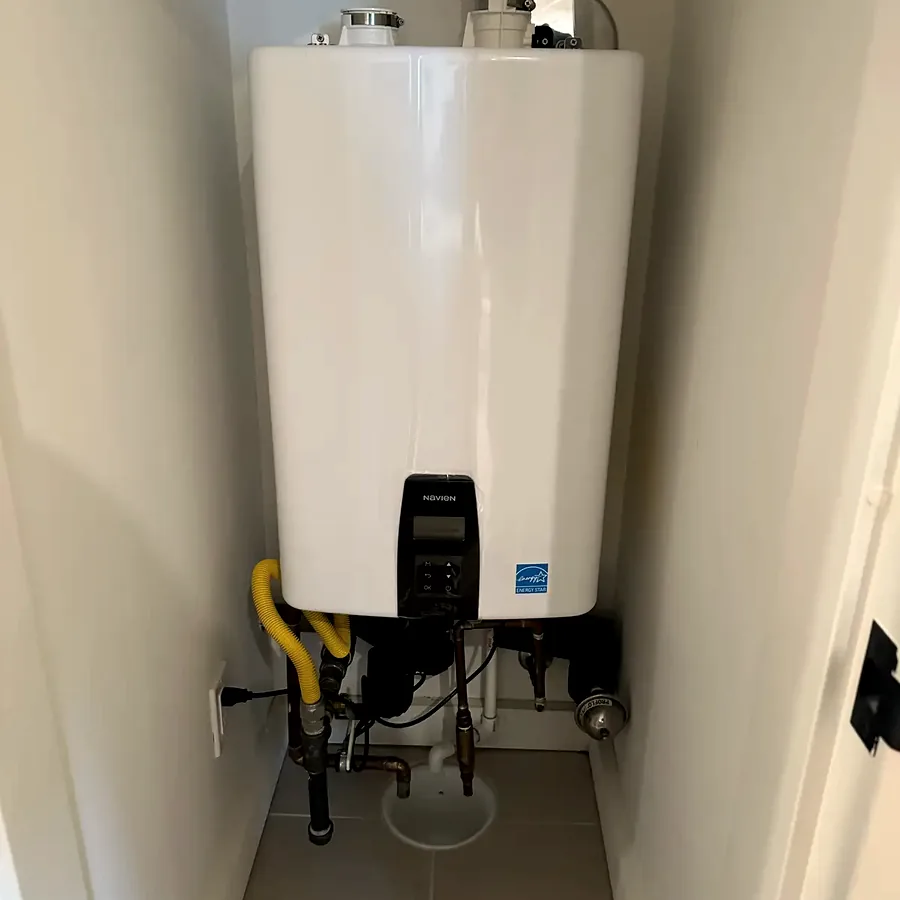
Plumbing
The systems that make the house work, and the bath and kitchen work that touches them.
- Water heaters and tankless
- Softeners and filtration
- Drains and sewer lines
- Leak detection and repipes
- Bath and kitchen work
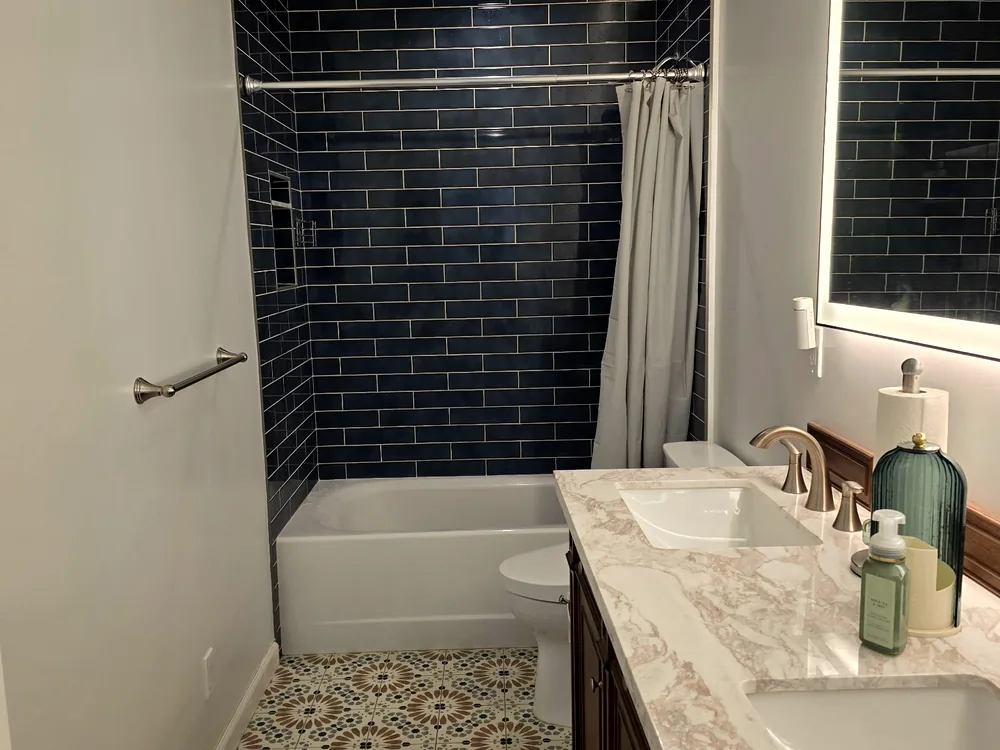
Accessible living
Built so you can stay in the house. Built so it doesn’t look built.
- Grab bars with wall blocking
- Curbless showers
- Walk-in tubs
- Doorway widening
- Home accessibility assessment
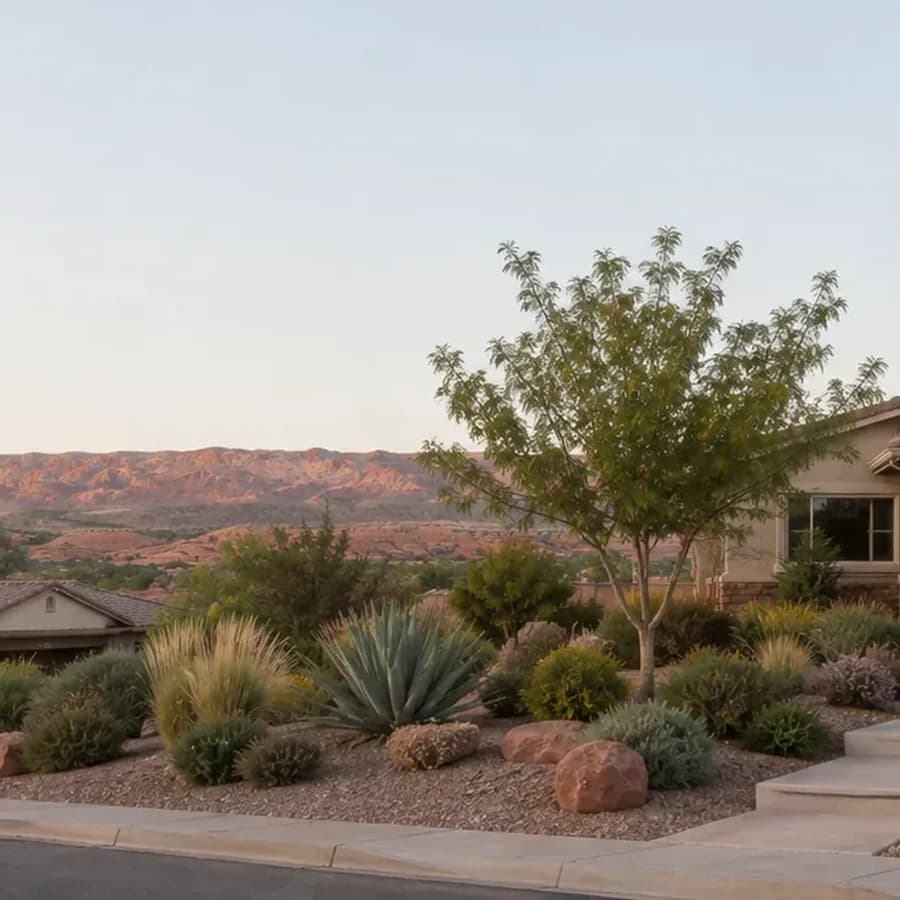
Water-wise landscape
Lawn out, desert in, with the rebate paperwork handled for you.
- Lawn removal
- Drip irrigation
- Desert planting
- Washington County rebate paperwork
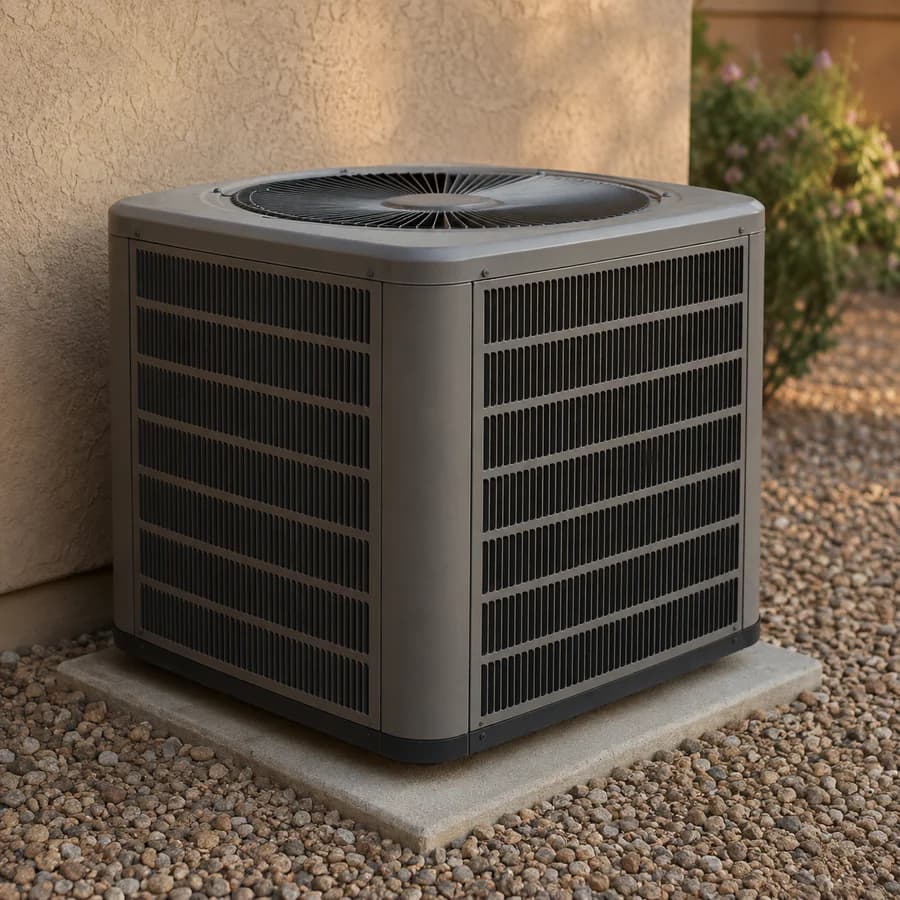
Heating and air
The system that keeps the house liveable in July, and the one thing in it you cannot put off.
- Emergency repair, any hour
- Air conditioning repair and replacement
- Furnaces, heat pumps and mini-splits
- Duct sealing and system sizing
- Tune-ups with the readings written down
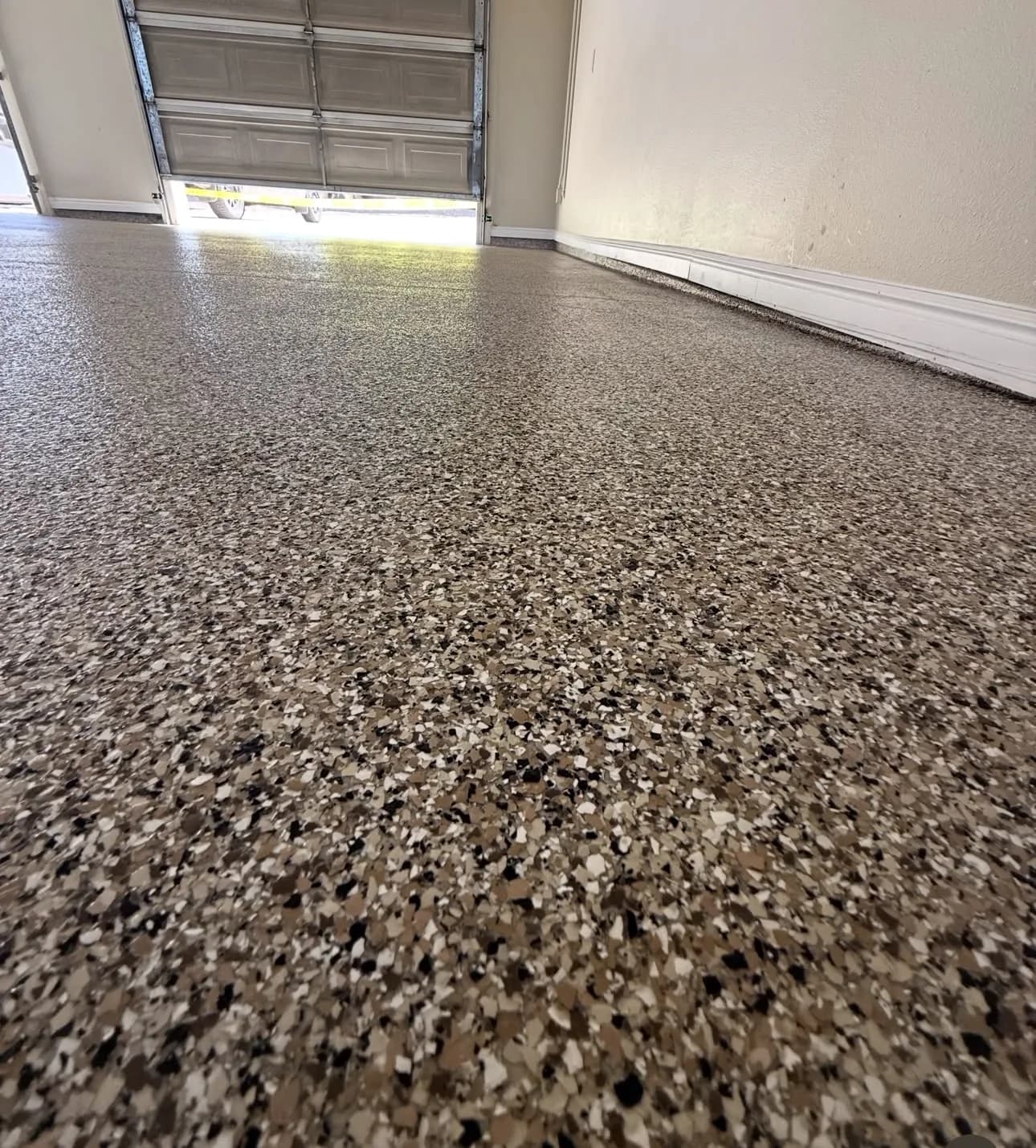
Concrete coatings
The floor you already own, ground back and finished. Garages, patios, driveways and shop floors.
- Garage floors, flake and solid color
- Driveways, patios and pool decks
- Basements and interior slabs
- Warehouse and shop floors
- The slab tested before anything is quoted
Painting
Inside, outside, and the wall repair that has to happen before either one.
- Interior walls, ceilings and trim
- Exterior repaints, including stucco
- Kitchen and bath cabinets
- Drywall repair and texture matching
- Popcorn ceiling removal
Cedar City, in detail
97 things that are true here, each with its source.
Read the part you came for. Every line traces to a document we read in full, numbered in where this comes from.
The water
What comes out of the tap here, and what it does to a water heater.
- Cedar City supplies its own drinking water from groundwater: 8 wells and 4 springs.1
- The utility is Cedar City Waterworks, state water system ID 11002.1
- Cedar City's water system served 10,414 connections in 2021.1
- The system has 10 storage tanks, 3 pump stations, 5 pressure zones and about 250 miles of pipe from 4 to 20 inches in diameter.1
- The city's wells are in two well fields: two wells near Enoch, north of city limits, and six west of Quichapa Lake, connected to town by transmission pipelines.1
- Cedar City's 2025 water quality report gives total dissolved solids of 180 to 804 ppm across its sources, against a limit of 2,000.1
12 more facts, with sources
- Sulfate ranged from 2.762 to 347.495 ppm across sources in 2025, against a limit of 1,000.1
- Sodium ranged from 3.573 to 27.517 ppm in 2025; EPA sets no limit for sodium.1
- Nitrate (as nitrogen) ranged from 0 to 3.08 ppm in 2025, against a limit of 10.1
- Arsenic ranged from 0 to 4.4 ppb in 2025, against a limit of 10.1
- In the city's most recent lead sampling (2024), the 90th-percentile lead result was 0 ppb and no site exceeded the action level.1
- Cedar City has completed an initial inventory of lead service lines.1
- The State Engineer has declared Cedar City Valley a critical management area because groundwater withdrawals exceed safe yield.1
- The state estimates the basin's safe yield at 21,000 acre-feet a year against current depletion of 28,000 acre-feet a year.1
- If every approved or perfected groundwater right were used, depletion would be about 50,000 acre-feet a year.1
- Under the 2021 groundwater management plan, water rights will be cut by priority date in five phases from January 1, 2035 to January 1, 2080.1
- Cedar City owns about 13,000 acre-feet of groundwater rights, of which about 2,800 have enough priority to survive the state's cuts.1
- The city's own master plan says groundwater in the valley is being withdrawn at an unsustainable rate.1
The city's rules
Lawn, irrigation, lighting and permits, from the municipal code.
- From April 1 through October 31, Cedar City prohibits outdoor irrigation with culinary water between 8 a.m. and 6 p.m. (City Code 37-7-1).1
- The watering-hours rule exempts new lawns for their first 30 days and short system tests with a person present.1
- A second watering-hours violation in a calendar year gets the property's water shut off.1
- Anyone planting new sod or seed in Cedar City should call the Water Division at (435) 586-2968.1
- In new Cedar City developments, lawn is not allowed on park strips or in areas less than 8 feet wide.1
- In new residential development, lawn may not exceed 50% of front and side yard landscaping, except on lots with less than 250 square feet of landscaped area.1
13 more facts, with sources
- Cedar City adopted its water-efficient landscape standards on May 24, 2023, by Ordinance 0524-23.1
- Cedar City allows no physical connection between the city's culinary water and any other water system.1
- In Cedar City the property owner buys, installs, tests and maintains any required backflow prevention device.1
- Backflow devices must be inspected and tested at least once a year when the city requests it.1
- Cedar City requires a building permit for plumbing or mechanical changes, including mechanical equipment upgrades and replacements.1
- A new furnace or water heater on a gas line needs a gas meter or mechanical permit in Cedar City if no other permit covers the work.1
- Cedar City has adopted the 2024 International Plumbing Code and the 2024 International Mechanical Code.1
- Cedar City has adopted the 2021 IECC residential provisions with Utah amendments.1
- Cedar City's design frost depth is 30 inches.1
- Cedar City's building design standards use Seismic Zone D1 and a 90 mph wind speed with 115 mph gusts.1
- When Cedar City requires a subdivision soils report, it must address subsidence, hydro-compaction, settling and sinking of soil.1
- Cedar City's building inspector keeps approved subdivision soils reports open to public review.1
- Cedar City and Iron County both have ordinances protecting drinking-water source zones, and the city publishes a protection-zone map.1
Who serves the house
Water and power providers, which changes what a rebate is worth.
- Rocky Mountain Power supplies electricity in Cedar City.1
- Builders in Cedar City get work order numbers for electric service from Rocky Mountain Power at 888-221-7070.1
- Enbridge Gas serves Cedar City with natural gas.1
- About 72% of Cedar City's occupied homes (9,009 of 12,480) heat with utility gas, per ACS 2020–2024 Table B25040.1
- 2,983 of Cedar City's 12,480 occupied homes heat with electricity, per ACS 2020–2024 Table B25040.1
The associations
What the documents say, by community. Confirm with your own.
- Cedar Highlands Homeowners Association is an active master HOA registration with the state, number 14258617-MHOA.1
- The Central Iron County Water Conservancy District runs the Cedar Highlands water system and chose a different tank site after its geotechnical consultant advised against the old one, which sits at the toe of a landslide.1
- Utah law bars an HOA from prohibiting water-wise landscaping on a detached home's lot (Utah Code 57-8a-231).1
- Except for erosion control, an HOA may not require lawn in an area less than 8 feet wide.1
The ground
Soils, faults, flood and rockfall, from the state's hazard mapping.
- The Utah Geological Survey documented land subsidence and earth fissures in Cedar Valley in Special Study 150 (2014).1
- Groundwater pumping in excess of recharge has lowered water levels in Cedar Valley by as much as 114 feet since 1939, according to the UGS.1
- Cedar Valley's aquifer contains a high share of fine-grained sediment that compacts when it is drained.1
- The largest subsidence the UGS measured at a benchmark was 0.9 foot, near Enoch; vertical offset across the Enoch fissure zone is about 3 feet in places.1
- At least 8.3 miles of earth fissures have formed in the southwestern and northeastern parts of Cedar Valley.1
- The UGS concluded that long-term groundwater pumping in excess of recharge is the cause of the subsidence and fissures.1
13 more facts, with sources
- If water levels keep falling about 2 feet a year, the UGS expects basin-wide subsidence of 0.02 to 1.2 inches a year to continue, and new fissures to form.1
- Satellite radar (InSAR) identified about 100 square miles of Cedar Valley subsiding from groundwater mining.1
- The UGS says the fissure inventory is likely incomplete, because many fissures are hairline cracks hard to see.1
- Documented fissure damage is limited to the Parkview subdivision in Enoch and a stock pond west of Quichapa Lake.1
- In Enoch's Parkview subdivision, fissure movement reversed the flow of a sewer line so it could no longer drain by gravity; the UGS calls it the first extensive fissure damage to the built environment in Utah.1
- Several large-capacity Cedar City municipal wells sit near the fissure zones around Quichapa Lake.1
- Subsidence can continue long after groundwater decline stops, because clay layers take years to decades to finish compacting.1
- The UGS's 2025 hazard study (Special Study 177) says collapsible soil and flooding have been the costliest geologic hazards in Cedar Valley.1
- The UGS identifies radon gas as a hazard in the Cedar Valley study area.1
- The UGS also maps expansive, corrosive and soluble soil and rock, shallow groundwater, landslide and rockfall hazards in Cedar Valley.1
- The UGS hazard maps are public on the Utah Geologic Hazards Portal and are not a substitute for a site-specific investigation.1
- Collapsible soil in Cedar City itself was studied as far back as 1978.1
- The Hurricane fault runs along the Hurricane Cliffs at the east edge of Cedar Valley, and the cliffs are up to 2,000 feet high.1
The seasons
Heat, monsoon, wind and freeze, and how they set the calendar.
- Cedar City's NOAA 1991–2020 normals come from station USW00093129, Cedar City Municipal Airport, at 1,702.6 meters.1
- Cedar City's normal daily high in July is 91.0°F.1
- Cedar City's normal daily low in January is 18.0°F, and 16.3°F in December.1
- The normal daily low in Cedar City is below freezing every month from October through April.1
- Cedar City averages about 168 nights a year at or below 32°F, against about 62 in St. George.1
- Cedar City averages 5.4 nights a year at or below 0°F; St. George averages none.1
6 more facts, with sources
- Cedar City averages 1.4 days a year at or above 100°F, against 63.1 in St. George.1
- Cedar City's normal is 6,002 heating degree days a year, nearly twice St. George's 3,205, and 678 cooling degree days against St. George's 2,416.1
- The median last spring freeze in Cedar City is May 21 and the median first fall freeze is September 29.1
- Cedar City's median growing season is 130 days, against 239 in St. George.1
- Both Cedar City ZIP codes, 84720 and 84721, are USDA hardiness zone 6b on the 2023 map; St. George's 84770 is 8b.1
- Iron County is Building America climate "Cold" and IECC 2021 Climate Zone 5B; Washington County is the only Utah county in Zone 3B.2
The houses
How homes here were built, and what that means for the pipes.
- Cedar City has 13,572 housing units (ACS 2020–2024, Table B25001).1
- About 57% of Cedar City's occupied homes are owner-occupied (7,077 of 12,480), against 68% in Iron County (ACS 2020–2024, Table B25003).1
- The median Cedar City housing unit was built in 1999 (ACS 2020–2024, Table B25035).1
- About 23% of Cedar City housing units (3,064 of 13,572) were built before 1980 (ACS 2020–2024, Table B25034).1
- 3,414 Cedar City units were built in 2010 or later: 2,667 in 2010–2019 and 747 since 2020 (ACS 2020–2024, Table B25034).1
- 6,900 of Cedar City's housing units are single-family detached homes and 368 are mobile homes (ACS 2020–2024, Table B25024).1
1 more fact, with sources
- The median value of an owner-occupied home in Cedar City is $377,000 (ACS 2020–2024, Table B25077).1
Rebates and easements
The conversion program as it applies here.
- Cedar City is in the Central Iron County Water Conservancy District, not the Washington County Water Conservancy District.1
- The district estimates the Cedar Valley aquifer is being overdrawn by 7,000 acre-feet a year and that homes use about 60% of their water outdoors.1
- Cedar City residents qualify for the State of Utah's landscape incentive, run by the Utah Division of Water Resources through Utah Water Savers.1
- The state incentive pays $2.00 per square foot of lawn replaced with water-efficient landscaping, up to $50,000 per application.1
- Lawn must not be removed before the application is approved and the participation agreement is signed.1
- The project area must be at least 200 square feet.1
7 more facts, with sources
- Plants must cover at least 50% of the converted area at maturity, and the area must be watered by drip.1
- Artificial turf, pools, water features and concrete do not count as water-efficient landscaping for the incentive.1
- Projects must be finished within 365 days of approval, and homes on private wells are not eligible.1
- The state inspects the finished project and mails the incentive check to the property owner.1
- Utah Water Savers pays up to $100 for a WaterSense-labeled smart irrigation controller, open to all Utah homes.1
- The state's toilet replacement rebate closes November 1, 2026.1
- Utah Water Savers, the state program that pays Cedar City's landscape rebate, limits its rebates to one rebate per property every five years.1
Something on this page describe your house?
Tell us what you’re seeing. We’ll say on the phone whether it can wait, and what it costs to find out.
Read before you decide
Artificial turf, measured: 200 degrees on a 98 degree day
The highest published synthetic turf surface temperature was recorded in Utah. Watering cools it for about five minutes. Here is where turf still makes sense, and what planted conversion does instead.
Your backflow test notice, explained
St. George requires an approved assembly on every outside watering system, protected from freezing, and tested every year. Here is what that device does.
A pipe broke in the wall of your condo. Who pays?
Utah Code § 57-8-7.2 draws the line at the finished surface. Everything behind it is common area, and a pipe gets sorted by how many units it serves.
Curbless walk-in showers: the complete guide
A standard 60-inch tub occupies the same footprint as a 60 by 30 roll-in shower. The numbers, the slab, the hard water, and what the research honestly says.
Where this comes from
Every line above traces to a document we read in full. The number after a sentence points to the research below; hover it for the section. If you find a line wrong, tell us and we will fix it and say so.
- Cedar City research, September 2026 Compiled from the Utah Geological Survey's Special Studies 150 and 177 on Cedar Valley, the Utah State Engineer's groundwater management plan, Cedar City's water quality reports, master plans and municipal code, NOAA 1991-2020 climate normals for the Cedar City airport station, Census American Community Survey tables, the USDA hardiness map, Utah Water Savers, and the Central Iron County Water Conservancy District. 32 sections cited. Hover a number above for the section.
- Heating and air research, September 2026 Compiled from the Code of Federal Regulations at 10 CFR 430 and the Federal Register, EPA rules on refrigerant transition, the Utah Code and Utah DOPL's licensing records, ACCA's load calculation standard, ASHRAE and the AHRI directory, Pacific Northwest and Lawrence Berkeley National Laboratory publications, NOAA climate normals, ENERGY STAR, and the published data of Trane, Lennox and Daikin. 1 section cited. Hover a number above for the section.
What we are asked for most in Cedar City
Everything on this page is about Cedar City specifically. This is the work behind it: the six jobs people in this county search for most, each with its own page saying what is included and what is not.
Air conditioning replacement
The outdoor unit and matched indoor coil, on the existing heat.
Water softener, installed
Unit, install, bypass, drain and brine line.
Furnace replacement
The heat only, where the cooling side has life left in it.
Gas line install and repair
New runs, resizing for tankless, and leak testing.
Paver patio
Excavate, compacted base, bedding sand, pavers and edge restraint.
Exterior repaint
The whole envelope, prepared and coated in the order and the weather the manufacturer publishes.
The quote is the number. There is no second number.
Call (801) 680-6859
7 a.m. to 5 p.m., weekdays. Emergency calls answered any hour, every day.