What the work is
When the lowest fixture in the house floods while another one drains, the main line between the house and the city connection is blocked. We cable it through the cleanout, get it flowing, and then tell you what we hit.
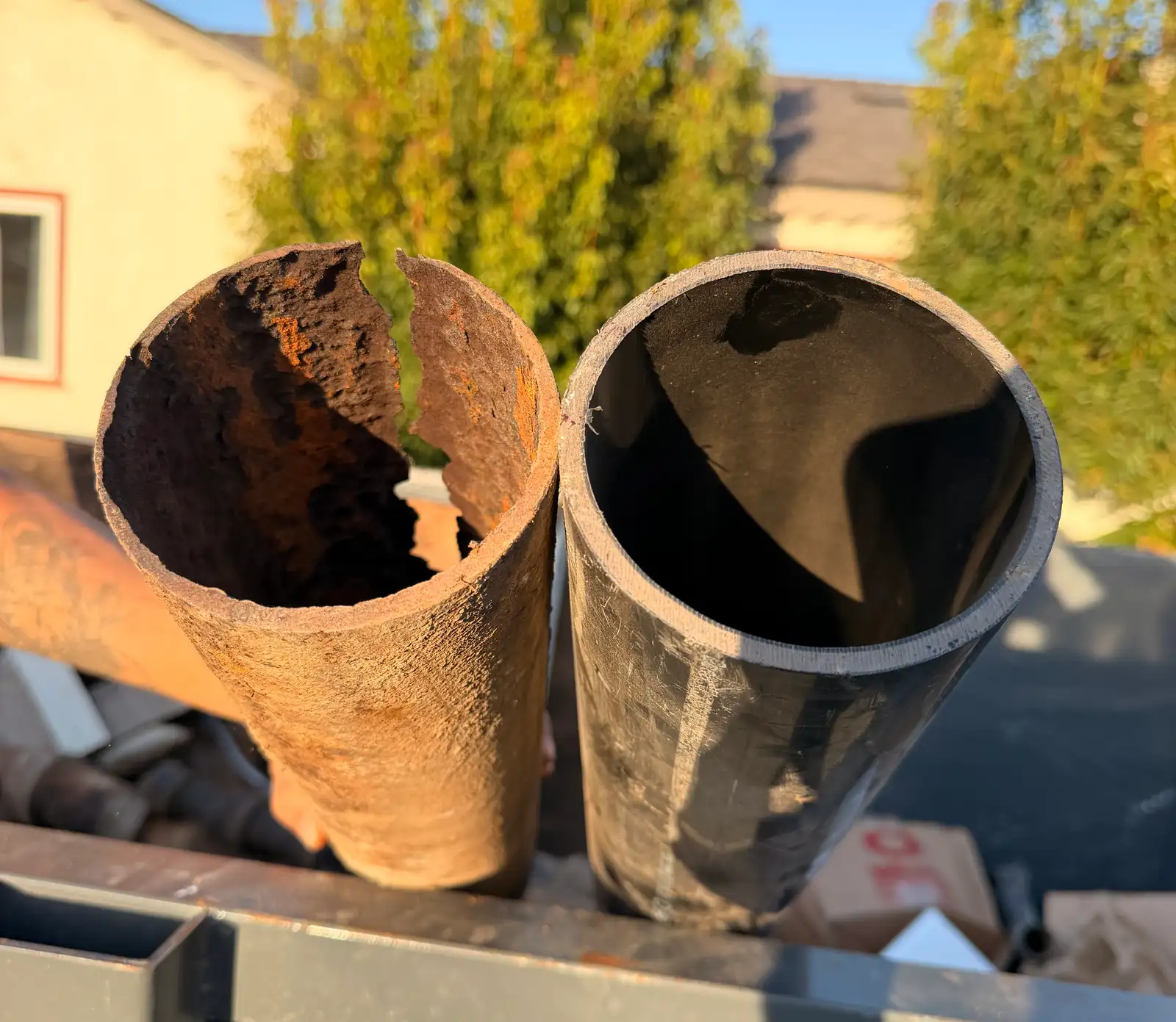
Getting it flowing is the easy half. A main line does not block for no reason: roots at a joint, a belly holding solids, scale in old cast iron, a foreign object, or a broken section that has dropped out of line. A cable will punch through most of those and the line will run again. Whether it runs again in three weeks or three years depends on which one you had.
That is why the camera matters more than the cable, and why we would rather run one than sell you the same clearing four times.
What is included
- Cabling the main line through an existing cleanout
- Running water afterwards to confirm the line carries volume, not just a trickle
- Telling you what the cable felt like and what we think caused it
- Cleaning up what came out
What is not
- The camera run, which is a separate line item you approve first
- Any repair to the line itself
- Damage the backup already caused inside the house. That is your insurer's, and we will document what we found for the claim
- Anything on the city's side of the connection
Where our responsibility stops is not the same in every town here
Where the city's ownership of the lateral ends and yours begins is not written the same way in St. George, Washington City, Hurricane, Santa Clara, Ivins, La Verkin and Toquerville, and more than one of them describes it loosely enough to argue about. We have asked each one in writing rather than guessing on your behalf. Until we have those answers in hand, we will tell you what we can see, mark where the line runs, and say plainly which side of the connection the problem is on.
What to ask anyone quoting this, us included
- What did the cable hit, and where?
- Do you recommend a camera, and why or why not?
- If this is roots, where are they coming in, and is that a joint or a break?