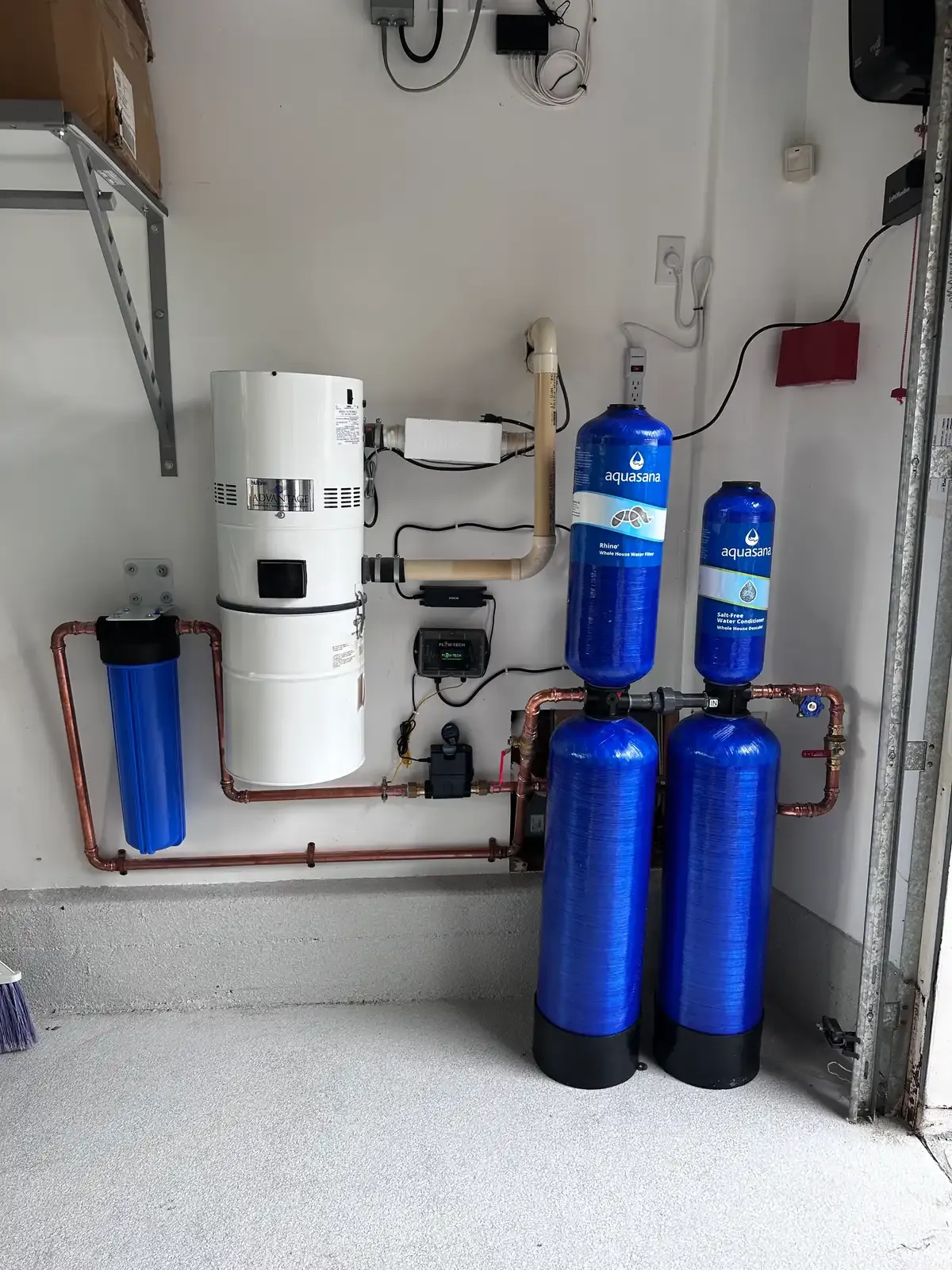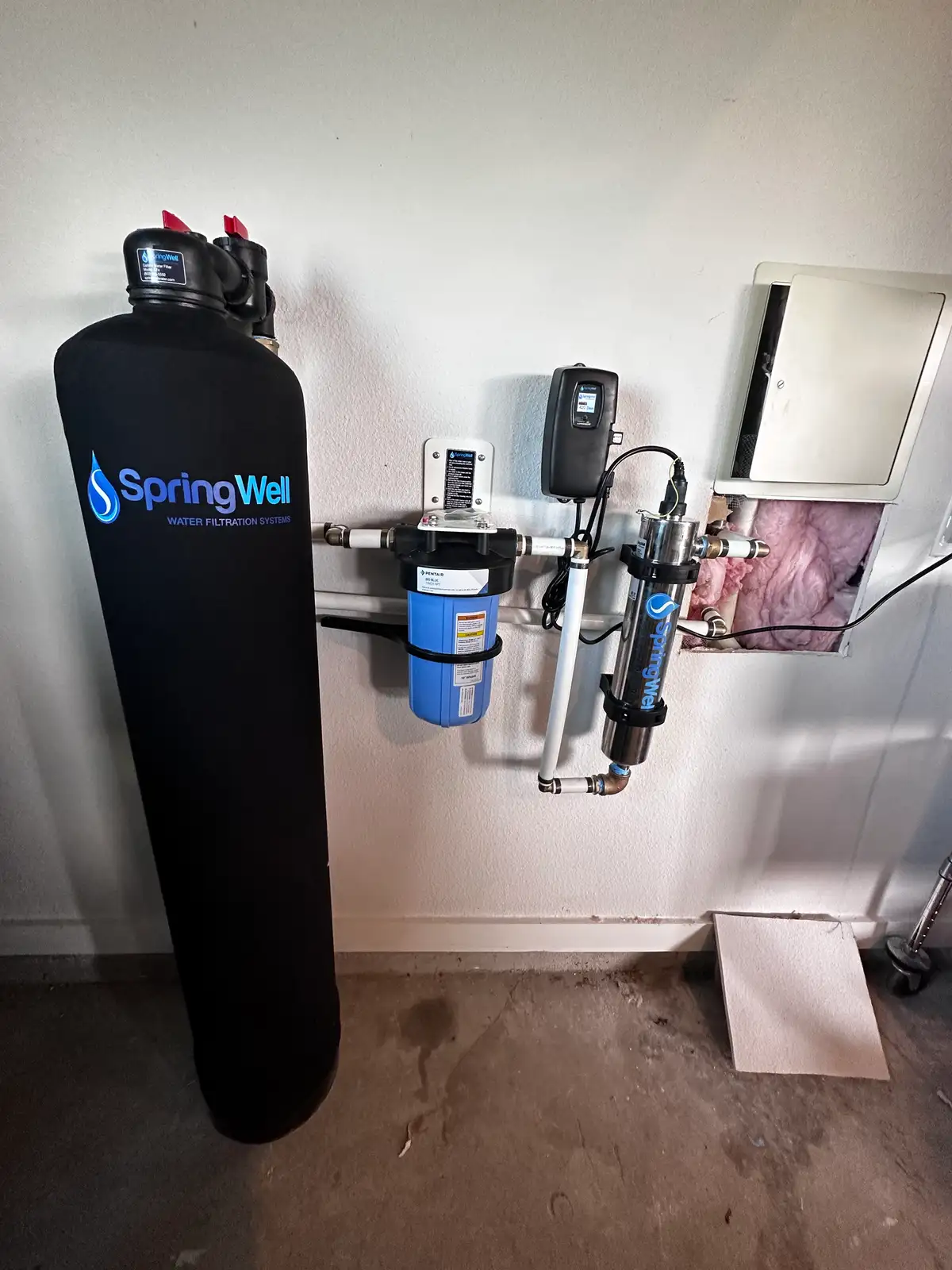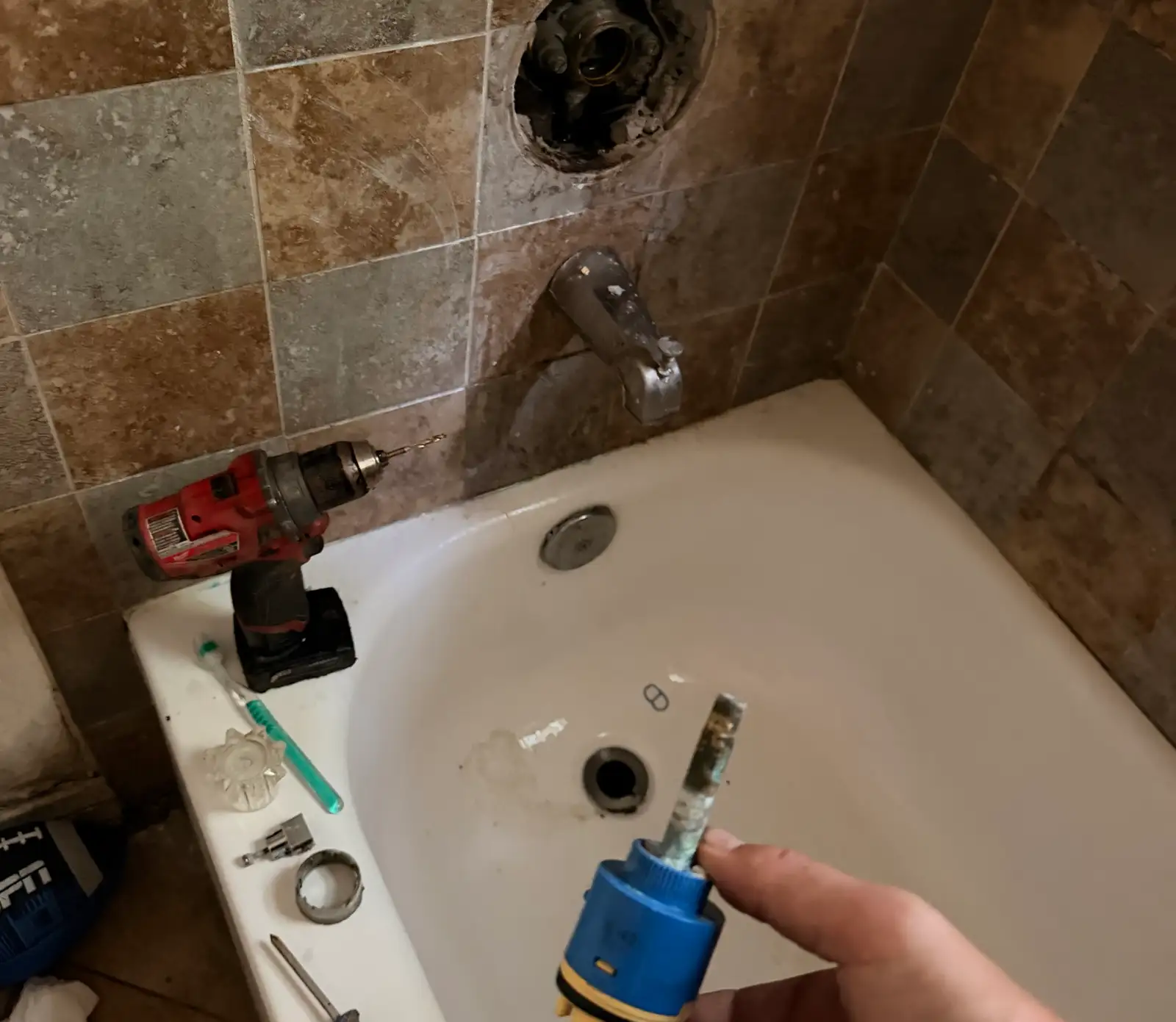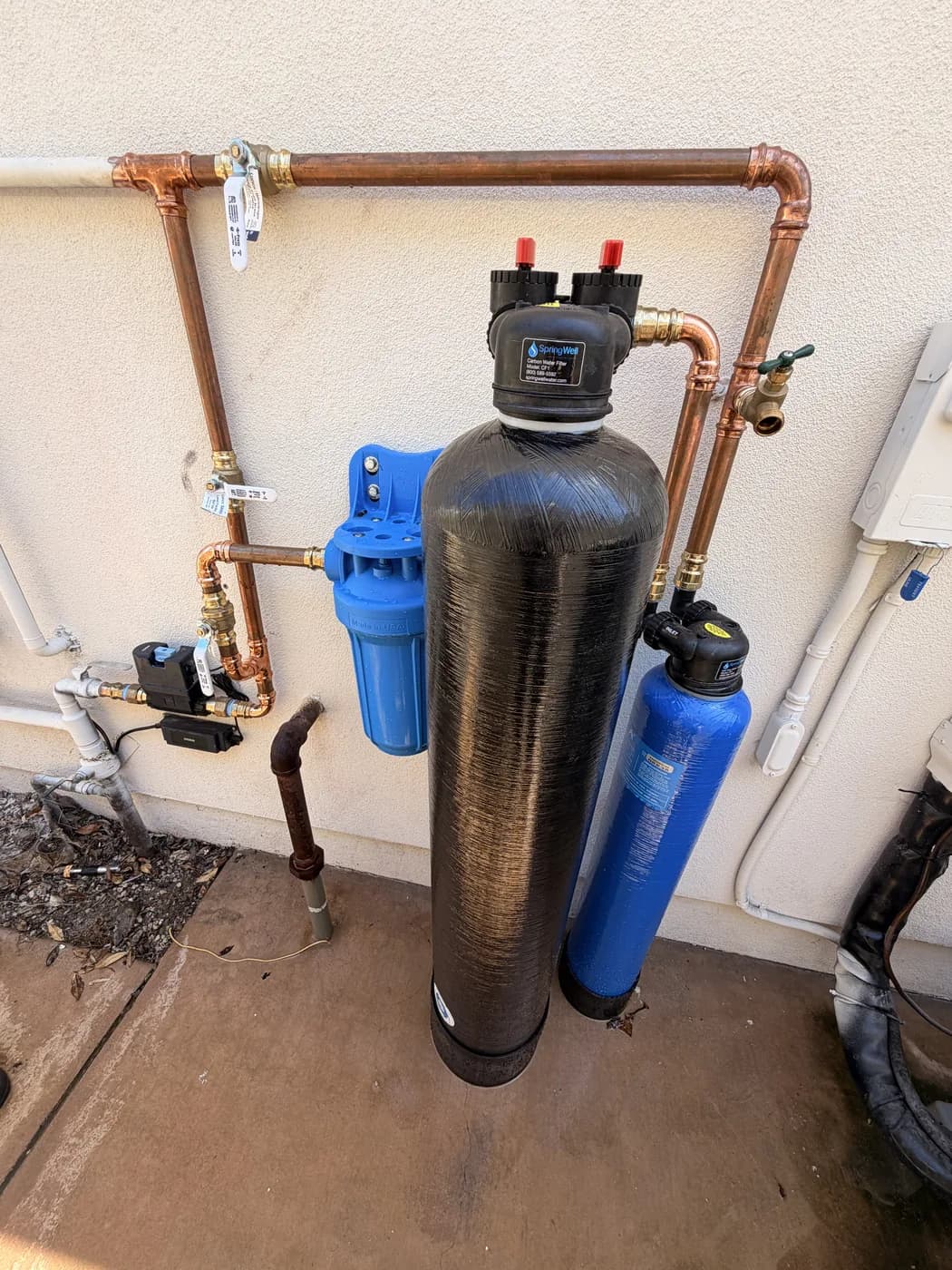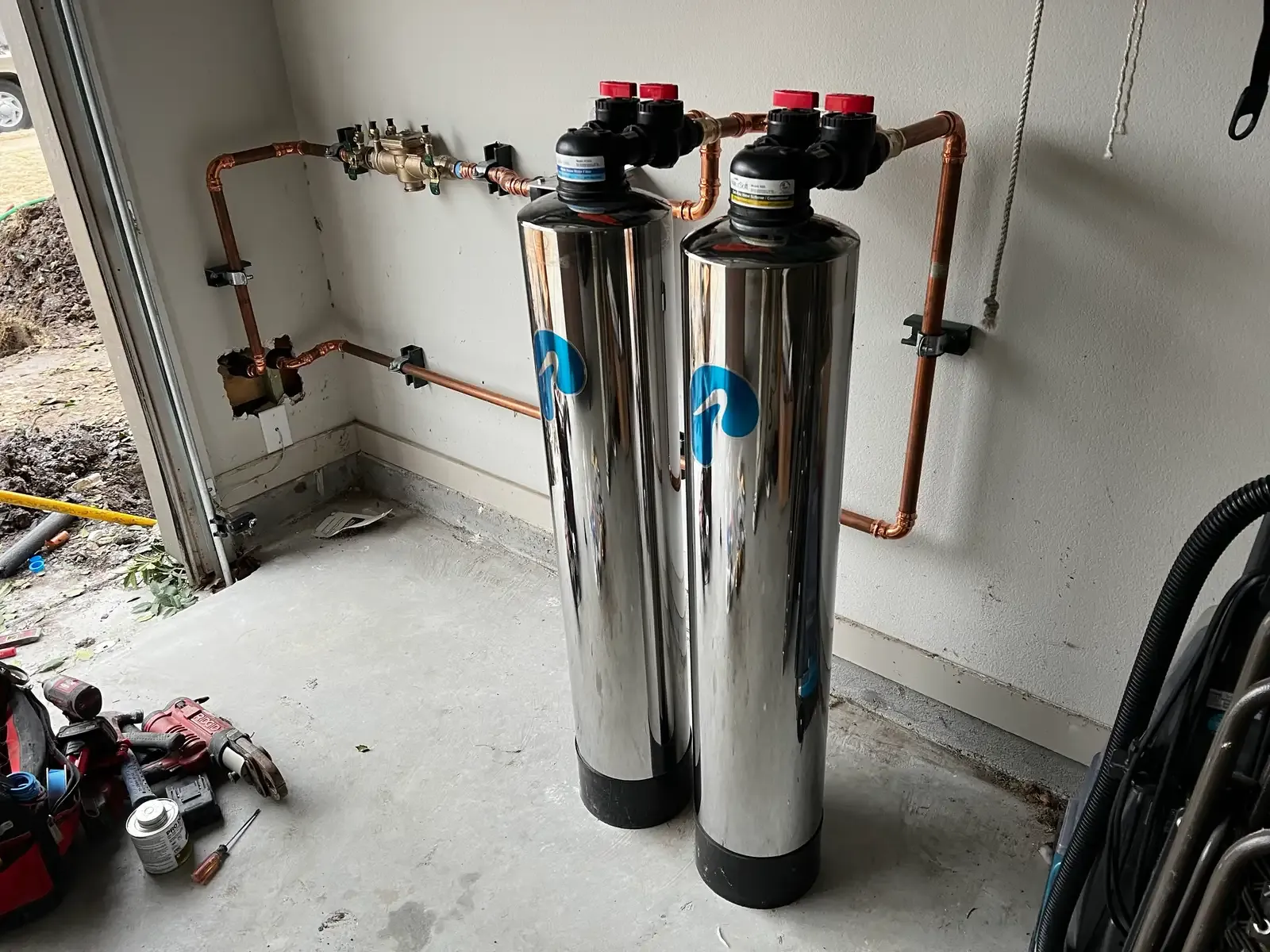
What the work is
A softener exchanges the calcium and magnesium that make water hard for sodium or potassium. Water leaving a properly sized and correctly set softener is functionally zero to one grain, which is what protects fixtures, appliances and water heaters.
Sizing is the whole job. A unit too small regenerates constantly and wastes salt and water; a unit too large regenerates too rarely and channels. Sizing depends on your hardness, your household's actual use and your peak flow, which is why we would rather test than assume.
We install with a bypass. It costs a little more and it means the next service, or a holiday, does not involve the whole house.
What is included
- Testing your water at your tap before sizing anything
- The unit and brine tank, set and plumbed with a bypass
- Programming to your measured hardness and your household
- Drain connection to a legal termination with an air gap
- Showing you how to add salt and what the settings mean, and leaving that in writing
What is not
- Drinking water treatment. A softener is not a filter; see reverse osmosis
- A promise about taste
- Electrical beyond a nearby existing receptacle
- Removing an old unit's brine that has solidified in the tank, if that turns into its own job
Your hardness is not the city's hardness
The City of St. George's Water Distribution Division tells residents to set a softener to 18 grains per gallon, with a maximum of 22. That is the number to work from because it comes from the utility rather than from someone selling a softener.
No water quality report in the county publishes hardness; it is not a federally required parameter. St. George blends spring, well and Virgin River sources, and its 2024 report shows total dissolved solids from 118 to 936 ppm and sulfate from 1.38 to 451 ppm depending on which blend feeds your street. A city-wide number is not your number. A recommendation should come from a test at your tap.
Why it matters more here than the salesman says
Four tankless makers cap total hardness at 200 mg/L, about 12 grains. At 18 to 22 an untreated tankless is an uninsured heat exchanger. On a tank heater the cost shows up as efficiency and as scale in the bottom of the tank. The guide below quotes the warranty documents directly.
What to ask anyone quoting this, us included
- What did my water actually test at, at my tap?
- How did you size this unit — hardness, people, peak flow?
- Is there a bypass?
- What is the salt cost per month at this setting?