
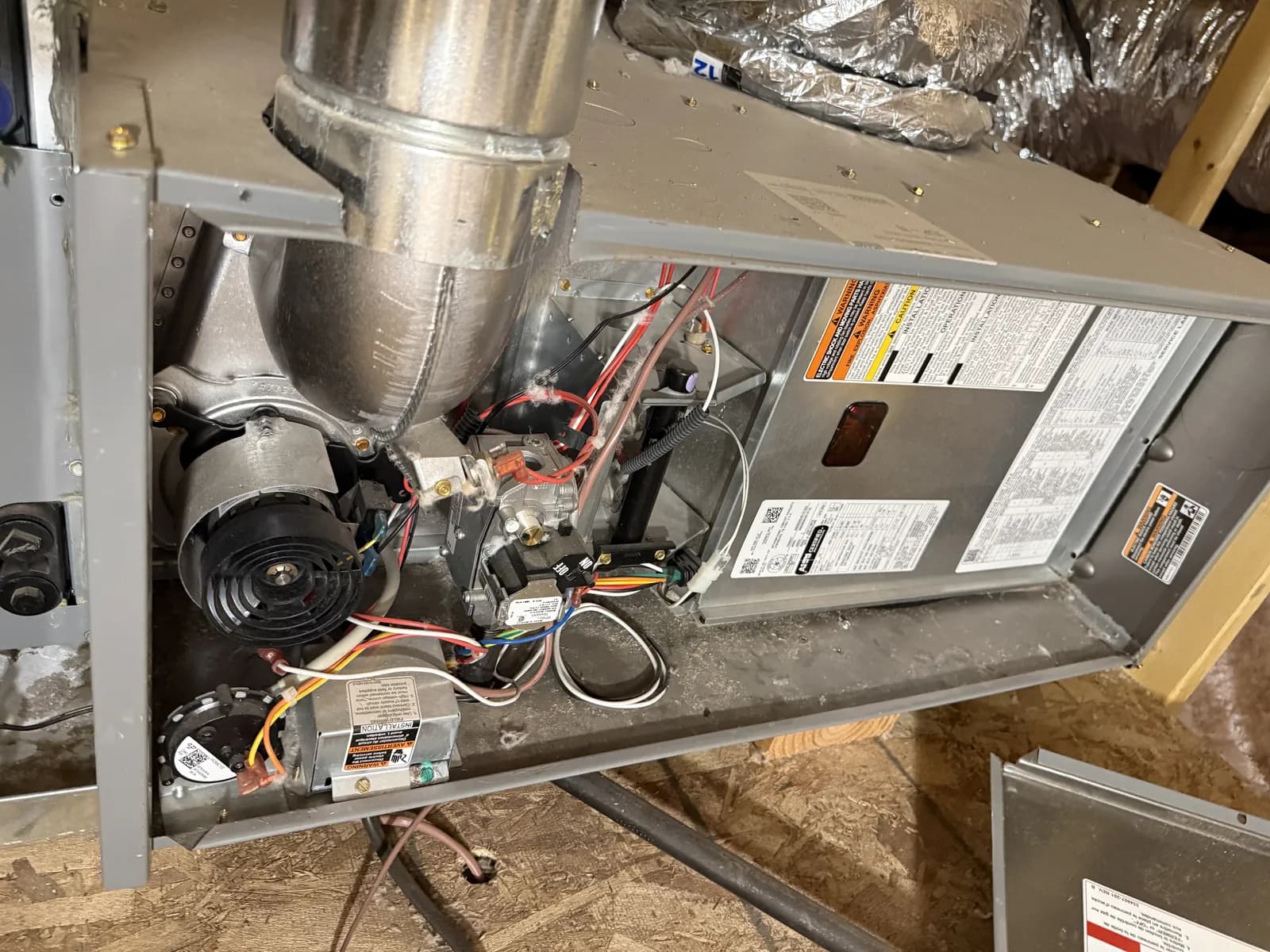
What the work is
A walk of the house with instruments: register temperatures and airflow room by room, static pressure across the system, the ducts looked at where they can be reached, the insulation and the glass noted, the equipment's readings taken.
You get a written list, ranked now, soon and later, with a cost band against each line. Some of it will be sealing and balancing rather than equipment, and where that is true we will say so even though it is the smaller job.
The fee is credited against the work if you go ahead with us, and the list is yours either way. Take it to anyone.
What it is not: a sales call with a clipboard. The output is a document, the fee is credited if you go ahead with us, and the document is yours to take to somebody else if you would rather.
The most common finding is not equipment. It is a duct fault, a return that is too small, a thermostat in a bad location reading a temperature the rest of the house never sees, or a room with more glass than the system was ever asked to handle. Those cost a fraction of a system and we will tell you so even where the bigger job is the one we would rather sell.
What is included
- Room-by-room register temperature and airflow
- Static pressure across the system
- The ducts inspected where they can be reached
- A written, ranked list with a cost band on each line, yours to keep
- The thermostat's location assessed, which is a common and cheap fault
What is not
- A blower door test or thermal imaging, which are separate specialist services
- A report that only recommends buying equipment from us
What to ask anyone quoting this, us included
- Do I keep the written report?
- Is the fee credited if I go ahead?
- Which of these are duct fixes and which need equipment?
- What is the cheapest thing on this list, and what would it fix?
- Can I take this report to another contractor?