
St. George and Washington County
Painting
Interior and exterior painting, cabinets, and the drywall repair and texture work that decides how the finished wall reads. Most of a paint job is what happens before the first coat, and on a south-facing wall here that is the whole job.
9 kinds of work below. Prices go on this page as each one is set, and never before. Read our Plain Terms
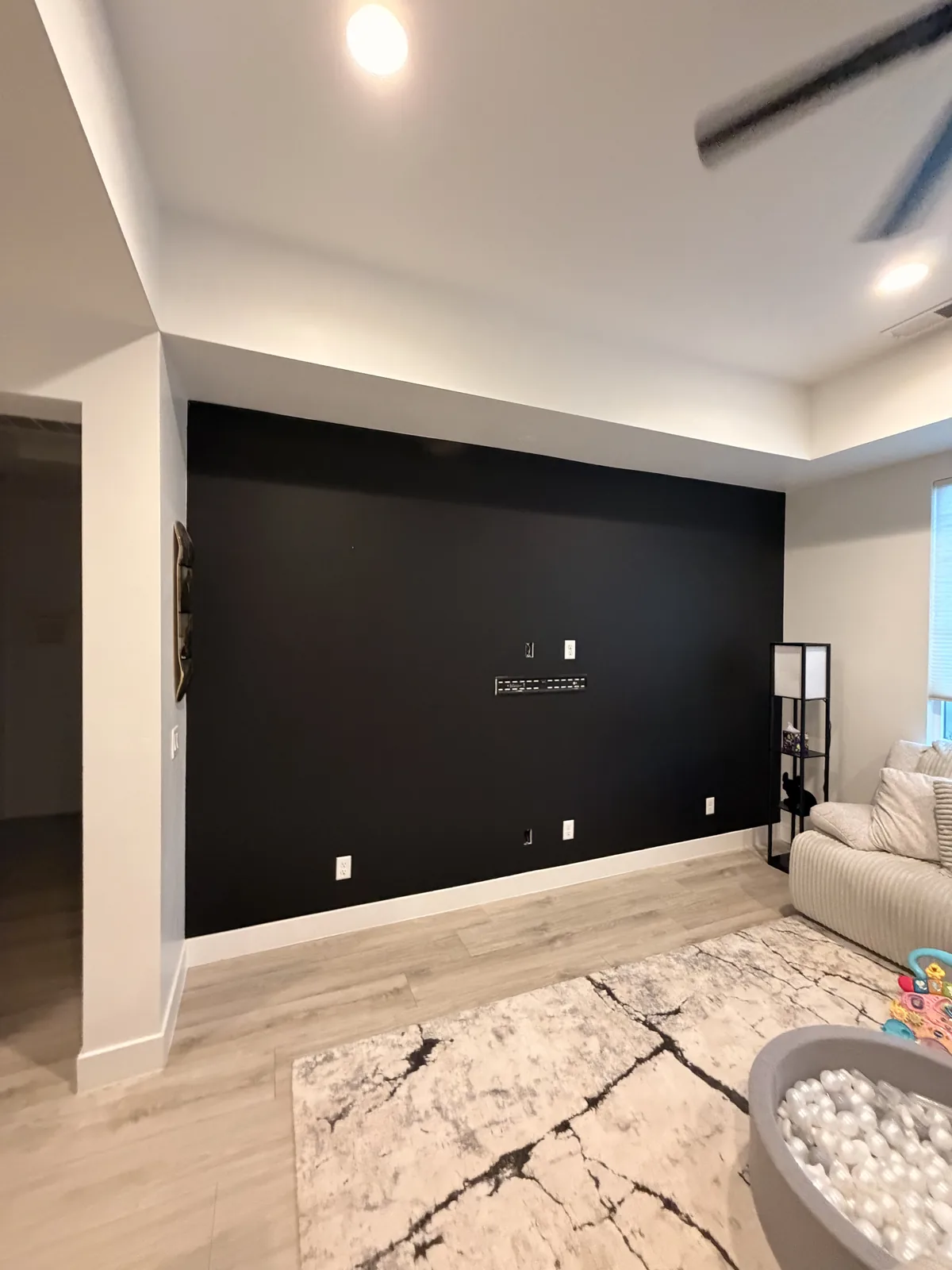
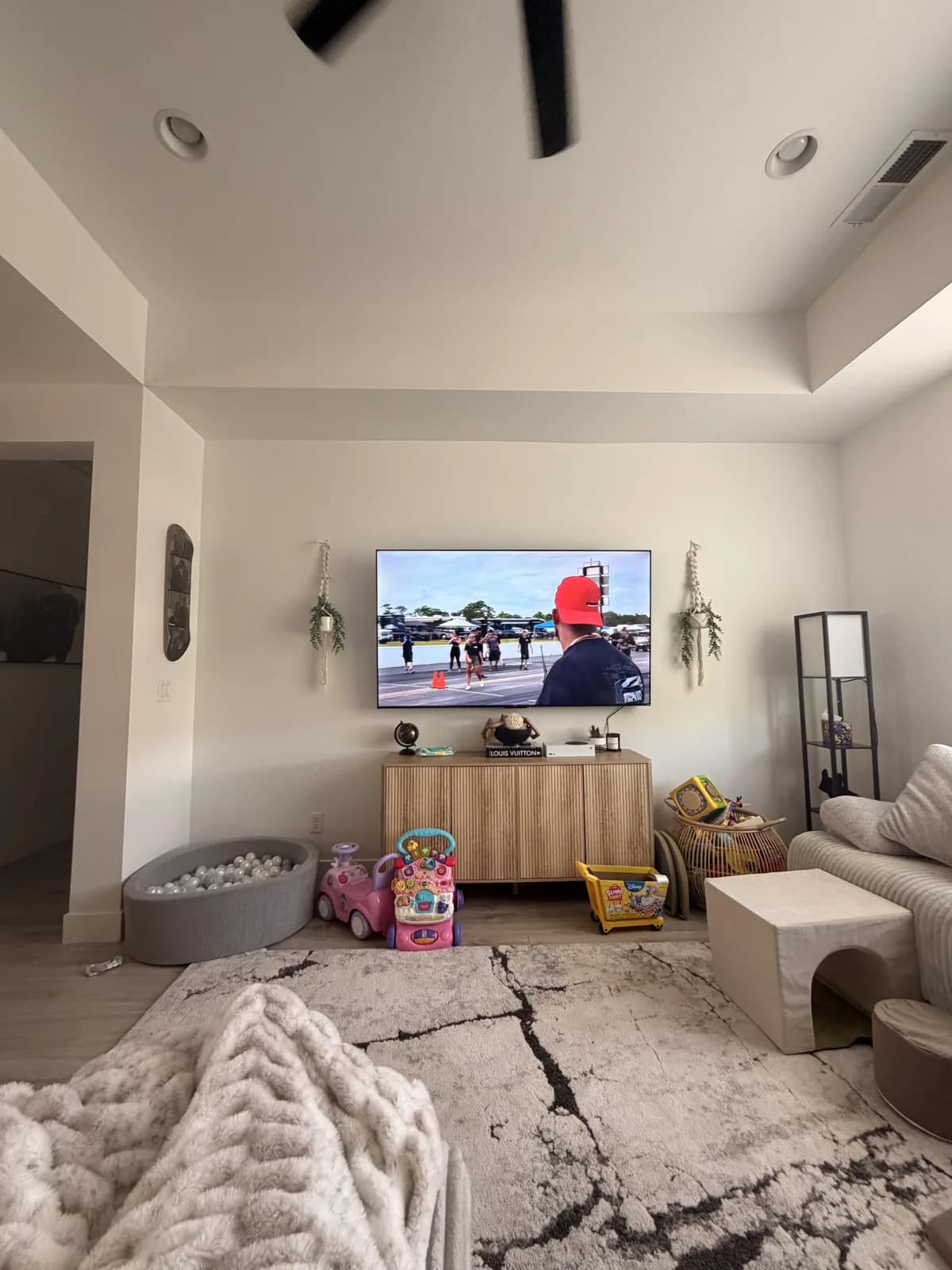
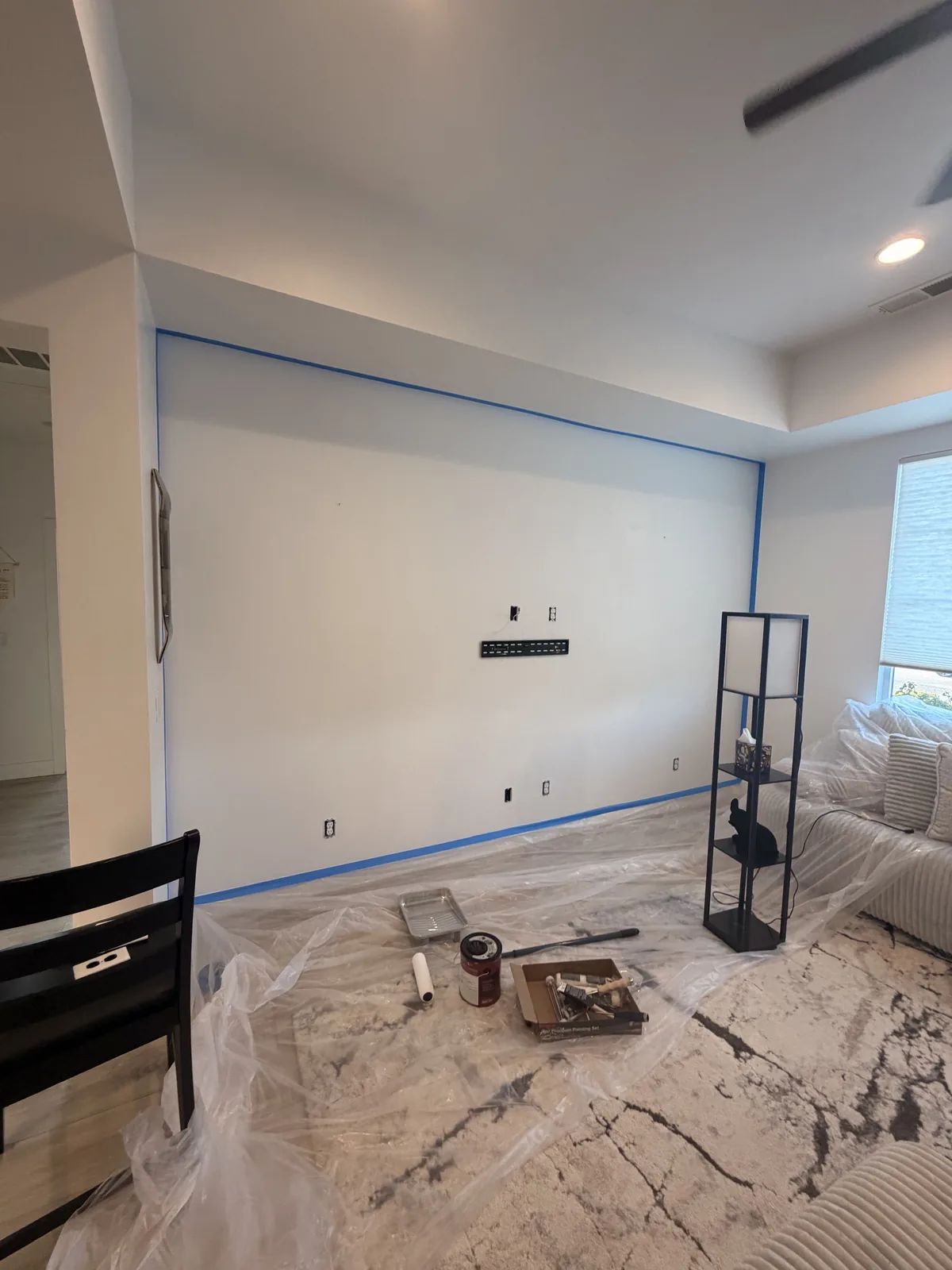
Inside the house
Interior painting
Walls and ceilings, one room or the whole house, with the patching done first.
Cabinet painting and refinishing
Kitchen and bath cabinets, cleaned, deglossed and sprayed. The prep is the difference between two years and ten.
Trim, doors and baseboards
The parts of a room that get touched, on their own or with the walls.
Almost every coating failure is a preparation failure
That is not our claim. It is printed on Sherwin-Williams’ own product data sheet: most coating failures are due to inadequate surface preparation or application. The same sheet adds the part nobody likes to quote — that any preparation short of removing the old coating entirely may shorten how long the new system lasts.
The federal wood research laboratory found the same thing from the other direction, and put numbers on it. Bare redcedar left in the sun before painting held its paint for shorter and shorter periods the longer it waited: painted immediately, no peeling after twenty years; weathered one week first, peeling at thirteen years; weathered sixteen weeks first, peeling within three. Their note on it is the unsettling part. After two or three weeks outside, the wood appears unchanged.
Which is the whole problem with judging a paint job. Everything that decides how long it lasts is invisible on the day it looks finished, and it stays invisible for about two years.
One test you can run before anyone quotes
Rub a black cloth, or just your hand, firmly across the sunny side of your house. If it comes away with a chalky film, that is the coating failing, not dirt: ultraviolet light has broken down the resin that binds the pigment, and the loose pigment is what is on your hand.
It matters because painting over chalk is the standard way to get intercoat peeling, where the new paint separates from the old, usually within a year. Anyone quoting your house should have an answer for the chalk. Ask what it is.
Color that has faded without chalking is a different thing and not a failure of the film. The cloth tells you which one you have.
Outside the house
Exterior repaint
The whole envelope, prepared and coated in the order and the weather the manufacturer publishes.
Stucco painting and coating
The most common exterior in Washington County, and the one with the most ways to go wrong.
Trim, fascia and garage doors
The parts the sun destroys first, repainted without doing the whole house.
Why an exterior here is a scheduling problem before it is a painting problem
The normal daily high in St. George is 101.9°F in July and 99.9°F in August. That is NOAA’s 1991 to 2020 average for this city’s own station, not a record and not a hot year.
Now read what the people who make the paint publish. Benjamin Moore caps application of its exterior line at a surface temperature of 100°F. PPG gives 100°F for ambient and substrate. Sherwin-Williams publishes no ceiling but warns that above 80°F its exterior product sets up quickly, and that over 100°F a film can dry before it has had a chance to adhere. Dunn-Edwards, a Southwest company, allows up to 120°F with stated precautions.
An average July afternoon in this city is therefore at or past what most of those manufacturers publish — and that is the air temperature. A wall in direct sun is hotter than the air around it.
So the work follows the shade around the house rather than the order that would be convenient. South-facing walls get done in the morning. Midday, when the sun is highest, is the wrong time to coat anything. That is not our house rule; it is what Dunn-Edwards publishes in its own hot-weather bulletin, and it is the difference between a coating that bonds and one that dries before it can.
And then August
August averages 1.07 inches of rain on the same NOAA normals — more than June and July put together, which come to 0.66 between them. The National Weather Service runs the monsoon from June 15 to September 30.
Every manufacturer we read says not to apply if rain is expected within two to three hours. A county whose hottest weeks are also its wettest of the summer is one where the calendar matters, and where “we can start Monday” is sometimes the wrong answer.
We will tell you when the weather is wrong for the work. It is a cheaper conversation than the one about why it failed.
Walls and ceilings
Drywall repair and patching
Holes, cracks, water damage and the patch somebody else left proud of the wall.
Texture matching
Knockdown, orange peel or hand texture matched so the repair disappears instead of announcing itself.
Popcorn ceiling removal
Scraped, retextured and repainted. On a house of a certain age it is tested first, and that is not optional.
If your house is old enough, the rules change. Most here are not.
Of Washington County’s 88,415 housing units, 7,613 were built before 1980 — about one in eleven, on the Census Bureau’s American Community Survey. In most of this county the federal lead rule does not apply at all, and you should not be sold containment you do not need.
Where it does apply — homes built before 1978 — it is specific. Disturbing more than six square feet of painted surface in a room inside, or twenty square feet outside, brings the work under the EPA’s renovation rule, and sanding or scraping counts as disturbing it. Window replacement counts at any size. The rule requires two separate things: the company must be an EPA-certified firm, and a trained, certified renovator must be assigned to the job.
Both are checkable, and you should check. EPA publishes a public search for certified firms. Anyone who tells you the rule does not matter on a pre-1978 house is telling you something useful about themselves.
Ceilings, before anyone scrapes
EPA lists textured paint and patching compounds used on walls and ceilings among the products that have contained asbestos. On a house old enough for that to be a question, the order is test first, scrape second.
EPA is equally clear about who takes the sample: a trained and accredited professional, because there is risk in releasing fibers. Its guidance says taking samples yourself is not recommended.
If a test comes back positive the work goes to a licensed abatement contractor, and we will say so rather than quietly working around it. How to check anyone’s license applies here too, including ours.
Color, approval and the paperwork
Before you choose a color, find out who has to approve it
In most of Washington County the constraint on an exterior color is not the city. It is the CC&Rs of the community you live in, and the design review committee that reads them. Those documents are recorded, and you are entitled to your own copy.
We have read them for ten communities here and published what they say, including how each one’s approval process actually runs and how long its committee takes.
HOA rules, community by community
What the recorded documents say about approvals, and what Utah statute adds on top of them.
If your request was denied
What a denial has to contain under Utah law, and what happens next.
What we will not tell you
We will not tell you a color needs a city permit, or that it does not. Nobody here has read the relevant sections of the St. George or Washington City code, and the honest answer to a question we have not checked is that we have not checked it.
One thing worth clearing up, because people conflate them: a house being listed on the National Register carries no restrictions on what the owner does with it. The city says so itself. The zoning overlay downtown is a separate thing with its own review.
If your approval is the thing standing between you and a start date, tell us and we will work to it.
The quote is the number. There is no second number.
Call (801) 680-6859
7 a.m. to 5 p.m., weekdays. Emergency calls answered any hour, every day.