What the work is
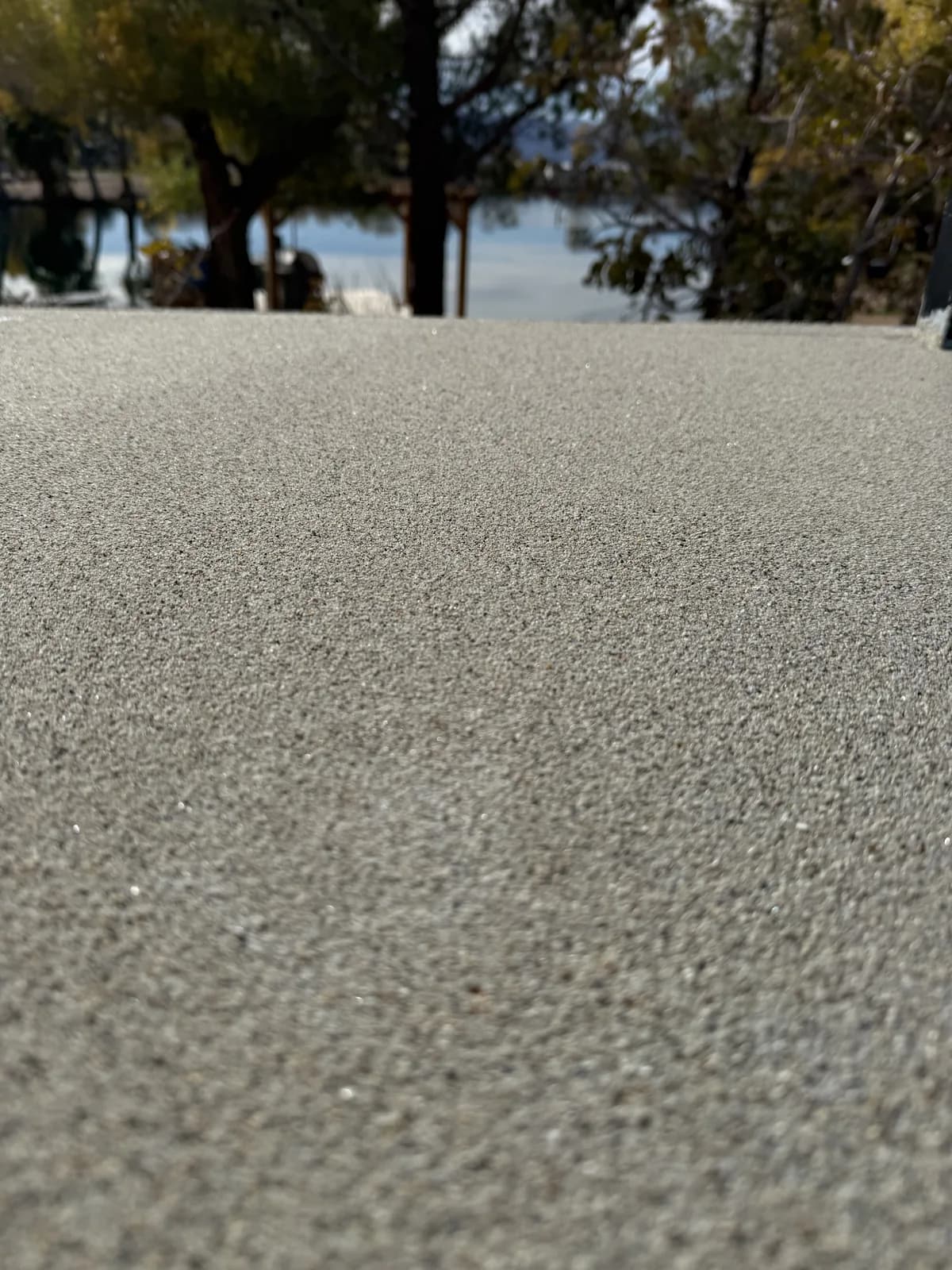
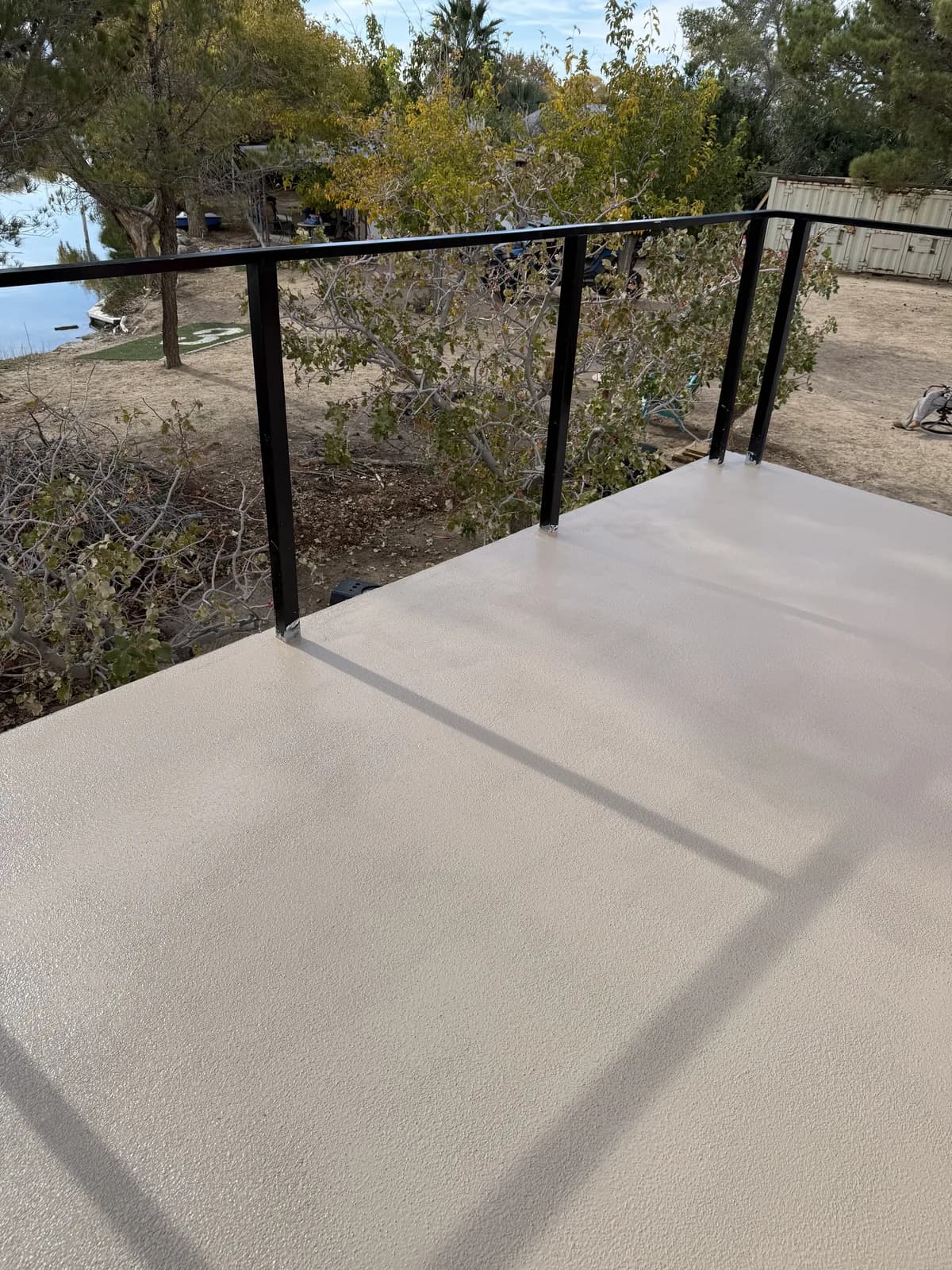
A pool deck finish is usually a coarse aggregate or quartz broadcast rather than a fine flake. The raised, granular surface is what gives grip with water on it. It is deliberately rougher than an indoor floor and it is meant to be.
Color does real work here too. A dark surface in direct sun gets hot, and a pool deck is the one floor people stand on barefoot at the hottest hour of the hottest day. Lighter is cooler. We will raise that before you pick from a chip.
The preparation is the same as any exterior slab and the scheduling is the same: it waits for a day without wind and without rain, for the reasons on the driveway page.
What we will not do is put a smooth finish on a pool deck. A metallic or a plain gloss looks superb in a photograph and is the wrong surface next to water. If that is what you want, we will decline it rather than install it.
What is included
- The texture chosen and agreed before the color
- Washing, grinding and repair of the existing deck
- Coarse broadcast finish appropriate to a wet surface
- Masking coping, tile, rails and anything adjoining
- A weather-dependent date, said plainly
What is not
- A smooth or metallic finish on a pool deck. We will not install one
- Coping, tile or pool shell work. Different trade
- Draining, refilling or any work inside the pool
The heat, and why color comes after texture
St. George recorded 98 days at or above 100°F in 2024, the most on record, and the all-time high is 117°F. A pool deck is the one surface in the property that is used barefoot, at midday, in exactly those conditions.
That is why the order of decisions here is texture, then color, then pattern — and not the other way round. It is also why we will tell you a dark deck will be hot, even when the dark sample is the one you like.
What to ask anyone quoting this, us included
- How does this surface behave wet, and can I feel a sample?
- How hot will this color get, honestly?
- What happens where the deck meets the coping?