St. George Home Services

Concrete coatings · Outside the house

Patio and porch coating

Resurfacing the slab you already have, rather than breaking it out and pouring a new one. Where the concrete is sound and only tired, this is the cheaper answer by a long way.

One flat fee to find out what is wrong. You are told it on the phone before anyone is dispatched, and it comes off the job if you hire us. Read our Plain Terms

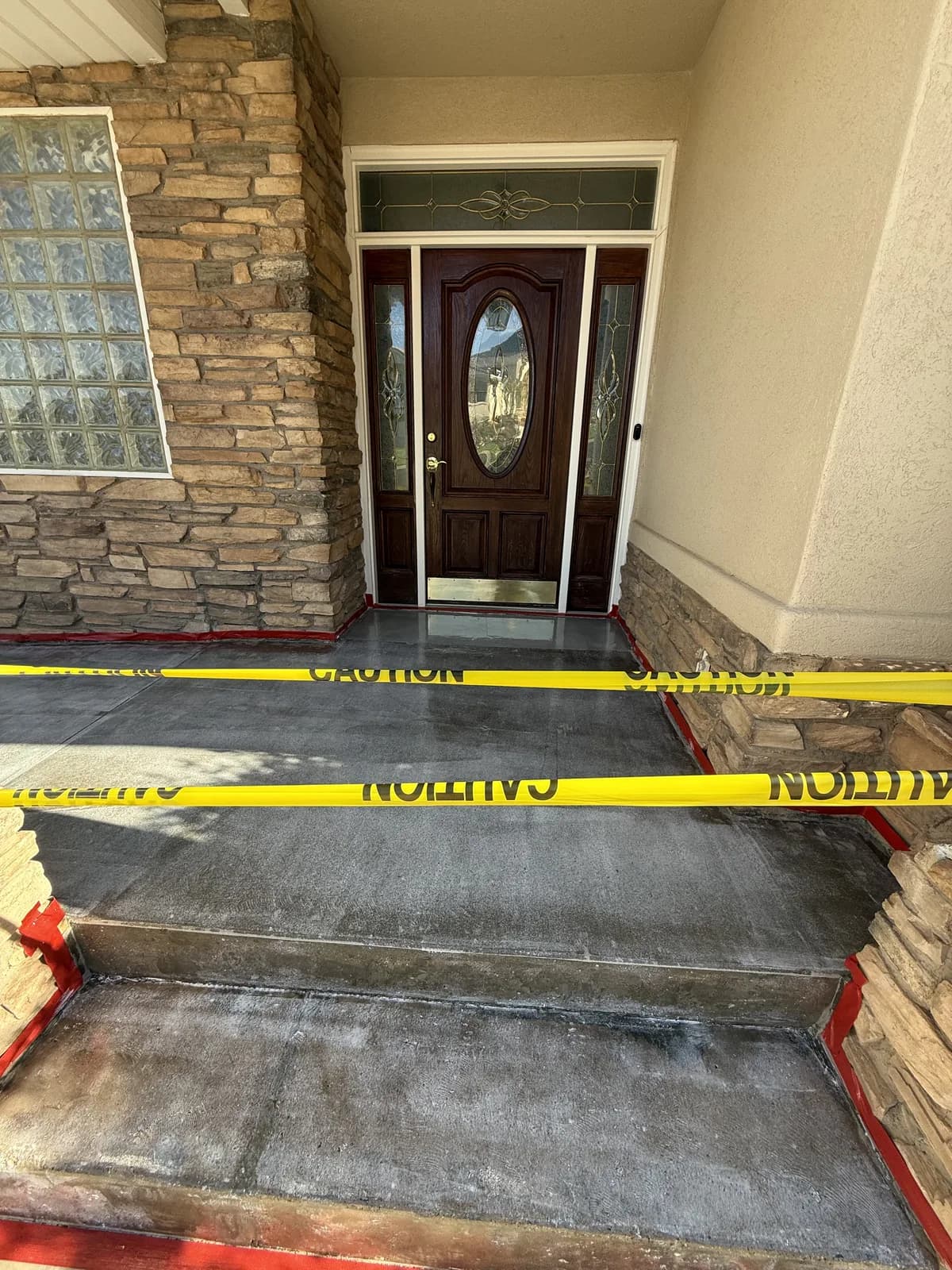
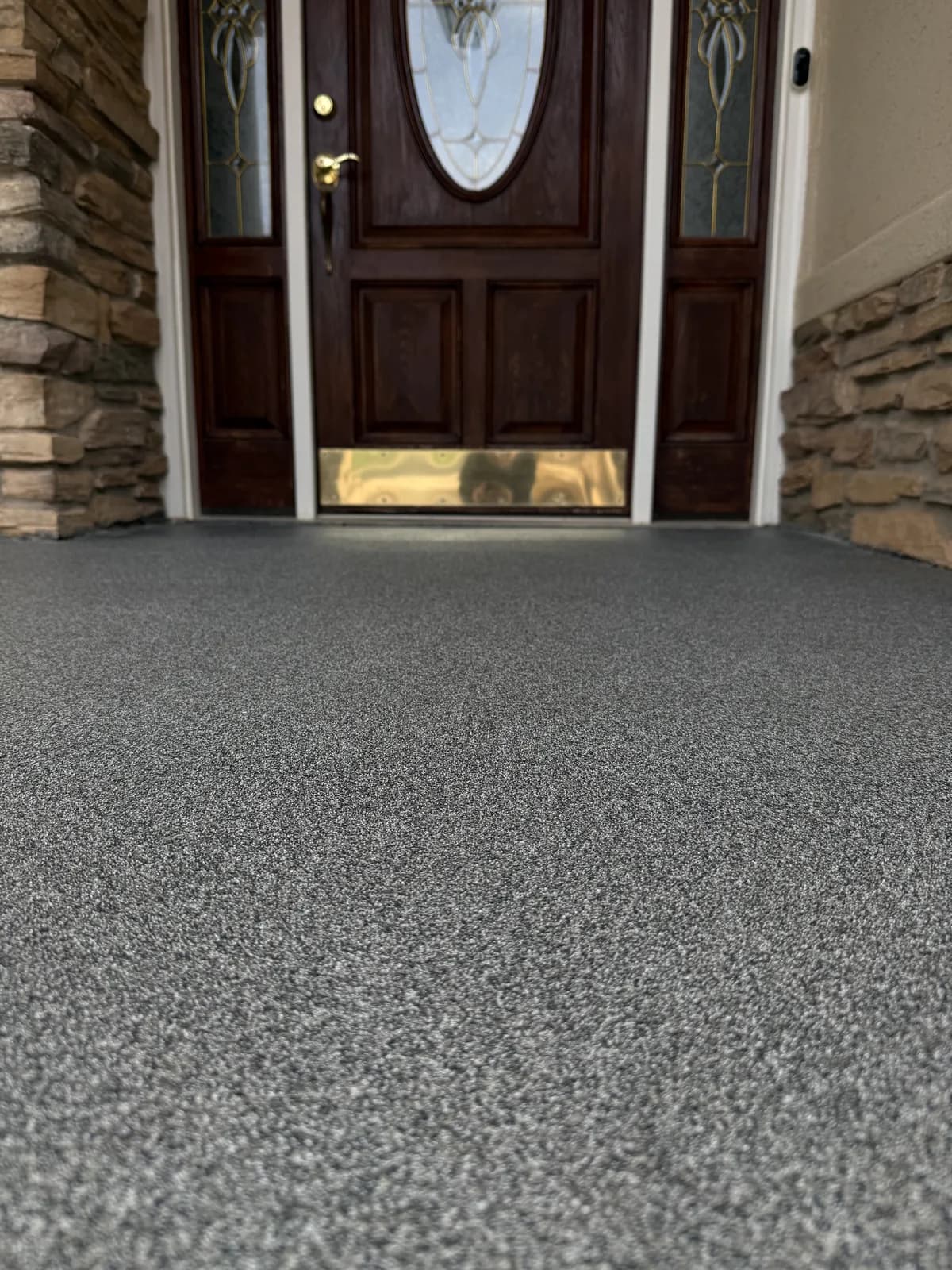
A front entry porch finished in a fine gray and white speckled coating, running up to a dark wood front door with leaded glass sidelights and stacked stone either side
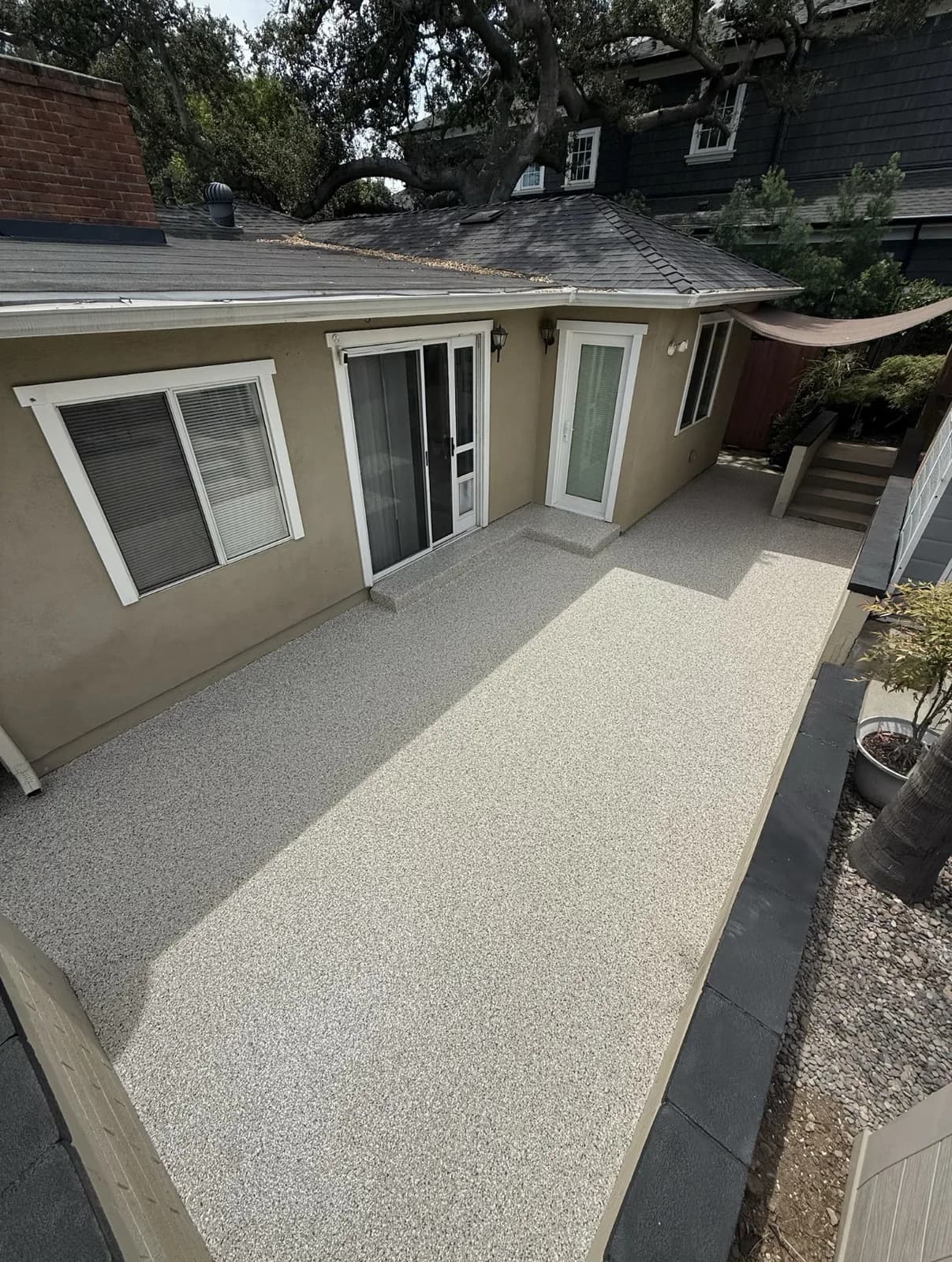
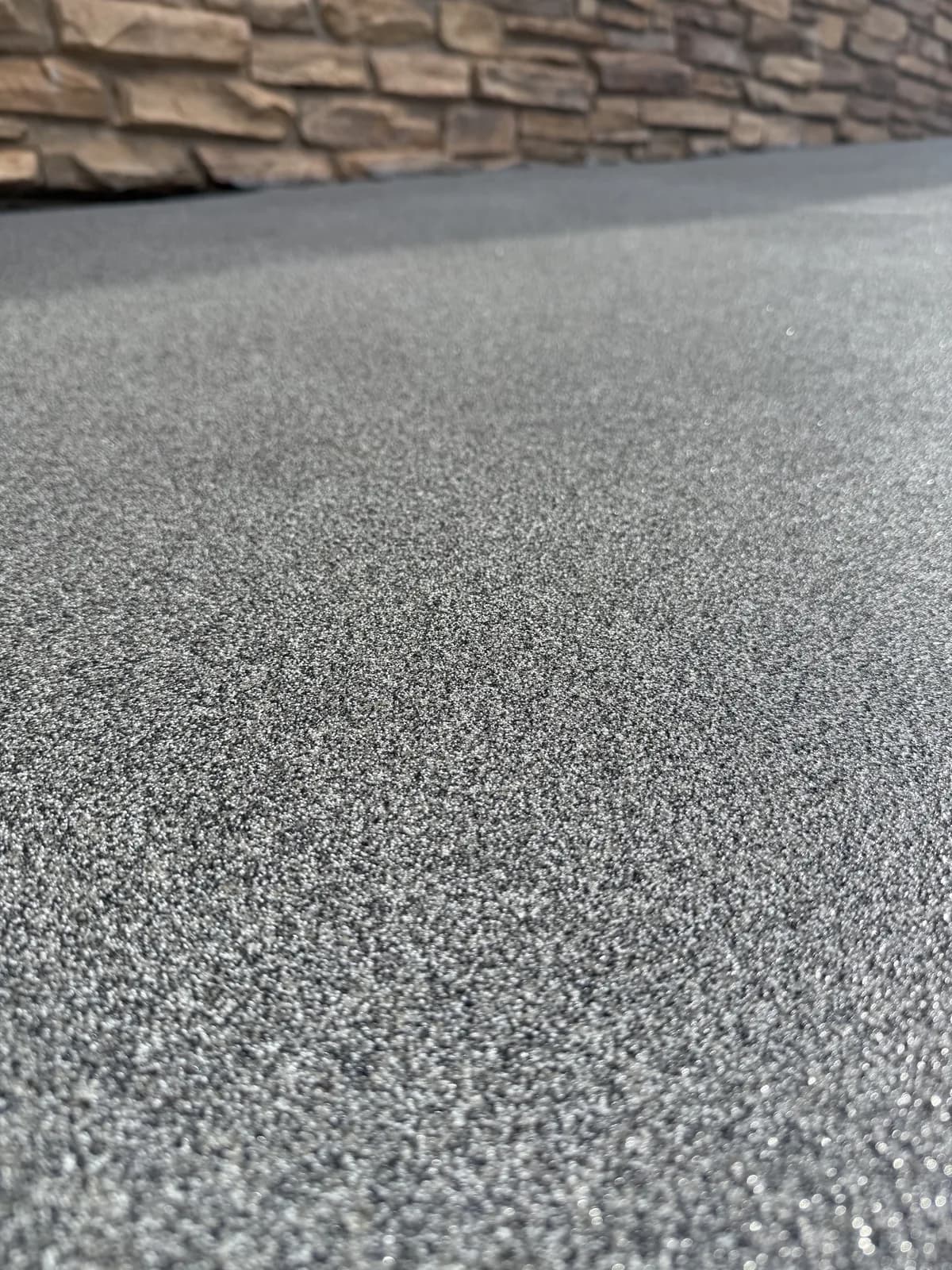
An entry porch. The finish here is a fine broadcast rather than large flake.

What the work is

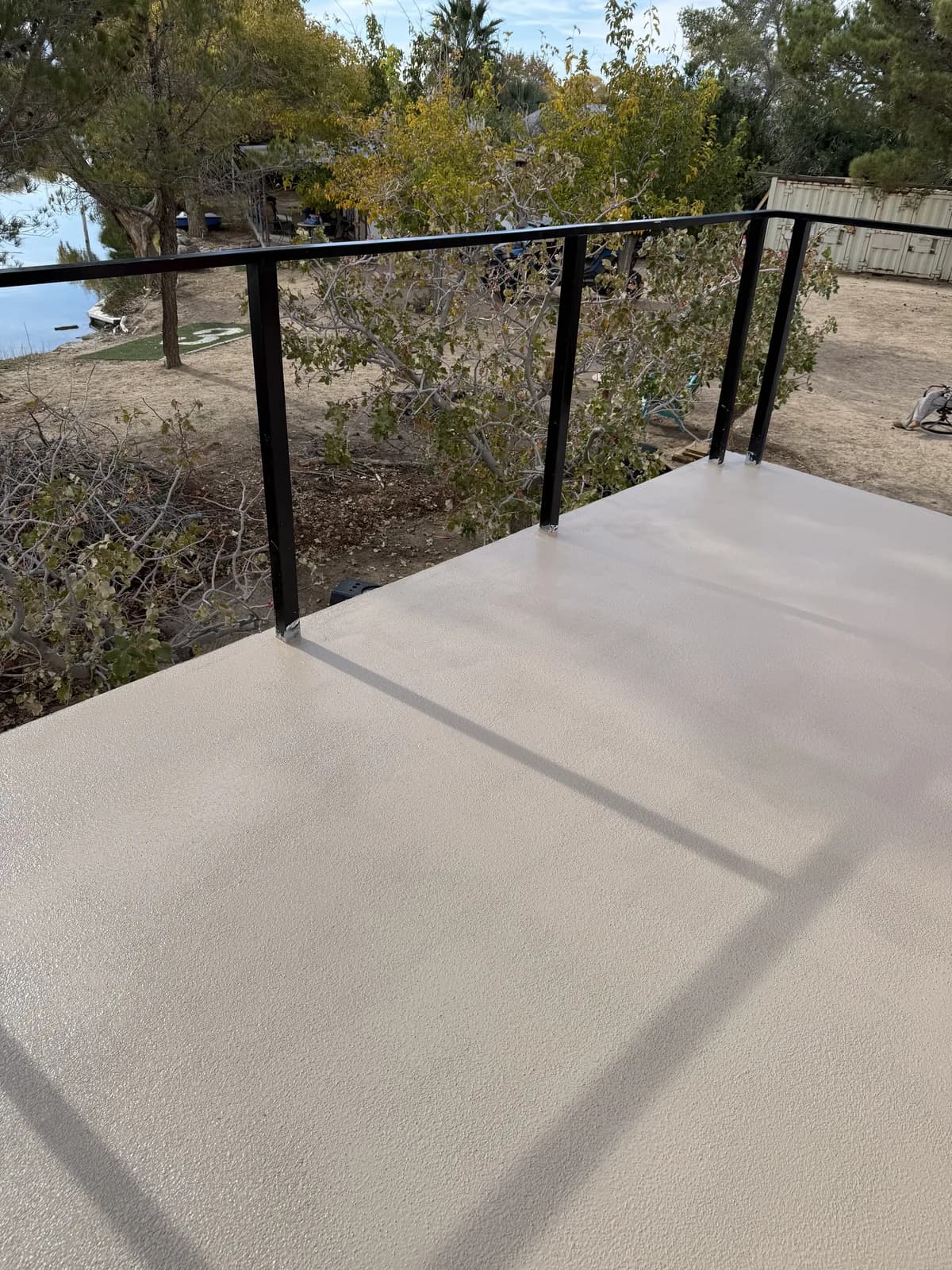
A patio or porch coating goes over the existing slab. The surface is washed, ground back, repaired and then finished — flake, a texture, or a color, depending on what the space is for.

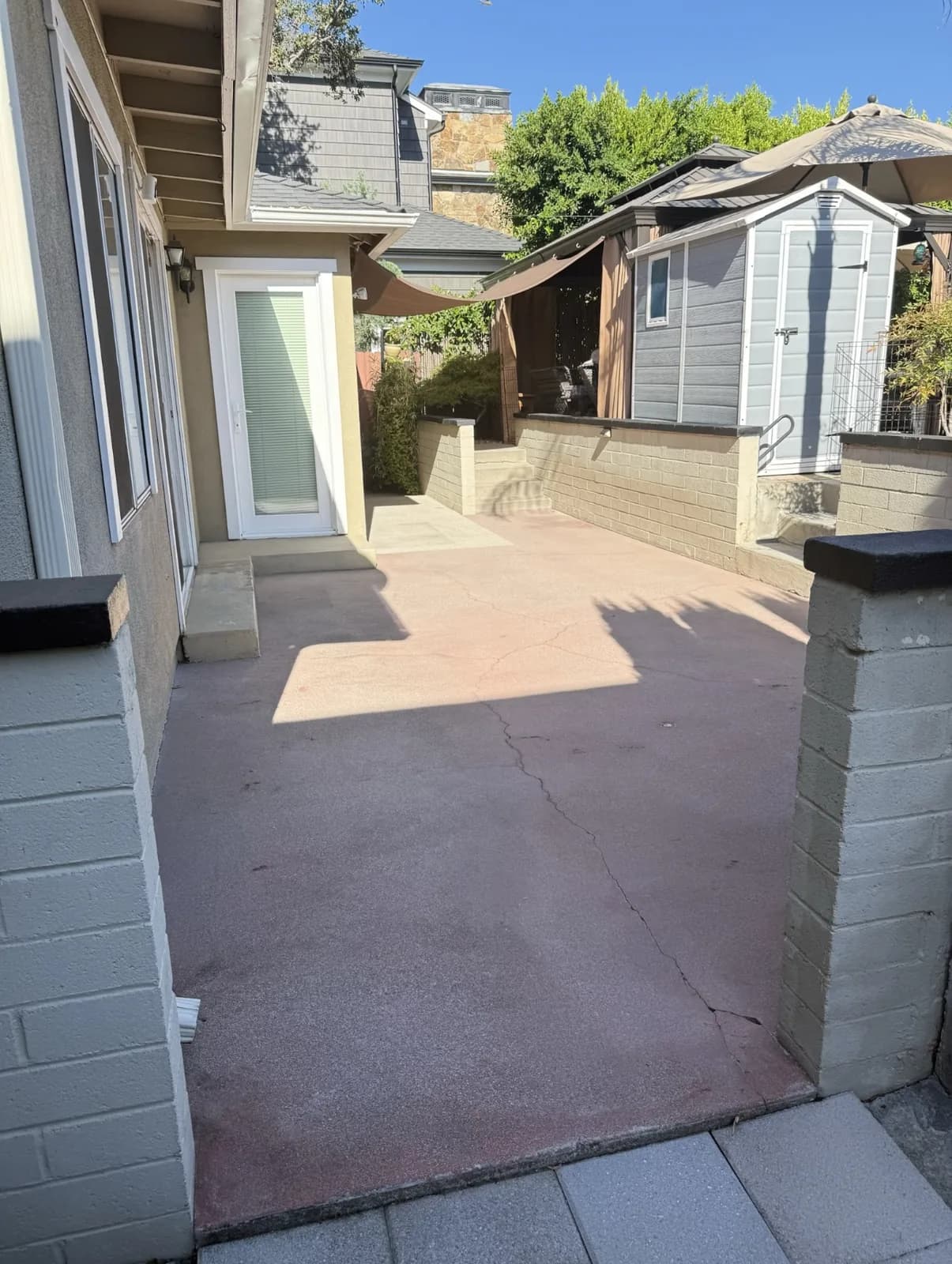
The reason to do it is usually appearance: an old tinted or stamped slab that has faded unevenly, worn through in the traffic lanes, or carries pale scars from earlier repairs. A coating gives that one surface again without the cost, mess and disruption of demolition.

The reason not to do it is movement. A slab that is cracking because it is moving will crack the coating too, and reasonably quickly. We look at what the cracks are doing before we quote covering them, and if the answer is that the slab is going, we will tell you that a coating is money spent twice.

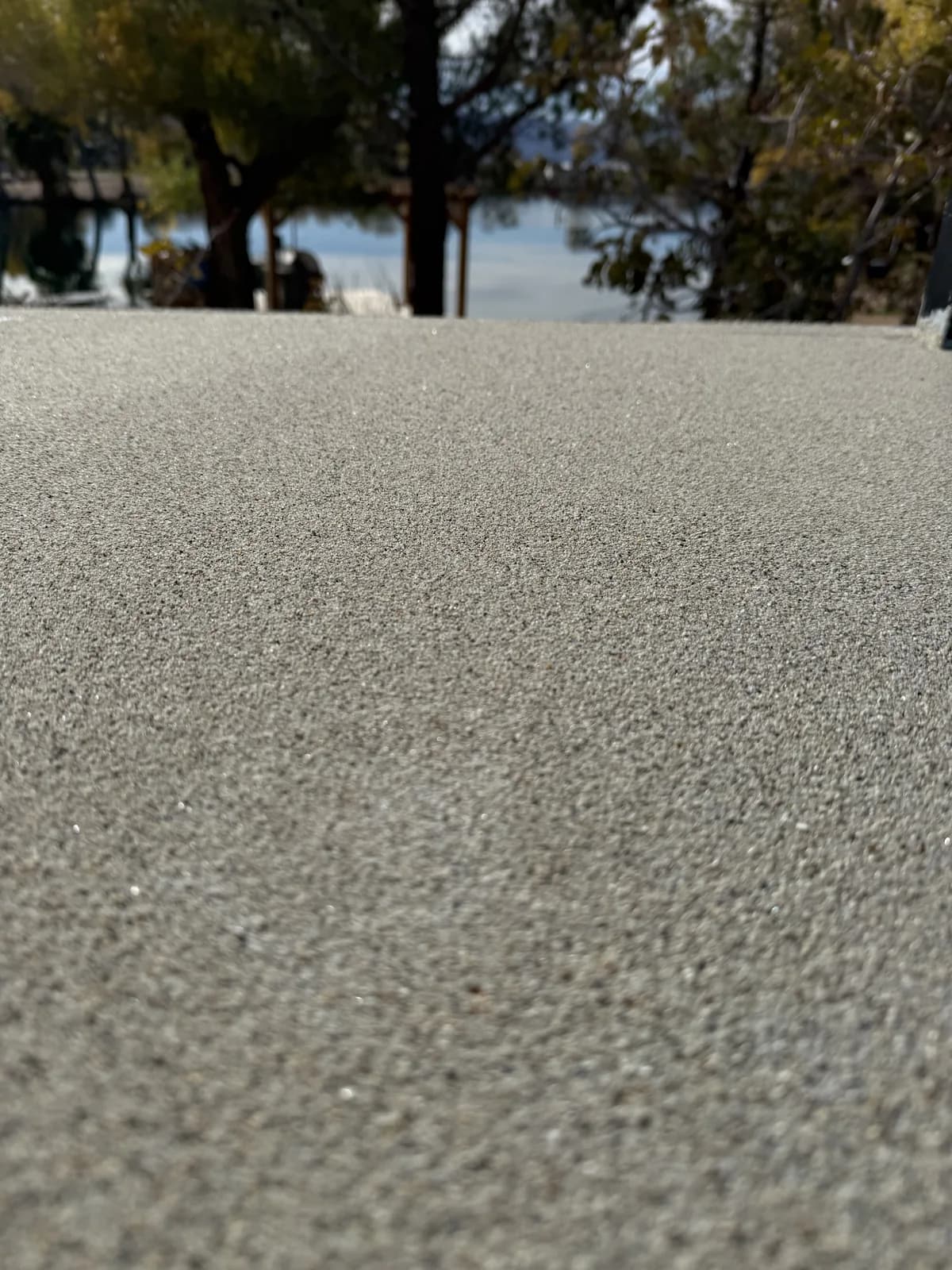
Outside, the texture is not decoration. A patio has to stay walkable when it is wet, and that is a function of how coarse the broadcast is. We will talk about that before the color.

What is included

  • Washing and grinding the existing slab
  • Assessment of the cracks, and a plain account of which are cosmetic
  • Repair as its own quoted step
  • The texture agreed before the color
  • Masking walls, planters, posts and anything adjoining

What is not

  • Covering a slab that is actively moving. We will tell you rather than take the job
  • Demolition and a new pour. That is different work with a different price
  • Matching the existing color of an adjoining uncoated slab. It will not match
  • A smooth finish anywhere it will be walked on wet

What a patio here is actually up against

Sun first. With 98 days at or above 100°F in 2024 and an all-time high of 117°F, an unshaded patio slab in this county spends a third of the year hot enough to matter to both the surface and the people on it. Texture and color both change how that feels underfoot.

Then water, in the specific way it arrives here. Southwest Utah has a defined monsoon season, and St. George has recorded a 78-day dry spell ending with monsoon onset. That pattern — months of nothing, then a heavy cell — is the worst case for drainage and the reason a patio that sheds water properly is worth more than one that looks good dry.

What to ask anyone quoting this, us included

  • Are these cracks moving, and how do you know?
  • How coarse is the texture, and what will it feel like barefoot?
  • Where does the water go once this is coated?
What we can show you in writing

Every line traces to a document we read in full. The number after a sentence points to the research below.

  • St. George recorded 98 days at or above 100°F in 2024, the most on record, and the all-time high is 117°F on July 11, 2021. The city has had back-to-back hottest-Julys-on-record, in 2023 and again in 2024.1
  • UGS Special Study 127 records flooding as the most widespread and damaging geologic hazard in southwestern Utah. Southwest Utah has a defined monsoon season, and St. George has recorded a 78-day dry spell ending with monsoon onset.1
  • Concrete substrates must be mechanically prepared to remove cement laitance, existing coatings and curing compounds, and to achieve a profile that is clean, dry and free of dirt, grease and oil. Diamond grinders create that profile and remove high spots and coatings; shot blasting is described as the industry standard for surface preparation of concrete.2

Where this comes from

Every line above traces to a document we read in full. The number after a sentence points to the research below; hover it for the section. If you find a line wrong, tell us and we will fix it and say so.

  1. Environment, water and ground research, August 2026 Compiled from the cities' own water quality reports, Utah Geological Survey Special Study 127, the Utah State Hazard Mitigation Plan, Washington County GIS hazard layers, NOAA climate records, EPA radon zones and Census QuickFacts. 2 sections cited. Hover a number above for the section.
  2. Concrete coatings research, September 2026 Compiled from ICRI Guideline 310.2R-2013 on concrete surface preparation, the ASTM moisture test standards F2170, F1869 and D4263, ACI 302.2R and NRMCA CIP 29 on slabs and vapor retarders, Sika's published surface preparation guide, Sherwin-Williams product literature on polyaspartic chemistry, and the Utah Geological Survey and Utah DEQ material already cited in the environment research. 1 section cited. Hover a number above for the section.

The rest of outside the house

  • Driveway and apron coating

    The slab that takes the sun, the tires and the blown sand. Exterior work is scheduled around weather, not around us.

  • Pool deck coating

    Textured on purpose. A deck has to stay walkable wet and bearable barefoot.

  • Walkways and steps

    The awkward work: edges, risers, nosings and curves, most of it done by hand.

The quote is the number. There is no second number.

Call (801) 680-6859

7 a.m. to 5 p.m., weekdays. Emergency calls answered any hour, every day.