What the work is
The faucet is the easy part. The reason this job takes longer than people expect is everything under the sink: corroded stops that will not close, supply lines that have been there since the house was built, and a basin wrench in a cabinet that was not designed to be worked in.
We change the stops and the supplies at the same time. Doing it later means doing the awkward part twice.
What is included
- Removing the old faucet
- Setting the new one with the correct escutcheon or deck plate
- New quarter-turn stops and braided supply lines
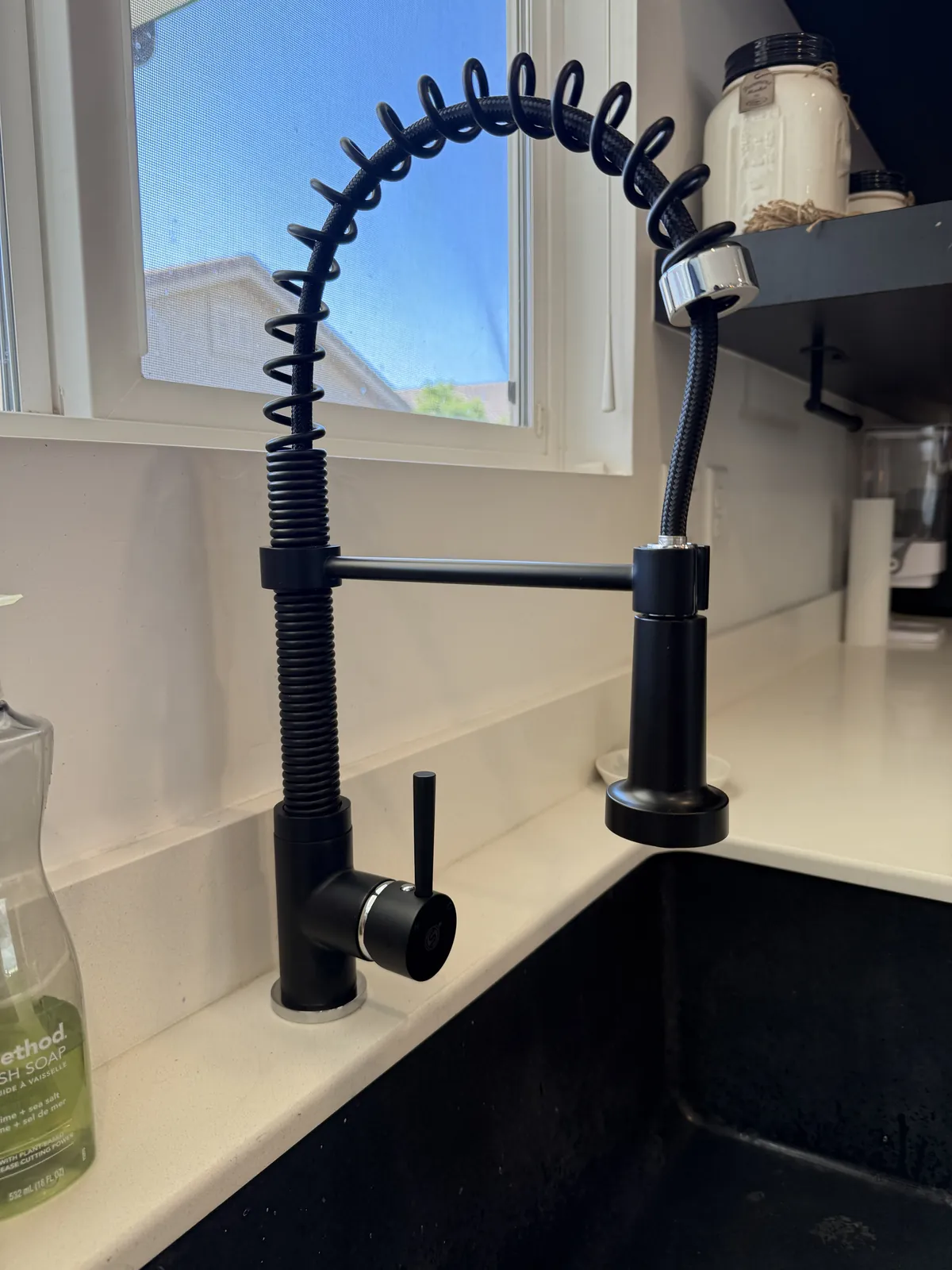
- Reconnecting the sprayer, soap dispenser or filtered tap where fitted
- Testing for leaks under pressure before we leave
What is not
- Cutting new holes in a stone or composite countertop
- Repairing a sink or a drain assembly that fails when disturbed. We will show you first
- Reverse osmosis or filtered water plumbing, which is its own item
- The faucet, unless you ask us to supply it
Cartridges and hard water
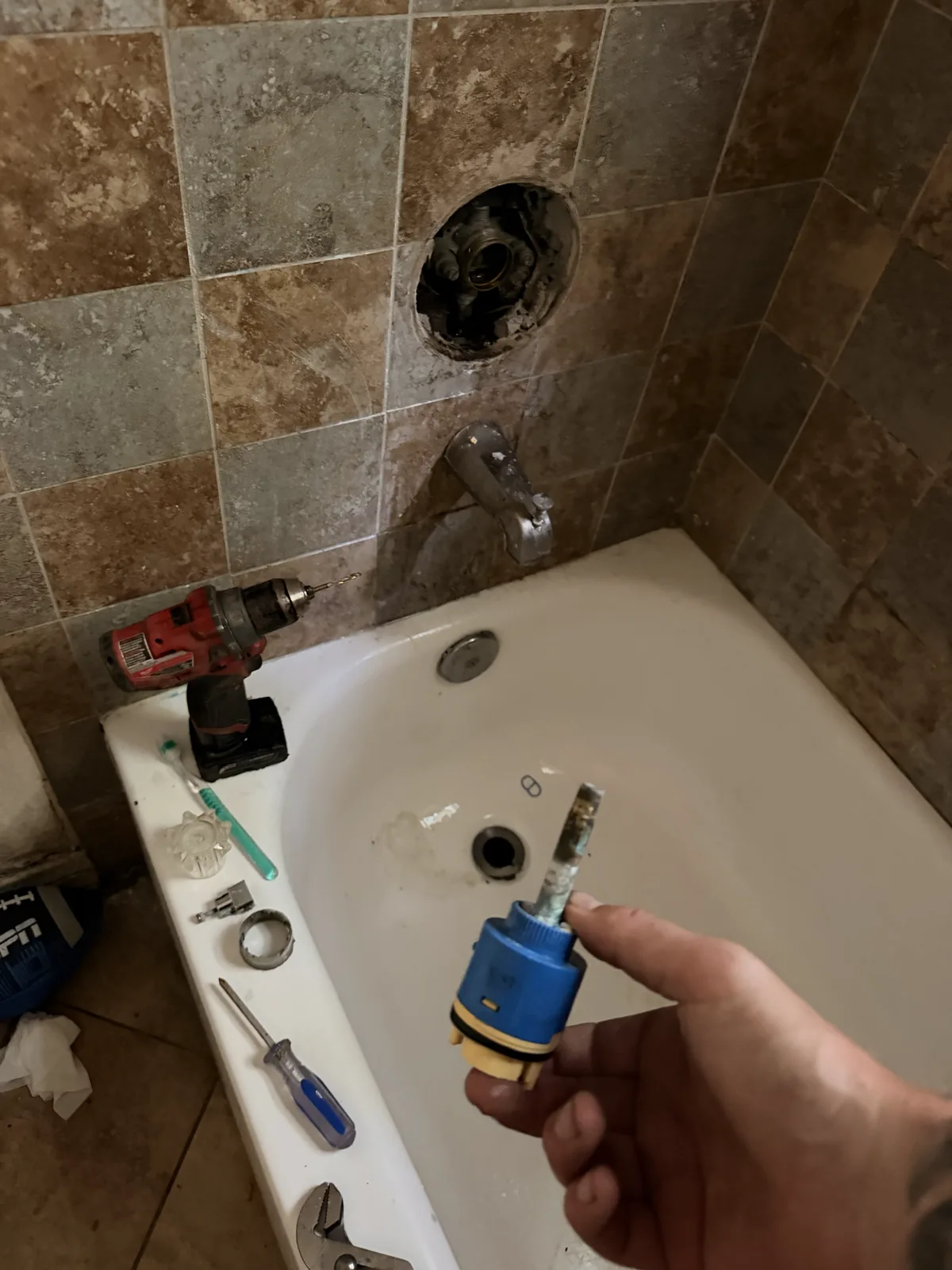
A mixing cartridge on this water furs up with mineral scale, which is why a faucet gets stiff and then drips. If the faucet is otherwise good, a cartridge is sometimes the whole repair and we will tell you that instead of selling you a faucet.
If you are replacing faucets across the house because they keep failing, the water is the thing to fix.
What to ask anyone quoting this, us included
- Are new stops and supply lines included?
- Is this a cartridge job rather than a whole faucet?
- Does the new faucet fit the existing holes?