St. George Home Services

Plumbing · Water treatment

Softener sized for 20+ grains

A softener specified for water at the top of the city's stated range, with the capacity and the salt efficiency to match.

One flat fee to find out what is wrong. You are told it on the phone before anyone is dispatched, and it comes off the job if you hire us. Read our Plain Terms

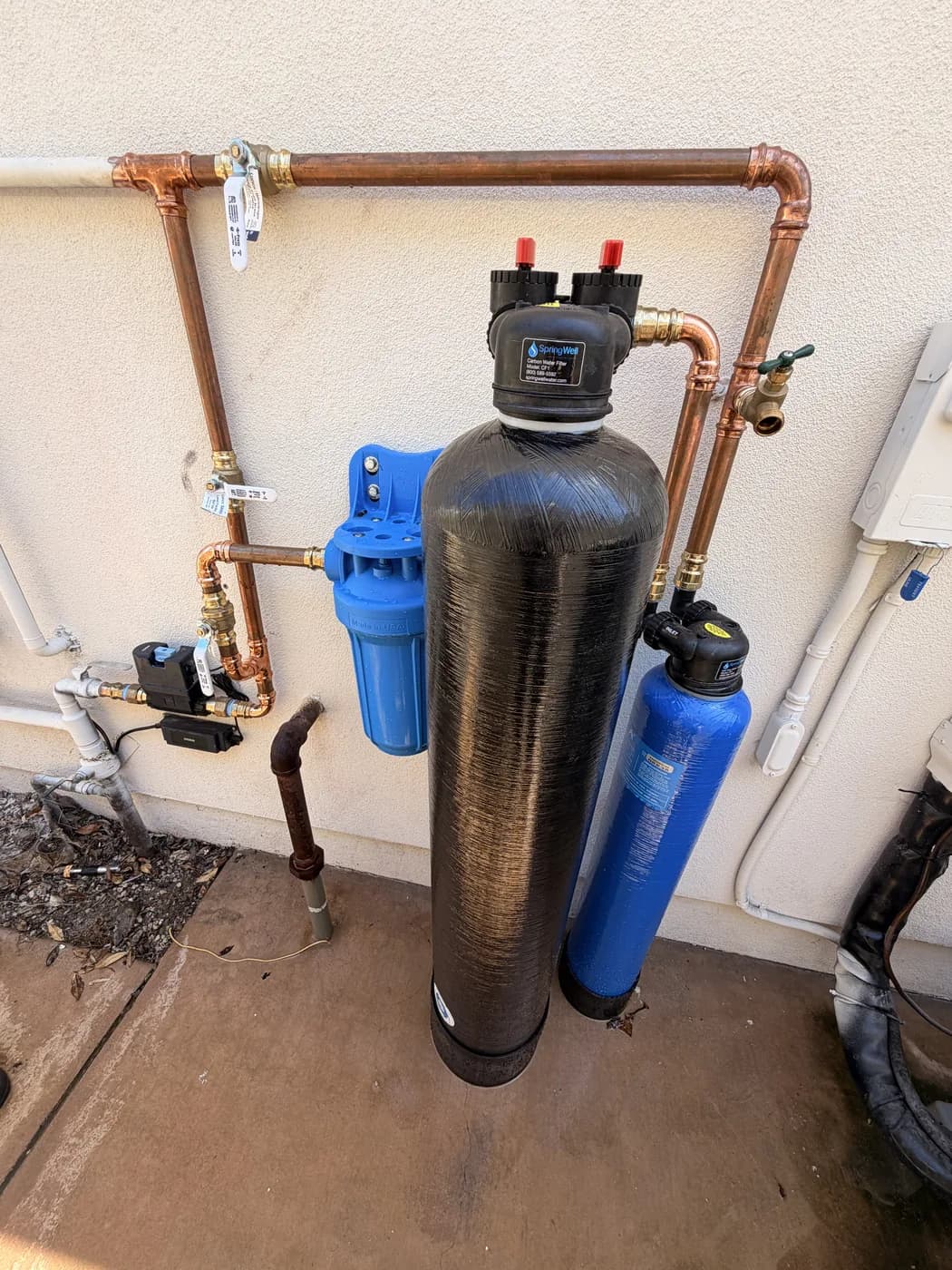
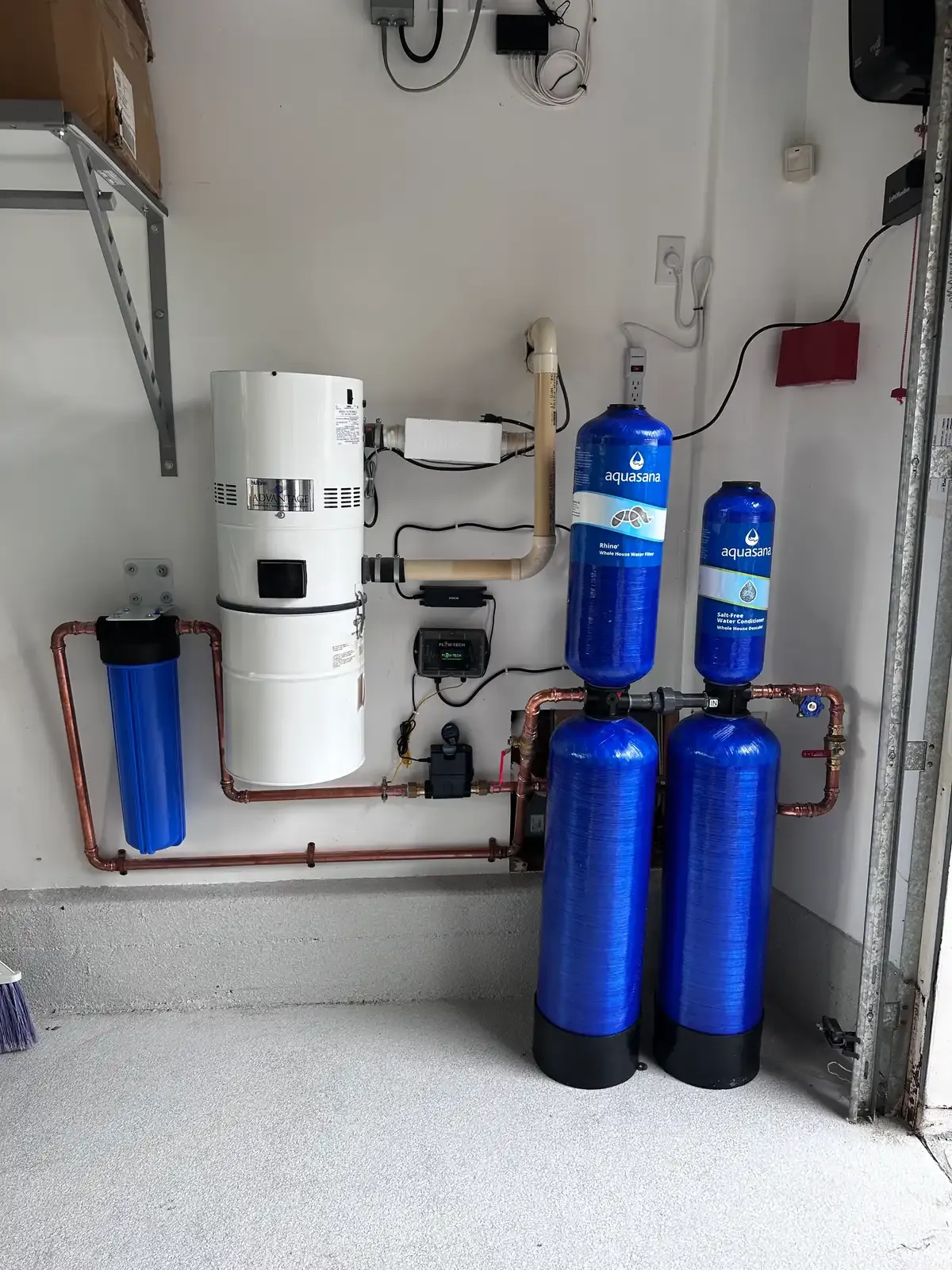
A softener and filter pair installed together with new supply piping
Softener and filter, installed together. Southern California.

What the work is

The city's stated maximum is 22 grains per gallon. A unit sized for a national average will regenerate too often on that water: more salt, more water down the drain, and a shorter resin life.

A properly specified high-capacity unit costs more up front and less to run. The comparison that matters is not the sticker price but the salt and water it uses over a year, and we will do that arithmetic with you rather than around you.

What is included

  • Testing your water at your tap
  • A unit with capacity matched to the tested hardness and your household
  • Bypass, drain with an air gap, and programming to the measured numbers
  • The projected regeneration frequency and salt use, in writing

What is not

  • Drinking water treatment
  • Any claim of a specific dollar saving on your bills
  • Electrical beyond a nearby existing receptacle

Where the high end comes from

The City of St. George's Water Distribution Division tells residents to set a softener to 18 grains per gallon, with a maximum of 22. That is the number to work from because it comes from the utility rather than from someone selling a softener.

No water quality report in the county publishes hardness; it is not a federally required parameter. St. George blends spring, well and Virgin River sources, and its 2024 report shows total dissolved solids from 118 to 936 ppm and sulfate from 1.38 to 451 ppm depending on which blend feeds your street. A city-wide number is not your number. A recommendation should come from a test at your tap.

Some streets sit on blends that are considerably harder than others. That is the argument for testing rather than buying a unit off a chart.

What to ask anyone quoting this, us included

  • What is the unit's grain capacity, and at what salt dose?
  • How often will it regenerate on my tested hardness?
  • What does that cost a year in salt and water?
What we can show you in writing

Every line traces to a document we read in full. The number after a sentence points to the research below.

  • The City of St. George's Water Distribution Division instructs residents to set water softeners to 18 grains per gallon, with a maximum of 22 grains.1
  • 18 grains per gallon is about 308 mg/L as calcium carbonate and 22 gpg about 376 mg/L, both classed as very hard on the USGS scale.1
  • The city asks residents to keep softener settings low because softener salt raises the dissolved-solids level of the reclaimed water the city reuses for irrigation.1
  • A.O. Smith's gas tankless warranty excludes damage from hard water over 7 grains per gallon in a single-family home. St. George runs 18 to 22.2
  • Noritz voids outright above 12 grains per gallon.2
  • Rinnai's manual states it flatly, and separately tells you a hard-water area needs treatment and more frequent flushing.2
4 more facts, with sources
  • Rheem excludes heat exchanger failures caused by scale, and Navien excludes damage from hard water deposits and mineral build-up.2
  • Rinnai and Rheem also void on hours, not just years: both stop at 12,000 operating hours, whichever comes first. A scaled unit runs longer per gallon delivered, so hard water spends that clock faster too.2
  • These are exclusions on the damage, not a blanket void of the whole warranty. A manufacturer denies a scale-related heat exchanger claim; it does not normally void an unrelated control board failure.2
  • Softening is what clears the limits. Softened output runs about 0 to 1 grain per gallon, under every threshold above. The 18-grain figure is what you tell the softener is coming in, not what comes out of it.2

Where this comes from

Every line above traces to a document we read in full. The number after a sentence points to the research below; hover it for the section. If you find a line wrong, tell us and we will fix it and say so.

  1. Environment, water and ground research, August 2026 Compiled from the cities' own water quality reports, Utah Geological Survey Special Study 127, the Utah State Hazard Mitigation Plan, Washington County GIS hazard layers, NOAA climate records, EPA radon zones and Census QuickFacts. 2 sections cited. Hover a number above for the section.
  2. Plumbing research, August 2026 Compiled from manufacturer warranty documents and installation manuals (A.O. Smith, Noritz, Rinnai, Rheem, Navien, Bradford White), the Battelle / Water Quality Research Foundation study, the Utah Code and DOPL rules. 4 sections cited. Hover a number above for the section.

Read before you decide

The rest of water treatment

The quote is the number. There is no second number.

Call (801) 680-6859

7 a.m. to 5 p.m., weekdays. Emergency calls answered any hour, every day.