St. George Home Services

Concrete coatings · Outside the house

Driveway and apron coating

The slab that takes the sun, the tires and the blown sand, all year. Exterior work here is scheduled around the weather rather than around us, and we will say so when we book it.

One flat fee to find out what is wrong. You are told it on the phone before anyone is dispatched, and it comes off the job if you hire us. Read our Plain Terms

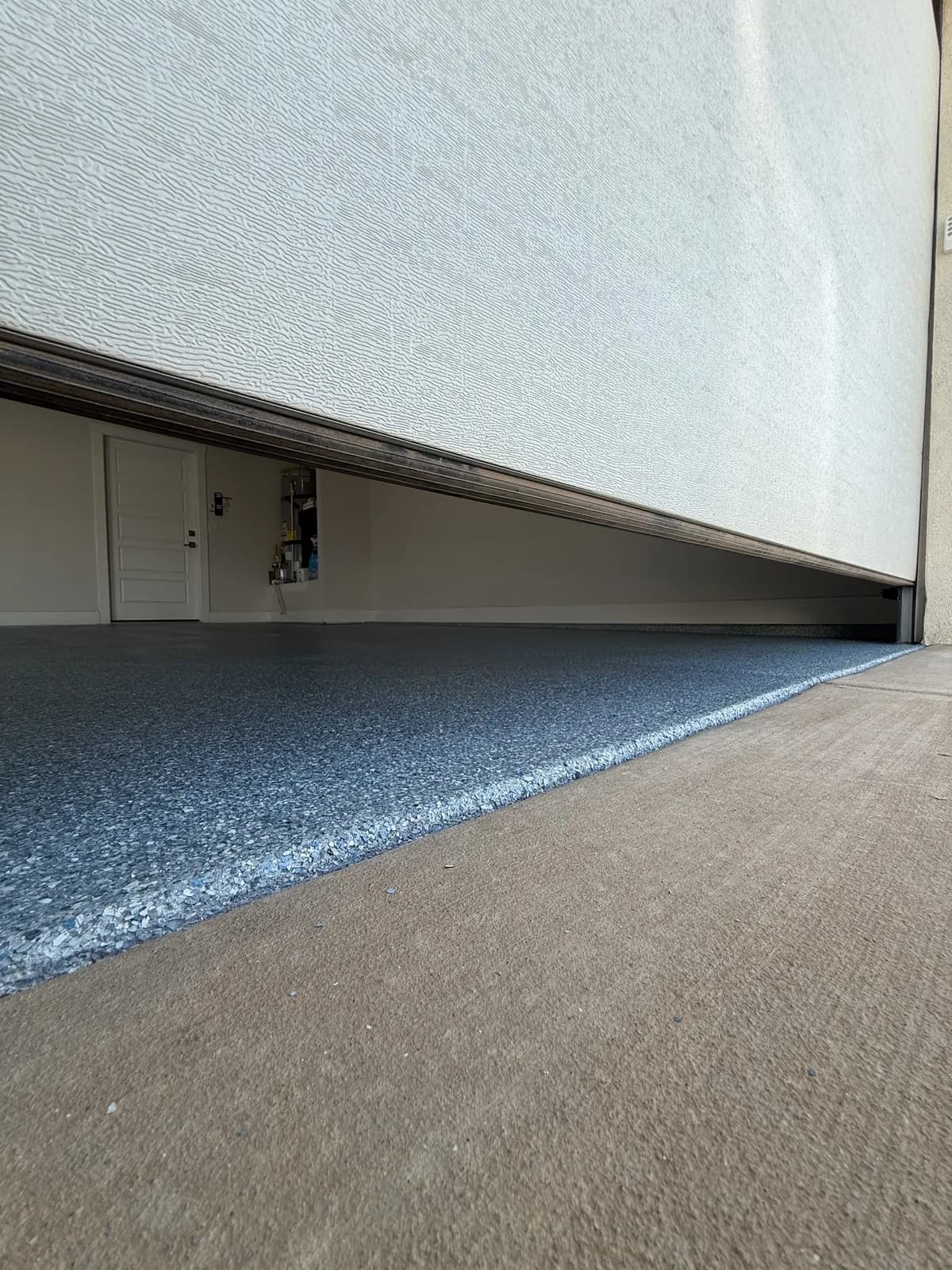
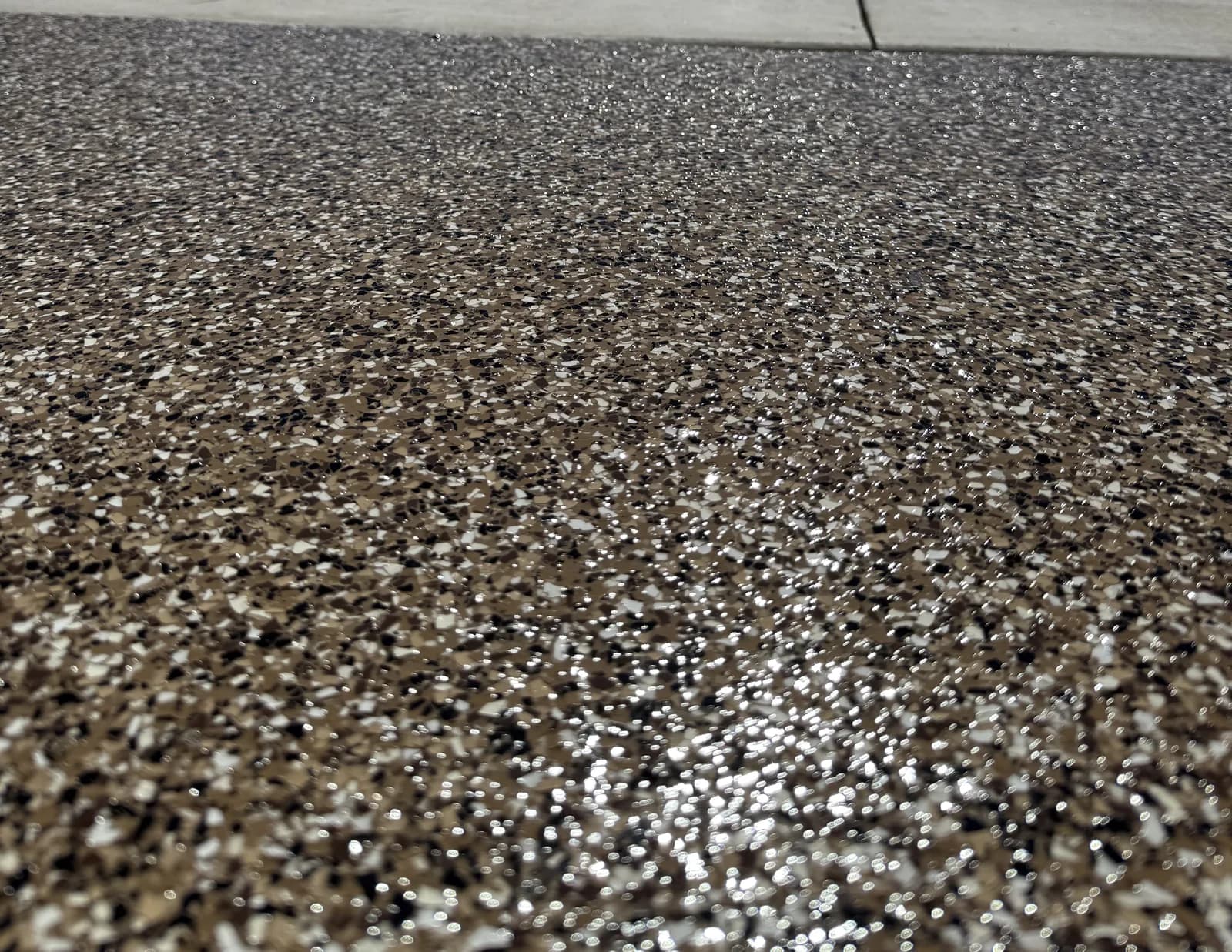
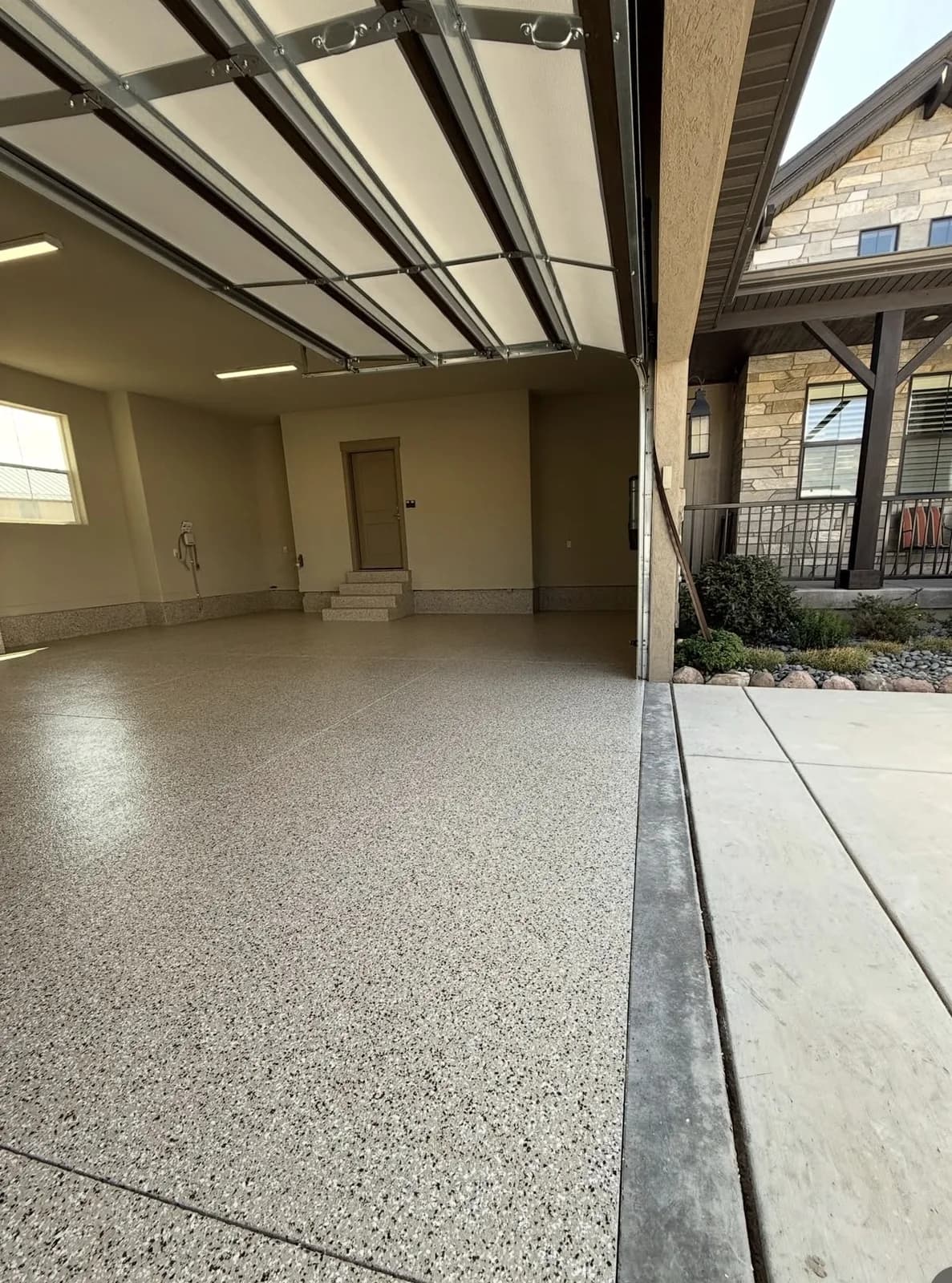
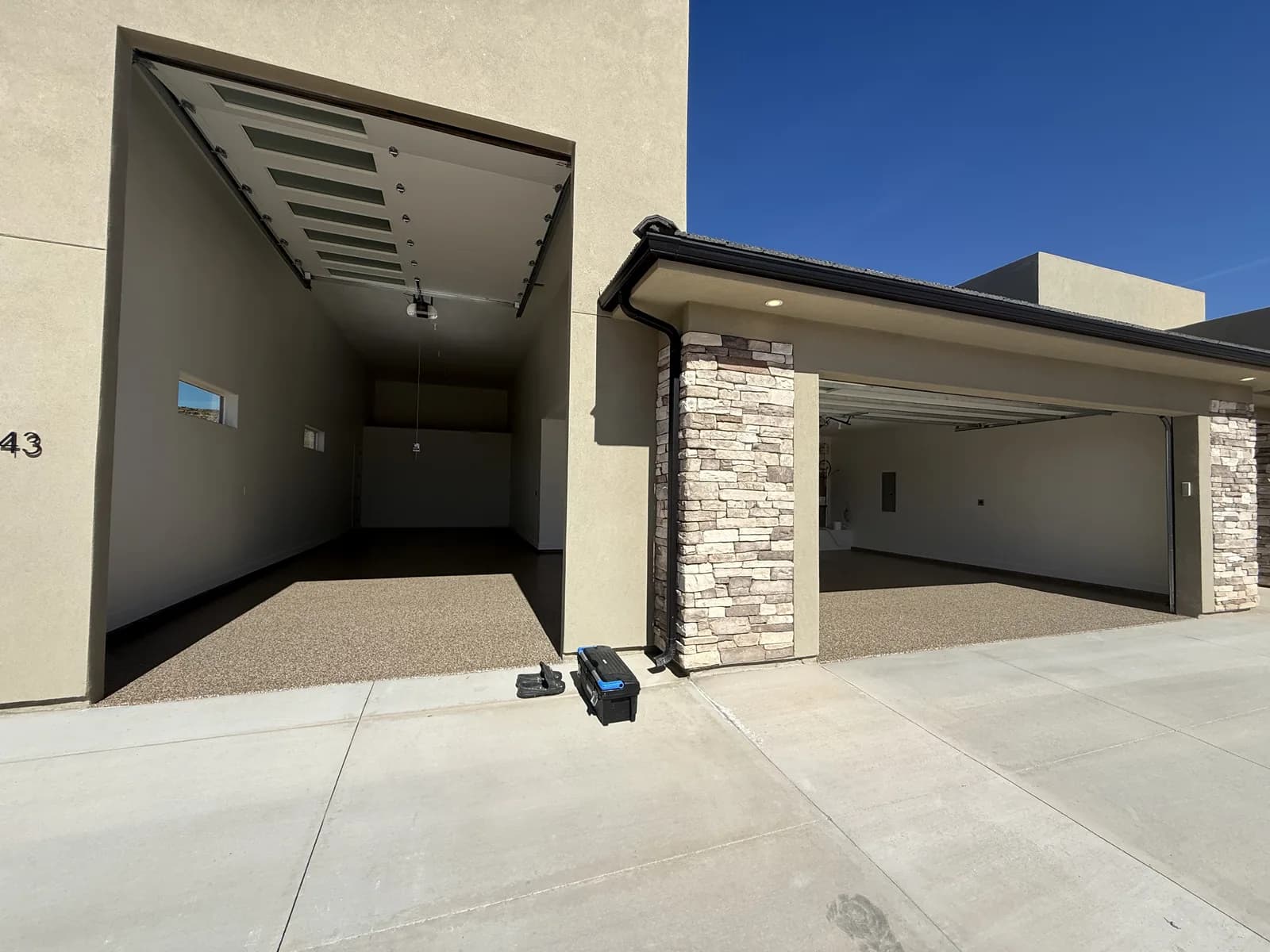
A tan flake garage floor seen from inside the bay, meeting the plain concrete driveway at the door line, with a stone-faced house across the street beyond
Where the coating stops at the door line, and the driveway concrete starts.

What the work is

A driveway or apron is the hardest place on a property to put a coating and the most visible place to get it wrong. It gets direct sun all day, it takes the full weight and heat of vehicles, and it is the surface most exposed to wind-blown grit.

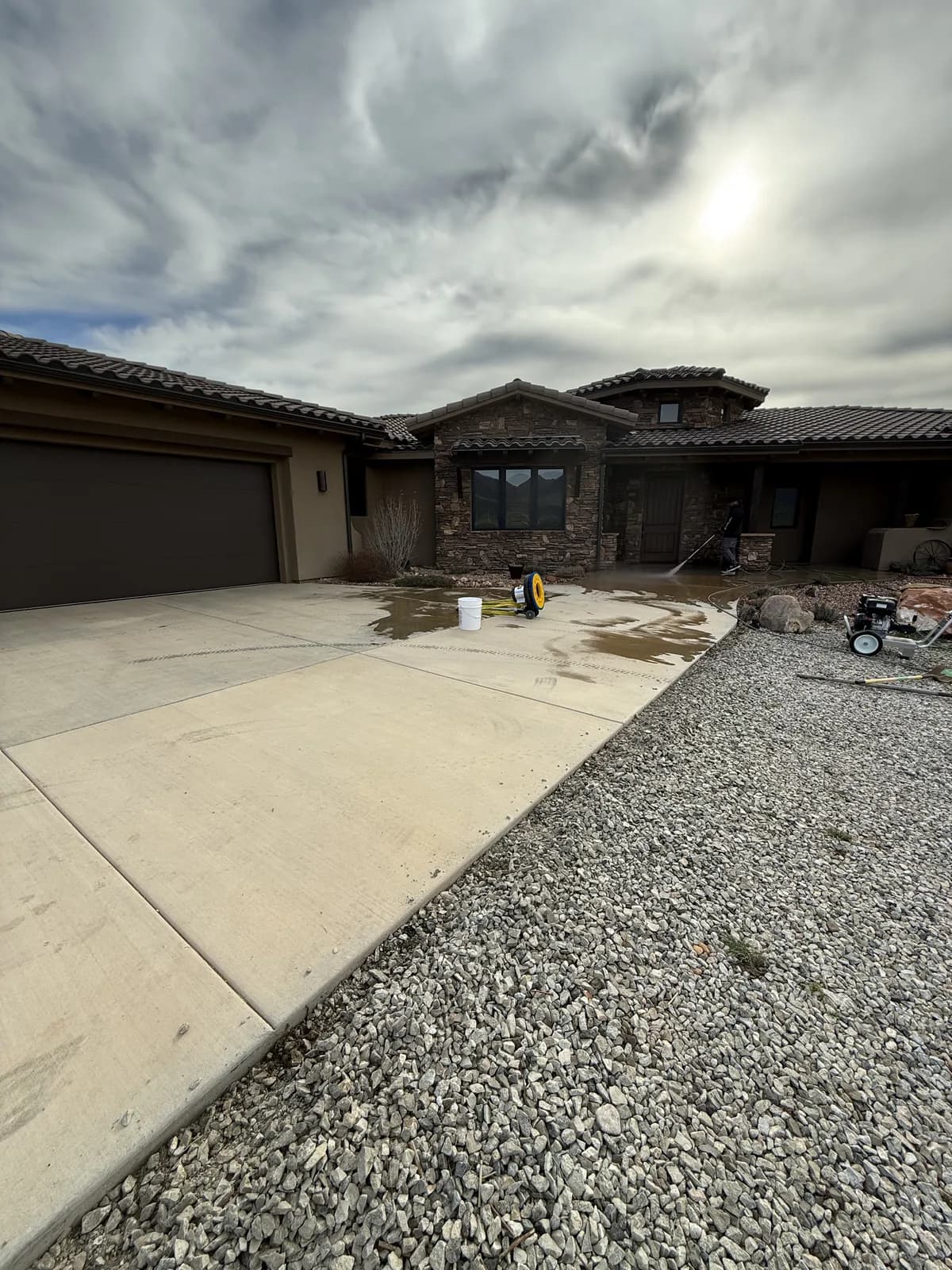
The preparation is the same in kind as a garage and more of it. The slab is washed, ground, tested and repaired. What comes off in the wash is worth watching: it tells you what the concrete has been absorbing.

Then it waits for a day it can have. Wet resin holds anything that lands in it, and an exterior pour that catches blowing sand has that sand in the floor permanently. It cannot be applied to a wet slab and it cannot cure through a storm. So an exterior date is a forecast-dependent date, and anyone who promises you one three weeks out without that caveat is promising something they do not control.

Many people coat only the apron — the strip between the garage door and the driveway — so the finish carries out of the bay and stops at a clean line. That is a smaller job and often the better-looking one.

What is included

  • Washing the slab down and showing you what came off it
  • Grinding, with the edges cut in by hand
  • Crack and joint treatment, quoted as its own step
  • Masking anything the coating could reach, including the garage door track
  • A booked date that is explicitly weather-dependent, and a plain reason if it moves

What is not

  • A fixed date we cannot hold. Exterior work waits on weather and we will not pretend otherwise
  • Coating over a slab that is heaving, settling or spalling through. That is repair first
  • Working through a wind event. The sand ends up in the floor and it does not come back out
  • Sealing an asphalt driveway. This is concrete work

Why the calendar is part of the quote

Three things here set the exterior schedule, and all three are published rather than invented. The Utah Geological Survey maps wind-blown sand as an adverse construction condition for this area and the county carries it as its own hazard layer; April is the windiest month. Flooding is the most widespread and damaging geologic hazard in southwestern Utah, and the monsoon delivers it in short, heavy cells after long dry spells. And the reliably non-freezing window here runs March 1 to November 21, which matters because resin has a published minimum cure temperature and an exterior slab in January can sit under it.

None of that makes exterior work difficult. It makes it scheduled. The difference between a company that works here and one that does not is whether they tell you that before they take a deposit.

What to ask anyone quoting this, us included

  • Is this date weather-dependent, and what moves it?
  • What is going down, and what does its data sheet say about ultraviolet exposure?
  • Are you coating the joints, or treating them separately?
  • What happens at the edge where the coating stops?
What we can show you in writing

Every line traces to a document we read in full. The number after a sentence points to the research below.

  • The Utah Geological Survey maps wind-blown sand as one of nine adverse construction conditions for the St. George–Hurricane area in Special Study 127, and Washington County publishes it as its own GIS hazard layer. Utah DEQ notes that from spring through fall, high winds combined with dry surface conditions produce dust storms that can lead to extremely high levels of particulate matter.1
  • UGS Special Study 127 records flooding as the most widespread and damaging geologic hazard in southwestern Utah. Southwest Utah has a defined monsoon season, and St. George has recorded a 78-day dry spell ending with monsoon onset.1
  • The reliably non-freezing window in St. George runs March 1 to November 21. Resin systems have a published minimum application and cure temperature, so an exterior slab outside that window can sit below it.2
  • Ultraviolet stability is a published property of a specific product, not of a trade name. Sherwin-Williams describes polyaspartic floor coating as part of the urethane family, extremely durable and fast-curing, offering UV-resistant, color-stable protection; its aliphatic polyaspartic products state UV stability by name on the data sheet.2

Where this comes from

Every line above traces to a document we read in full. The number after a sentence points to the research below; hover it for the section. If you find a line wrong, tell us and we will fix it and say so.

  1. Environment, water and ground research, August 2026 Compiled from the cities' own water quality reports, Utah Geological Survey Special Study 127, the Utah State Hazard Mitigation Plan, Washington County GIS hazard layers, NOAA climate records, EPA radon zones and Census QuickFacts. 2 sections cited. Hover a number above for the section.
  2. Concrete coatings research, September 2026 Compiled from ICRI Guideline 310.2R-2013 on concrete surface preparation, the ASTM moisture test standards F2170, F1869 and D4263, ACI 302.2R and NRMCA CIP 29 on slabs and vapor retarders, Sika's published surface preparation guide, Sherwin-Williams product literature on polyaspartic chemistry, and the Utah Geological Survey and Utah DEQ material already cited in the environment research. 2 sections cited. Hover a number above for the section.

The rest of outside the house

The quote is the number. There is no second number.

Call (801) 680-6859

7 a.m. to 5 p.m., weekdays. Emergency calls answered any hour, every day.