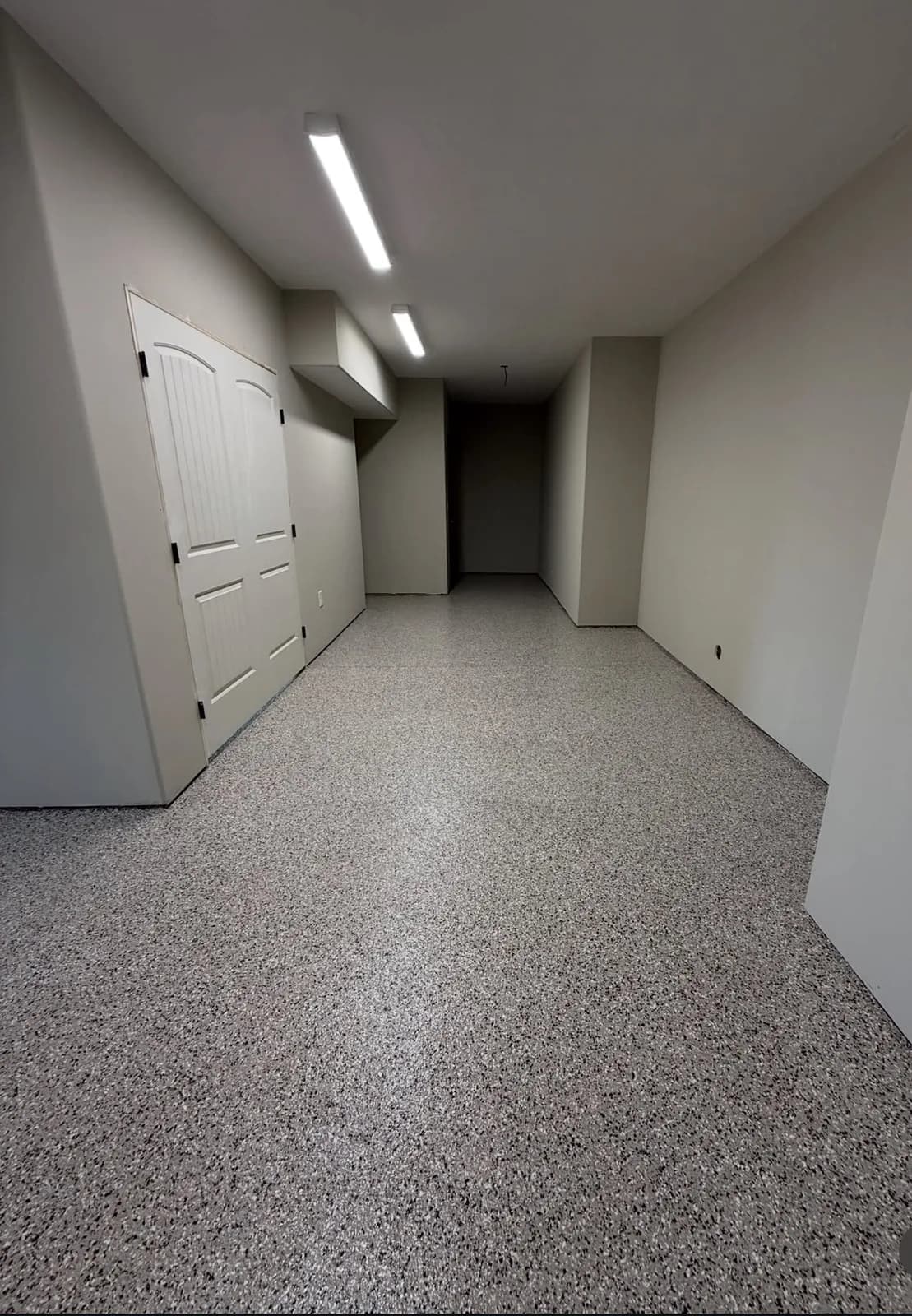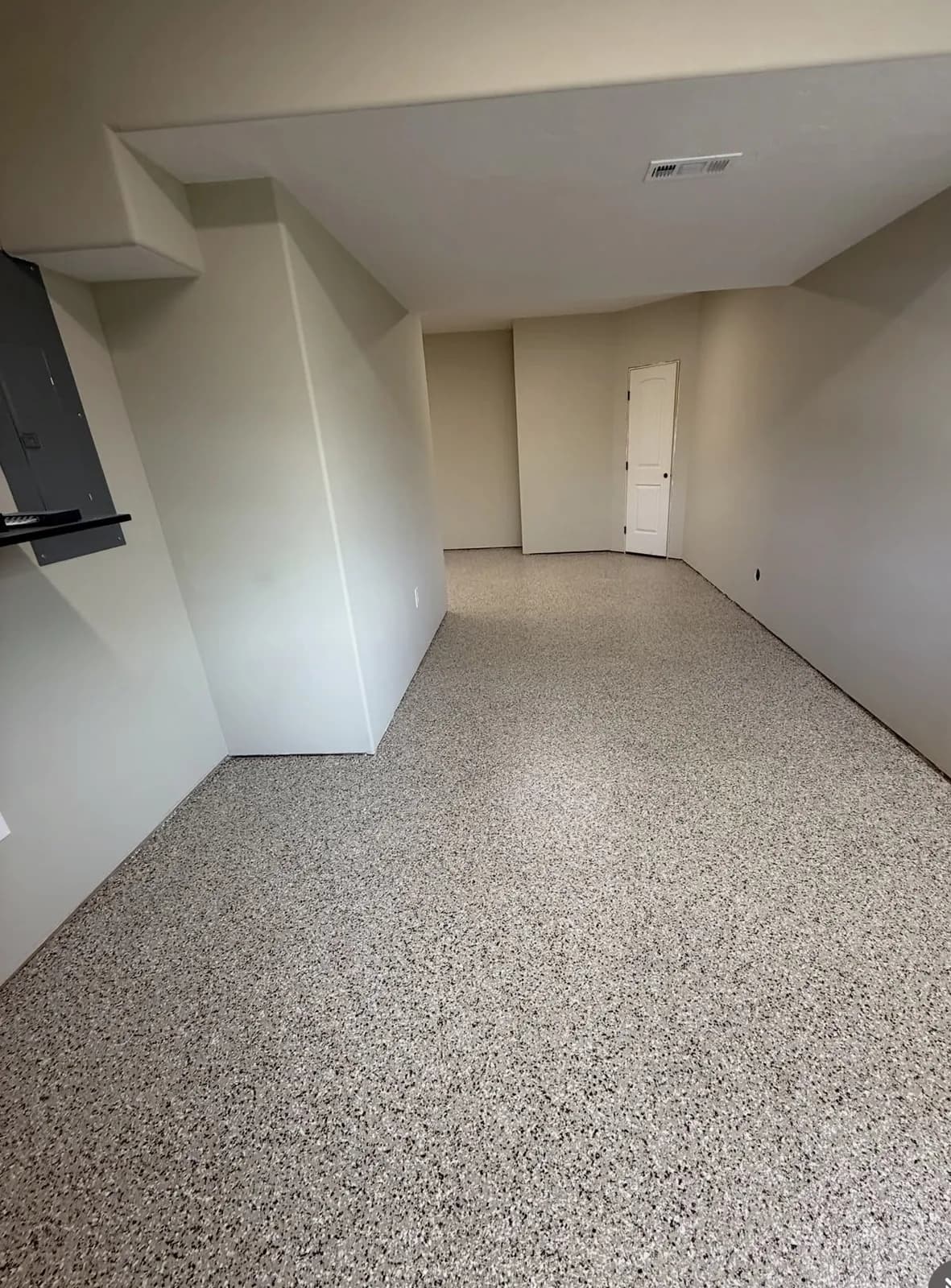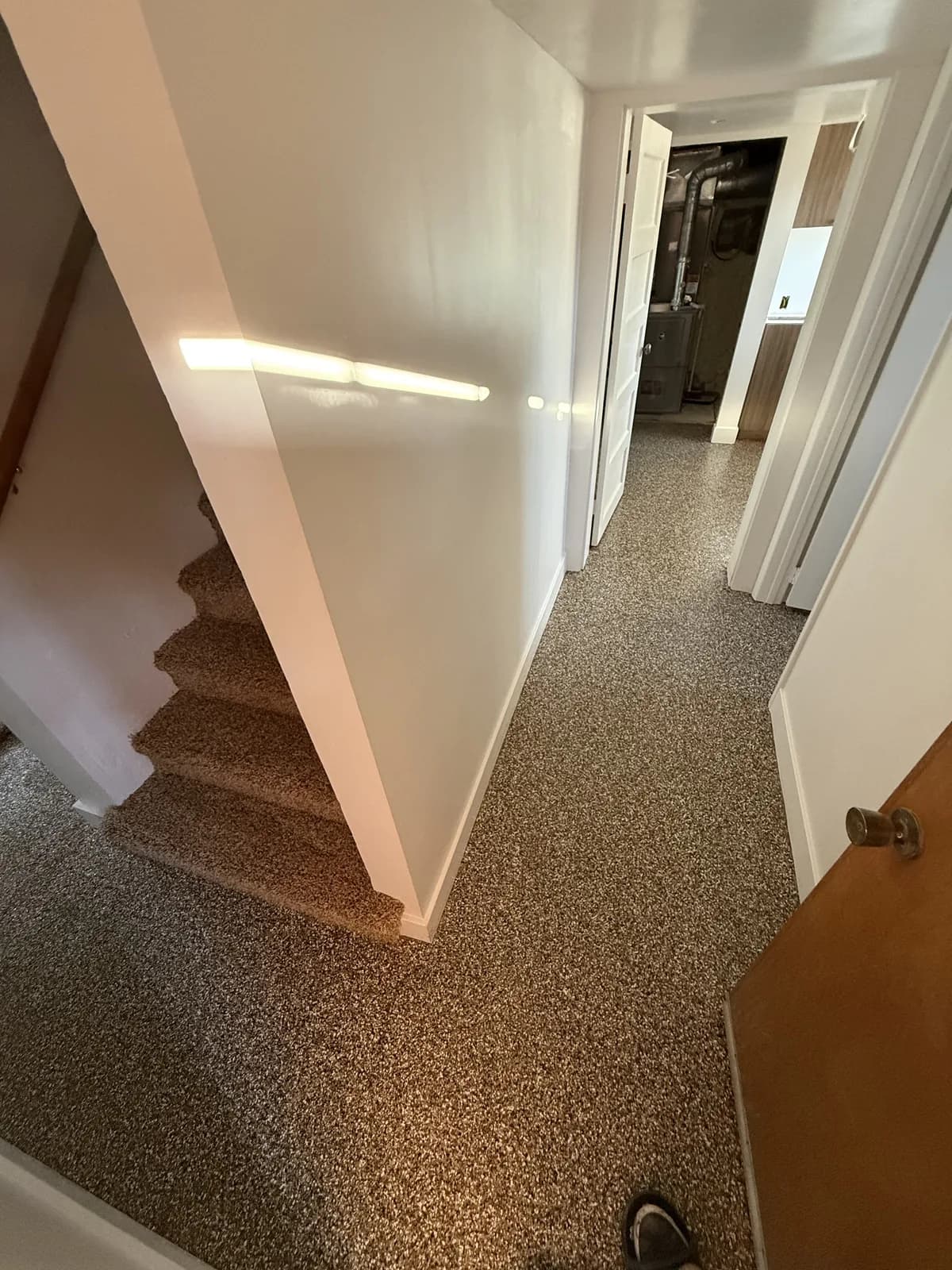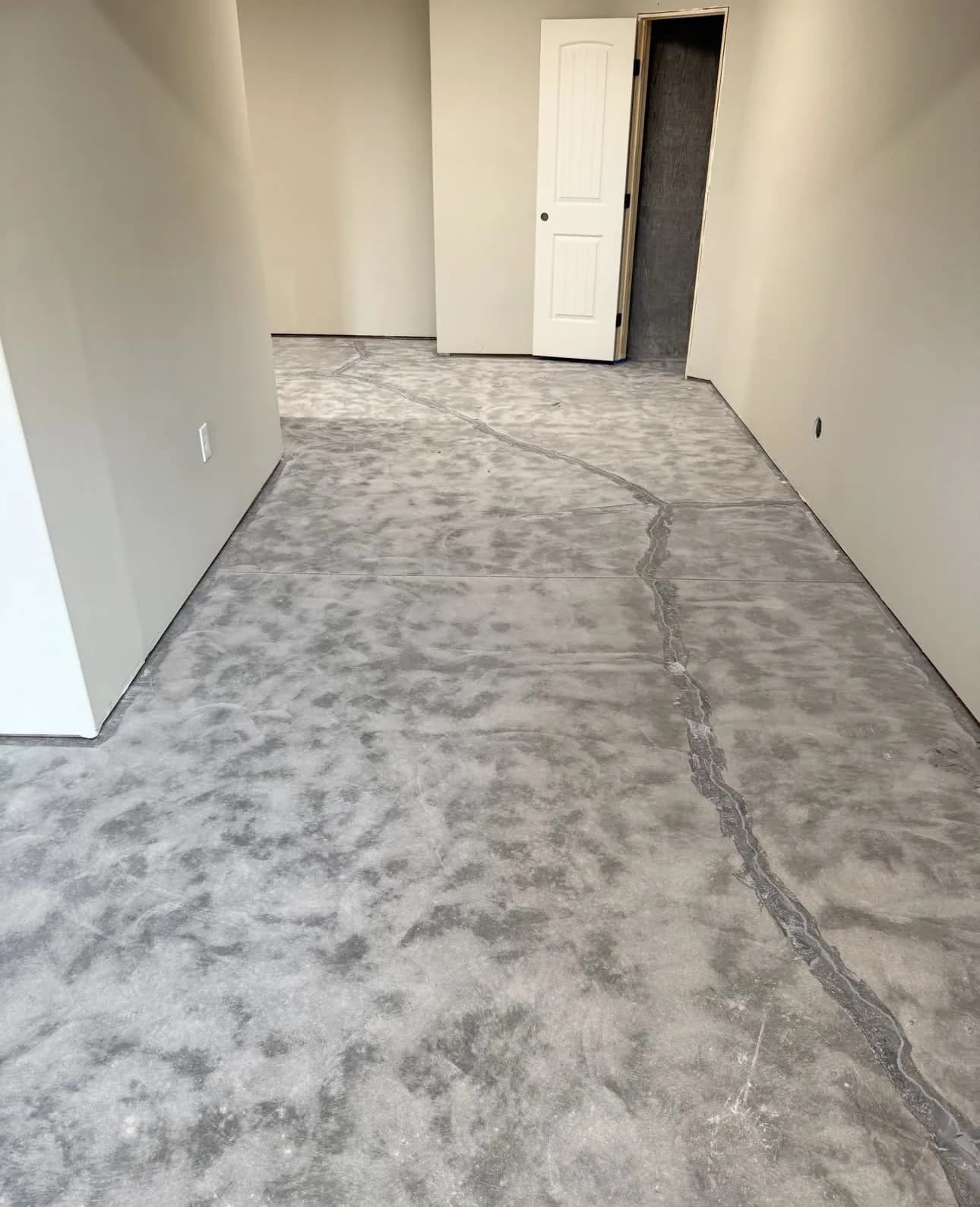
What the work is
A basement slab is in permanent contact with the ground. Water vapor moves from the ground through the slab toward the room, and a coating is a comparatively impermeable film laid on top of that. Where the vapor drive is high enough, the pressure builds under the film and the film blisters or lets go.
That is not a reason to avoid coating a basement. It is the reason to test one. There are published methods, they have numbers, and the results decide whether a moisture-tolerant primer is part of your job or not.
Whether a vapor retarder was installed under the slab was settled on the day the house was poured and cannot be changed now. An older house here may have none. That does not rule out a coated floor; it rules out guessing.
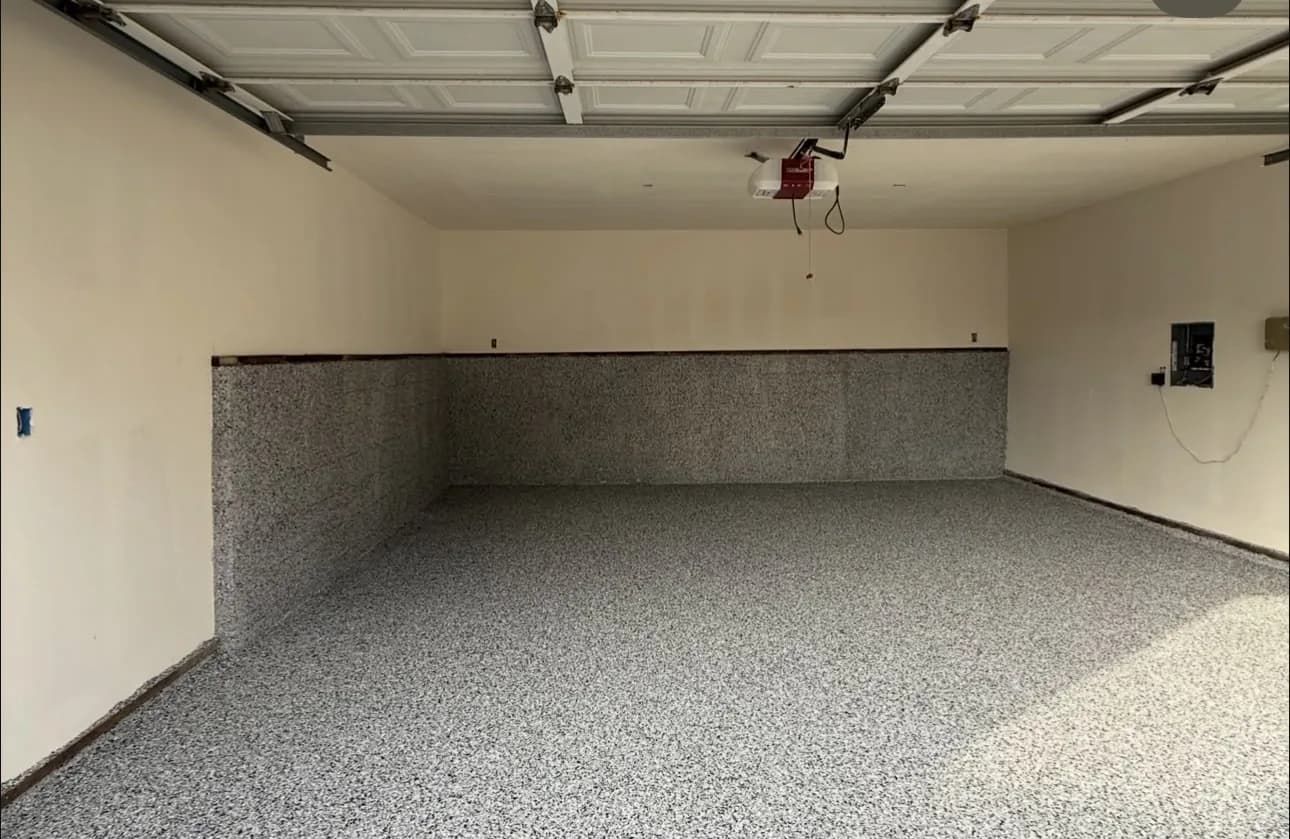
Done properly, a coated basement is a good floor. It is hard-wearing, it cleans, it does not hold damp the way carpet does, and carrying the coating a few inches up the wall as a continuous base means there is no open joint at the floor line for water to sit in.
What is included
- A moisture test to a published method, with the reading written down for you
- Grinding the slab, edges cut in by hand, with dust extraction
- Crack repair as its own quoted step
- A moisture-tolerant primer where the reading calls for one, named on the quote
- A coved wall base where you want one, quoted as its own line
What is not
- Quoting a finish before the slab has been tested. We will not
- Fixing the source of water coming in. That is drainage or waterproofing work, and a floor coating is not a substitute for it
- Coating over efflorescence or a damp patch without establishing where it is coming from
How the slab actually gets tested
There are three published methods and they do not measure the same thing. ASTM F2170 places probes in holes drilled to 40 per cent of the slab depth and reads the internal relative humidity of the concrete — it tells you what the slab will do over time. It has been displacing the older method since 2002. ASTM F1869, the calcium chloride test, seals a dish of salt under a dome and calculates a moisture vapor emission rate from its weight gain after three days; it reflects the surface, not the interior, and since 2010 the standard has disallowed it on lightweight concrete entirely. ASTM D4263, the plastic sheet method, is the quick one: it is used, in the standard's own words, "to indicate the presence of capillary moisture in concrete", and it reveals surface conditions only.
The guide that governs slabs receiving moisture-sensitive flooring is ACI 302.2R. The relationship it turns on is simple: the vapor retarder under the slab has to be less permeable than the covering going over it, or a moisture-related failure is on the table.
You do not need to know any of that. You need to know that it is published, that it has numbers, and that you can ask which test was run and what it read — of us and of anyone else.
What to ask anyone quoting this, us included
- Which moisture test are you running, and can I have the reading in writing?
- Does this house have a vapor retarder under the slab, and how would you know?
- If the reading is high, what changes — the price, the product, or the answer?