
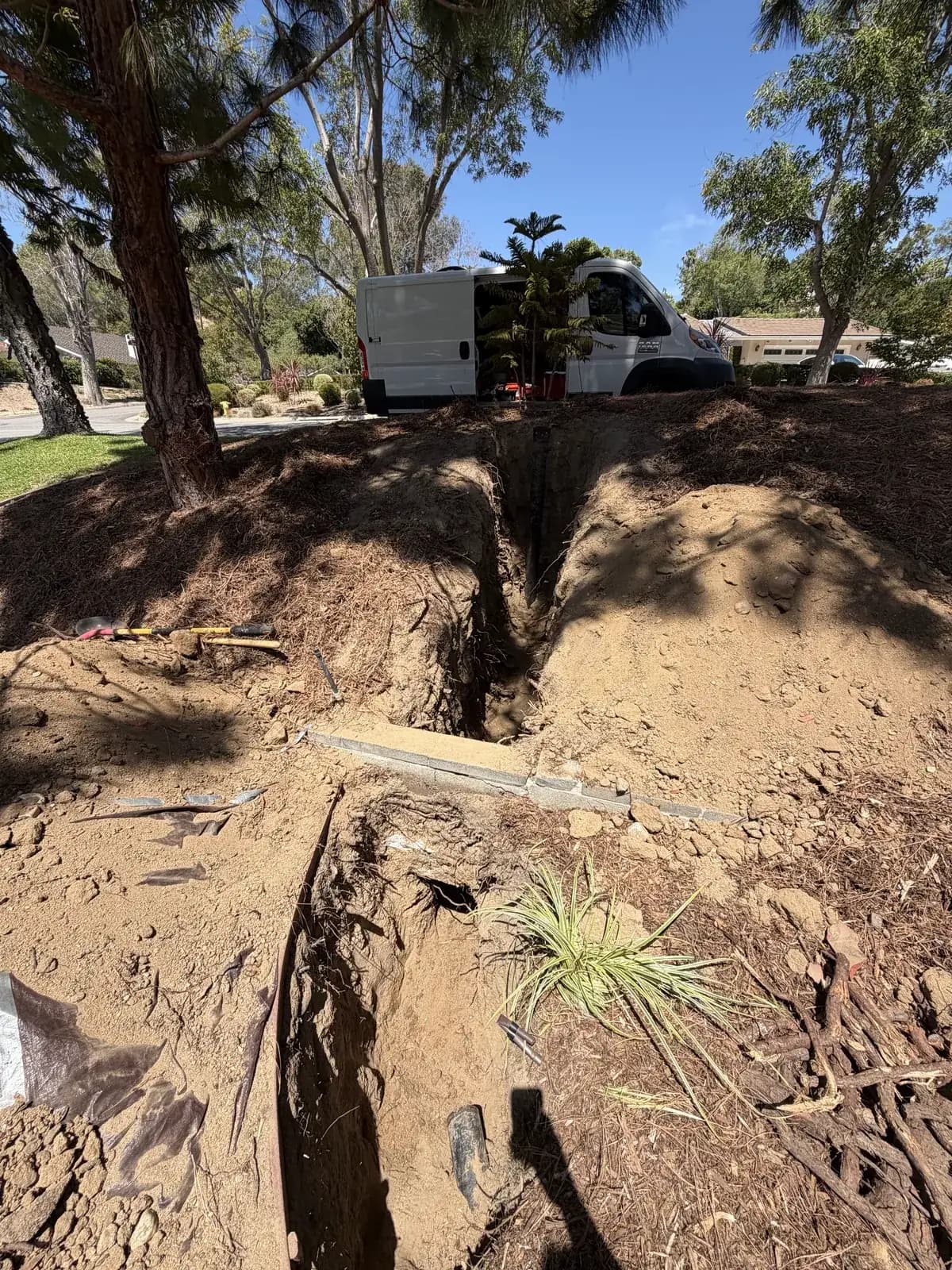
What the work is
Roots do not grow through sound pipe. They come in at a joint that has opened, a crack, or a failed connection, because that is where the water is. Cutting them out restores flow and does nothing about the opening.
So we do both halves. We cut or jet the mass out, and then we look at where they entered and tell you what that is: a joint that will keep letting them in, or damage that has to be repaired.
You can manage a rooted line for years by cutting on a schedule, and that is a legitimate choice if the alternative is a replacement you cannot fund yet. We will tell you what you are choosing between rather than deciding for you.
What is included
- Mechanical cutting or jetting of the root mass in the main line
- A camera run afterwards on request to show where they came in
- A plain recommendation: manage it, repair the section, or replace the run
What is not
- Any repair to the pipe
- Removing the tree. That is not our work and usually not the answer either
- Chemical root treatments
The trees that do this here
Mature landscape trees planted along a lateral are the usual source, and in this county a lot of them were planted when the front yard was lawn and the irrigation ran daily. When the lawn goes and the watering drops, established roots go looking, and a leaking sewer joint is the wettest thing in the yard.
If you are converting your front yard, that is the right moment to camera the lateral. The line is about to become the only reliable water under a dry yard.
What to ask anyone quoting this, us included
- Where did the roots enter, and is that a joint or a break?
- How long before this closes up again?
- What would it cost to fix the opening rather than the roots?