St. George Home Services

Concrete coatings · Garage floors

Flake floor

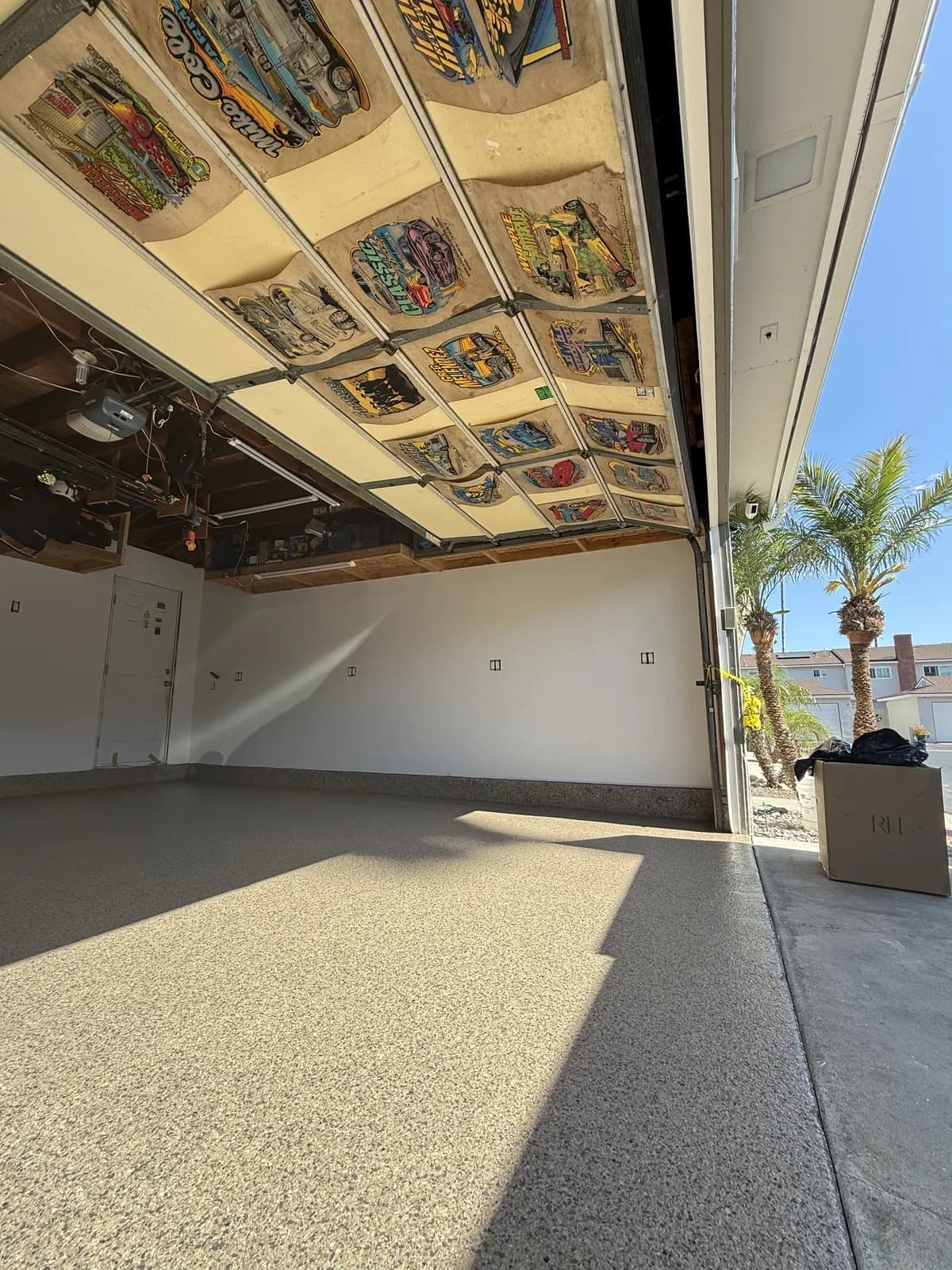
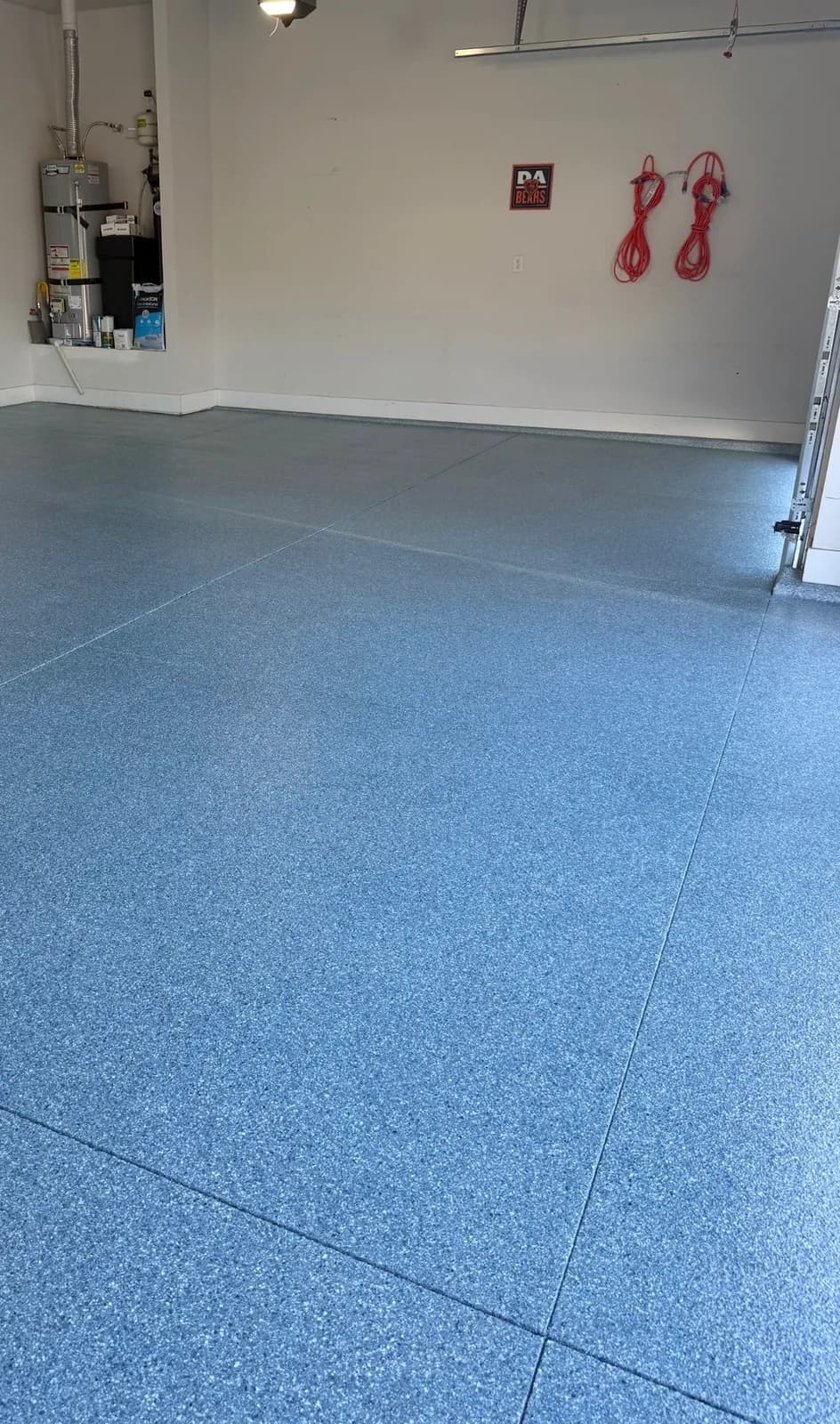
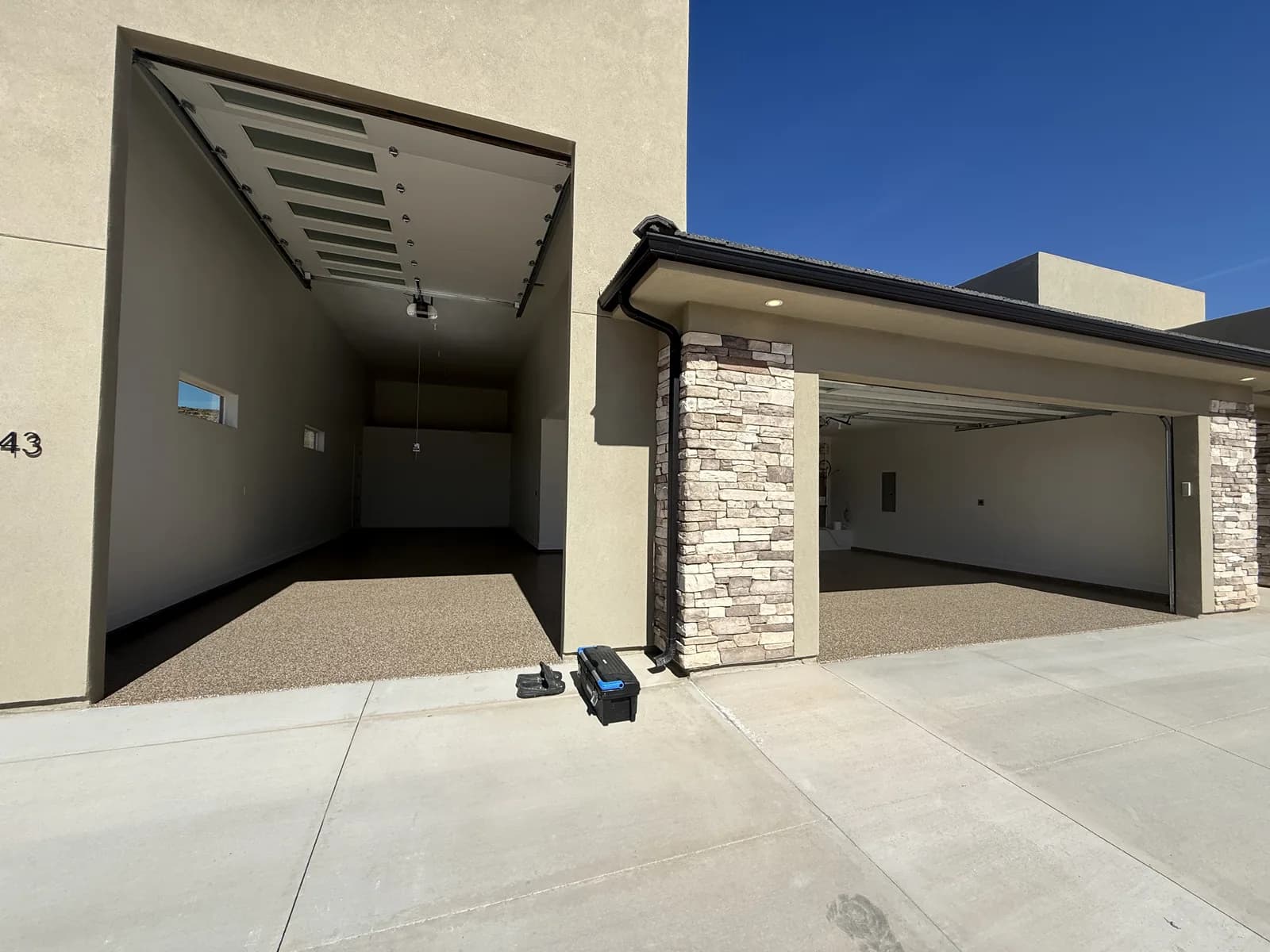
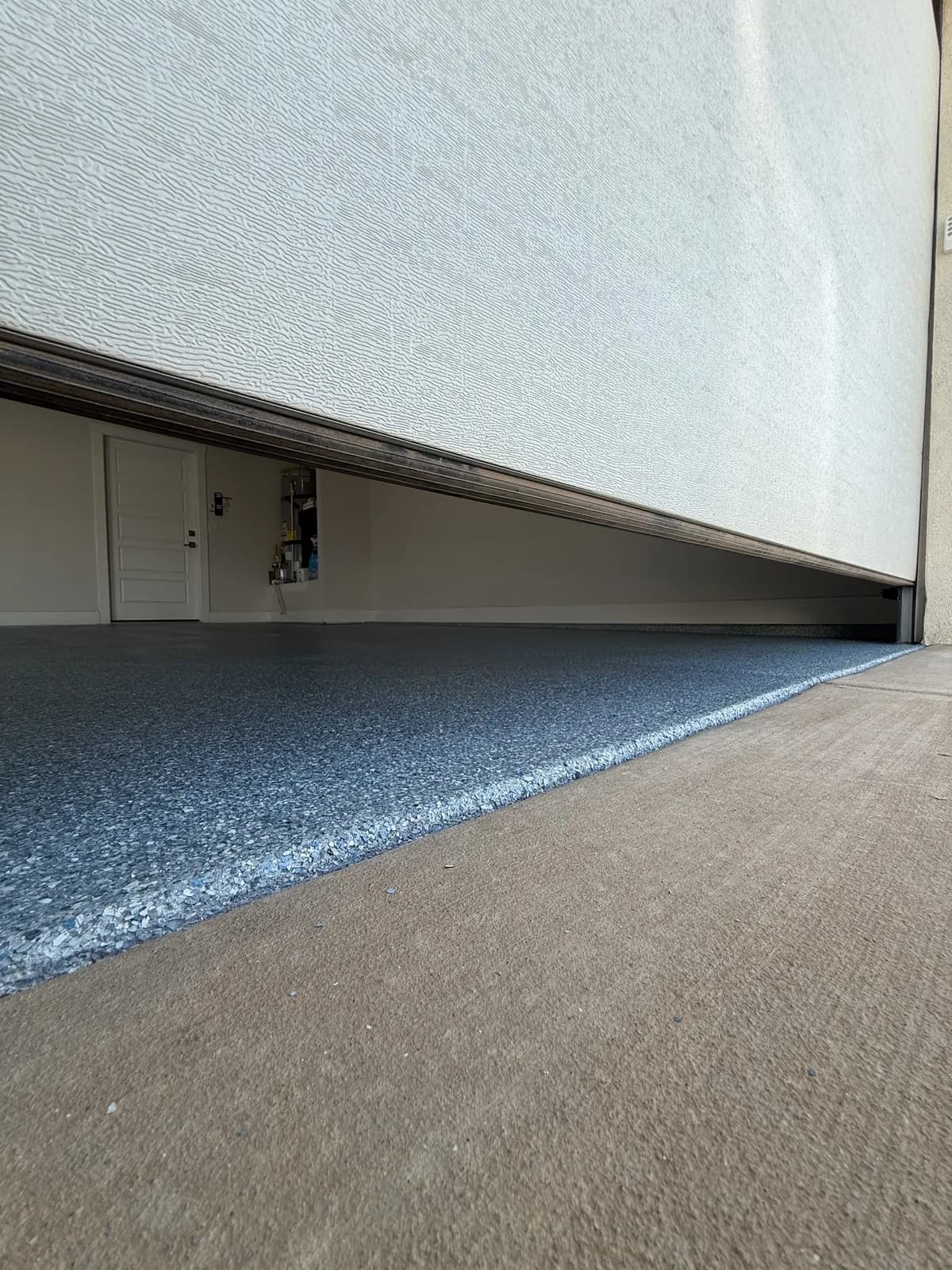
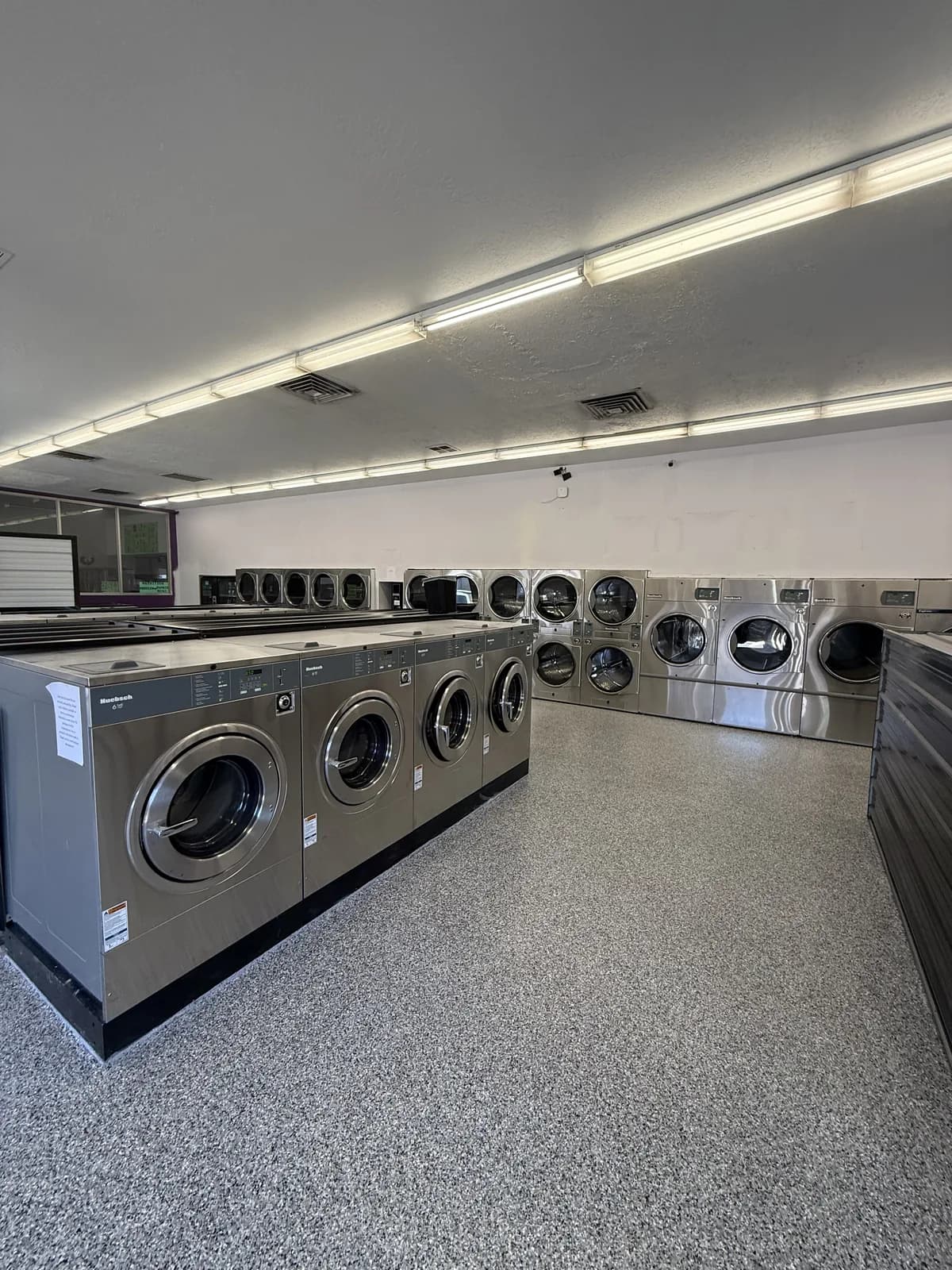
Vinyl chips broadcast into a wet base coat and locked under a clear top coat. It is the common finish, it is what is in most of the photographs on this site, and the reason it works is that it hides everything a plain color shows.

One flat fee to find out what is wrong. You are told it on the phone before anyone is dispatched, and it comes off the job if you hire us. Read our Plain Terms

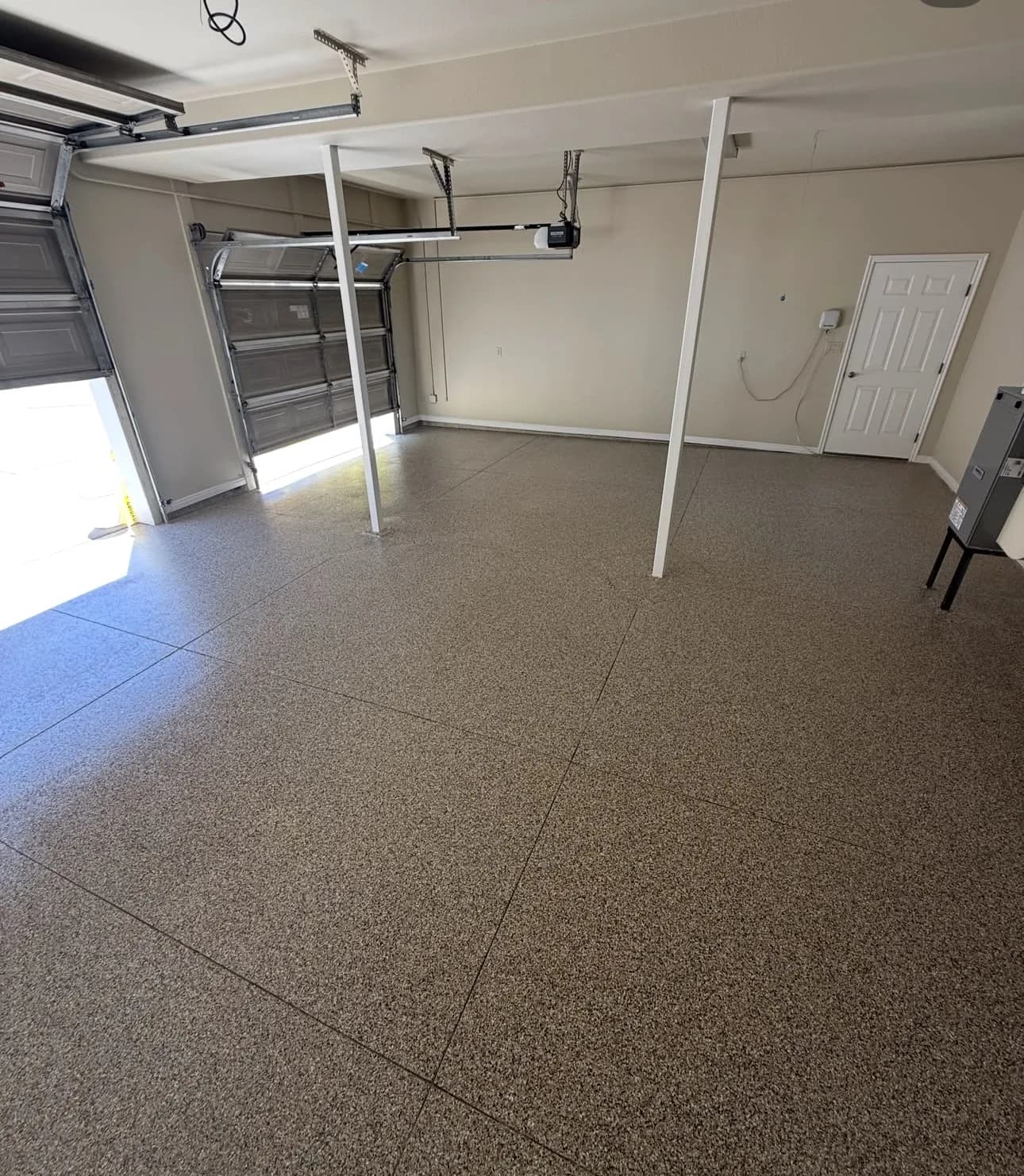
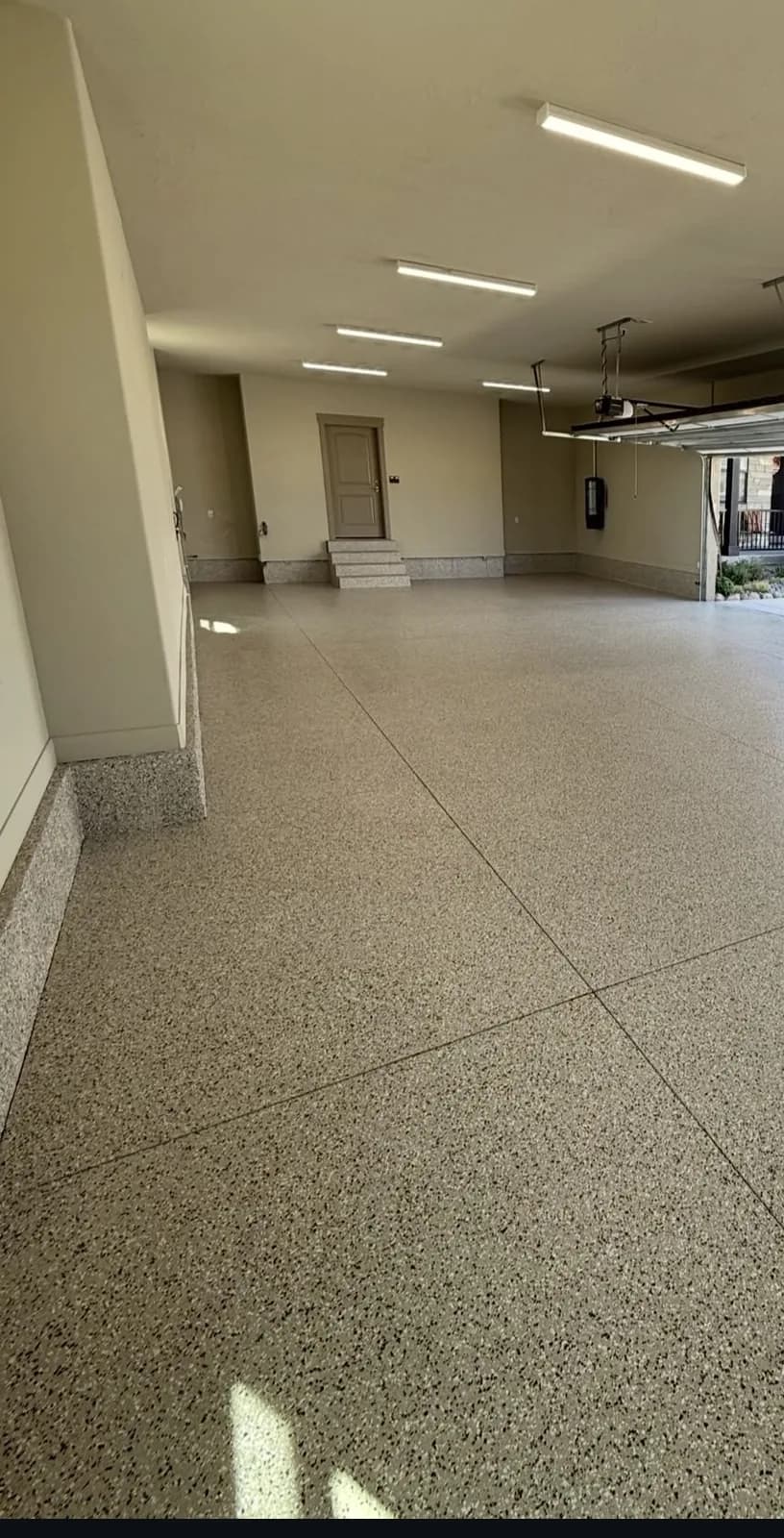
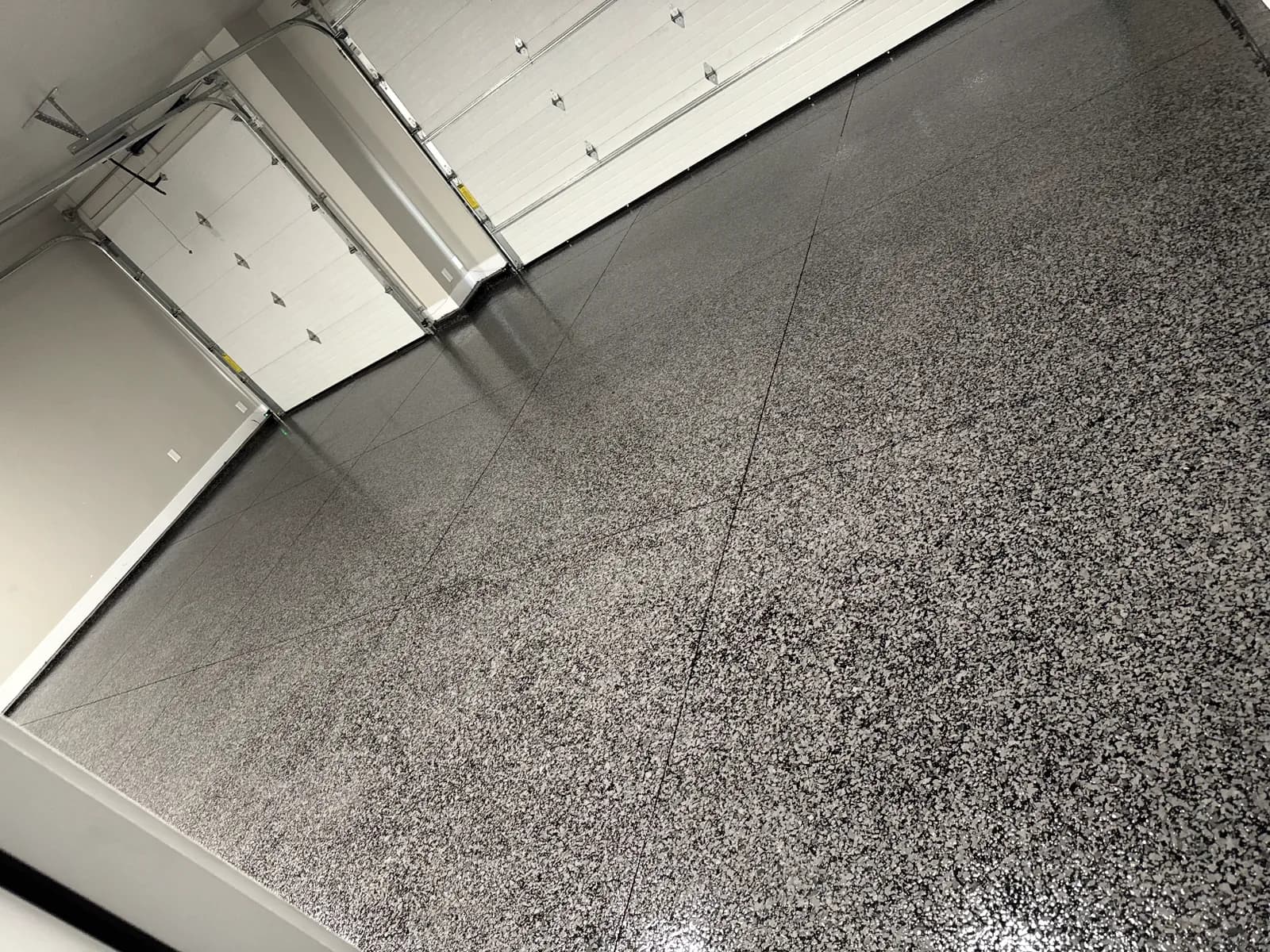
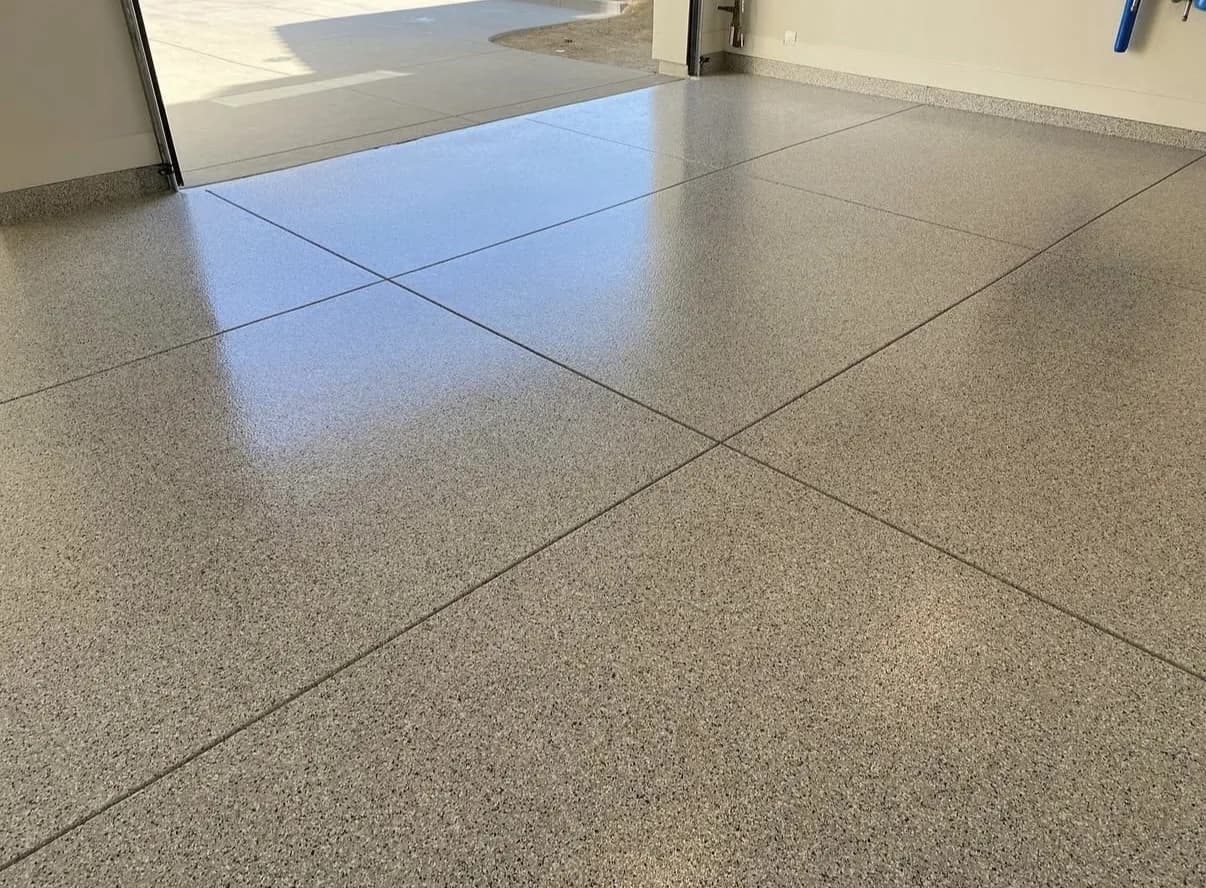
A finished garage floor in a pale gray and tan flake blend, running the depth of the bay, with the slab's saw-cut control joints still visible as fine straight lines through the coating and an open door at the far left
The control joints are still readable through the finish. They are part of the slab, not a defect in the floor.

What the work is

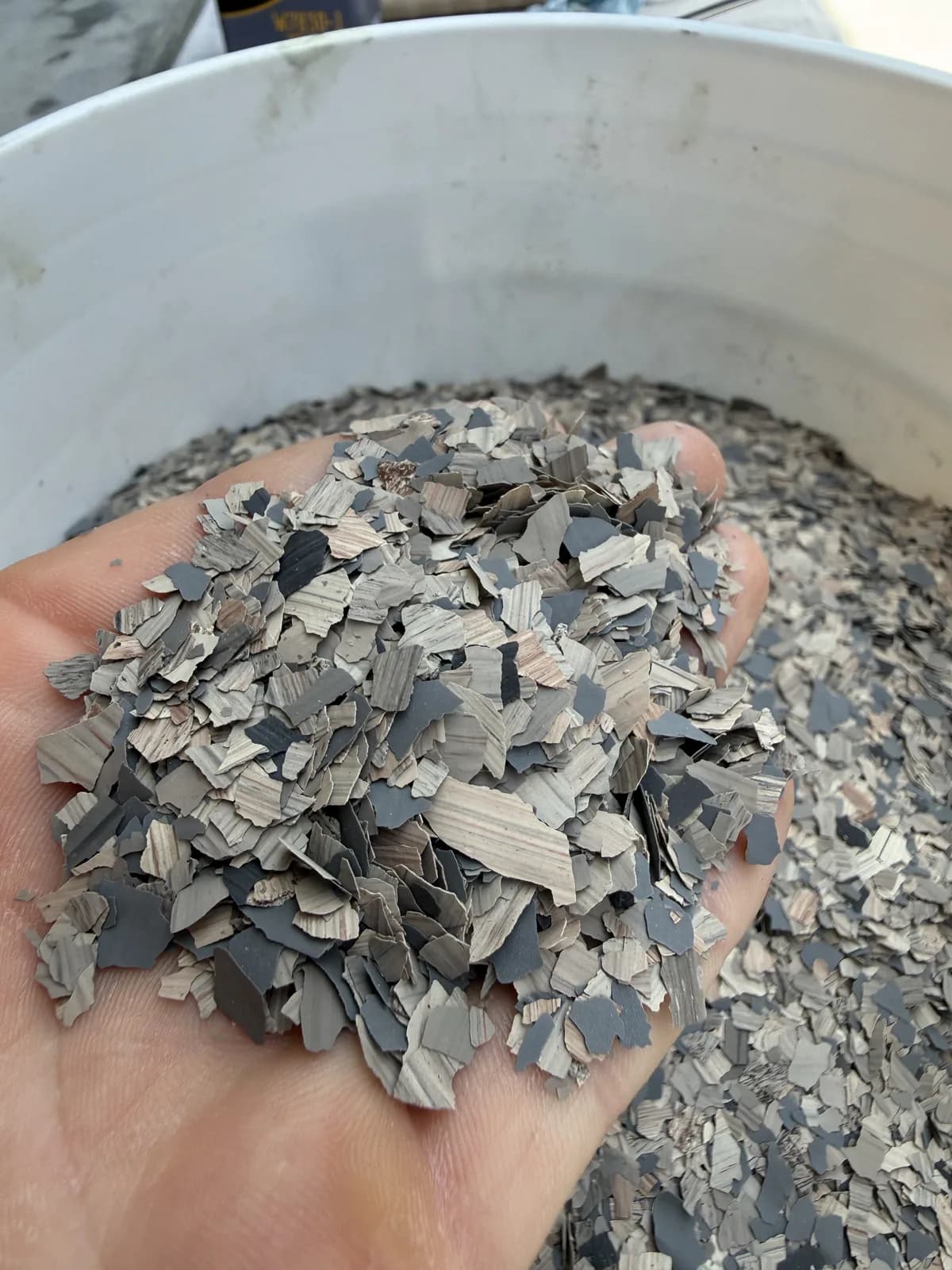
The base coat goes down pigmented. While it is still wet, vinyl chips are thrown into it by hand — into it, not onto it, which is why there is no second attempt at the timing. Once cured, the loose chips are scraped back and the surface is sealed under a clear coat.

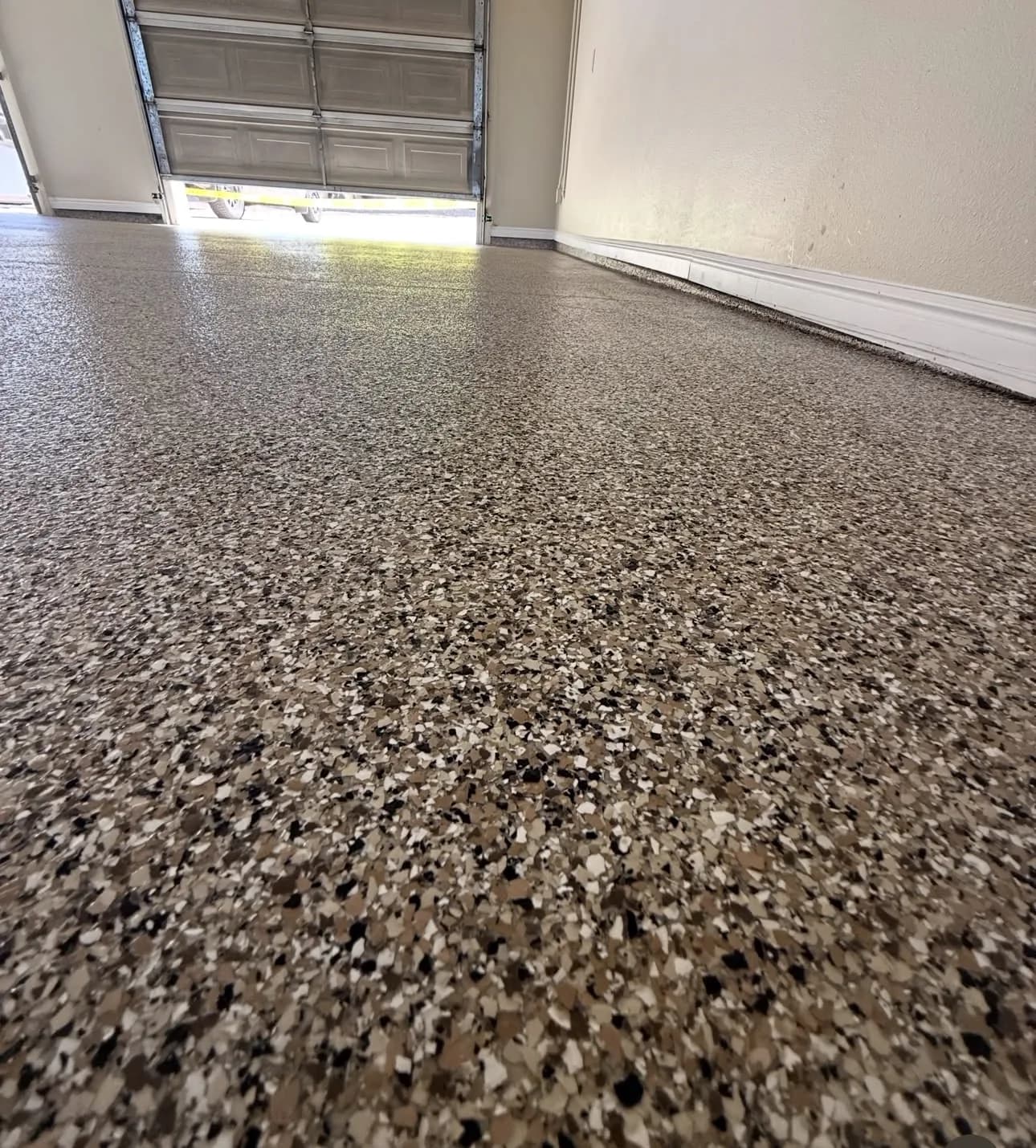
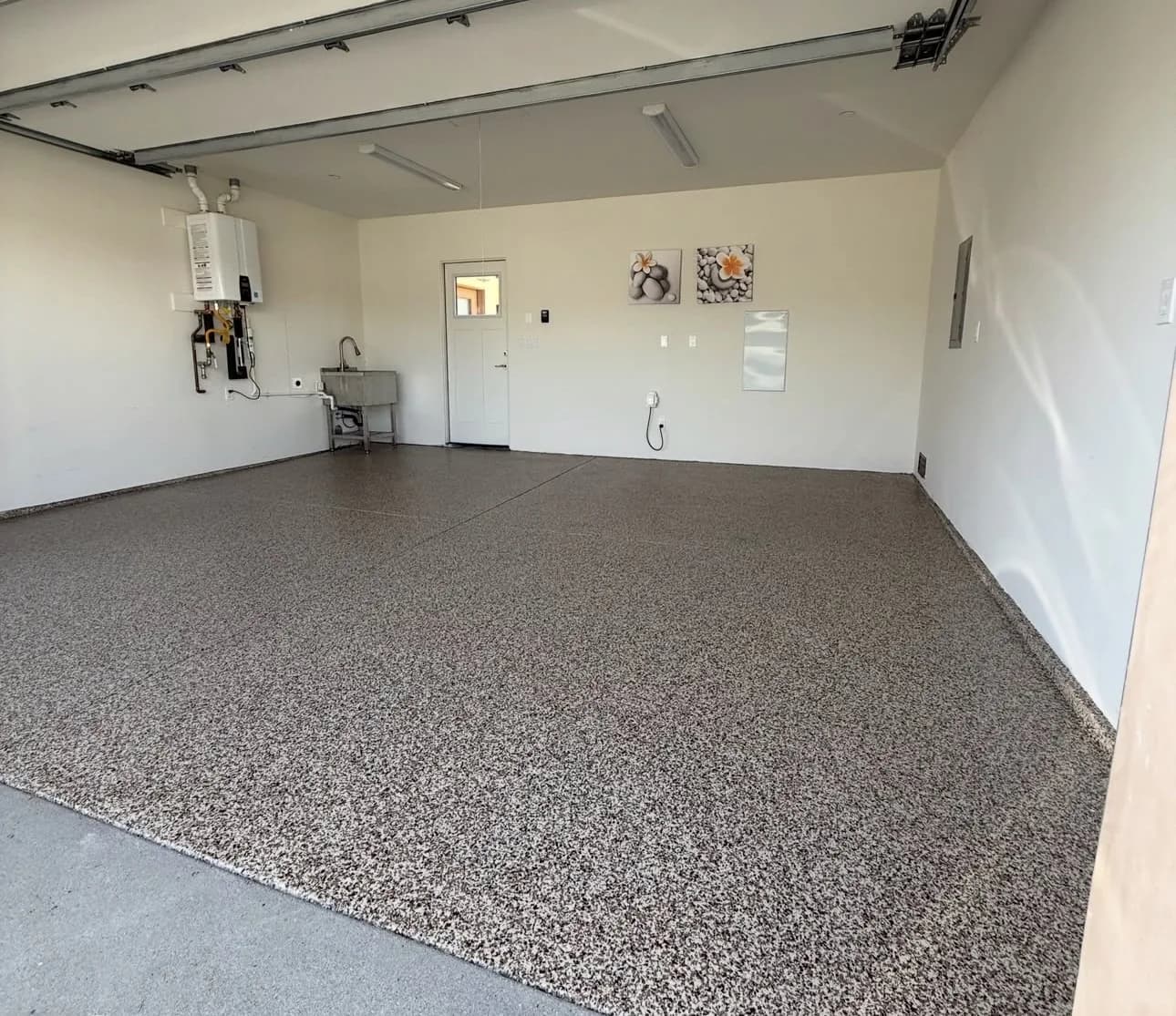
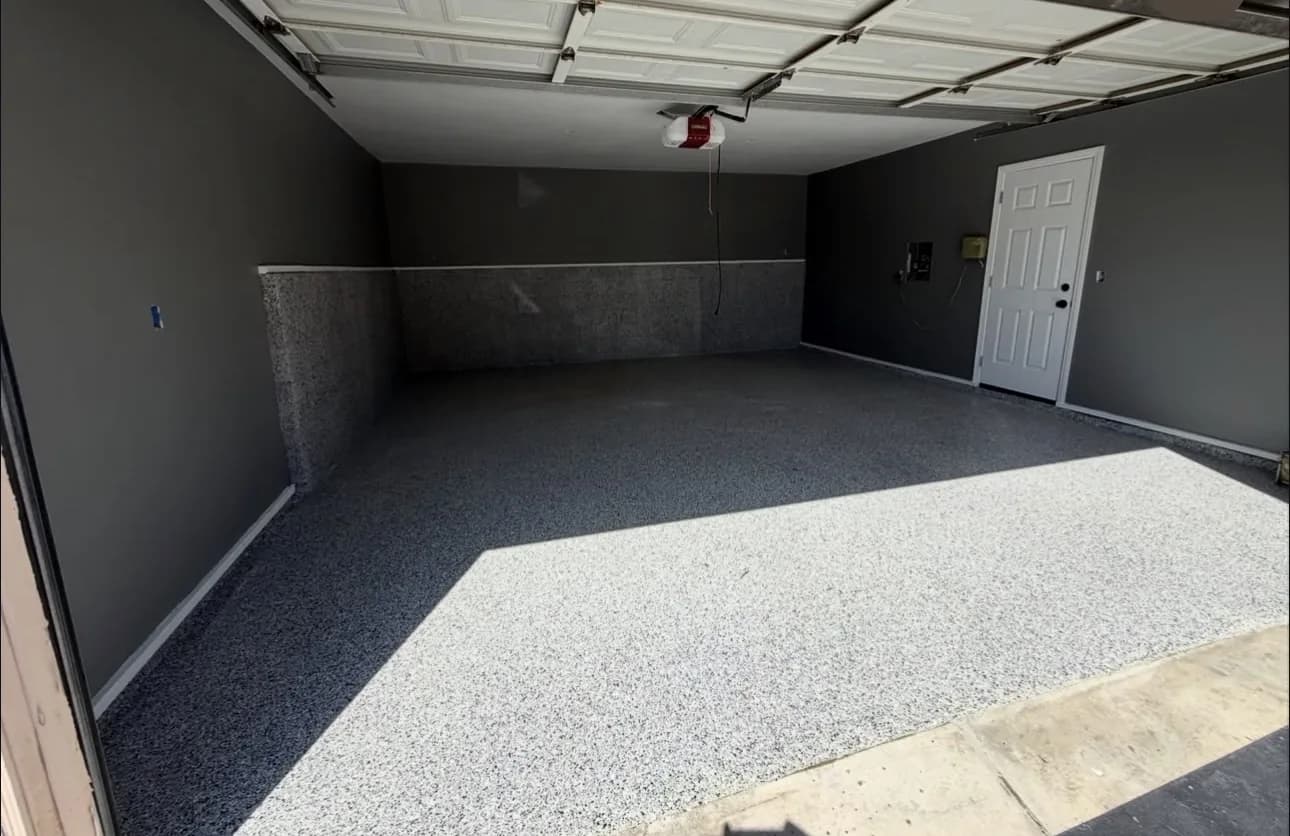
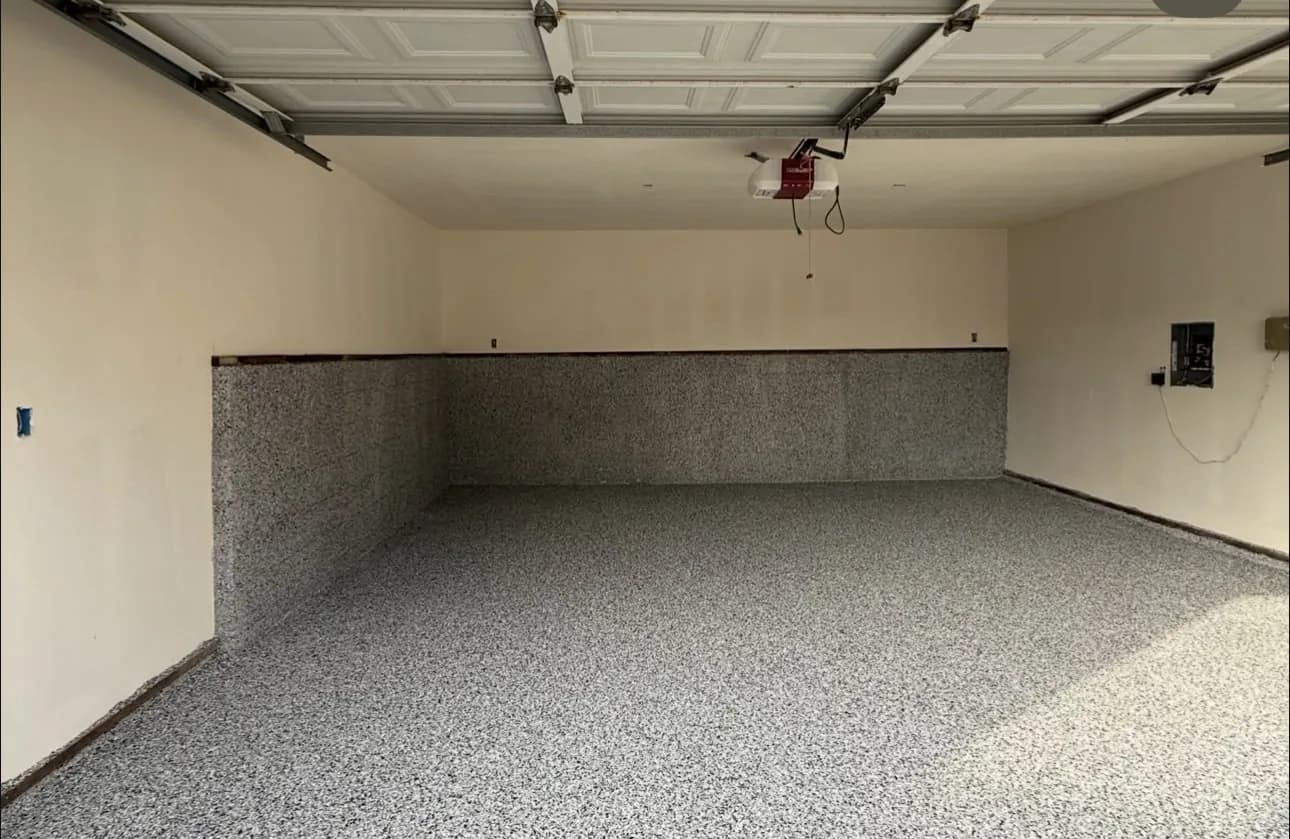
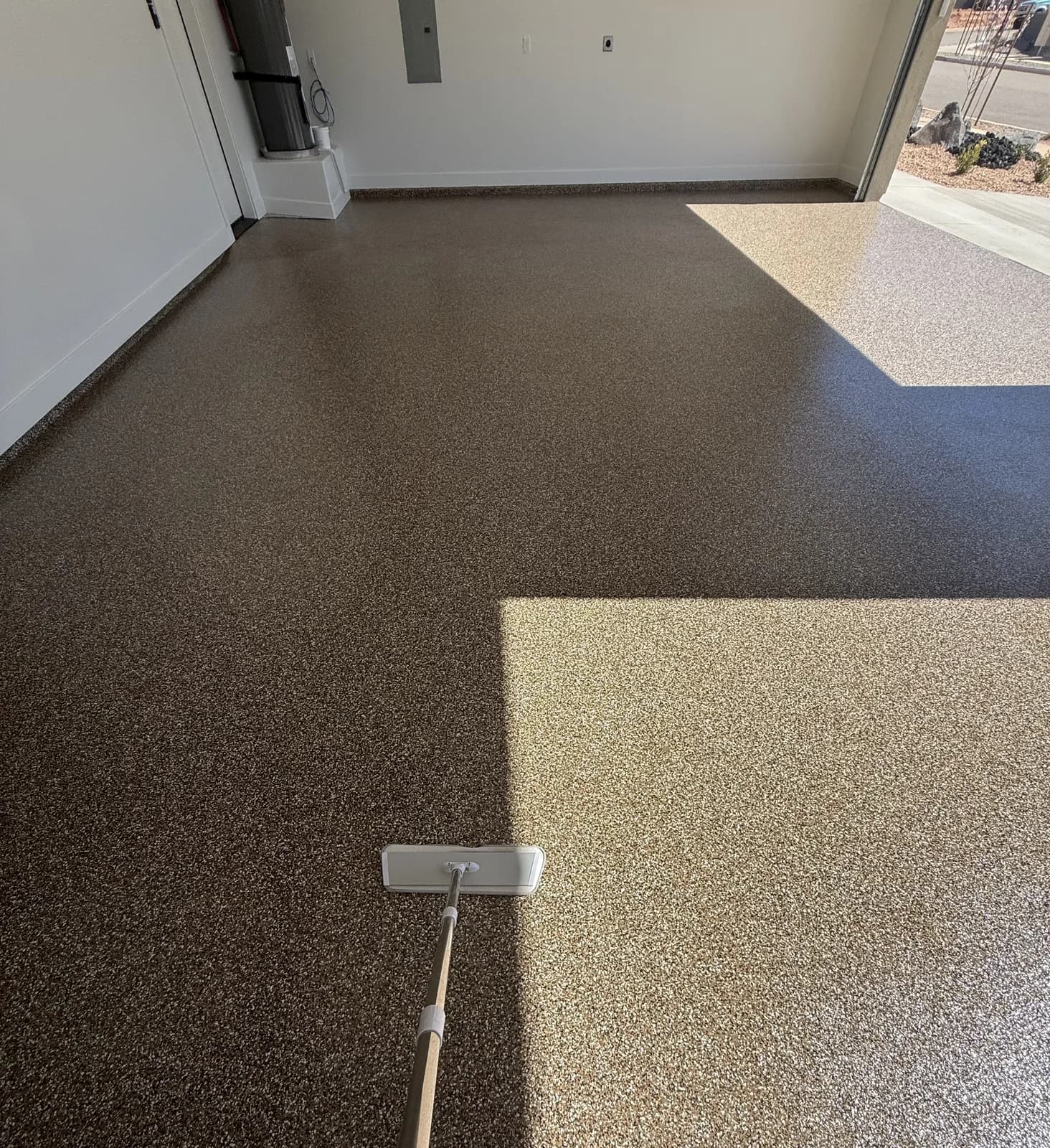
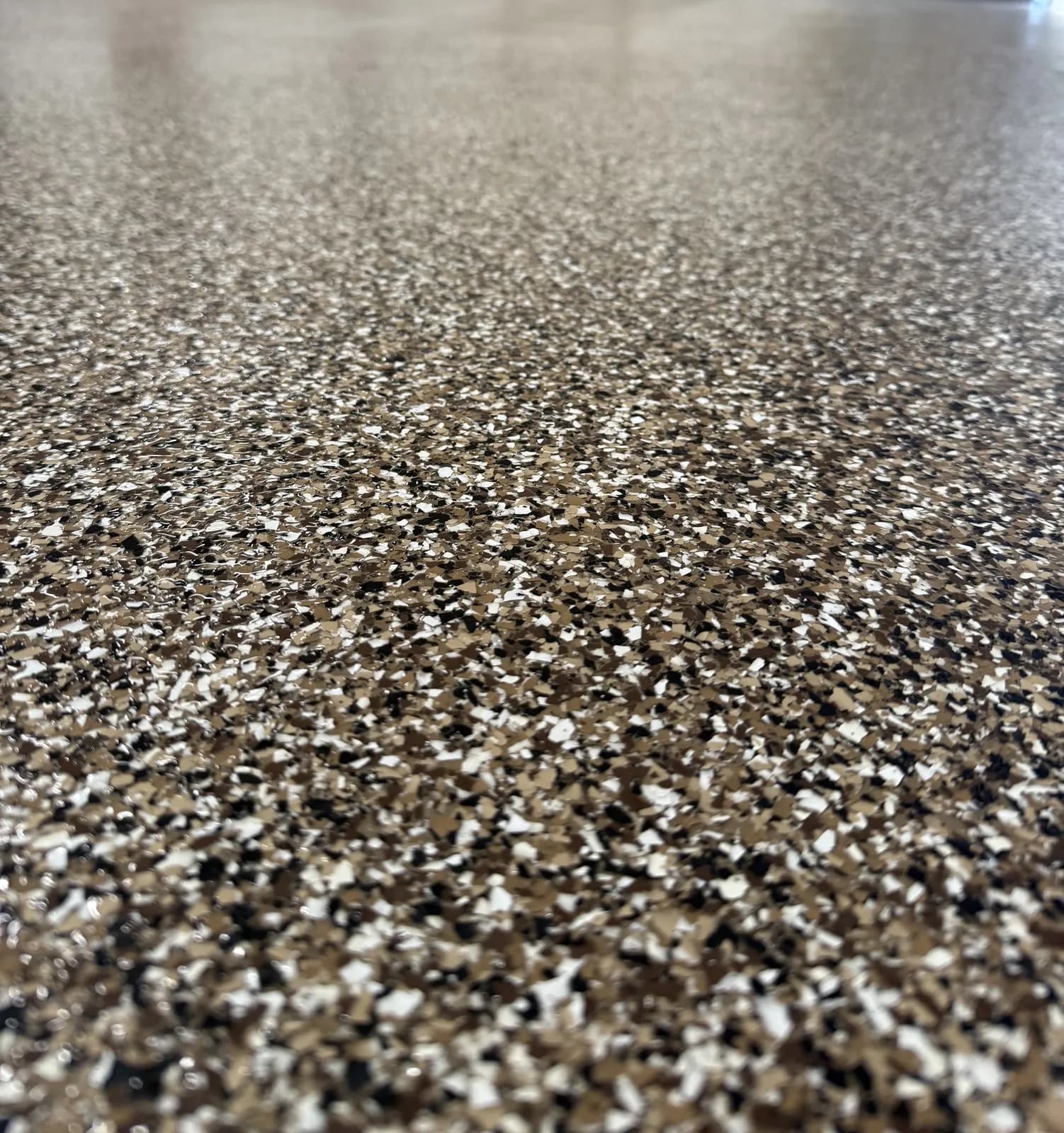
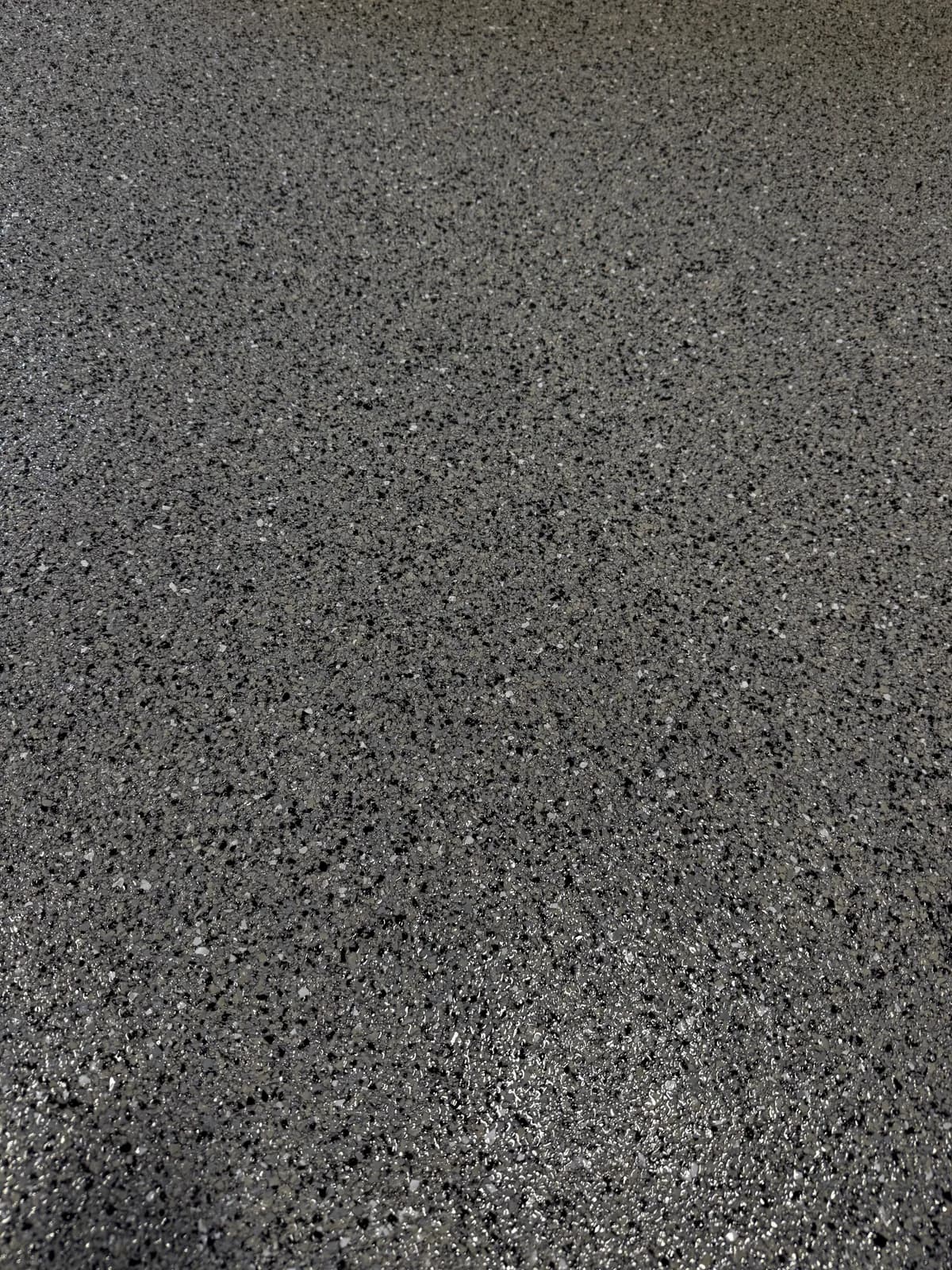
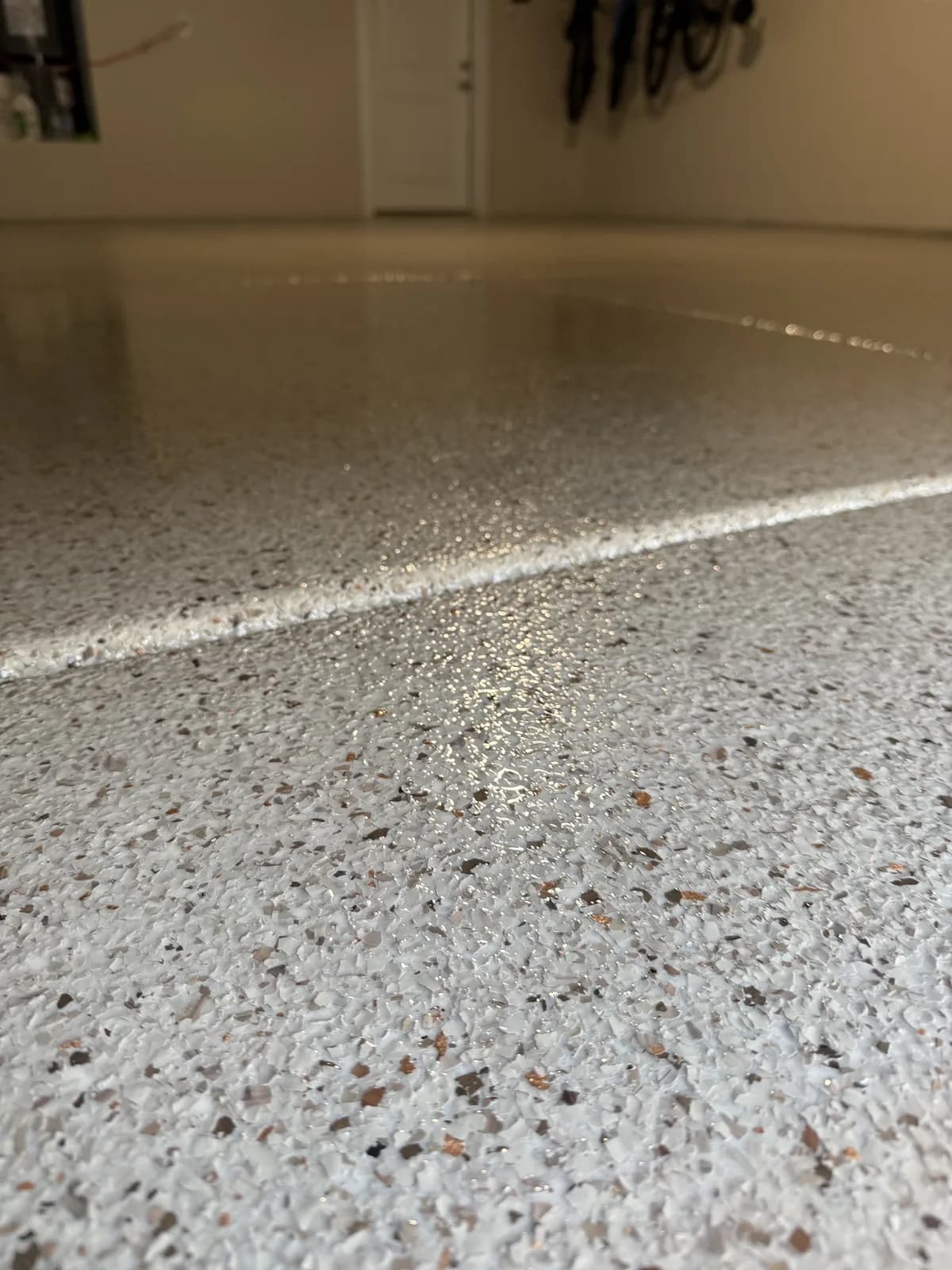
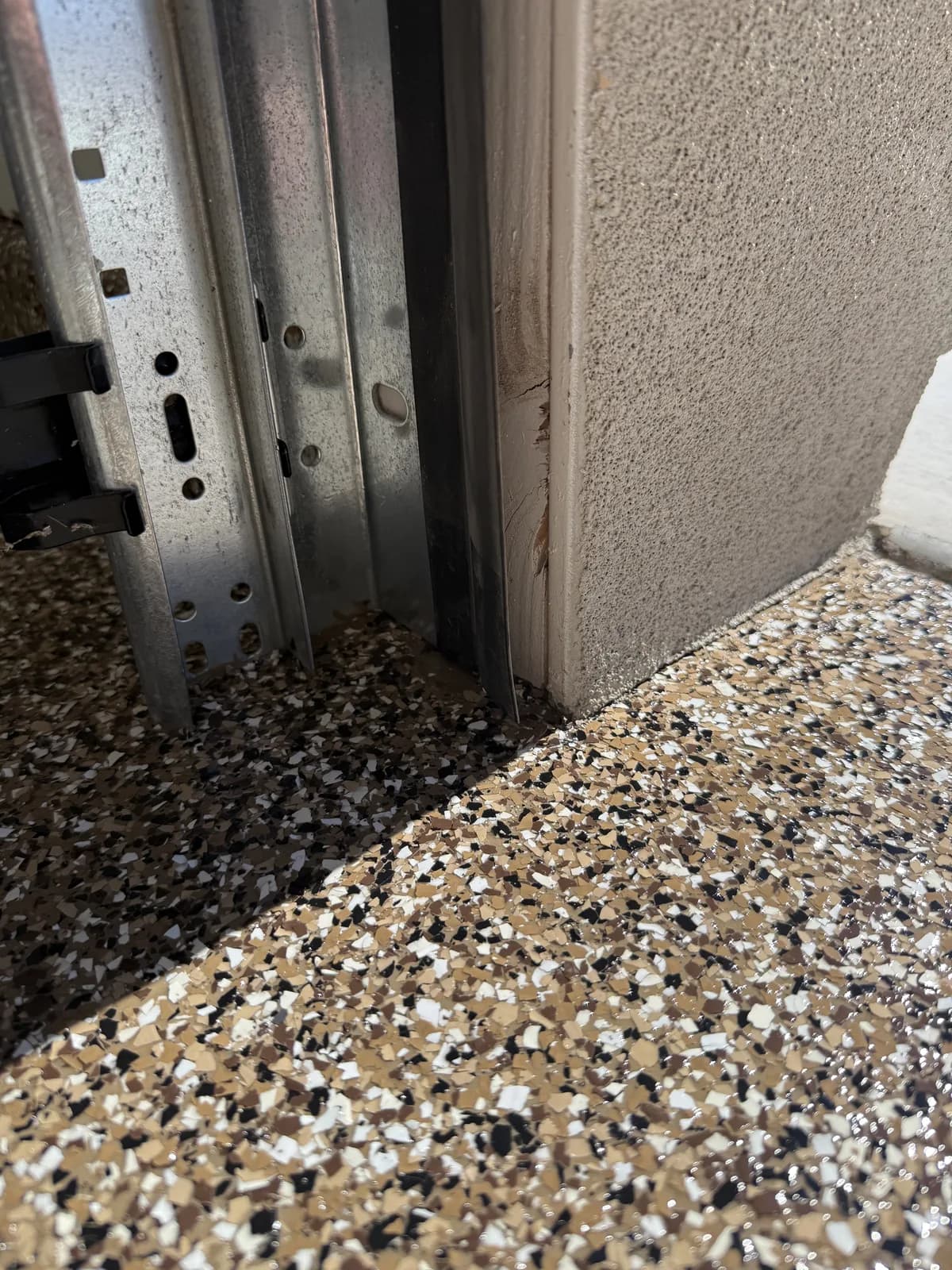
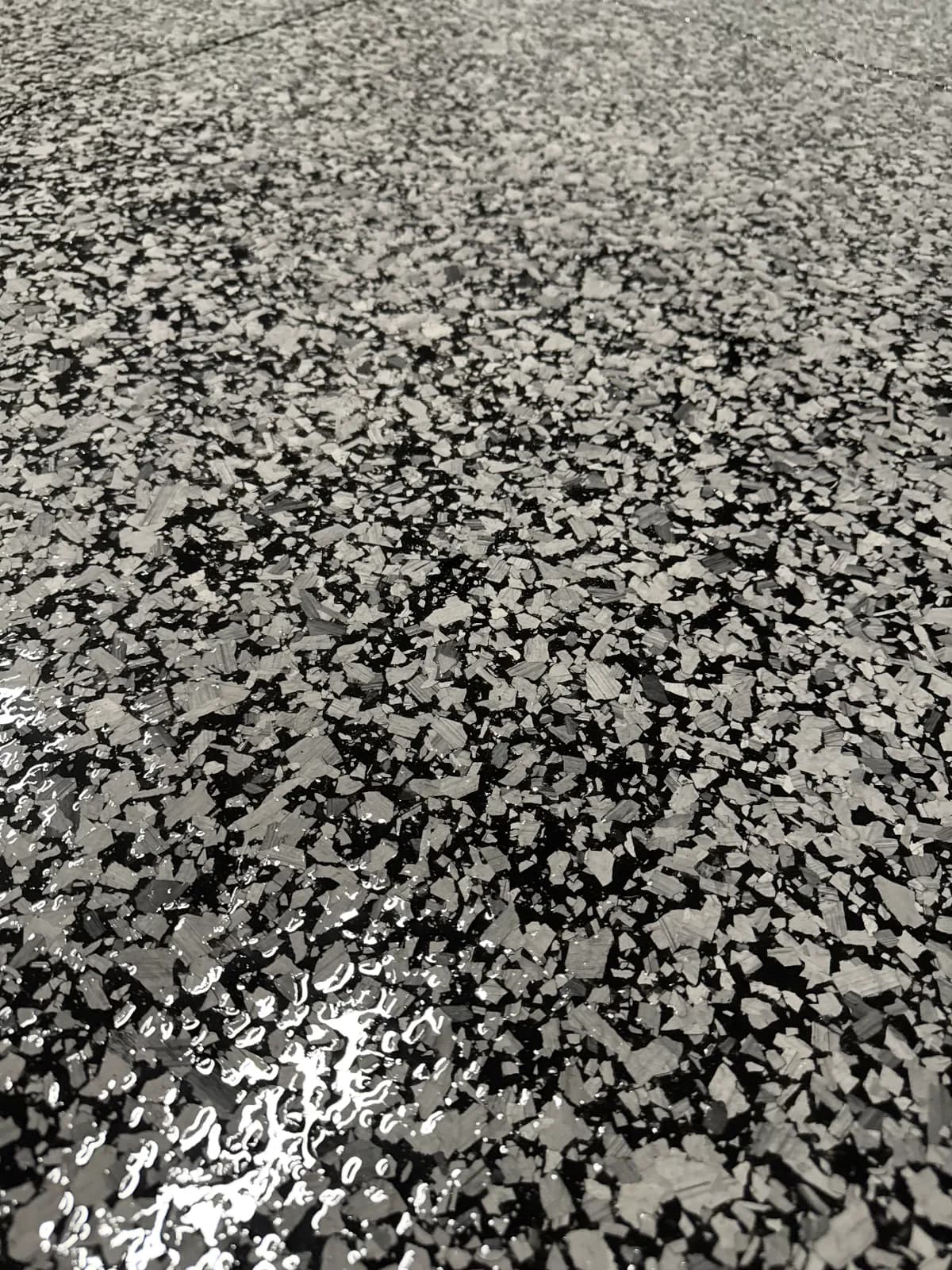
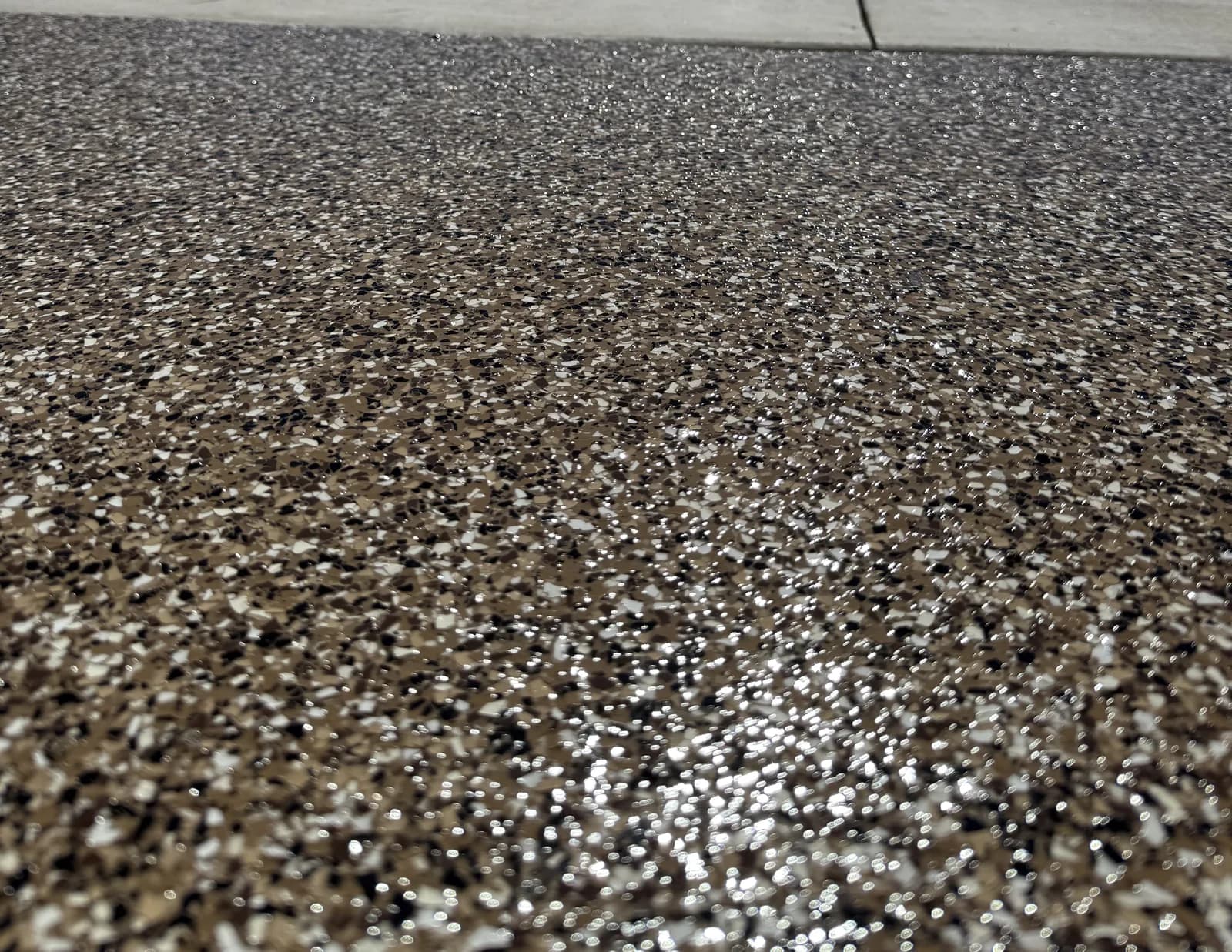
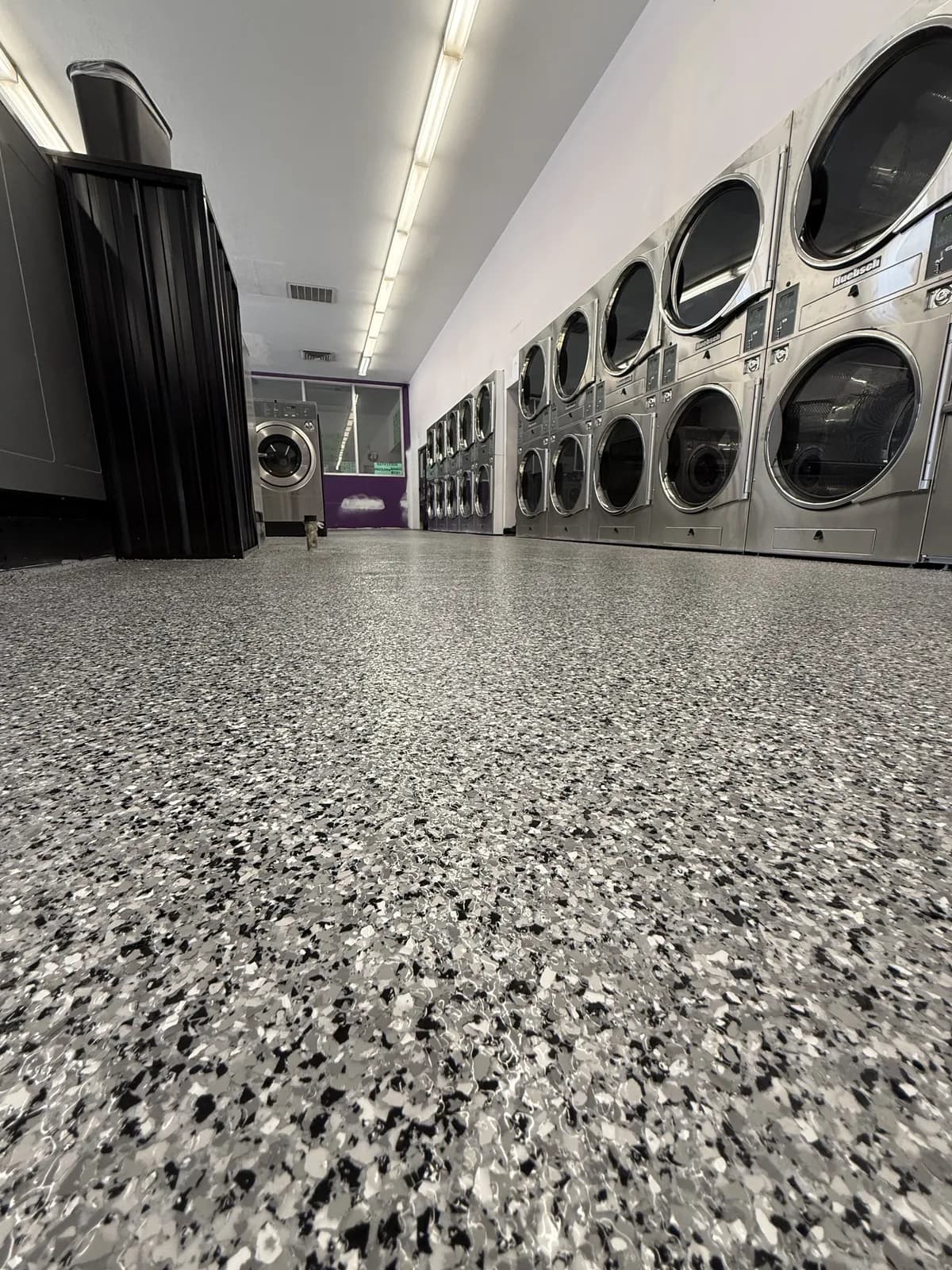
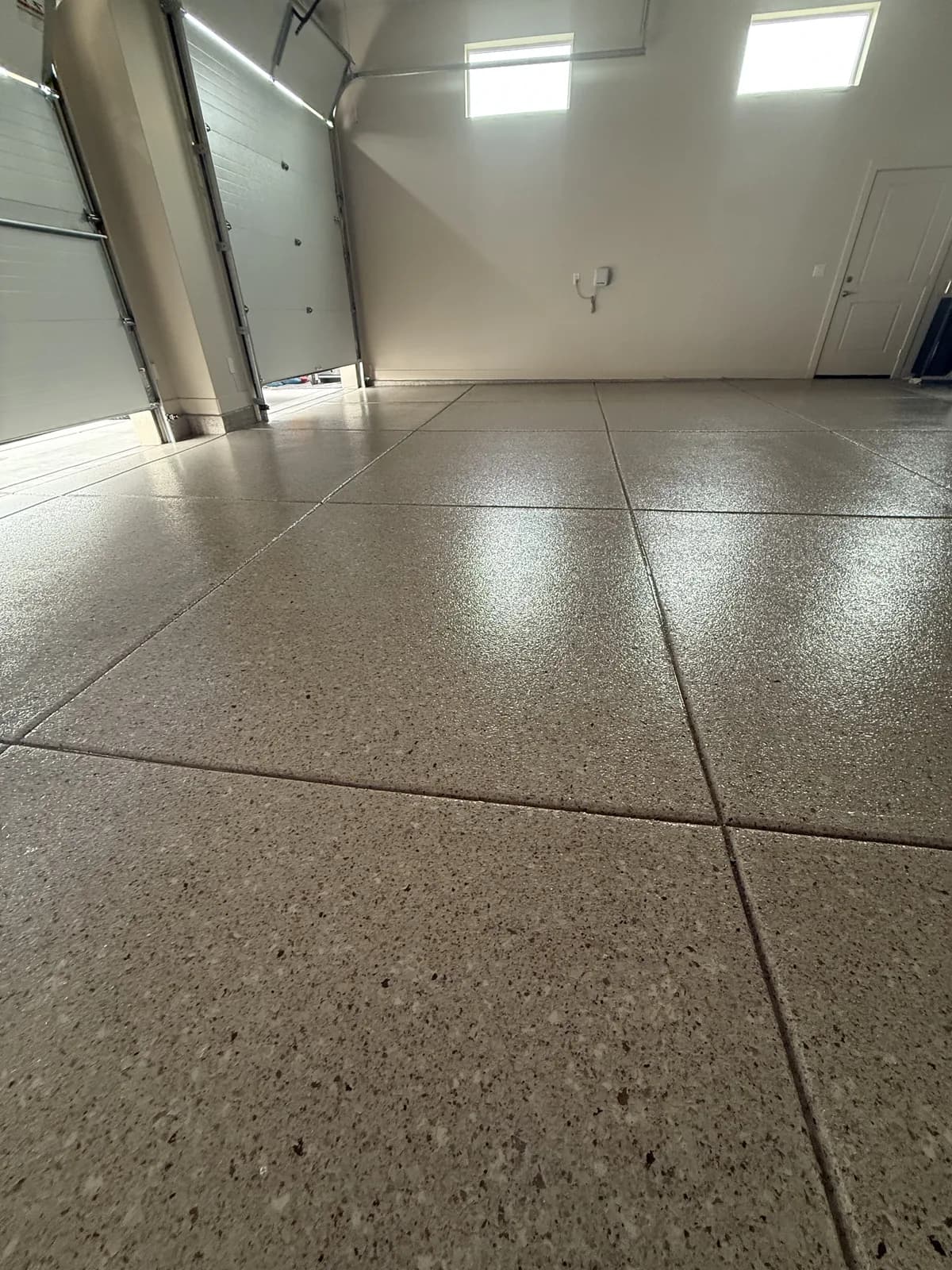
It is called a full broadcast when chips are thrown until the base will not take any more. That is what you are looking at in the close-up photographs here: no base color showing through at any angle.

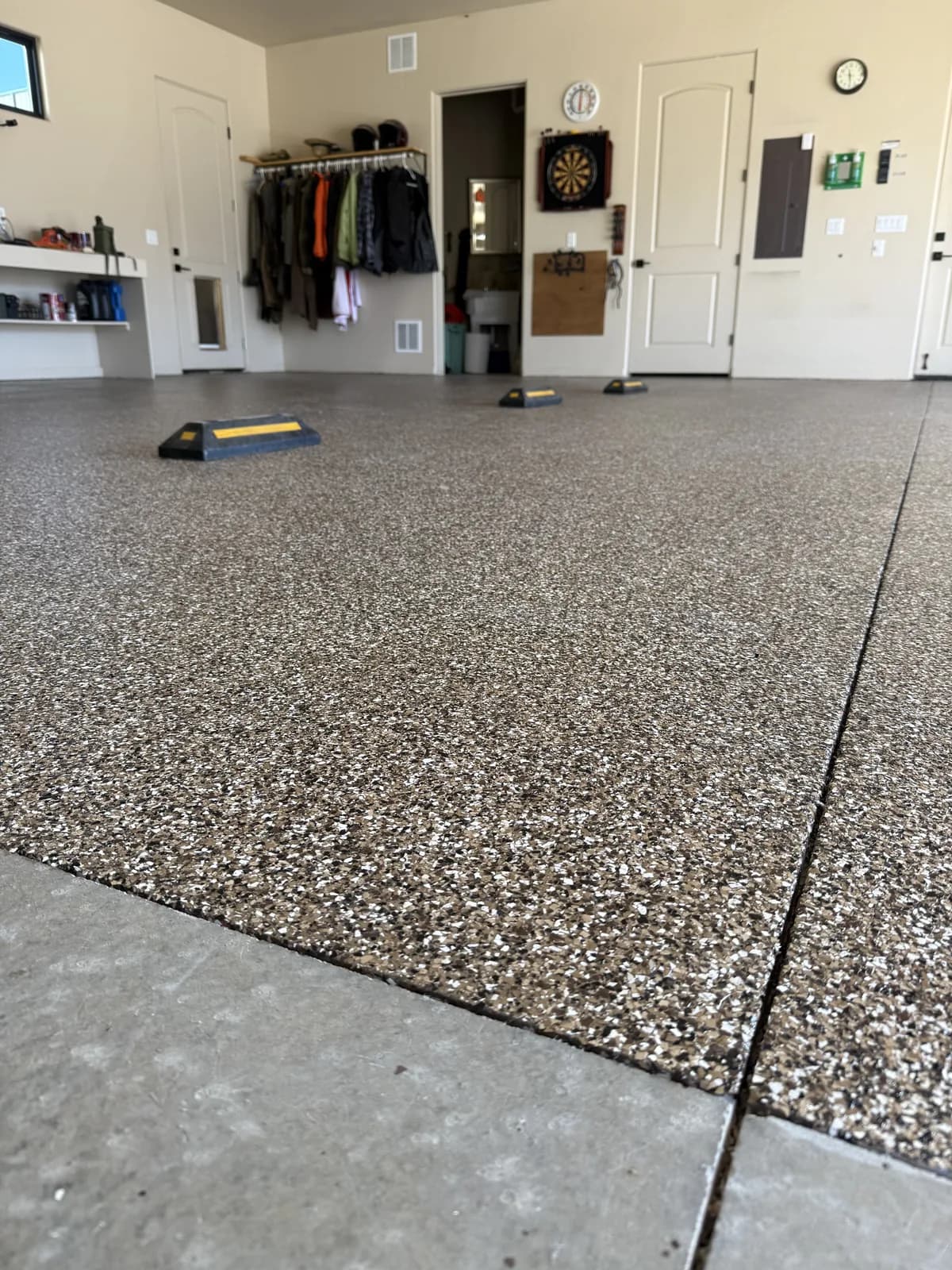
Two practical consequences. A flake floor has texture, so it is less slippery wet than a smooth one, and it hides dust, tire marks and the ordinary unevenness of a domestic slab far better than a solid color. The trade is that it is busier to look at, and the blend you pick is the floor you keep.

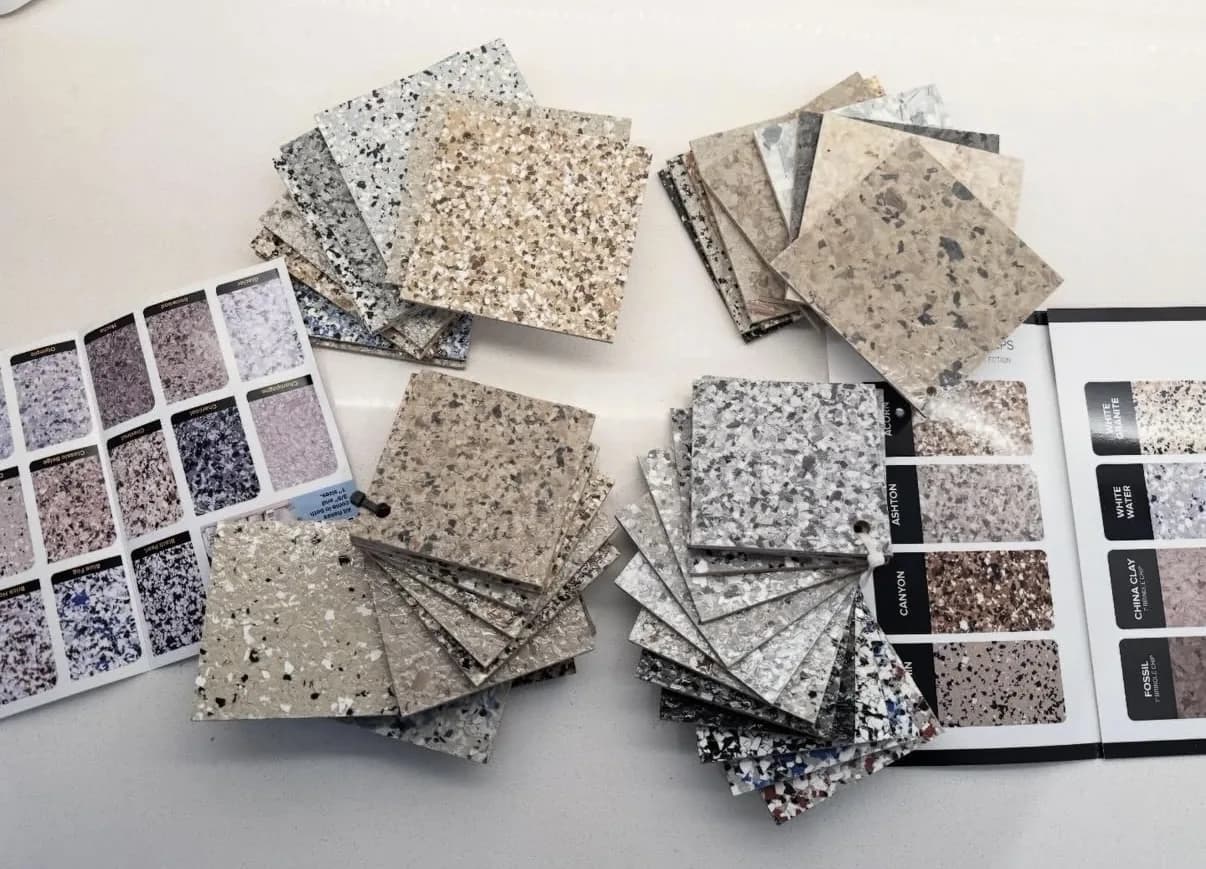
Pick the blend from a physical chip in daylight. The samples read differently under a garage light than they do under the sun, and a photograph on a phone is not a color match.

What is included

  • The blend chosen from physical samples before anything is ordered
  • Pigmented base coat over a prepared, tested slab
  • Full broadcast by hand, to refusal
  • Scraping back the loose chips once cured
  • Clear top coat over the whole floor
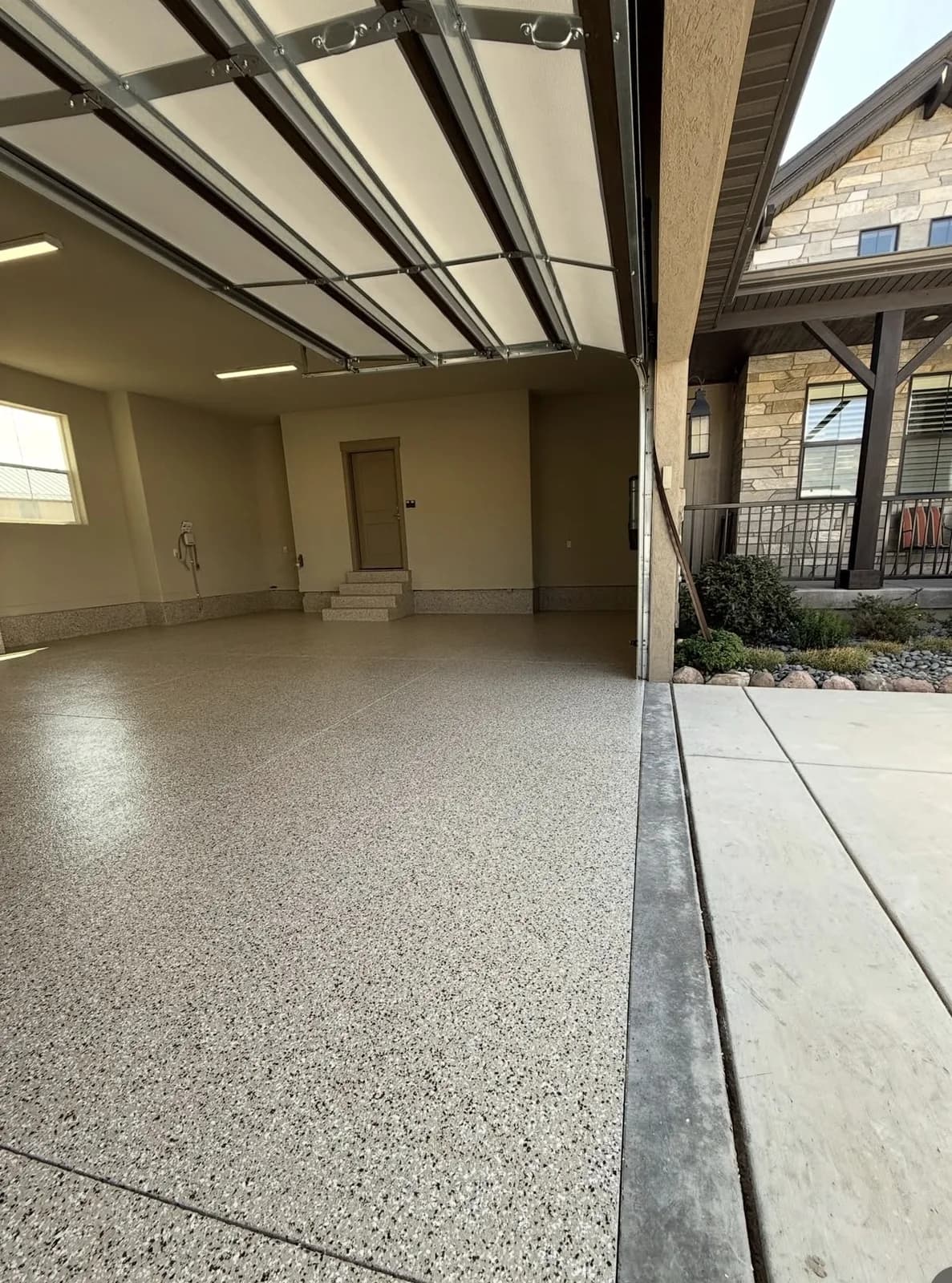
  • Carrying the finish up the wall as a base where you want it, quoted as its own line

What is not

  • Matching a blend to a photograph. We match to a chip
  • Changing the blend after the base coat is down
  • A partial broadcast sold as a full one. If you want a lighter scatter, that is a choice and we will price it as one

Why texture is not a cosmetic decision here

A garage slab in Washington County collects blown sand and fine dust for most of the year. On a smooth, solid-color floor that shows as a film and reads as dirt within a week of cleaning. On a flake floor it disappears into the pattern.

The same texture is what keeps the floor usable when a car comes in wet after a monsoon storm. Flooding is the most widespread geologic hazard in southwestern Utah, and the storms that cause it are short and heavy. A smooth sealed slab with water on it is a skating rink; a broadcast one is not.

What to ask anyone quoting this, us included

  • Is this a full broadcast, or a scatter? Ask to see the difference on a sample board
  • What is the clear coat, and what does its data sheet say about ultraviolet exposure?
  • Can I see the actual chip in daylight before you order it?
What we can show you in writing

Every line traces to a document we read in full. The number after a sentence points to the research below.

  • Concrete substrates must be mechanically prepared to remove cement laitance, existing coatings and curing compounds, and to achieve a profile that is clean, dry and free of dirt, grease and oil. Diamond grinders create that profile and remove high spots and coatings; shot blasting is described as the industry standard for surface preparation of concrete.1
  • The Utah Geological Survey maps wind-blown sand as one of nine adverse construction conditions for the St. George–Hurricane area in Special Study 127, and Washington County publishes it as its own GIS hazard layer. Utah DEQ notes that from spring through fall, high winds combined with dry surface conditions produce dust storms that can lead to extremely high levels of particulate matter.2
  • UGS Special Study 127 records flooding as the most widespread and damaging geologic hazard in southwestern Utah. Southwest Utah has a defined monsoon season, and St. George has recorded a 78-day dry spell ending with monsoon onset.2

Where this comes from

Every line above traces to a document we read in full. The number after a sentence points to the research below; hover it for the section. If you find a line wrong, tell us and we will fix it and say so.

  1. Concrete coatings research, September 2026 Compiled from ICRI Guideline 310.2R-2013 on concrete surface preparation, the ASTM moisture test standards F2170, F1869 and D4263, ACI 302.2R and NRMCA CIP 29 on slabs and vapor retarders, Sika's published surface preparation guide, Sherwin-Williams product literature on polyaspartic chemistry, and the Utah Geological Survey and Utah DEQ material already cited in the environment research. 1 section cited. Hover a number above for the section.
  2. Environment, water and ground research, August 2026 Compiled from the cities' own water quality reports, Utah Geological Survey Special Study 127, the Utah State Hazard Mitigation Plan, Washington County GIS hazard layers, NOAA climate records, EPA radon zones and Census QuickFacts. 2 sections cited. Hover a number above for the section.

The rest of garage floors

  • Garage floor coating

    The bay emptied, the slab ground back, and a finish that is bonded to concrete rather than sitting on it.

  • Solid color floor

    One color, no chips. The plainest finish, and the one that shows every repair in the slab beneath it.

  • Metallic floor

    A pigmented resin worked while wet so the color moves. No two are the same, which is the point and also the risk.

  • Grind and seal

    The concrete itself is the finish. Ground back, then sealed. Nothing is added on top to fail.

The quote is the number. There is no second number.

Call (801) 680-6859

7 a.m. to 5 p.m., weekdays. Emergency calls answered any hour, every day.