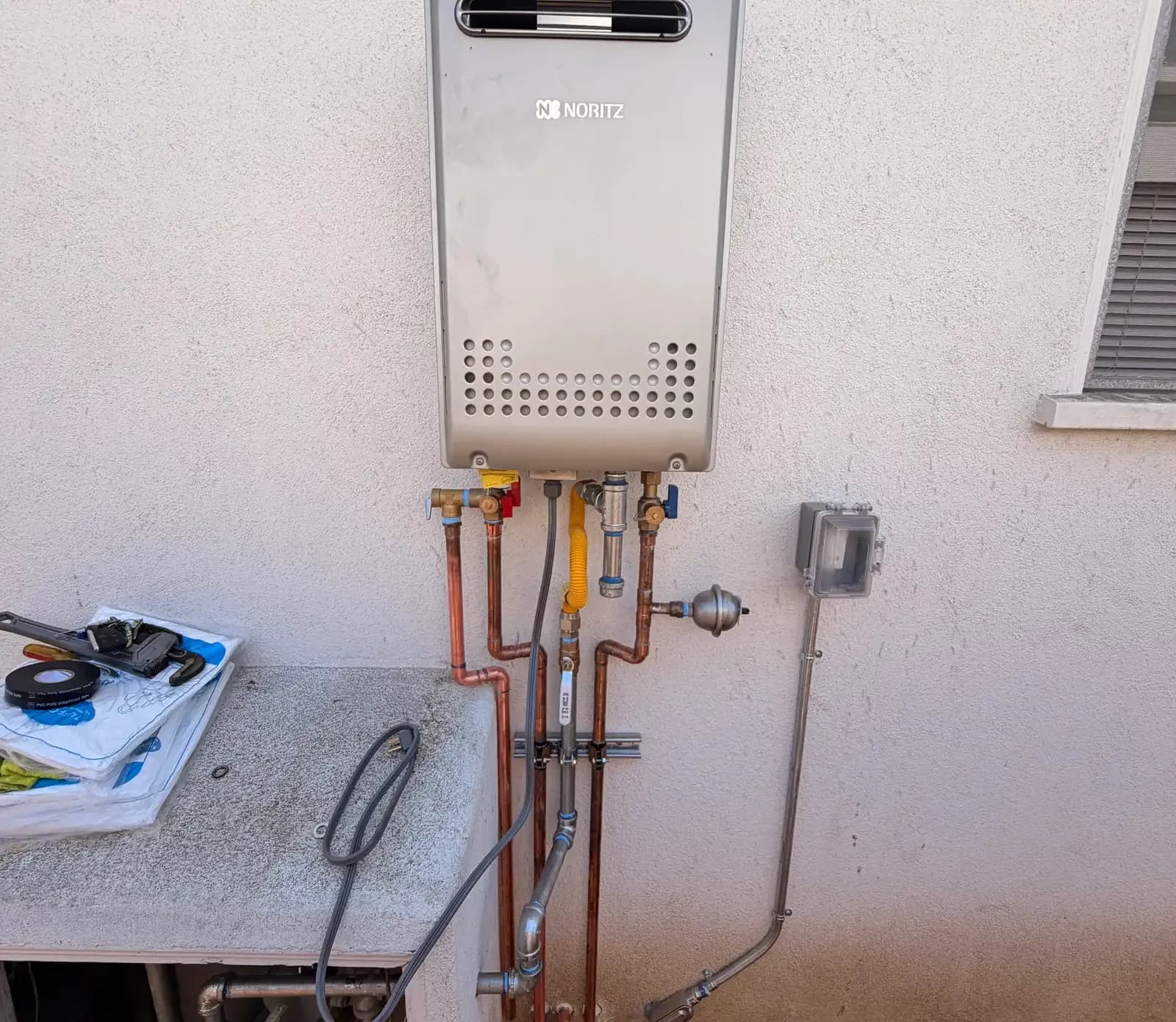
What the work is
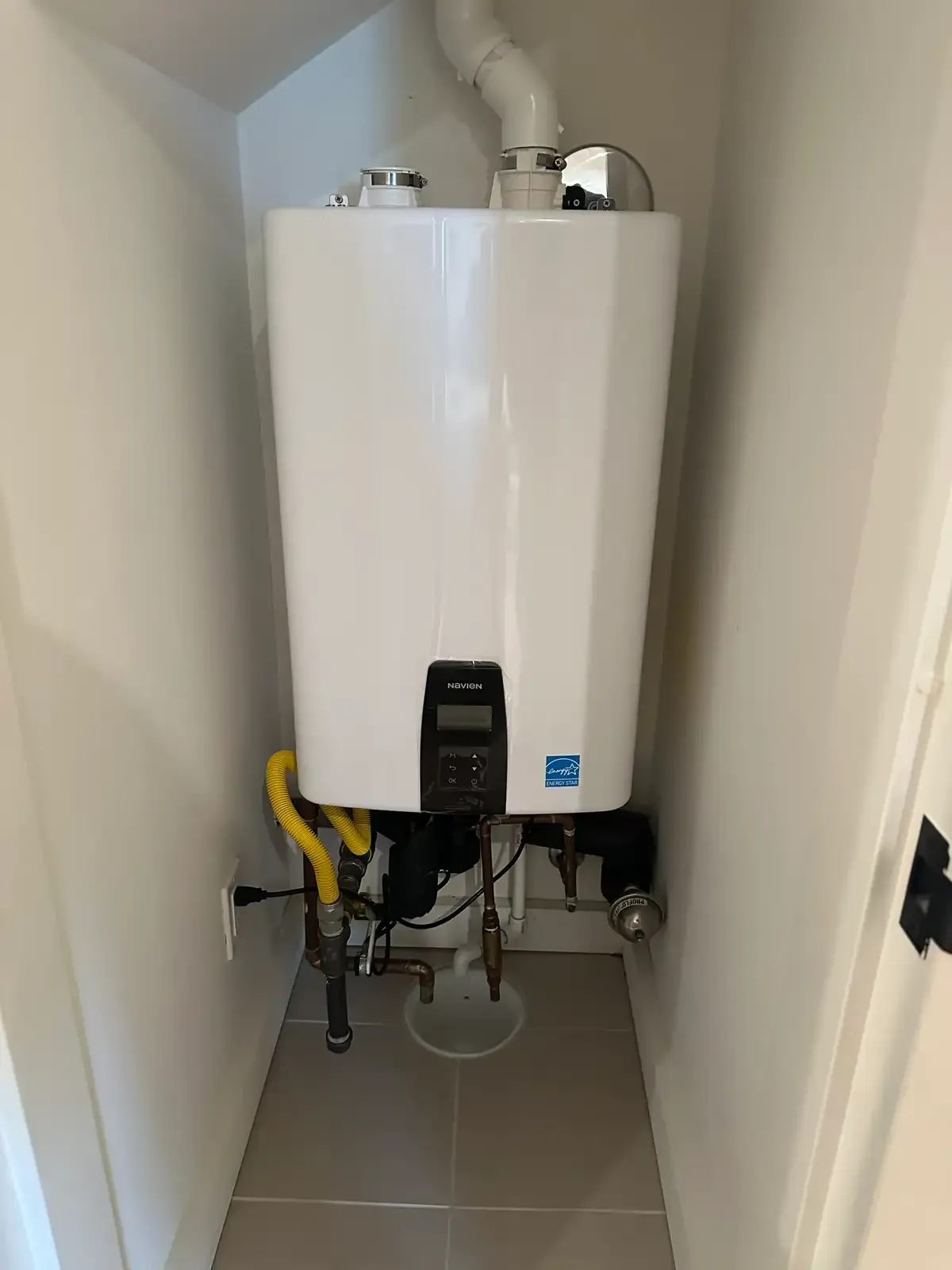
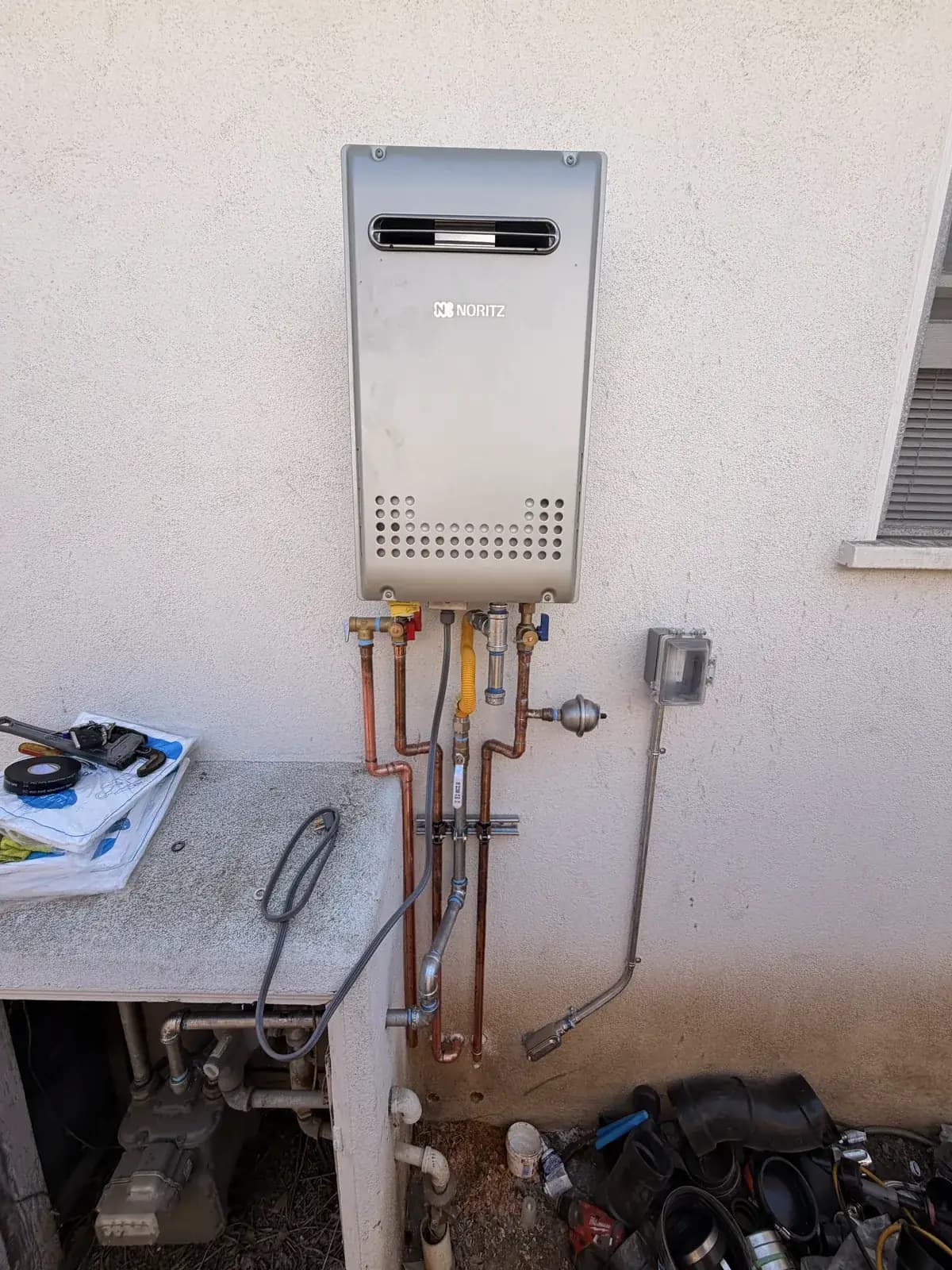
A tankless heater draws far more gas at peak than a tank does, so the existing line is often too small. Undersized gas is the single most common fault we find on a tankless that someone else installed, and it shows up as a unit that cannot hold temperature when two fixtures run.
The rest of a correct install is venting to the manufacturer's spec, condensate routed to a legal termination on a condensing unit, and a pair of isolation valves so the heat exchanger can be flushed without cutting pipe.
The isolation valves are not optional here. On this water, a tankless has to be descaled, and a unit installed without them costs more every single time.
What is included
- The unit, mounted, connected and commissioned to the manufacturer's start-up procedure
- Gas line sizing, and upsizing where the calculation requires it
- Venting to the manufacturer's specification
- Condensate routing on a condensing unit
- Isolation service valves on both sides
- The permit and the inspection
- Hauling the old heater away
What is not
- Treating the water. Priced separately, and read the note below before you decide against it
- Electrical beyond a like-for-like connection
- Structural work to carry the unit or the vent
- Any promise the warranty will pay out on an untreated install
Hardness, and what the warranties actually say
St. George's Water Distribution Division tells residents to set a softener to 18 grains per gallon, with a maximum of 22. Four tankless makers cap total hardness at 200 mg/L, which is about 12 grains. That gap is the single most important fact about water heaters in this county, and it is the reason the guide below exists.
Read the exclusions carefully rather than taking anyone's summary of them, including ours. They are not all the same kind of clause: some exclude the damage, one voids the warranty. One maker publishes no hardness figure at all and expressly covers heat exchanger failure from scale on certain units. That is why the guide below quotes the documents instead of paraphrasing them.
The practical version: an untreated tankless in St. George is an uninsured heat exchanger. Softened water leaving a properly set softener is functionally zero to one grain, which clears every limit in the table.
What to ask anyone quoting this, us included
- What gas line size does this unit need at full fire, and what have I got?
- Are isolation valves included?
- Which warranty applies, and what does it say about hardness?
- Where does the condensate go?