What the work is
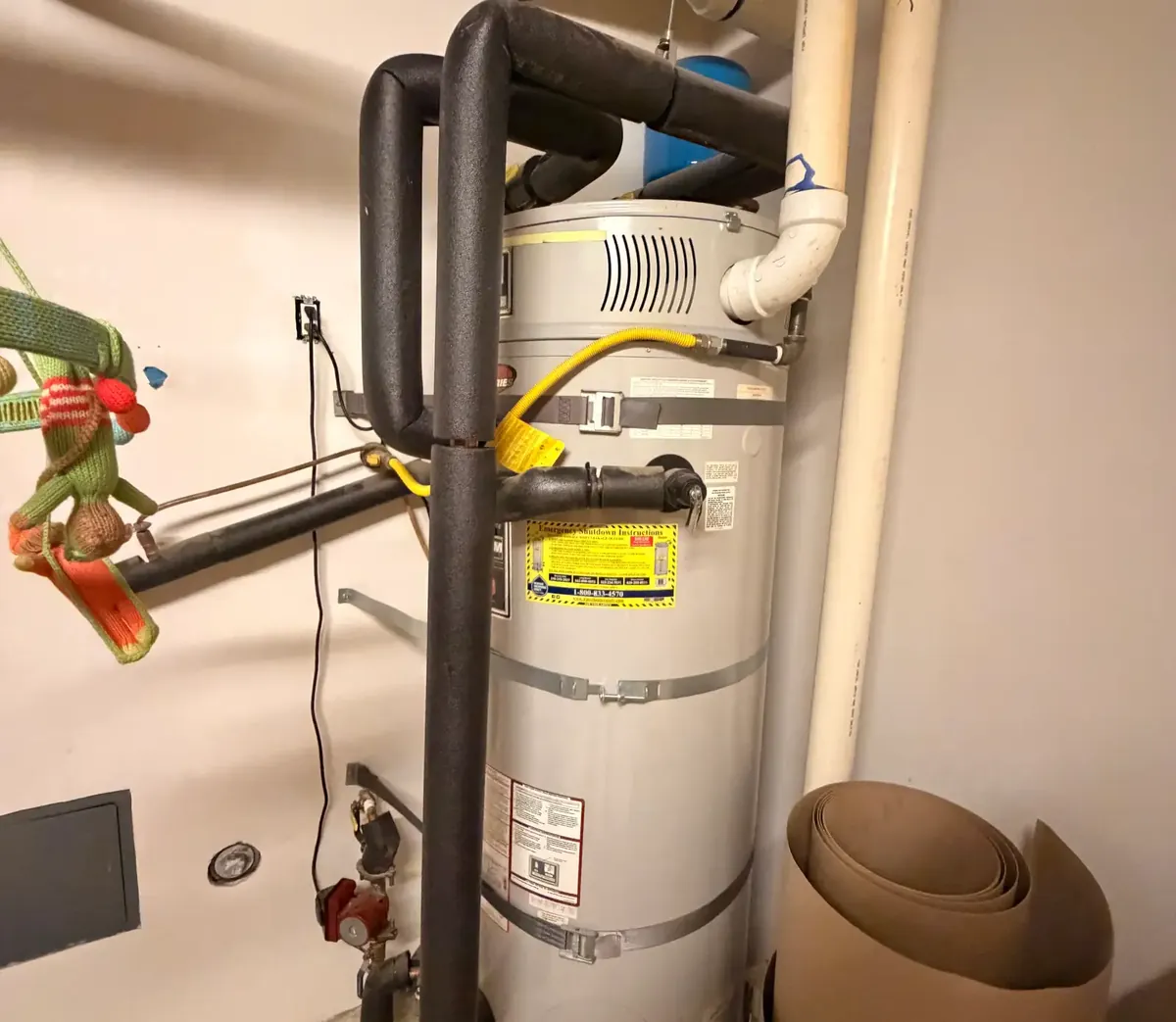
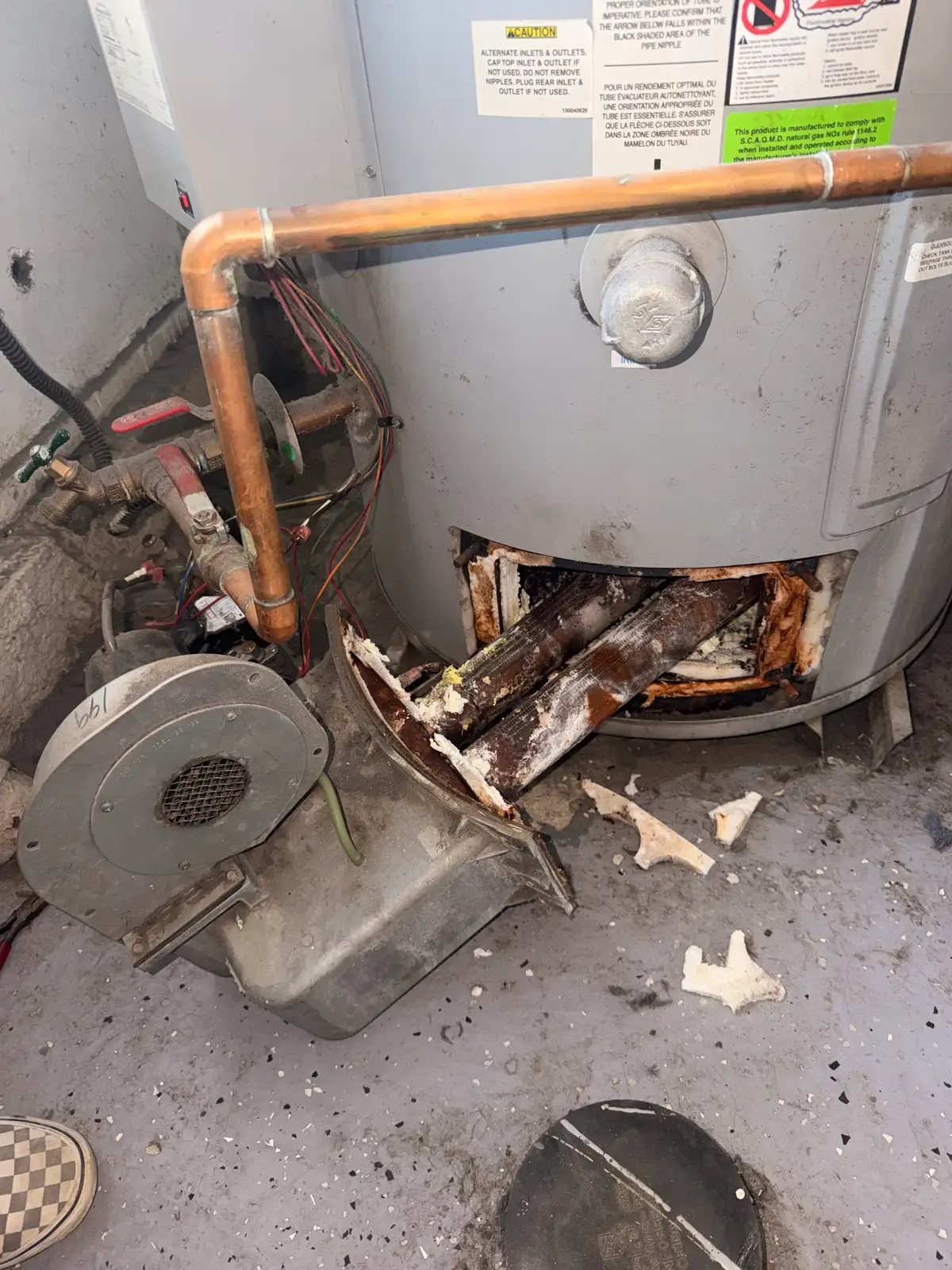
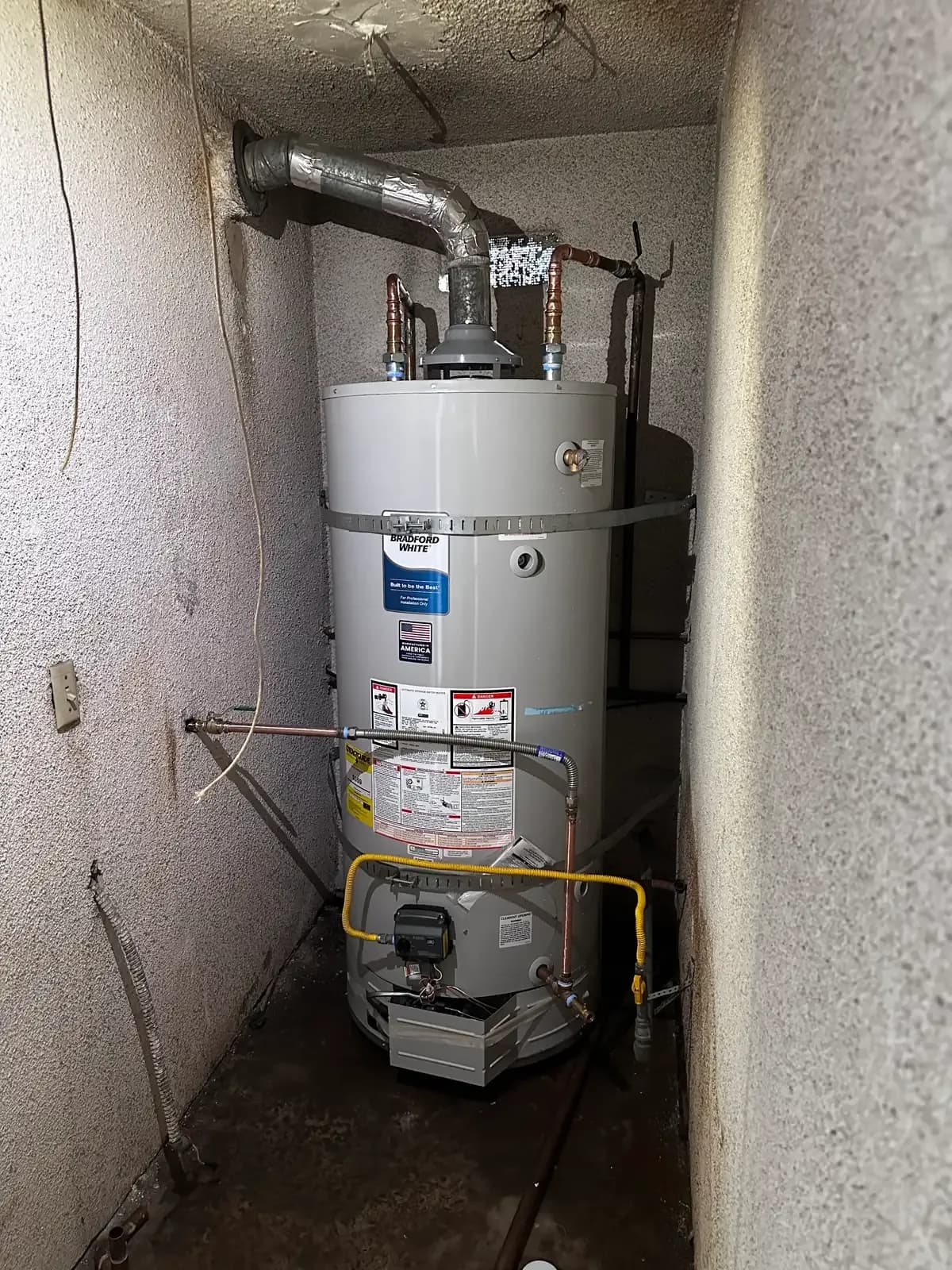
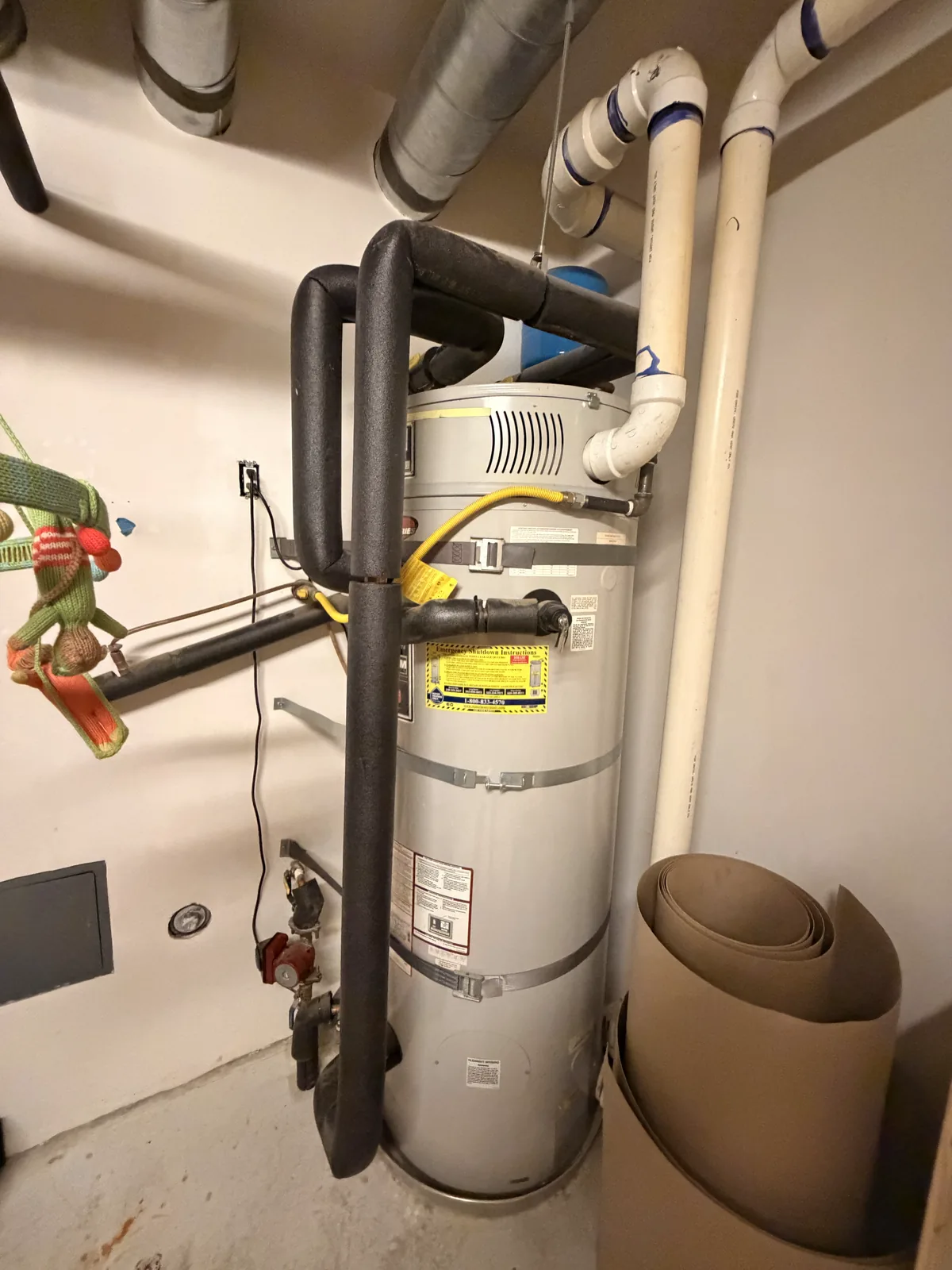
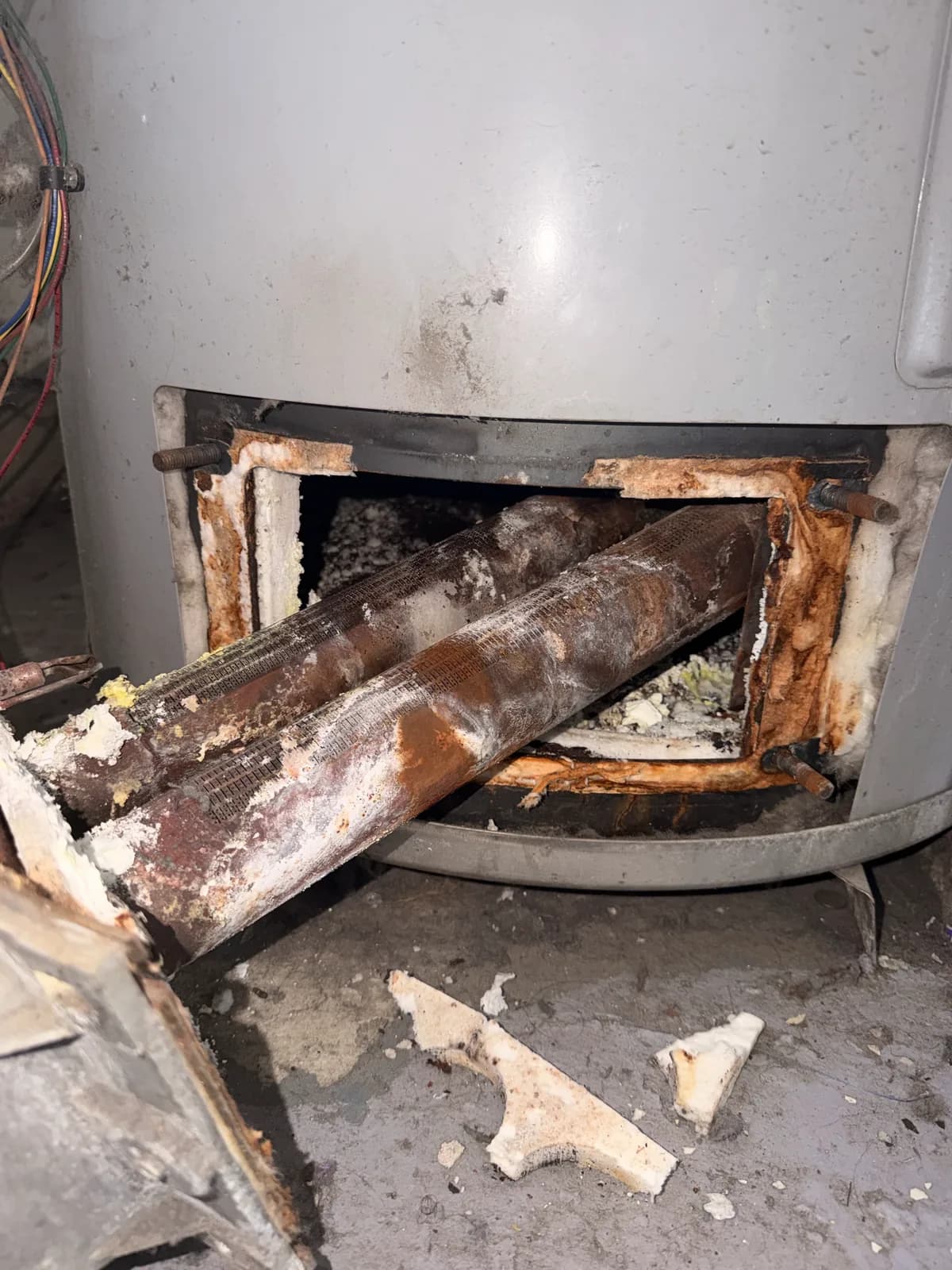
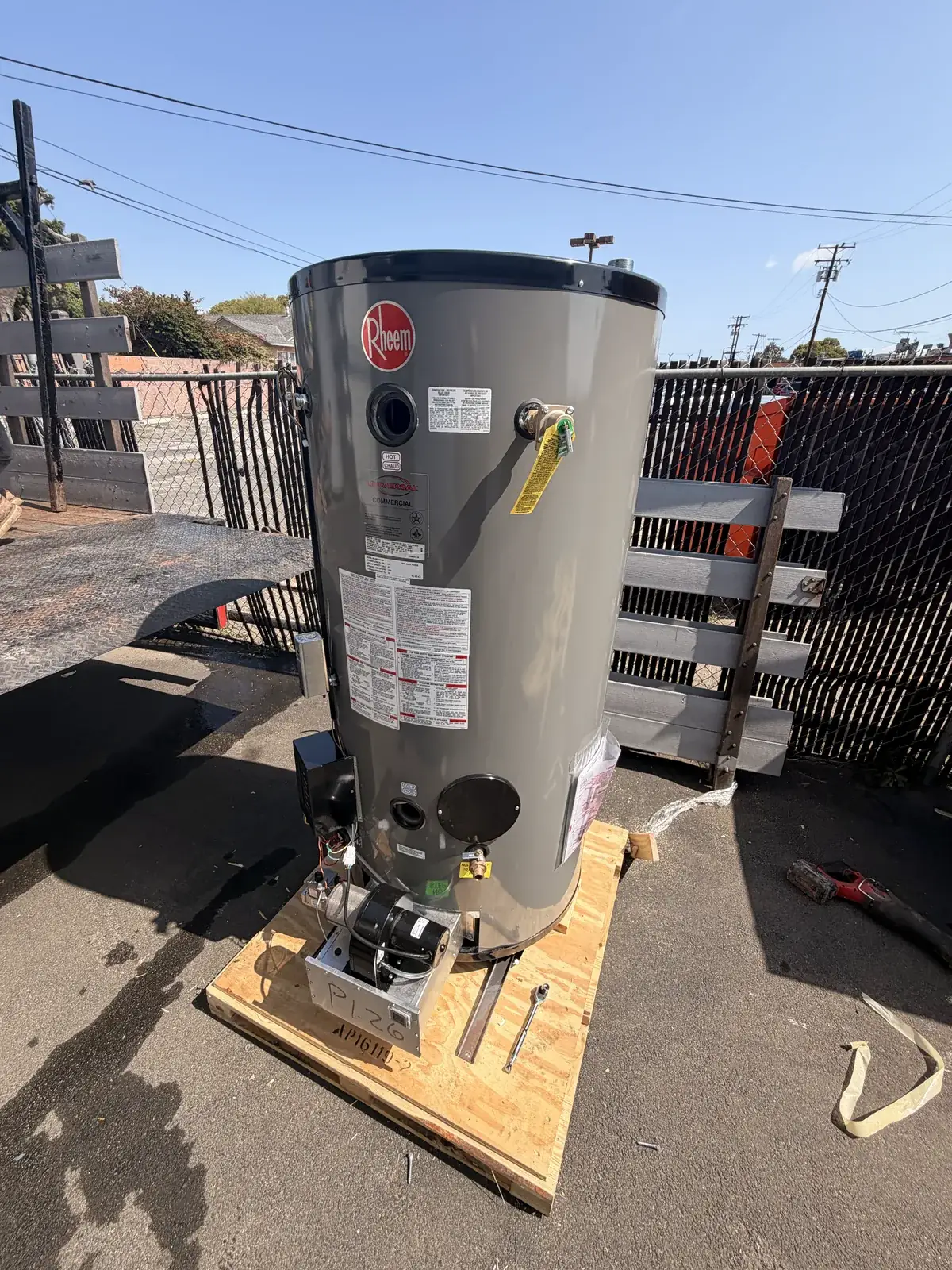
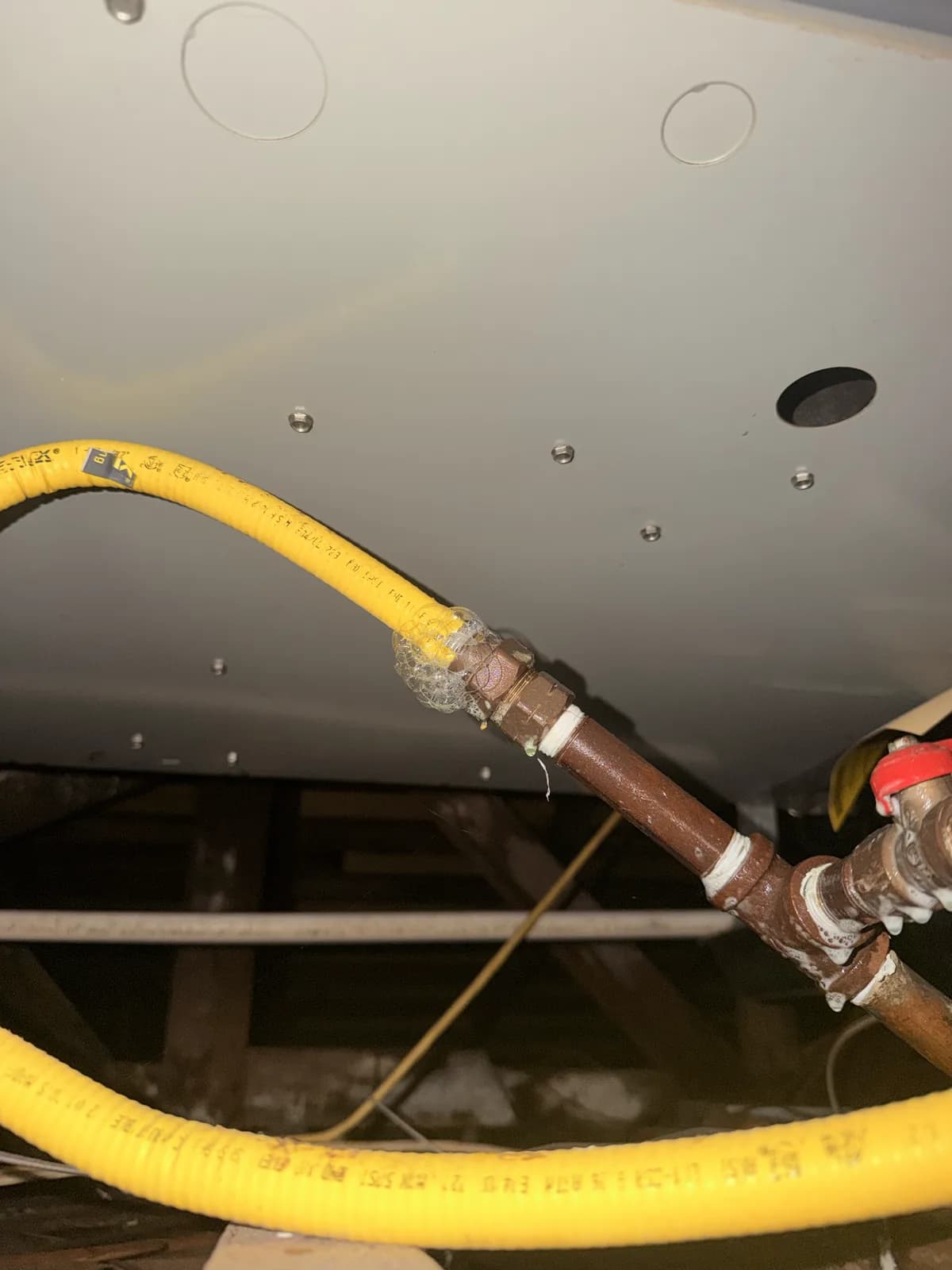
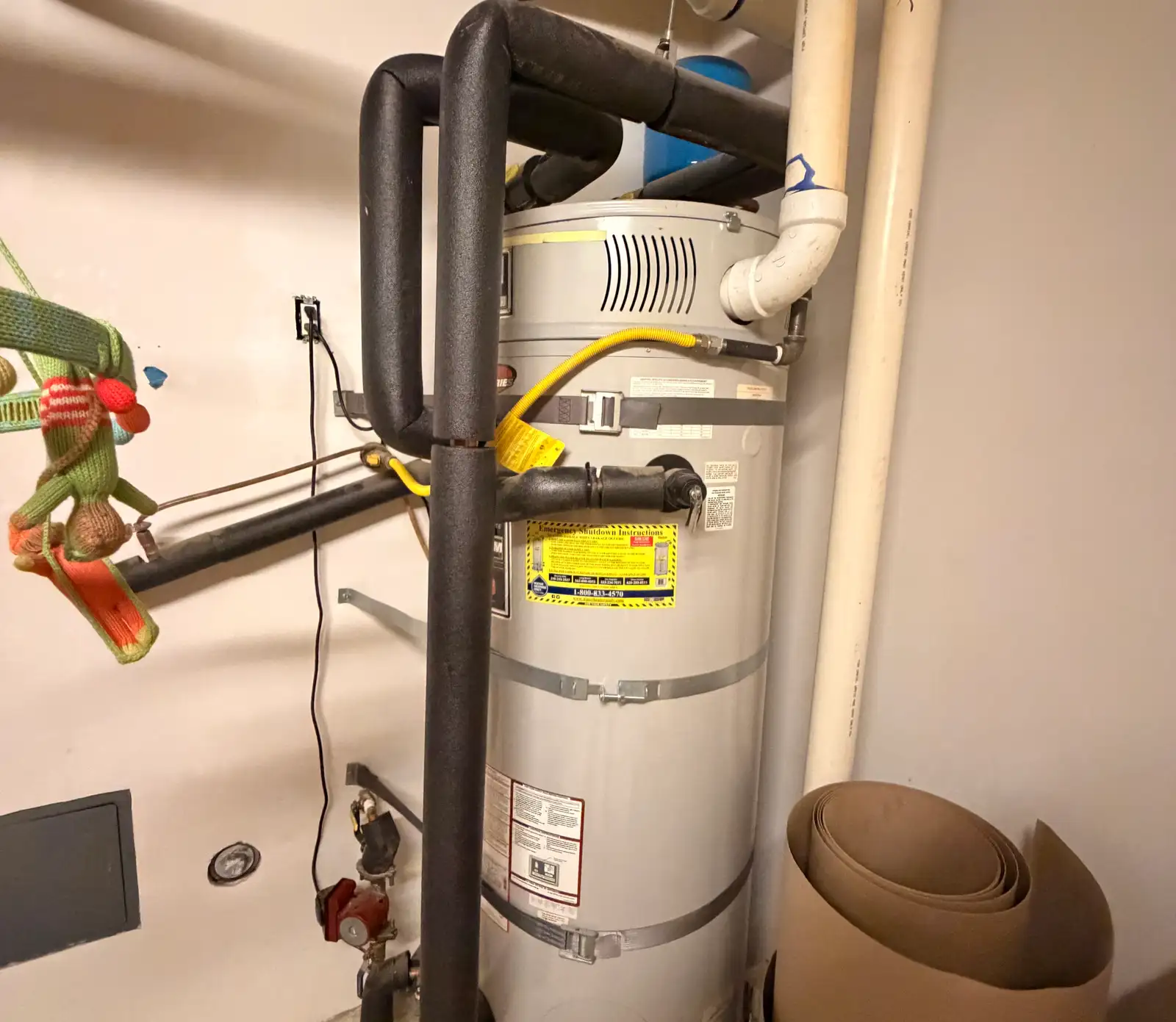
A replacement is not just a swap. The heater that comes out was installed to whatever the code said then; the one going in has to meet the code now. That usually means a proper drain pan and drain, a thermal expansion tank if there is a check valve or pressure reducing valve on the service, a sediment trap on the gas, correct venting, and strapping.
We quote all of that up front. The thing that turns a heater replacement into an argument is a quote written for the tank alone and then a second conversation on the day about everything around it. You get one number.
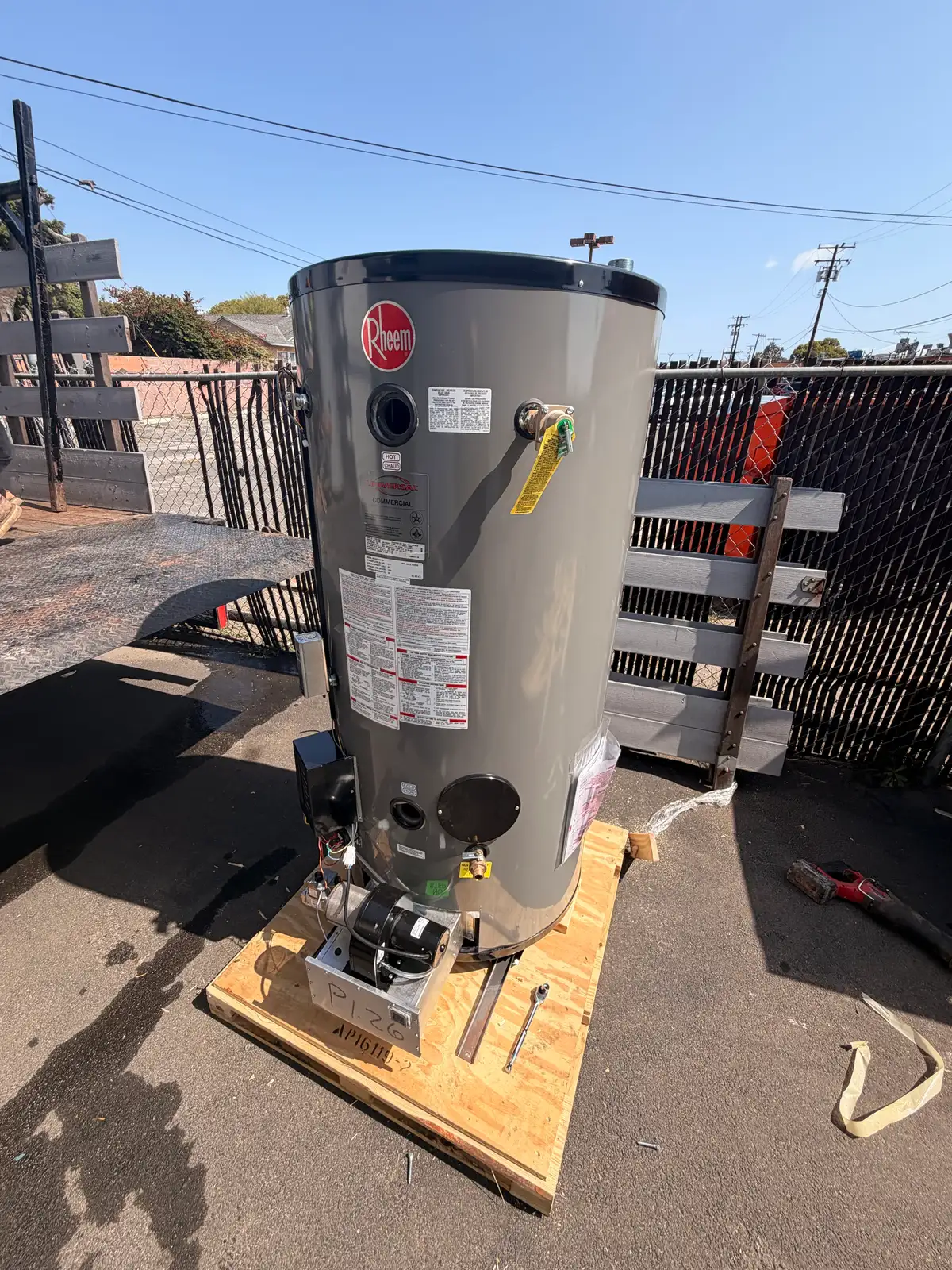
The old unit leaves with us. So does the box.
What is included
- The unit, set, connected, filled, purged and lit
- Drain pan and drain line where one is required
- Thermal expansion tank where the service has a check valve or a pressure reducing valve
- Sediment trap, new flex connector and a shutoff you can reach
- Strapping at the upper and lower third
- The permit and the inspection
- Hauling the old heater and the packaging away
What is not
- Moving the heater to a different location. That is a separate job and a bigger one
- Electrical work beyond a like-for-like connection. Electrical is subcontracted to our licensed partner
- Repairing a gas line that fails the pressure test. We will show you and quote it
- Drywall or door alterations if the new unit does not fit the old opening
Strapping is not optional here
Utah deletes the model code's water heater anchoring section and replaces it with its own, so strapping is required statewide here rather than being triggered by a seismic design category. Every heater we set gets strapped at the upper and lower third whether the inspector is coming or not.
The garage rule is its own section, and there is an exception for a flammable vapor ignition resistant unit. The guide below sets out which rule applies to which install.
What the water does to a tank
St. George's Water Distribution Division tells residents to set a softener to 18 grains per gallon, with a maximum of 22. Four tankless makers cap total hardness at 200 mg/L, which is about 12 grains. That gap is the single most important fact about water heaters in this county, and it is the reason the guide below exists.
On a tank heater, hardness costs efficiency rather than killing the unit outright, and sulfate in some source blends is the reason for the rotten-egg smell that shows up in some neighborhoods and not others. The anode rod is the part that deals with it, and replacing one is expressly maintenance under Bradford White's warranty. Pulling one out and leaving it out is misuse.
What to ask anyone quoting this, us included
- Is an expansion tank included, and how did you decide?
- Is the permit in the price?
- Who hauls the old one away?
- Will it be strapped, and where do the straps land on the tank?