What the work is
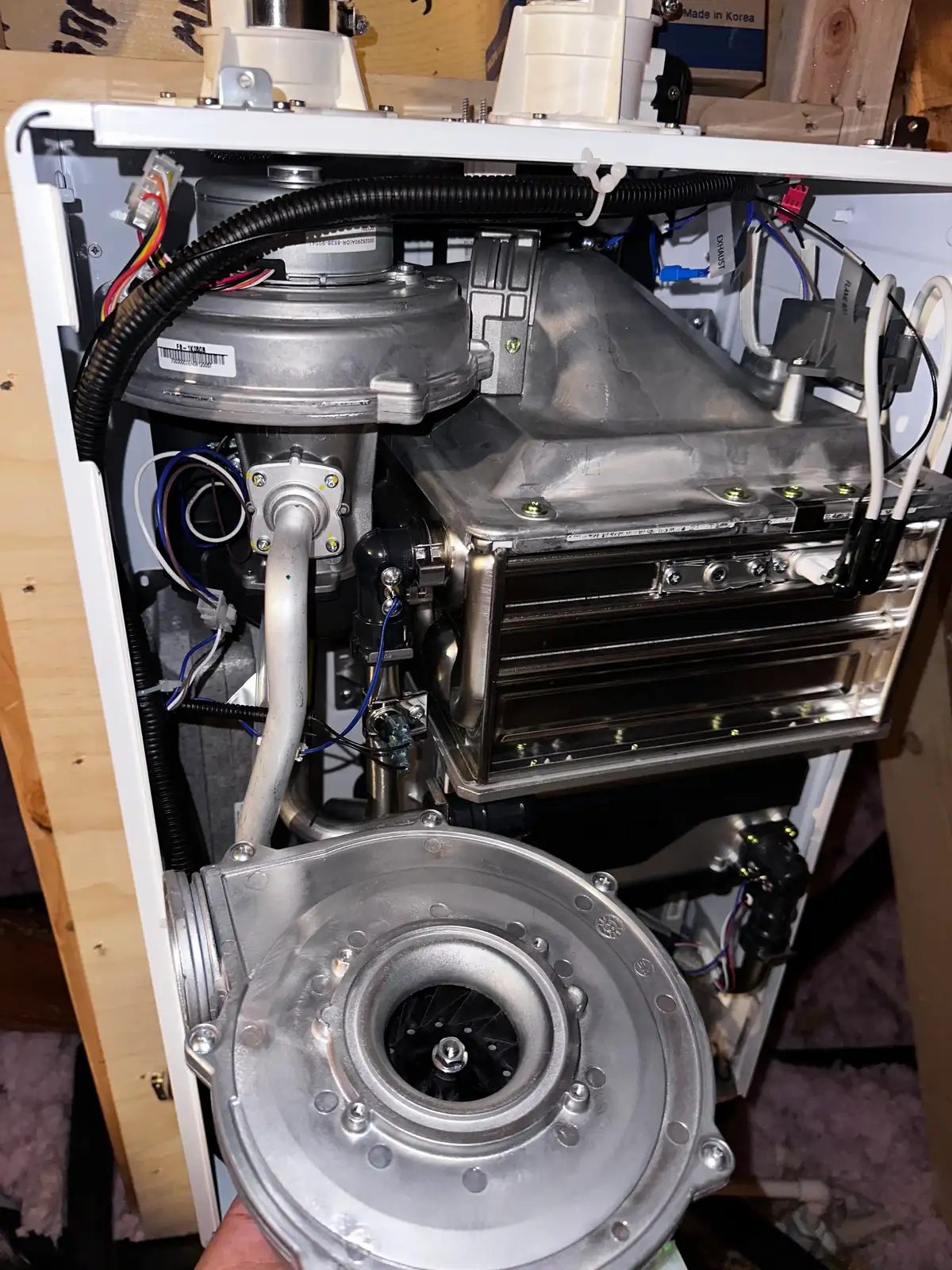
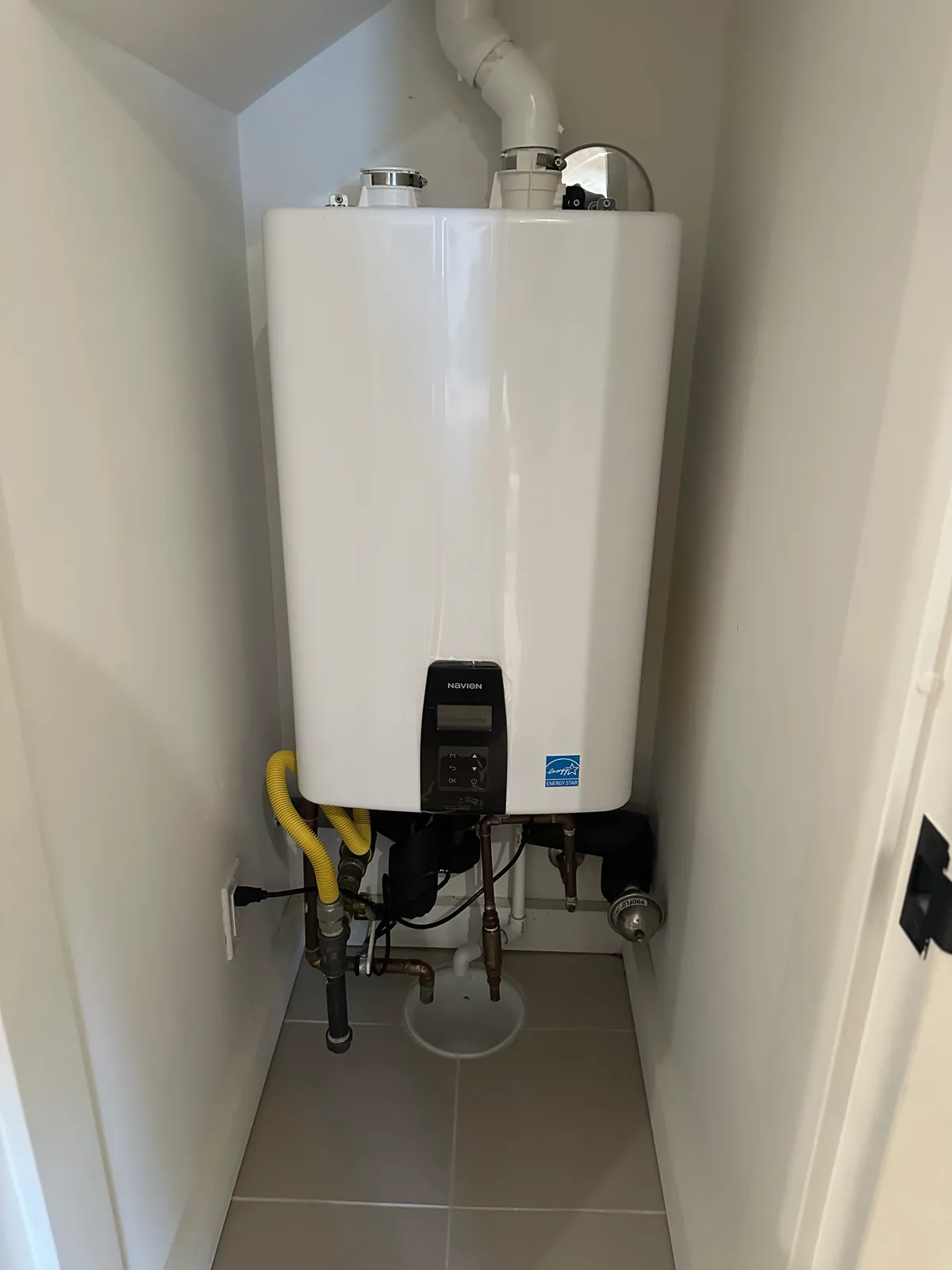
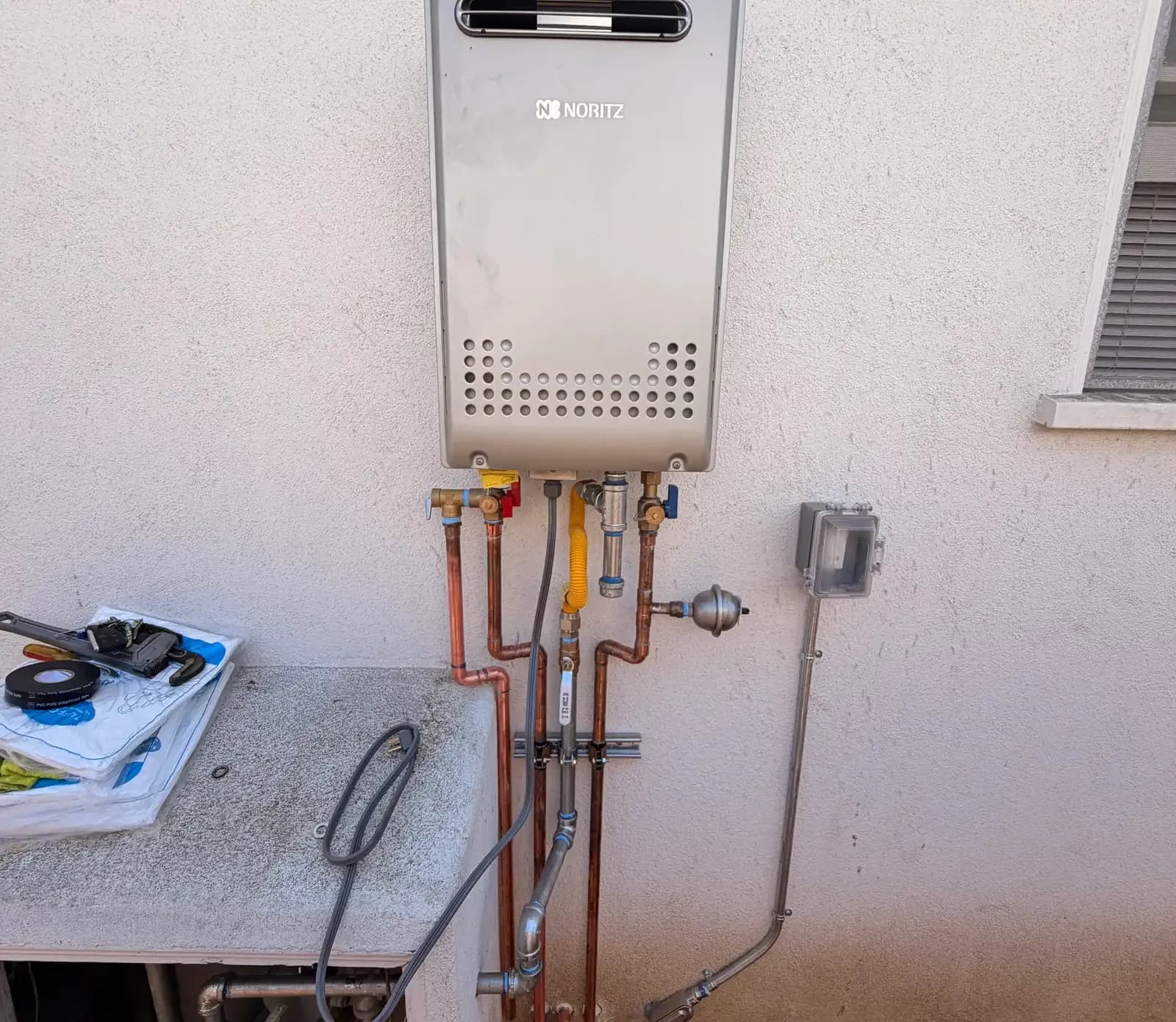
Descaling circulates a solution through the heat exchanger to dissolve the mineral that has plated onto it. On a unit with isolation valves it is a straightforward service. On one without, it means cutting into the pipework, which is why those valves are worth insisting on at install.
Scale does two things: it costs efficiency, and it runs the clock. Rinnai and Rheem both end warranty coverage at 12,000 operating hours regardless of calendar years, and a scaled unit runs longer to deliver the same gallon at the same setpoint. Scale runs the hours clock faster too.
What is included
- Descaling the heat exchanger through the isolation valves
- Cleaning or replacing the inlet screen
- Checking the burner and the condensate trap on a condensing unit
- Reporting how much came out, which tells you what interval you actually need
What is not
- Adding isolation valves where there are none. Quoted separately, and worth doing once
- Water treatment
- Repairing a heat exchanger that has already failed
How often, honestly
The interval depends on your water, and your water depends on which pressure zone feeds your street. St. George blends spring, well and Virgin River sources, and the 2024 water quality report shows total dissolved solids from 118 to 936 ppm across the system. Two houses a mile apart can need different intervals.
So we report what came out rather than selling you a schedule. After the first two services you will know your own number. Treating the water is what makes that number large.
What to ask anyone quoting this, us included
- Does my unit have isolation valves?
- How much scale came out?
- What interval do you recommend for my address, and why that one?