
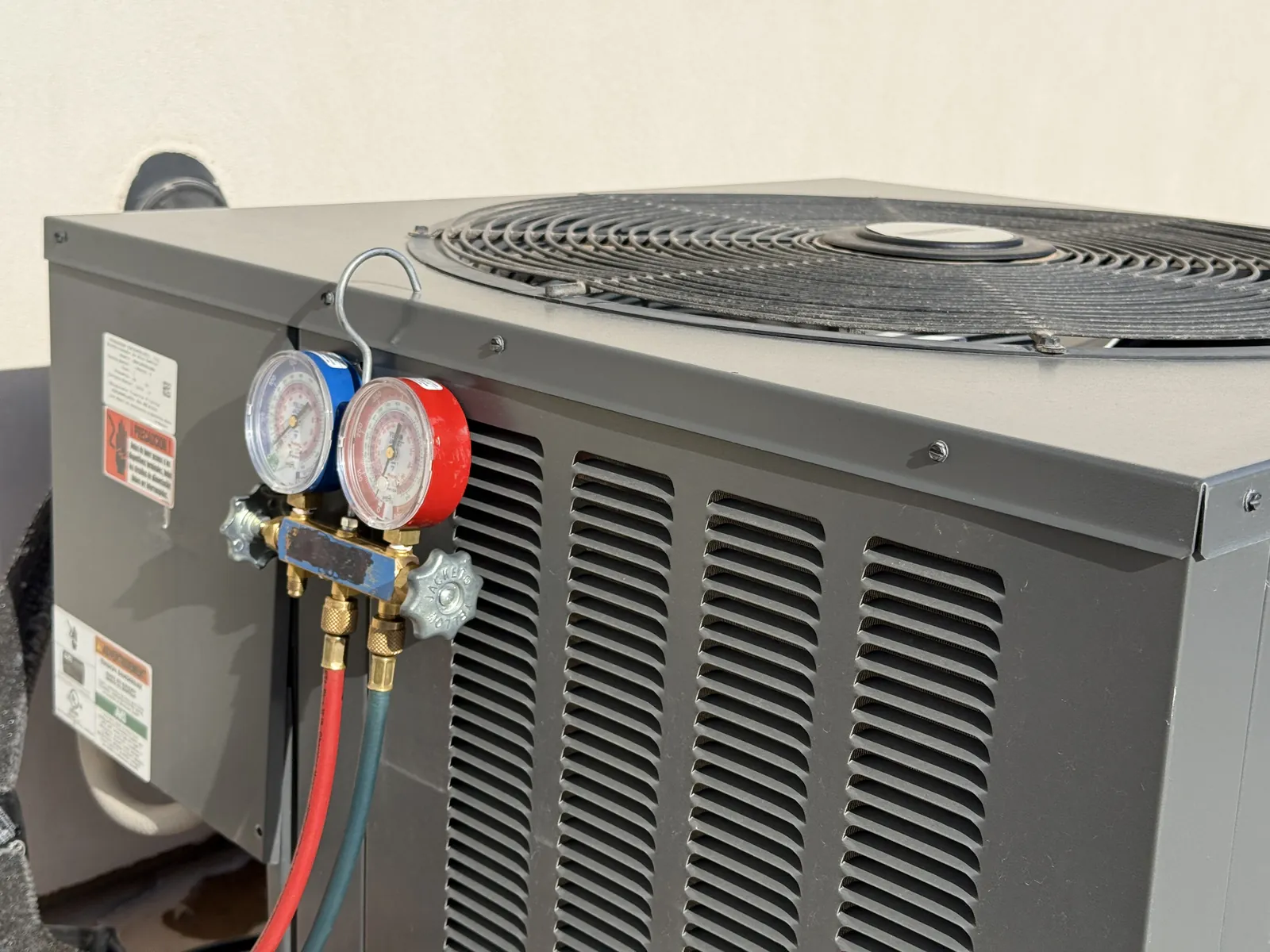
What the work is
Refrigerant is not consumed. A system that is low has a leak, and topping it up is a repair with a known expiry date. It is also the most common way a homeowner here pays for the same fault three years running.
We look for the leak with an electronic detector, and with nitrogen and soap where the detector cannot reach. Then you get told where it is and what it costs to fix, including the case where the leak is in the evaporator coil or the line set and the honest answer is that the repair is not worth it.
There is a second reason to find it rather than top it up, beyond the money. A system running low on charge runs the compressor hot and floods it with oil-poor refrigerant, and compressors are the one component whose failure usually ends the system. Repeated top-ups are not a cheaper path; they are a slower and more expensive one.
Where leaks are found, in rough order: the evaporator coil, the line set connections at either end, the service valves and their caps, and the condenser coil itself. Which one it is decides everything. A fitting is an afternoon. An evaporator coil on a system out of warranty is a conversation about replacement, and we will have that conversation honestly rather than quoting the coil and letting you find out.
What is included
- A search for the leak, not just a pressure reading
- Where it is, and the photograph if it is somewhere you cannot see
- The cost of the repair against the cost of replacing, both written down
- A weight of refrigerant recorded, so the next visit can tell how fast it is going
What is not
- A top-up with no leak search, unless you ask for it knowing what it is
- Guessing at the leak location to avoid the search
What to ask anyone quoting this, us included
- How did you find the leak, and can you show me?
- How much refrigerant did the system take?
- If this is the coil, what does that change?
- Which component is leaking?
- What will this cost me again in a year if I just top it up?