St. George Home Services

Plumbing · Water treatment

Softener and RO together

A softener and an under-sink reverse osmosis system installed together, in the right order, as one job and one number.

One flat fee to find out what is wrong. You are told it on the phone before anyone is dispatched, and it comes off the job if you hire us. Read our Plain Terms

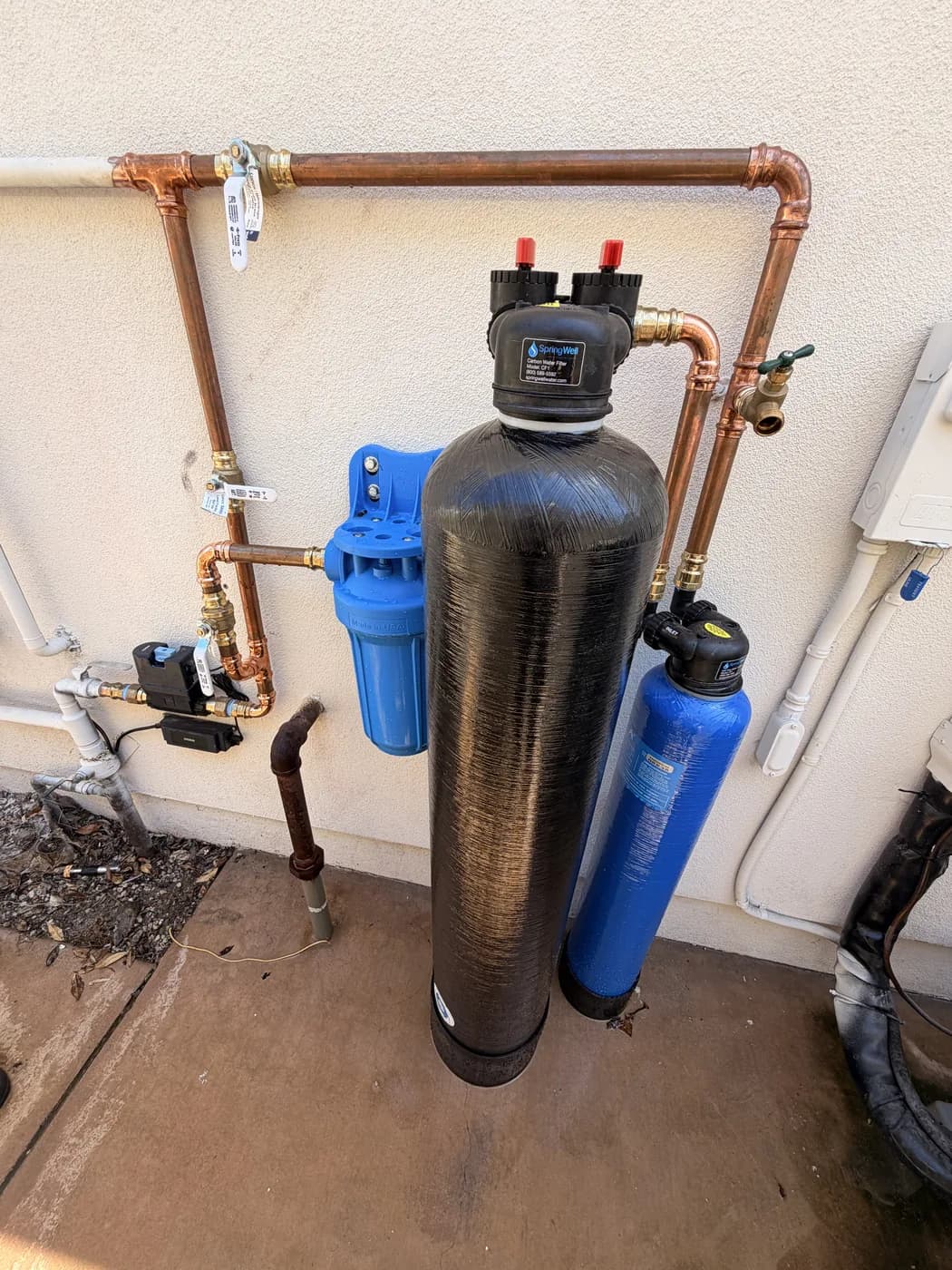
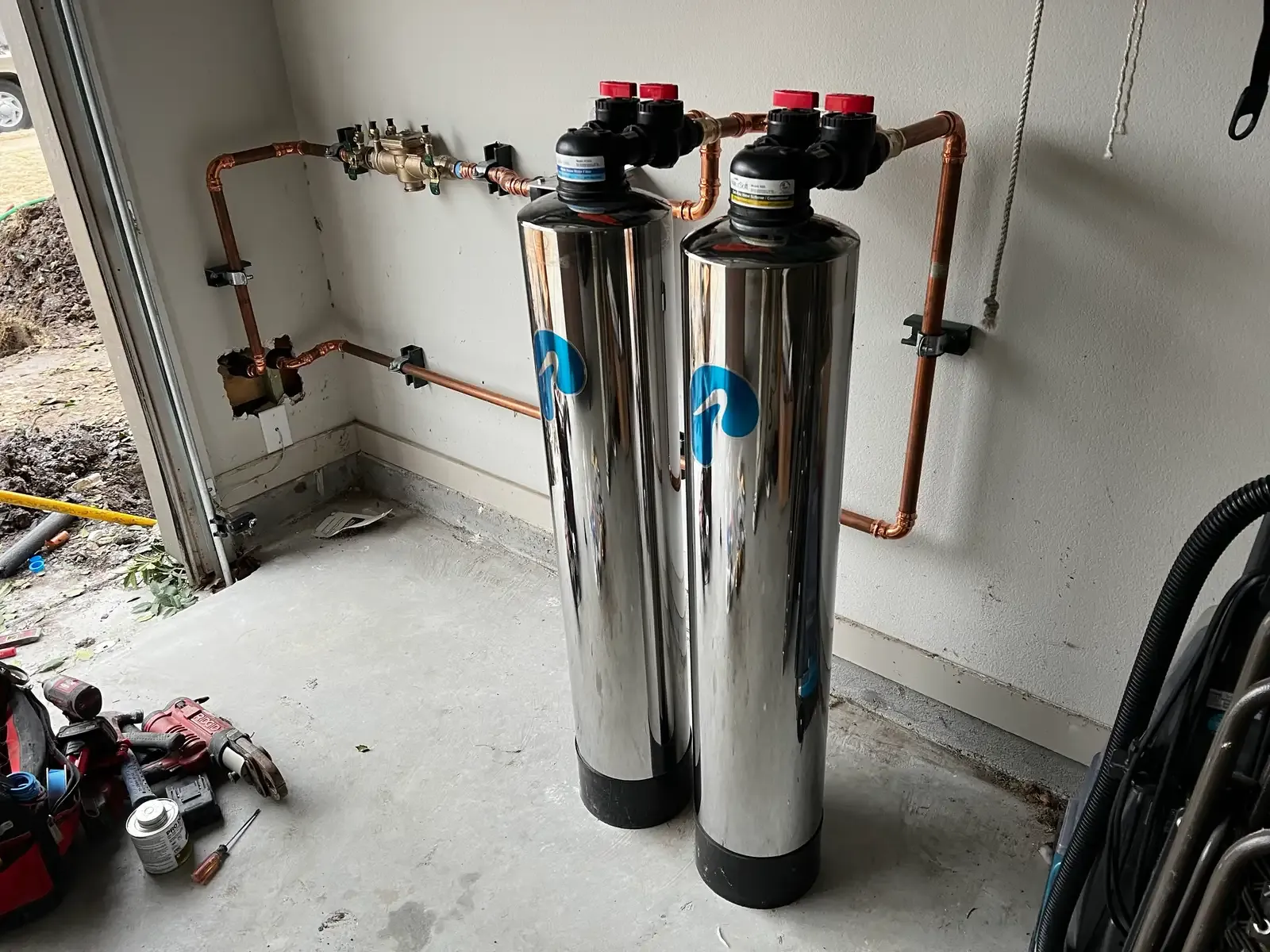
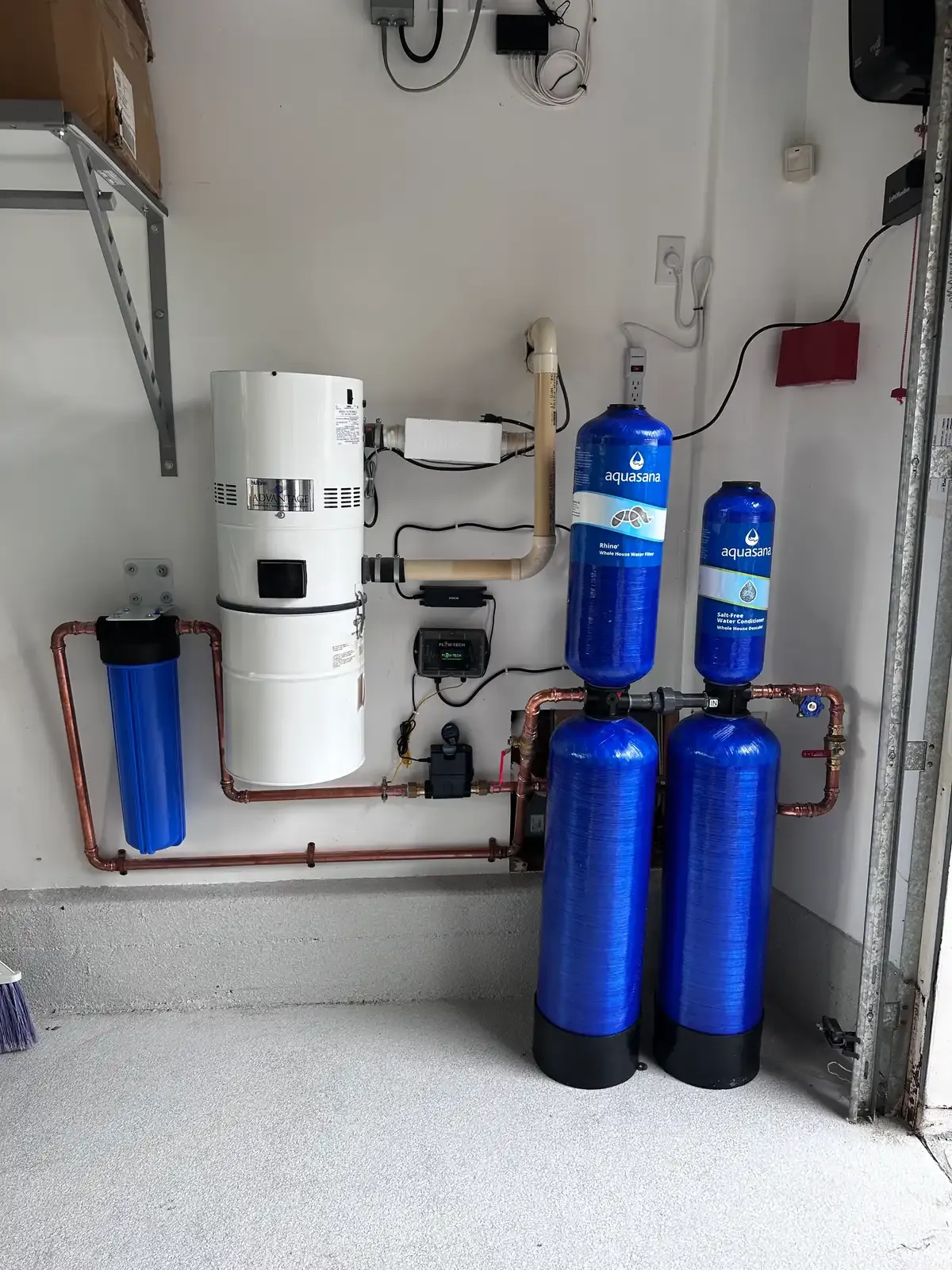
A whole-house filtration and softening system plumbed into the main line on a garage wall
Whole-house filtration and softening. San Pedro, California.

What the work is

These two do different things and most houses here want both. The softener protects the water heater, the fixtures and the appliances. The reverse osmosis unit handles what you drink and cook with.

Installed together they cost less than installed separately, and more importantly they get plumbed in the right order the first time: sediment and carbon, then the softener, then reverse osmosis at the tap.

What is included

  • Water test at your tap before anything is sized
  • Softener with bypass, drain and programming to the tested hardness
  • Under-sink reverse osmosis with its own faucet
  • Fridge or ice maker connection where you want one
  • One written schedule for salt, cartridges and service

What is not

  • Whole-house carbon and sediment, if you want that too. Quoted alongside
  • Countertop cutting for the reverse osmosis faucet
  • Electrical beyond an existing receptacle

What each one is for

The softener is what a tankless water heater's warranty is asking for. The reverse osmosis unit is what makes the water taste like water. Neither one substitutes for the other, and being sold one as if it were the other is the most common thing that goes wrong in this category.

What to ask anyone quoting this, us included

  • What order are these plumbed in?
  • What did my water test at?
  • What is the yearly running cost of both together?
What we can show you in writing

Every line traces to a document we read in full. The number after a sentence points to the research below.

  • The City of St. George's Water Distribution Division instructs residents to set water softeners to 18 grains per gallon, with a maximum of 22 grains.1
  • 18 grains per gallon is about 308 mg/L as calcium carbonate and 22 gpg about 376 mg/L, both classed as very hard on the USGS scale.1
  • The city asks residents to keep softener settings low because softener salt raises the dissolved-solids level of the reclaimed water the city reuses for irrigation.1
  • An RO membrane fed unsoftened water at this hardness will not last. Softened feed water is what buys you the 2 to 3 years.2

Where this comes from

Every line above traces to a document we read in full. The number after a sentence points to the research below; hover it for the section. If you find a line wrong, tell us and we will fix it and say so.

  1. Environment, water and ground research, August 2026 Compiled from the cities' own water quality reports, Utah Geological Survey Special Study 127, the Utah State Hazard Mitigation Plan, Washington County GIS hazard layers, NOAA climate records, EPA radon zones and Census QuickFacts. 2 sections cited. Hover a number above for the section.
  2. Plumbing research, August 2026 Compiled from manufacturer warranty documents and installation manuals (A.O. Smith, Noritz, Rinnai, Rheem, Navien, Bradford White), the Battelle / Water Quality Research Foundation study, the Utah Code and DOPL rules. 1 section cited. Hover a number above for the section.

Read before you decide

The rest of water treatment

The quote is the number. There is no second number.

Call (801) 680-6859

7 a.m. to 5 p.m., weekdays. Emergency calls answered any hour, every day.