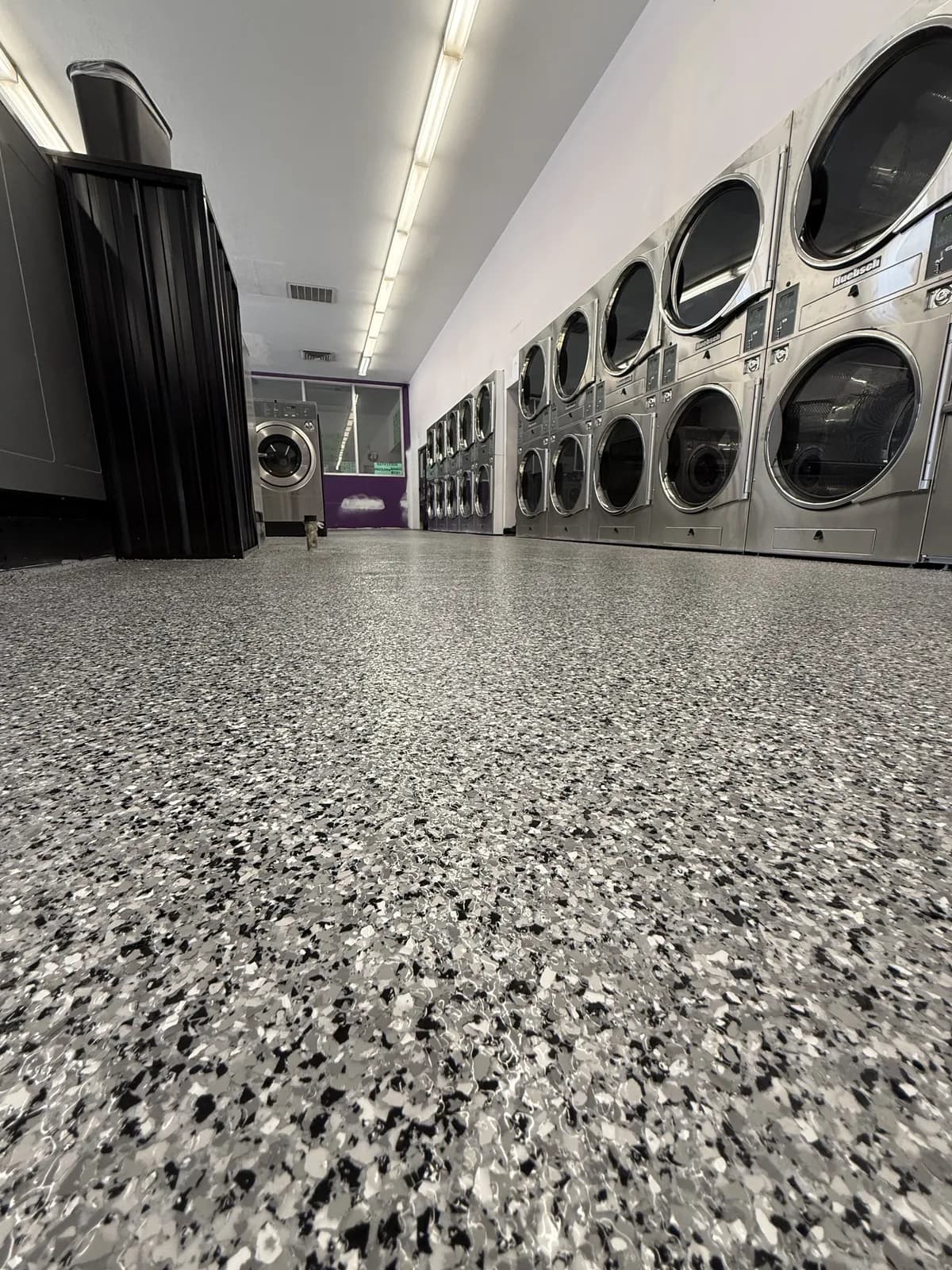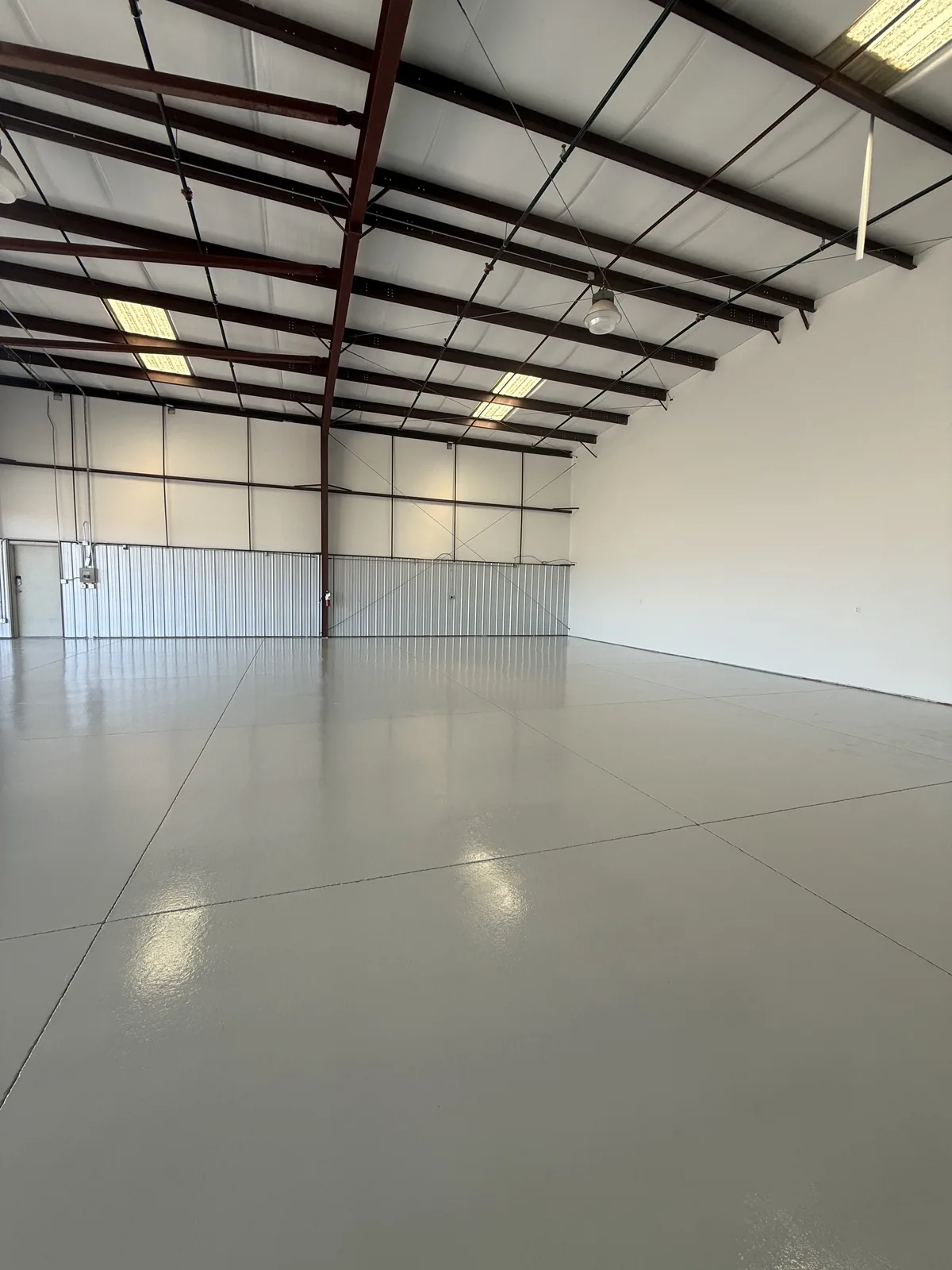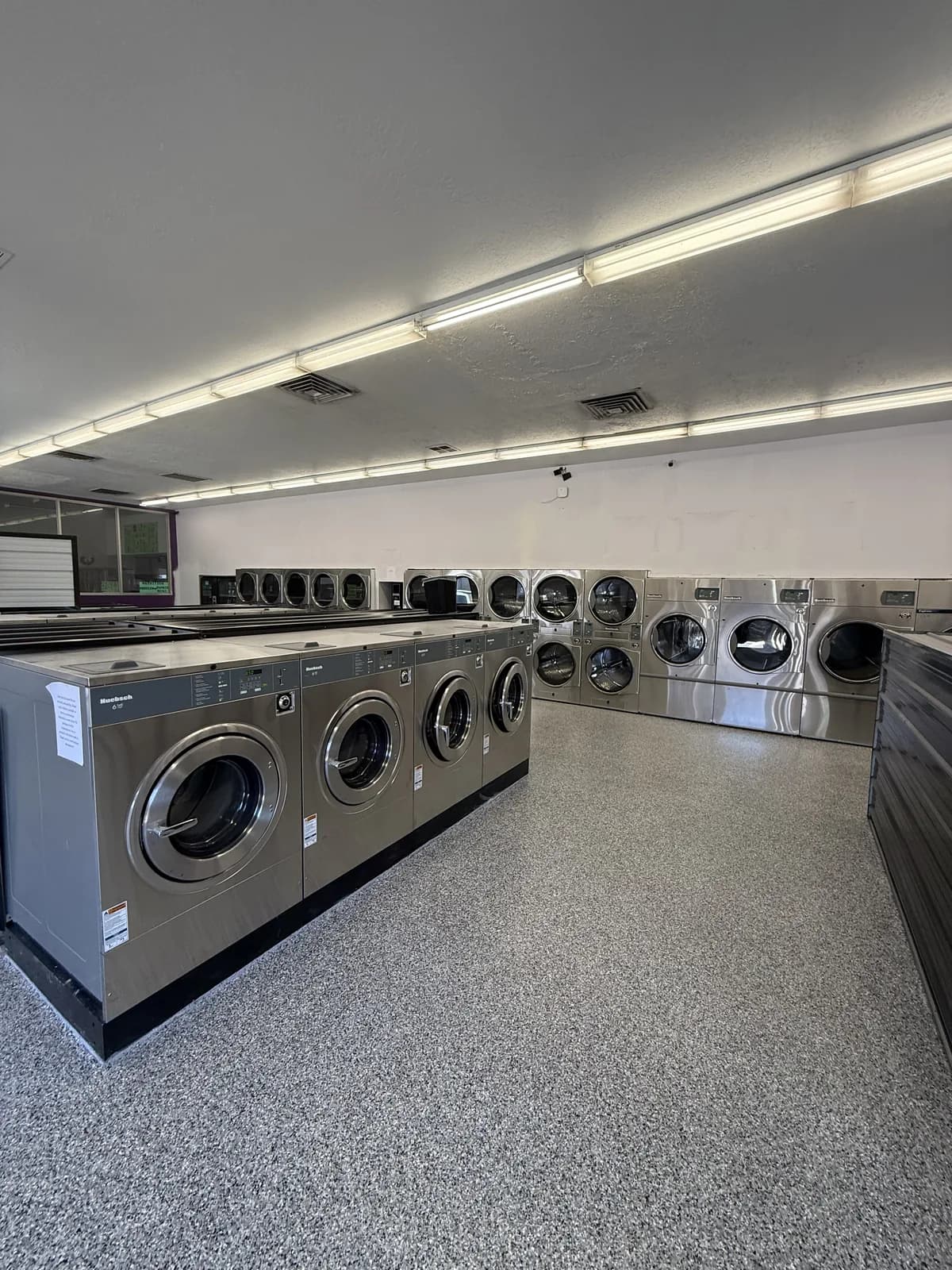
What the work is
On a commercial floor the constraint is almost never the coating. It is that the business has to open in the morning. Work gets sequenced in sections, or overnight, or across a closure you choose — and which of those applies changes the price honestly rather than secretly.
Commercial slabs have usually lived a harder life than domestic ones. Adhesive residue from old flooring, layers of earlier coating, saw cuts, patched service trenches and forklift scarring all show up in the preparation and all get found before the quote rather than after it.
A commercial floor also has to be specified rather than picked. Where it gets wet, where it gets wheeled traffic, where it has to be cleaned with something aggressive — those decide the system, and they are questions we will ask.
We will tell you what we cannot sequence. Some floors cannot be done in sections without a visible line, and if yours is one of them you should hear it before you plan around it.
What is included
- A walk of the floor with you, before the quote, to find what is under the existing surface
- Moisture testing with the readings written down
- Grinding with extraction, and removal of existing coatings and adhesive
- A sequence agreed to your trading hours, and a plain statement of what it costs
- Line marking and demarcation where you need it, quoted as its own item
What is not
- A sequence that leaves an invisible joint where the floor will not allow one. We will say so first
- Moving stock, fixtures or equipment
- Working around a section you have not cleared. An uncleared section is not coated
What to ask anyone quoting this, us included
- What is under the current floor, and how did you find out?
- Can this be done in sections without a visible line?
- What is the return-to-service time for this specific product, from its data sheet?