St. George Home Services

Concrete coatings · Garage floors

Garage floor coating

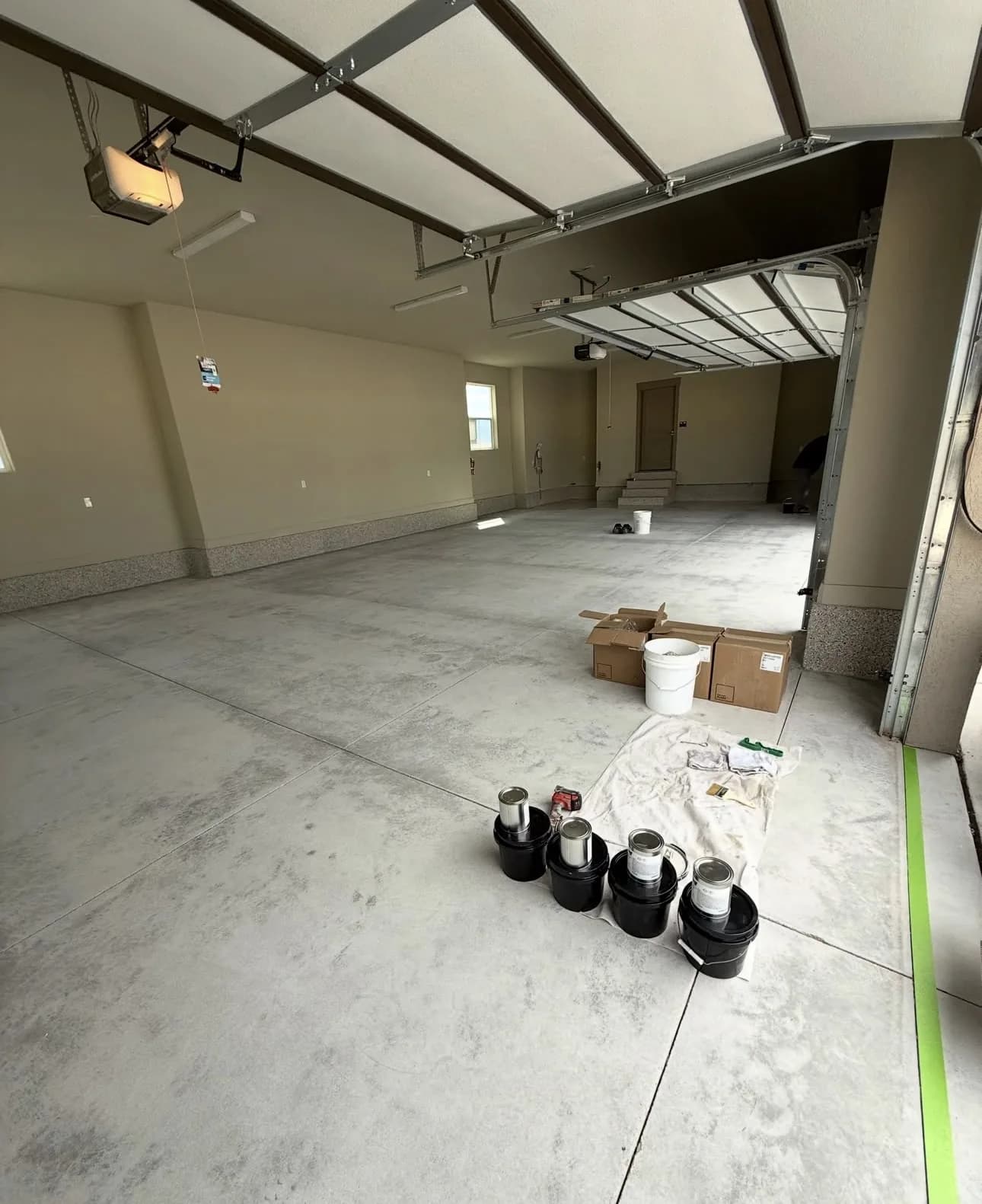
The bay is emptied, the slab is ground back past its surface film, and the finish is bonded to concrete rather than sitting on it. The grinding is most of the work and all of the difference.

One flat fee to find out what is wrong. You are told it on the phone before anyone is dispatched, and it comes off the job if you hire us. Read our Plain Terms

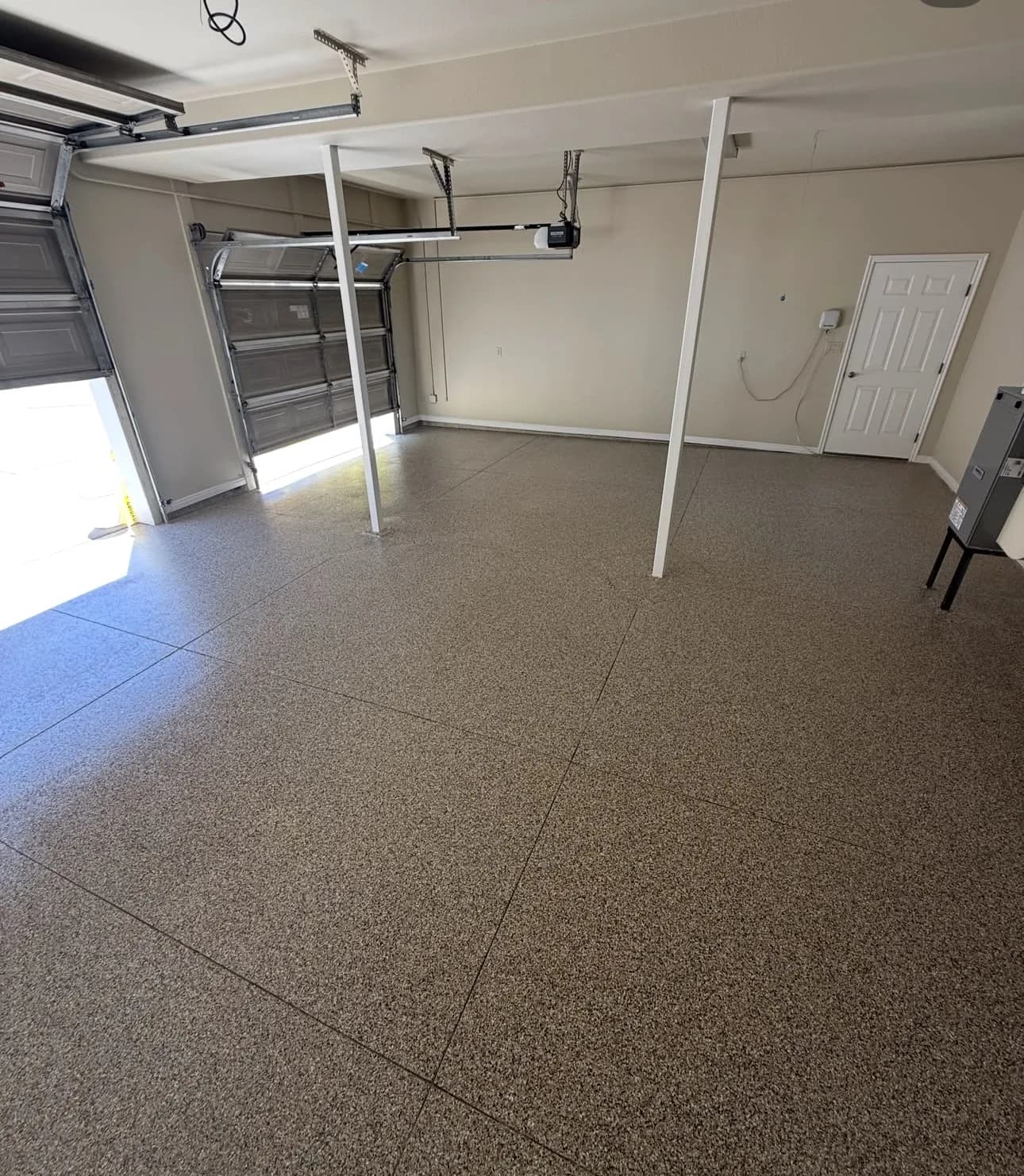
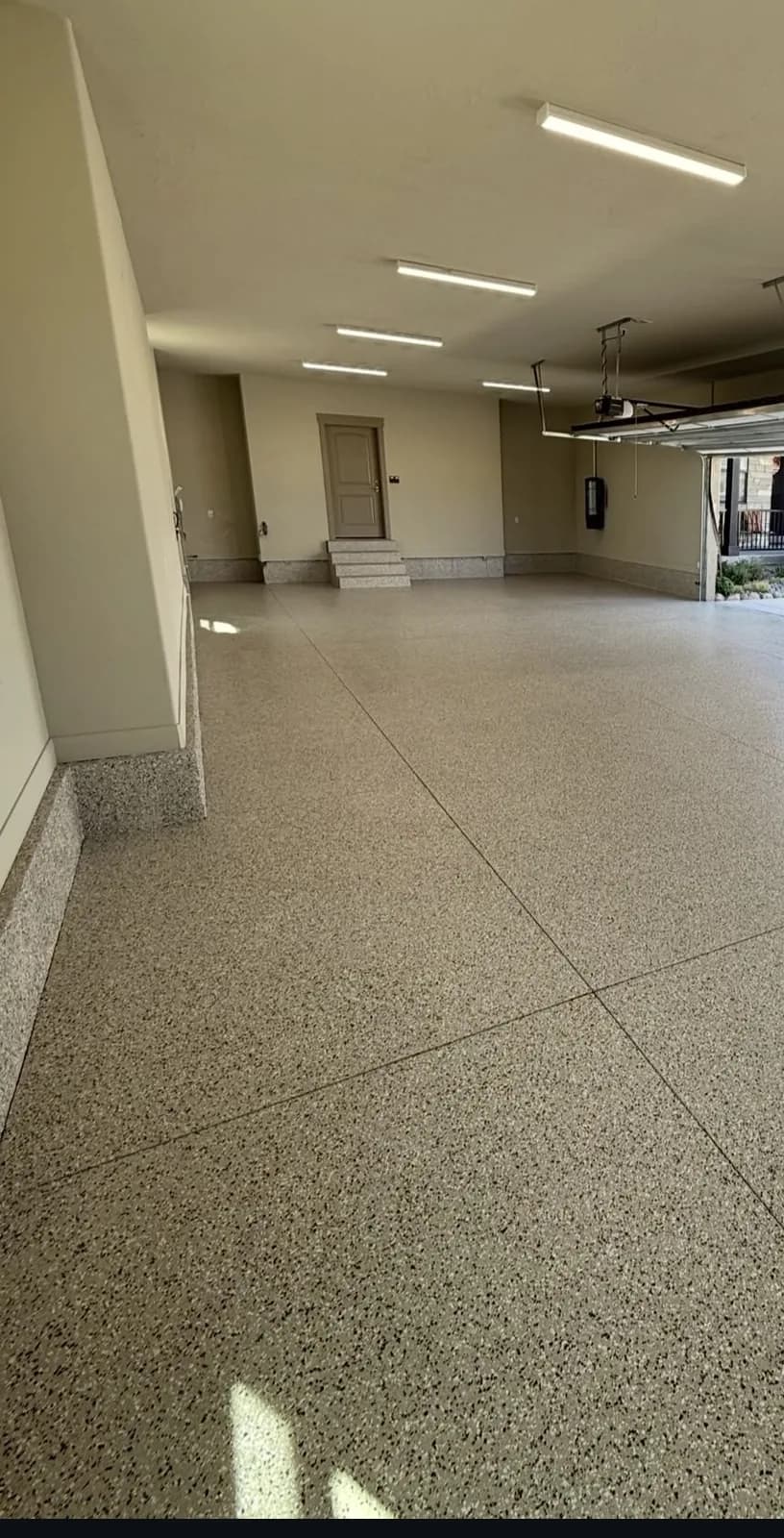
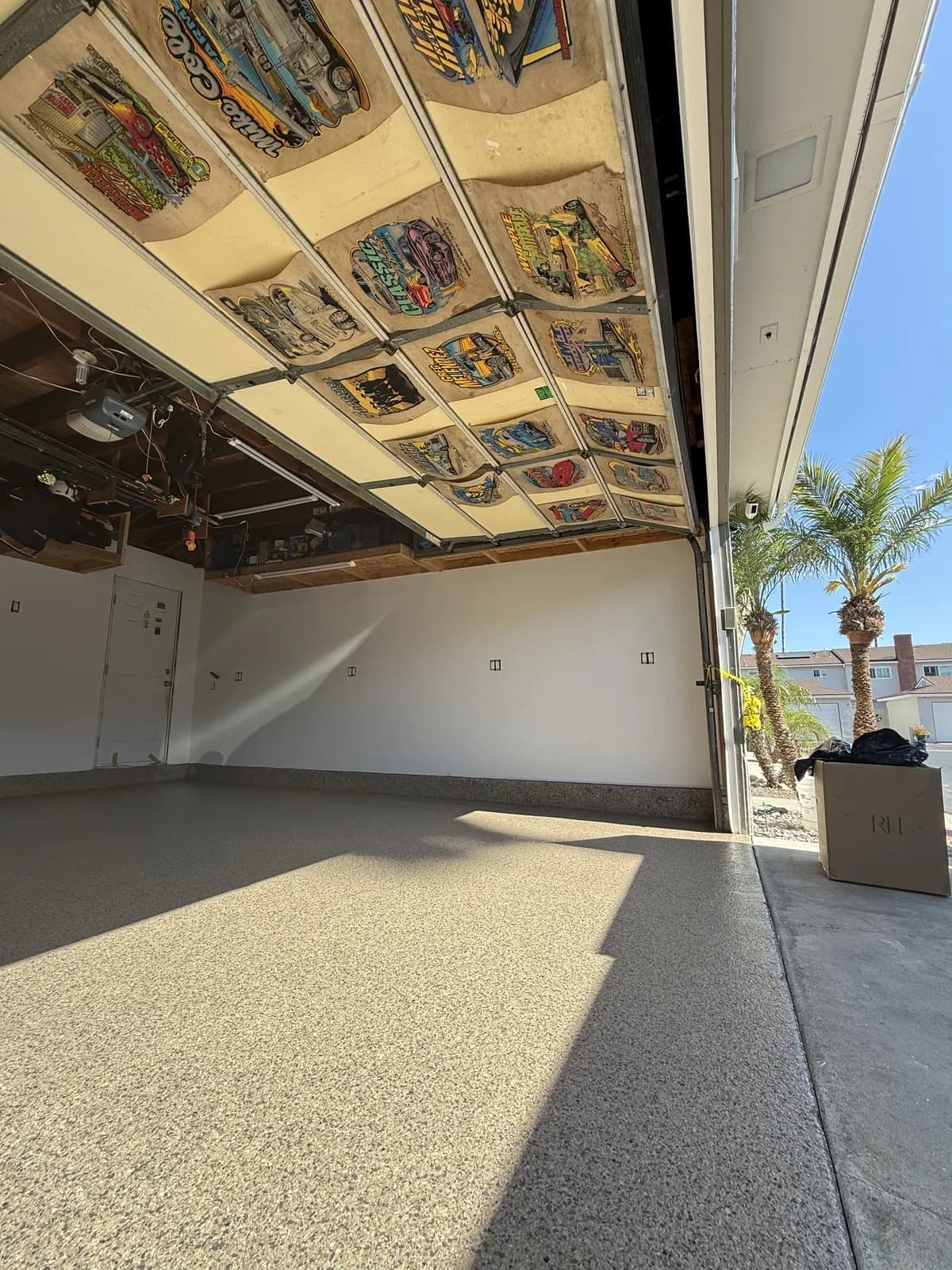
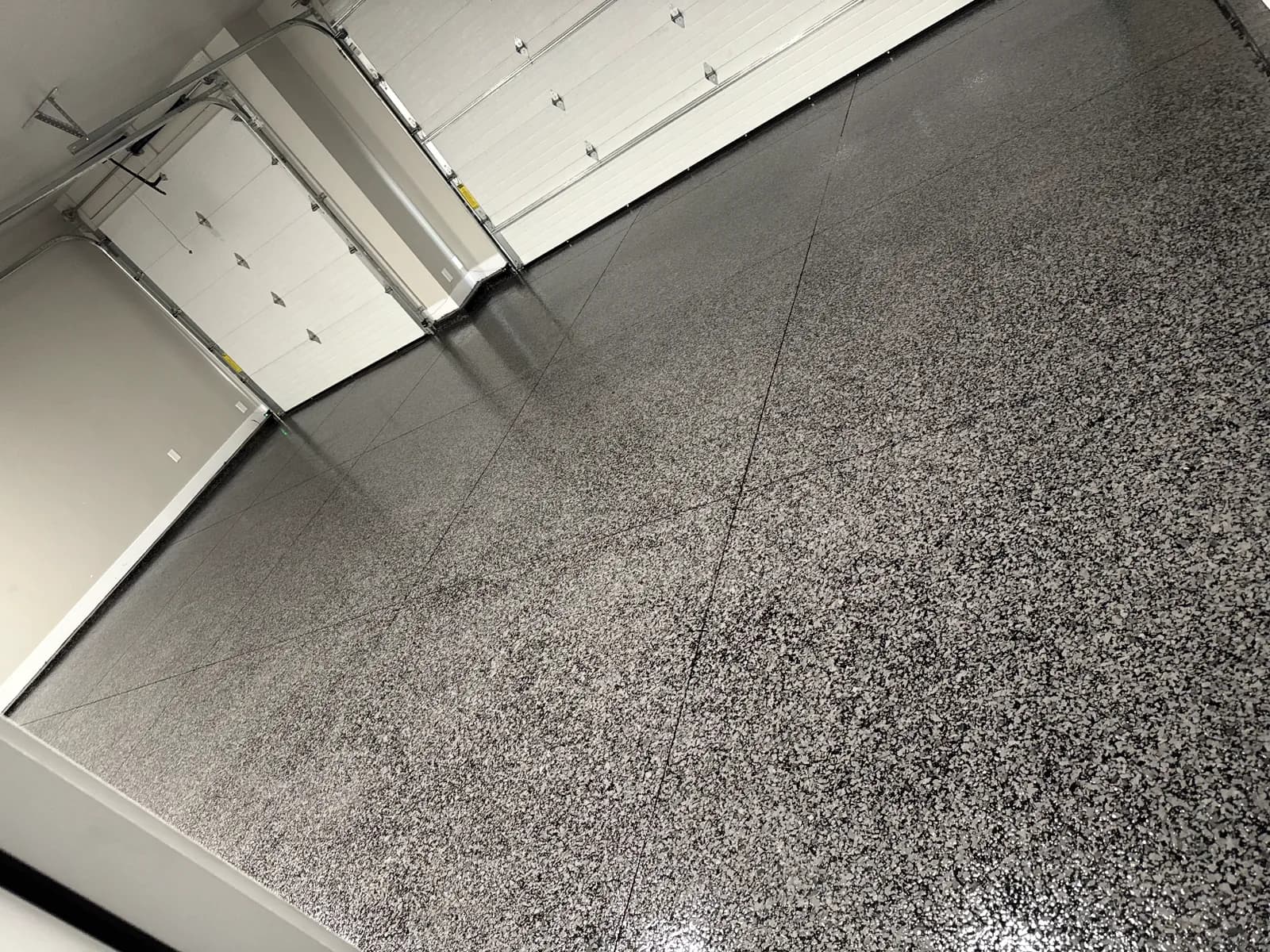
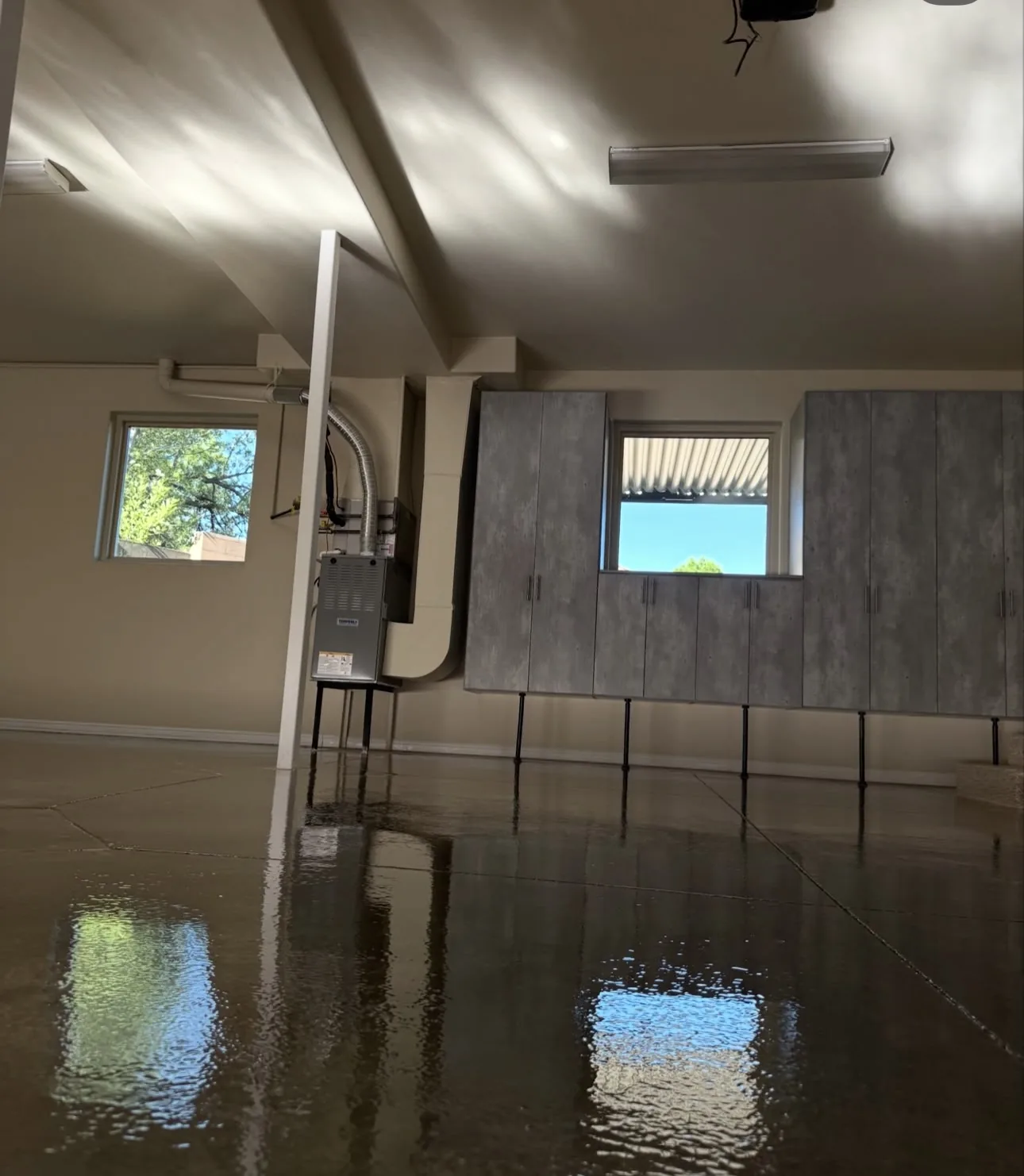
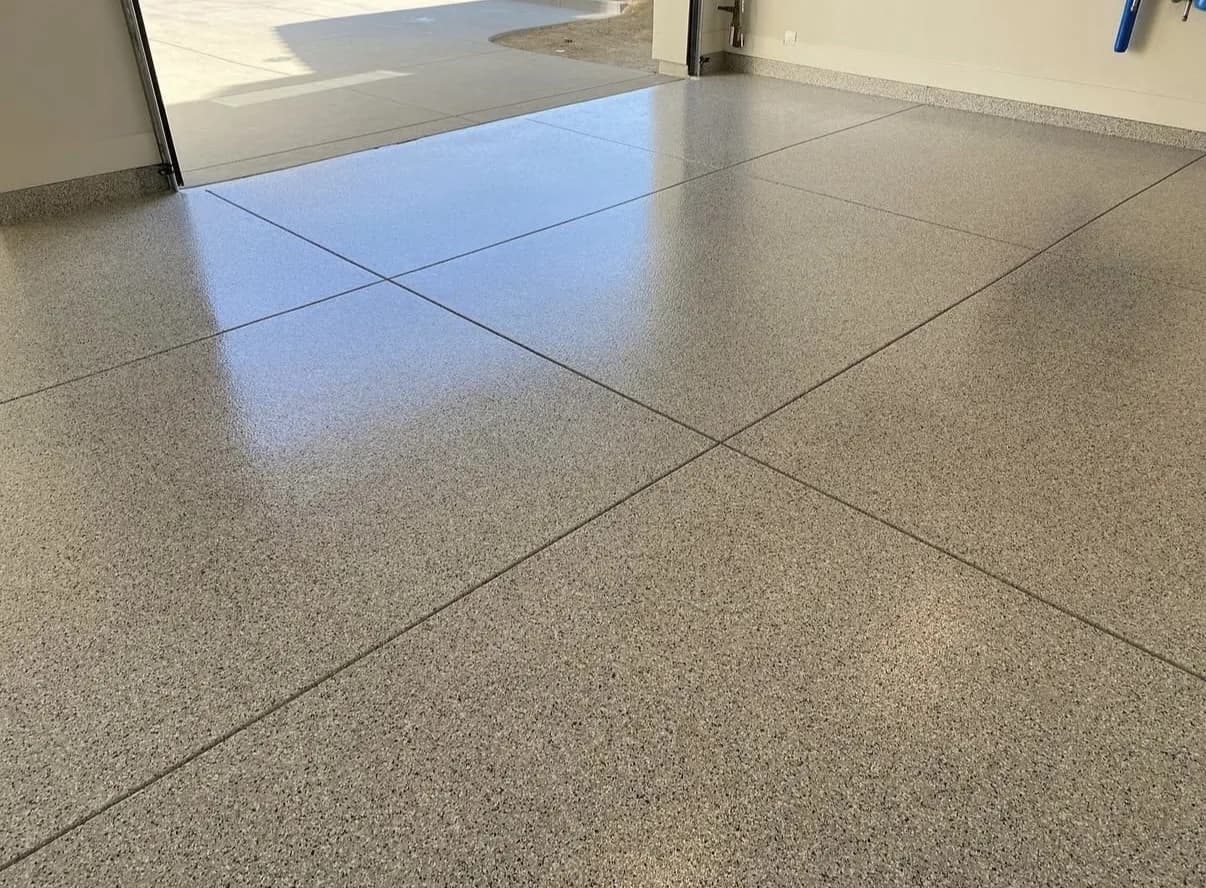
A finished garage floor in a pale gray and tan flake blend, running the depth of the bay, with the slab's saw-cut control joints still visible as fine straight lines through the coating and an open door at the far left
The control joints are still readable through the finish. They are part of the slab, not a defect in the floor.

What the work is

A coated garage floor is three things in order: preparation, a base coat, and a clear coat over it. Almost everything that goes wrong goes wrong in the first one, and almost nobody quotes it in detail.

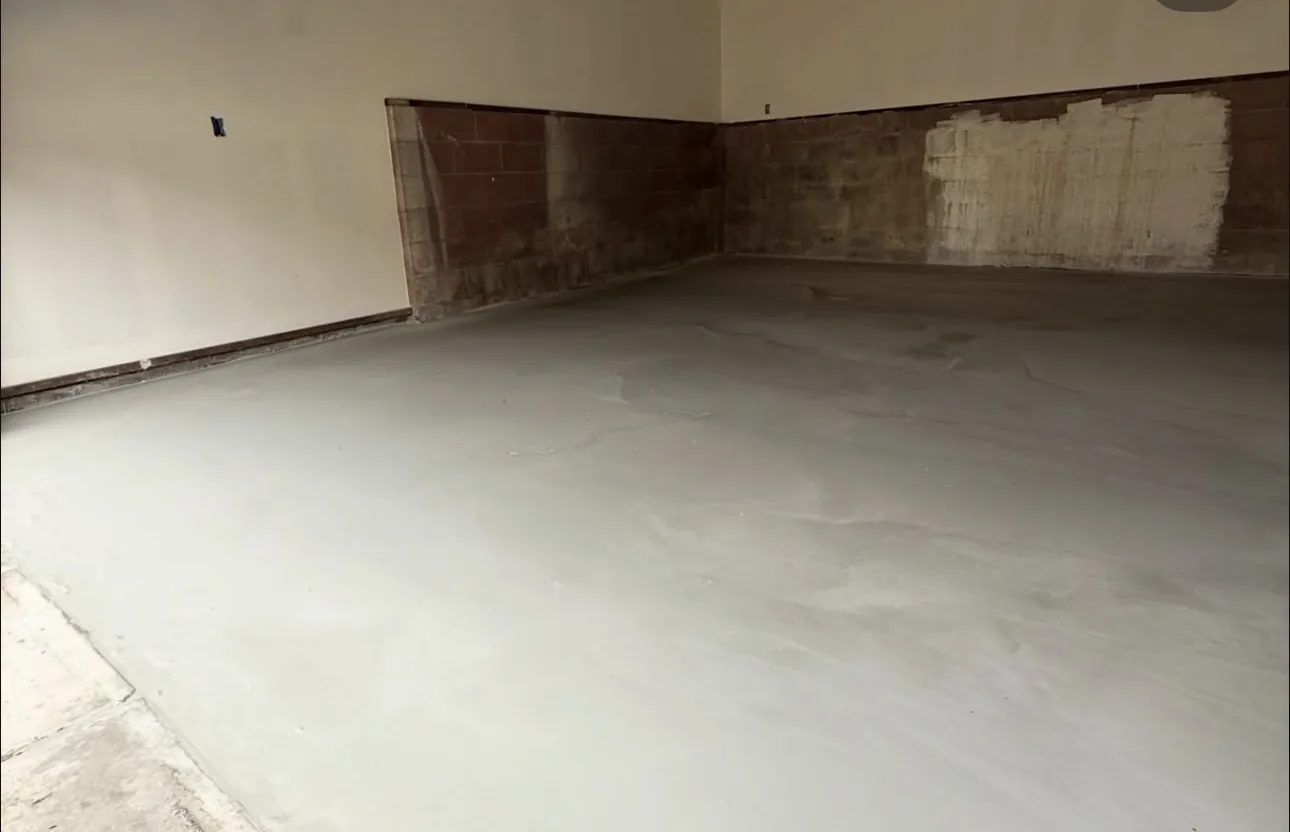
Concrete finishes with a weak, fines-rich film on top of it called laitance. It is part of how a slab is poured, not a defect. A coating rolled onto that film is bonded to the film, and when the film lets go the floor looks like it failed. Diamond grinding removes it and leaves a measurable profile for the resin to key into. That profile has a number on a published scale and you are entitled to ask which one we ground to and how we checked.

Then the slab is tested for moisture, the cracks and spalls are repaired as their own step, and only then does anything get applied. A crack that is still moving telegraphs back through a coating within a season, so it is repaired first or it is left alone and named on the quote.

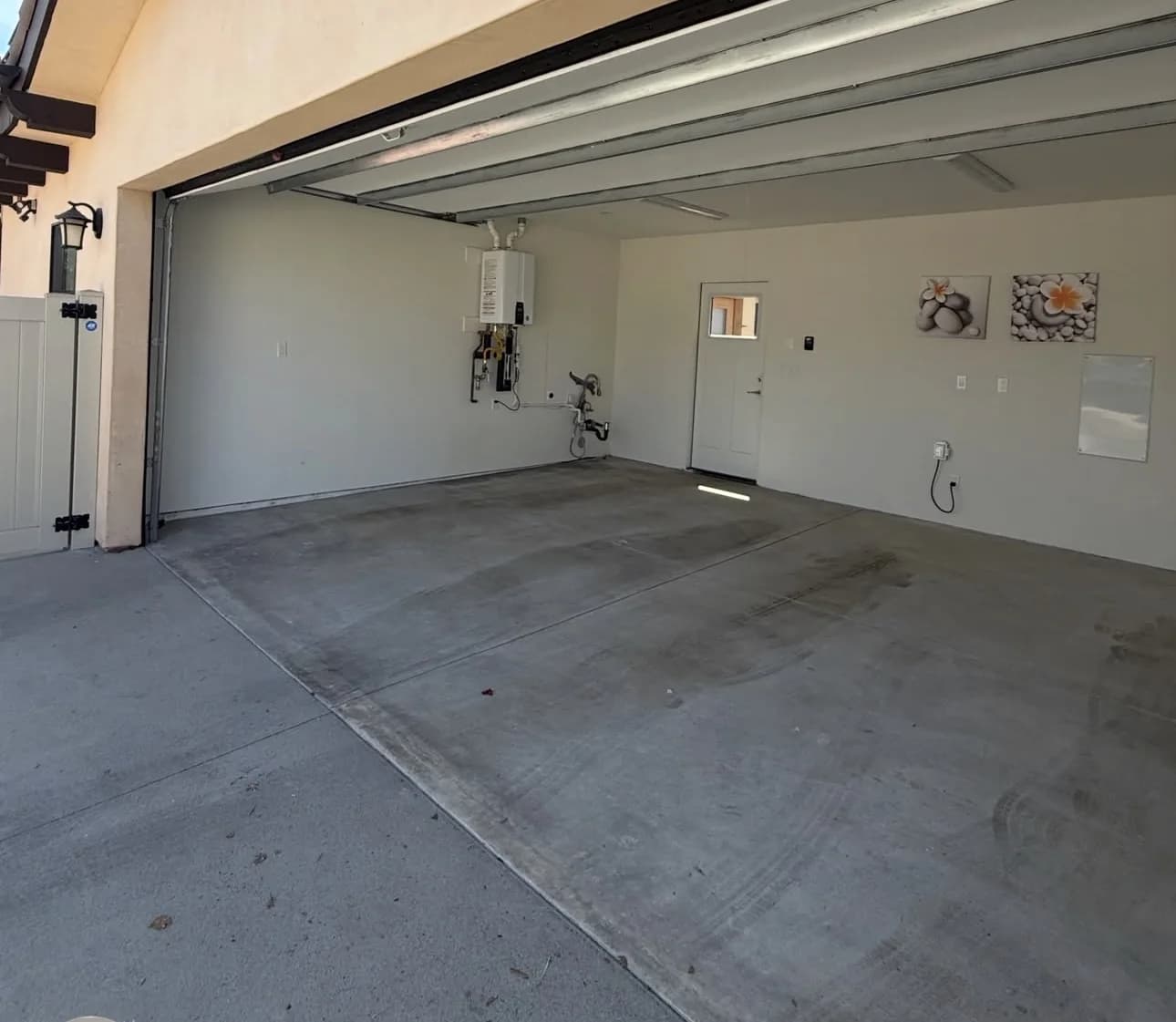
We will tell you if your slab is a poor candidate. Some are. A slab reading high on moisture, or one that has been sealed repeatedly with something that will not come off, costs more to prepare than the finish is worth, and you should hear that from us before you have paid for anything.

What is included

  • Moving what you can move; we say plainly what has to be out before the day
  • Diamond grinding the full floor, with the edges and corners cut in by hand
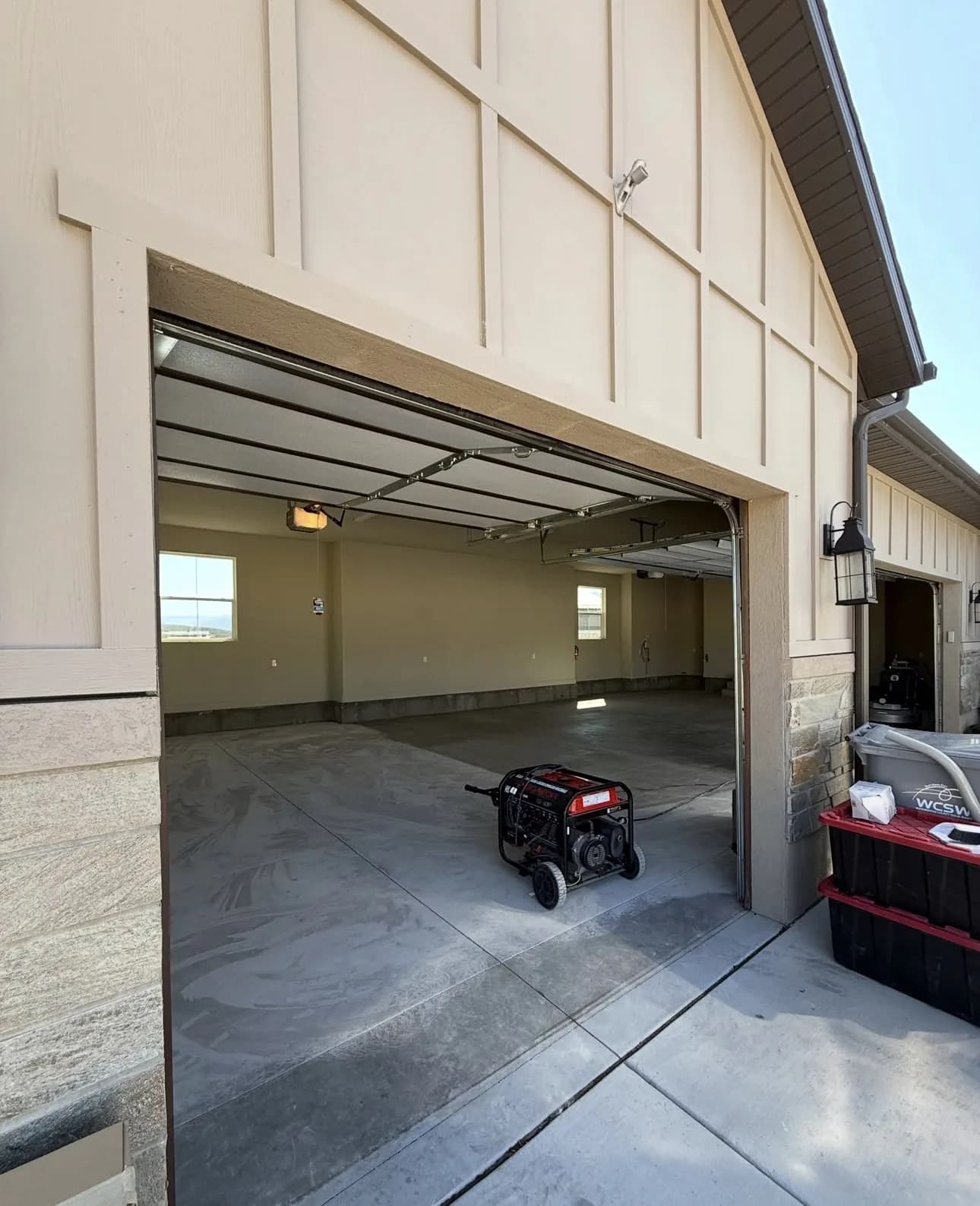
  • Dust extraction at the machine, so the grinding does not end up in the house
  • Crack and spall repair as a named step, quoted before it is done
  • A moisture test on the slab, with the reading written down for you
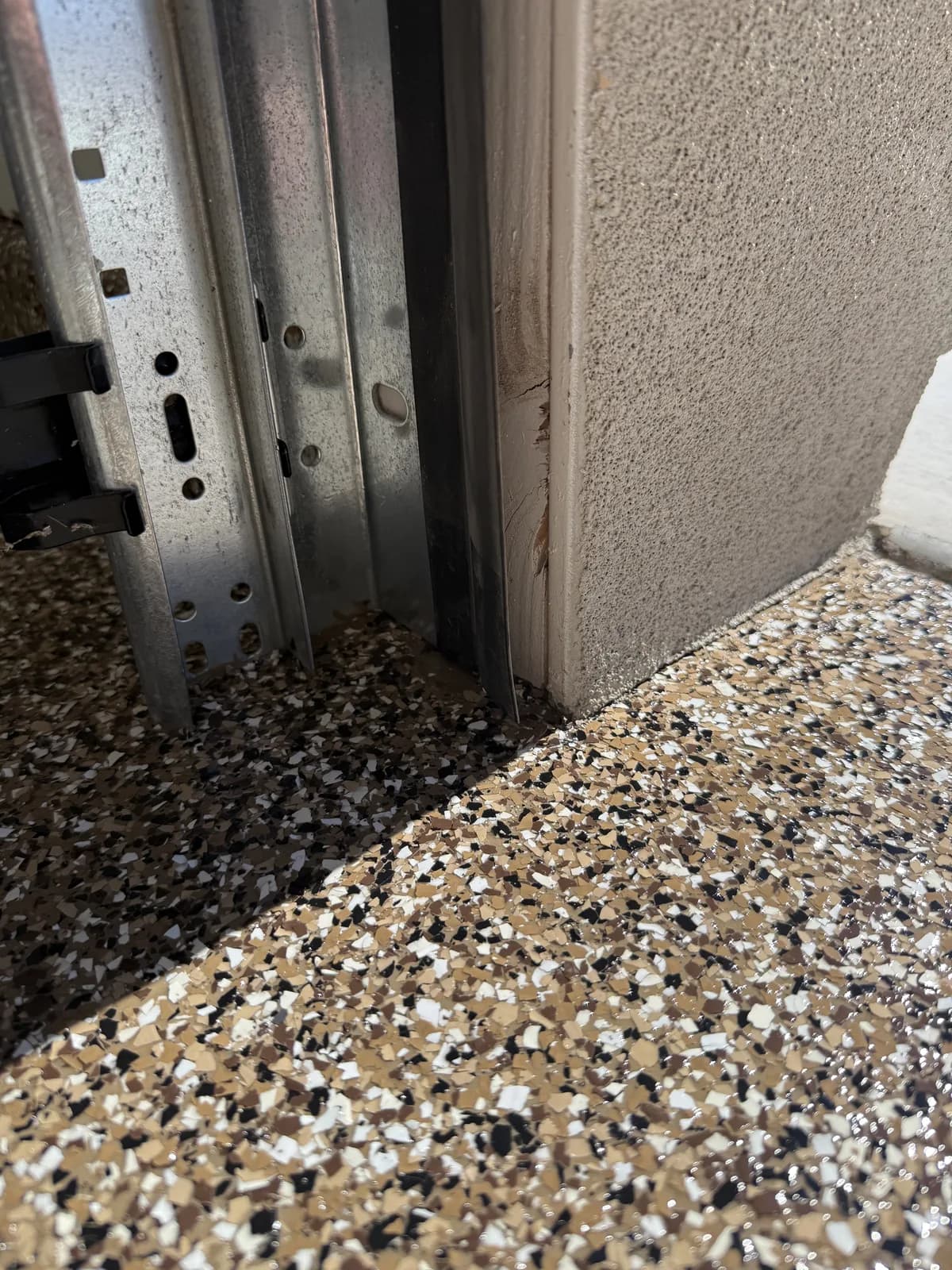
  • Masking the walls, the door track and anything the coating could reach
  • Base coat, the chosen finish, and the clear coat over it

What is not

  • Emptying the garage. It has to be clear, and that is the part people underestimate
  • Storing your belongings while the floor cures
  • Structural repair of a slab that is heaving or settling. That is a different trade and we will say so
  • Coating over an existing finish we cannot verify. It comes off first, or we do not quote it
  • A date we cannot hold. Exterior aprons wait on weather; the inside of the bay does not

What is different about doing this here

St. George recorded 98 days at or above 100°F in 2024, the most on record, and the all-time high is 117°F. An attached garage here spends the summer hot. That matters twice: it is what the finished floor lives with, and it is a constraint on the work itself, because resin systems have a published application temperature window and their working time shortens as the slab warms.

The other local one is sand. The Utah Geological Survey maps wind-blown sand as one of nine adverse construction conditions for this area, and Washington County publishes it as its own hazard layer — most counties do not map blowing sand at all, which is the signal that it matters here. Wet resin holds whatever lands in it. That is a real reason the exterior half of a job gets scheduled around a wind forecast, and April is the windiest month.

What to ask anyone quoting this, us included

  • How is the slab being prepared, and if the answer is grinding, to what surface profile?
  • Which moisture test are you running, and can I see the reading?
  • Which product is going on my floor, and can I see its data sheet?
  • What happens to the cracks, and is that in the quote or added later?
  • Who is preparing the slab, and are they the same people applying the finish?
What we can show you in writing

Every line traces to a document we read in full. The number after a sentence points to the research below.

  • Concrete substrates must be mechanically prepared to remove cement laitance, existing coatings and curing compounds, and to achieve a profile that is clean, dry and free of dirt, grease and oil. Diamond grinders create that profile and remove high spots and coatings; shot blasting is described as the industry standard for surface preparation of concrete.1
  • ICRI Guideline 310.2R-2013 defines a scale of concrete surface profiles, from CSP 1 — essentially unchanged concrete with loose debris removed — through CSP 9 and beyond at exposed aggregate. Physical replica chips exist so a prepared slab can be visually accepted or rejected against the number, and most coating manufacturers specify against that scale on their own data sheets.1
  • St. George recorded 98 days at or above 100°F in 2024, the most on record, and the all-time high is 117°F on July 11, 2021. The city has had back-to-back hottest-Julys-on-record, in 2023 and again in 2024.2
  • The Utah Geological Survey maps wind-blown sand as one of nine adverse construction conditions for the St. George–Hurricane area in Special Study 127, and Washington County publishes it as its own GIS hazard layer. Utah DEQ notes that from spring through fall, high winds combined with dry surface conditions produce dust storms that can lead to extremely high levels of particulate matter.2

Where this comes from

Every line above traces to a document we read in full. The number after a sentence points to the research below; hover it for the section. If you find a line wrong, tell us and we will fix it and say so.

  1. Concrete coatings research, September 2026 Compiled from ICRI Guideline 310.2R-2013 on concrete surface preparation, the ASTM moisture test standards F2170, F1869 and D4263, ACI 302.2R and NRMCA CIP 29 on slabs and vapor retarders, Sika's published surface preparation guide, Sherwin-Williams product literature on polyaspartic chemistry, and the Utah Geological Survey and Utah DEQ material already cited in the environment research. 2 sections cited. Hover a number above for the section.
  2. Environment, water and ground research, August 2026 Compiled from the cities' own water quality reports, Utah Geological Survey Special Study 127, the Utah State Hazard Mitigation Plan, Washington County GIS hazard layers, NOAA climate records, EPA radon zones and Census QuickFacts. 2 sections cited. Hover a number above for the section.

The rest of garage floors

  • Flake floor

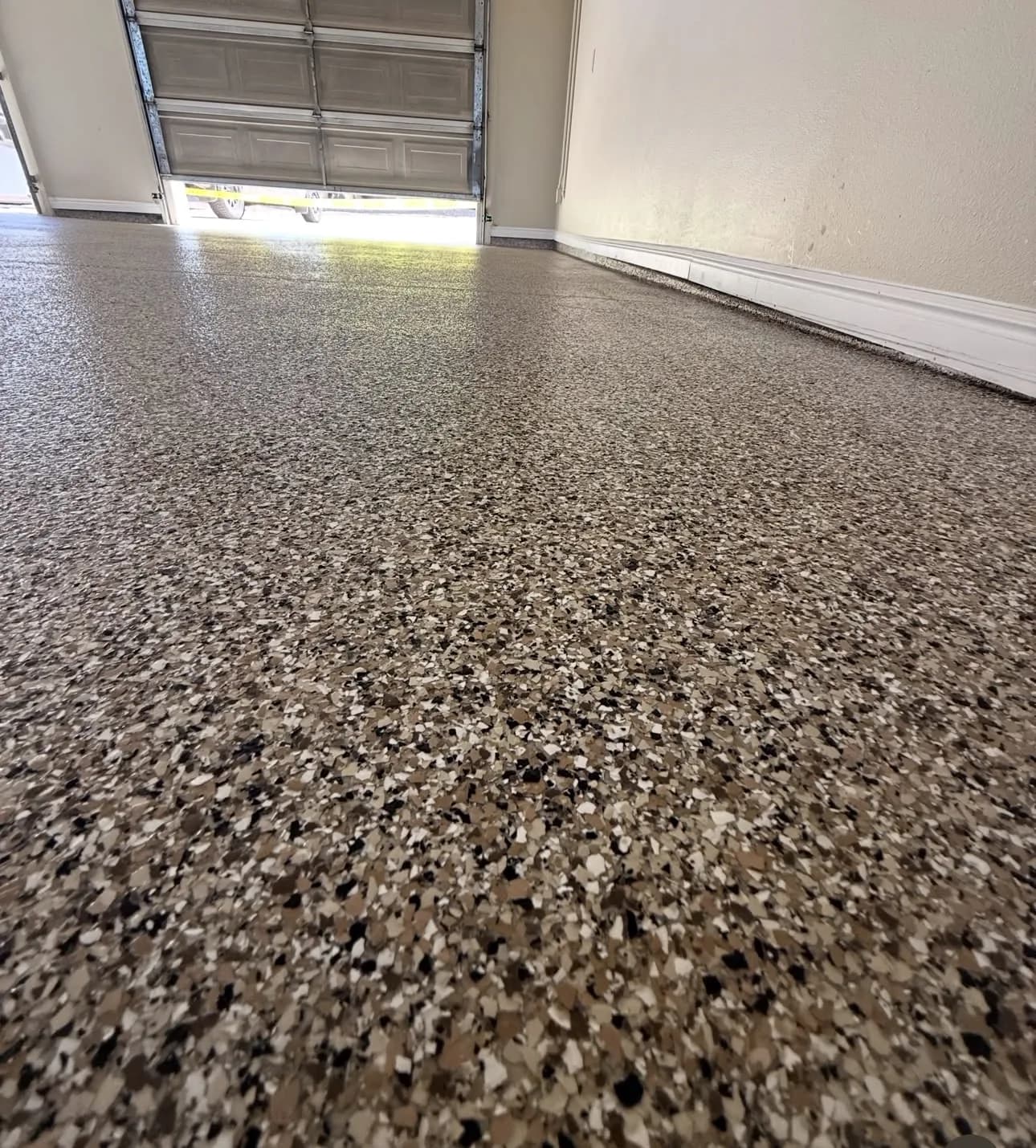
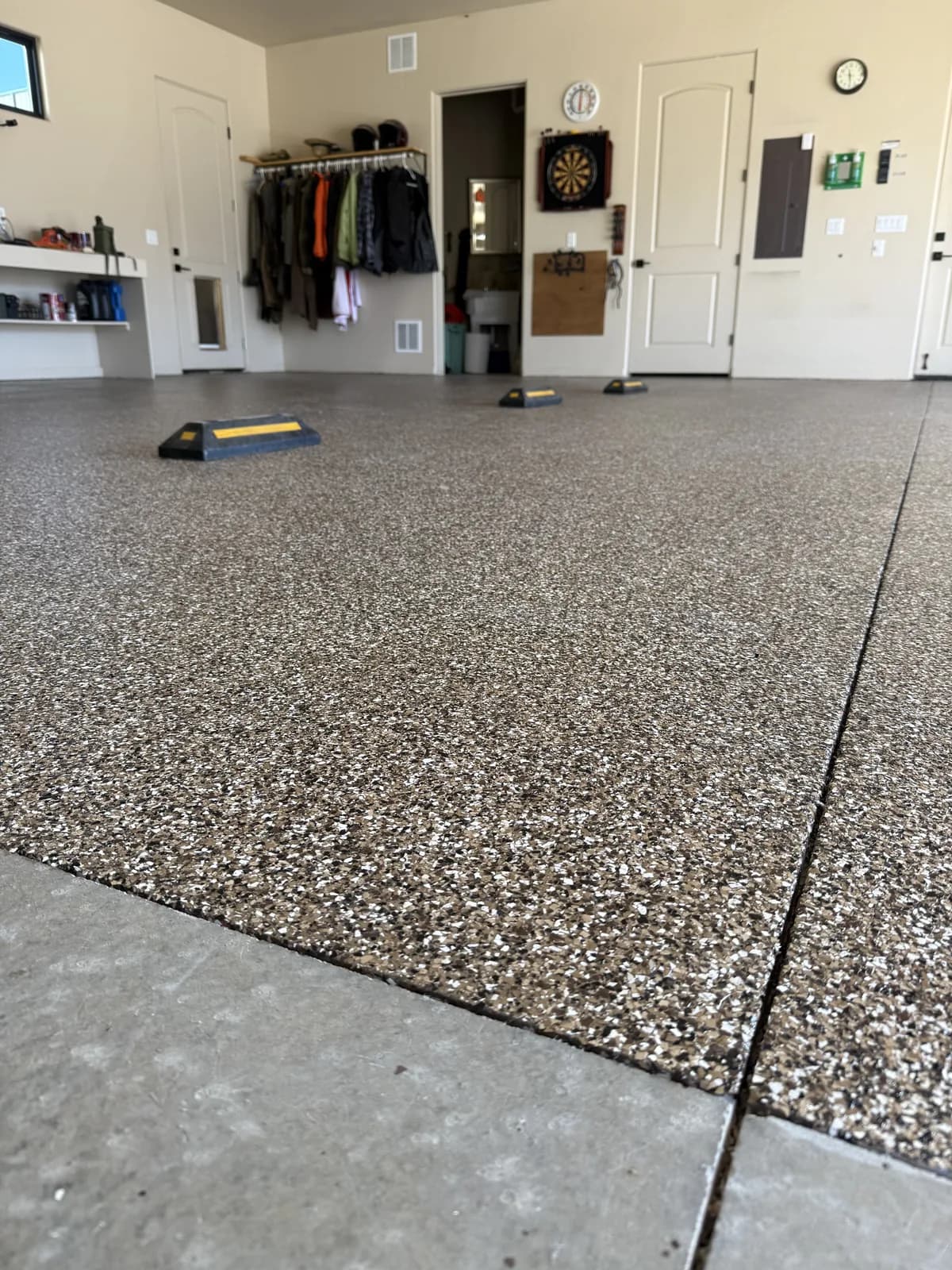
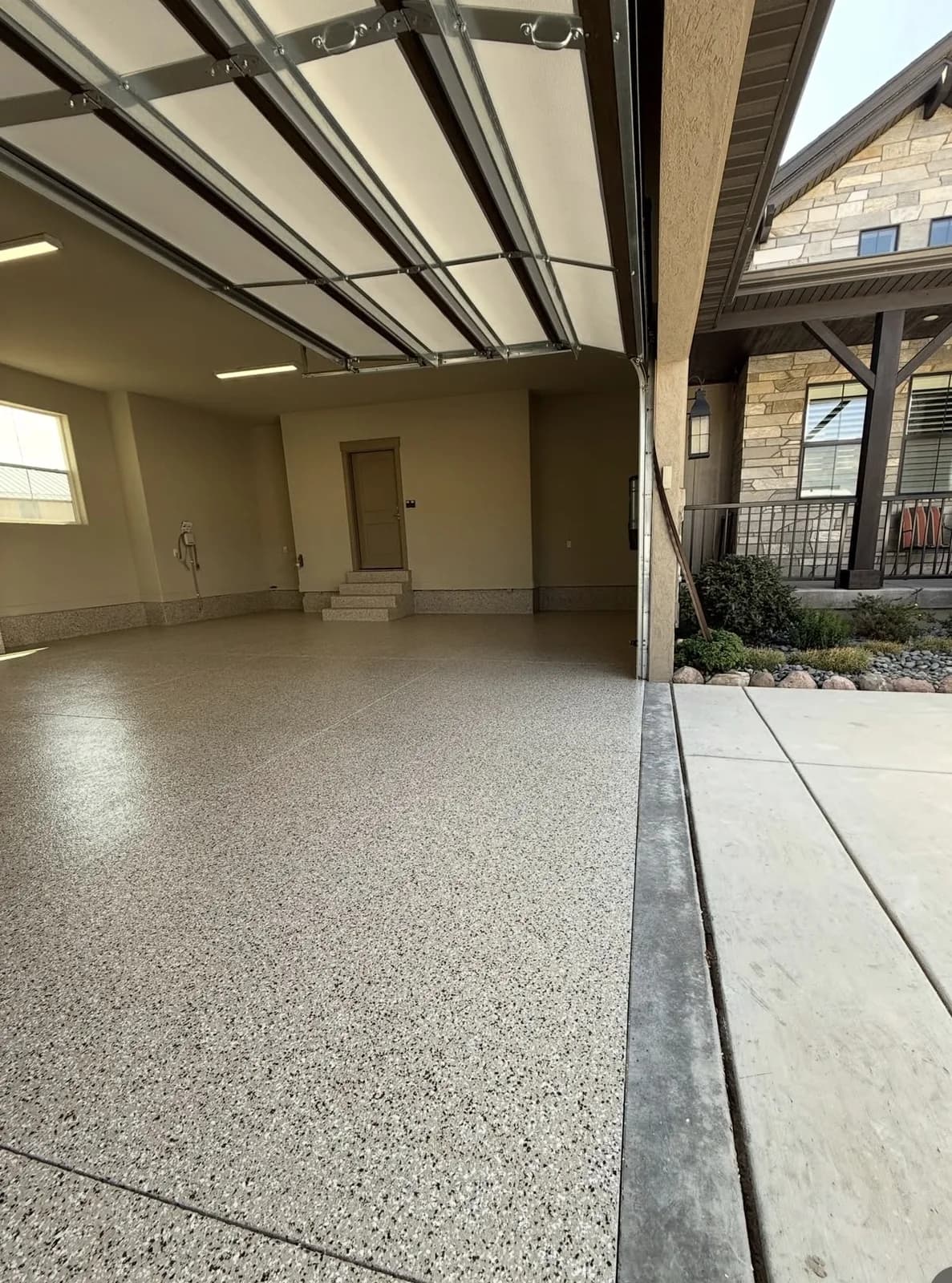
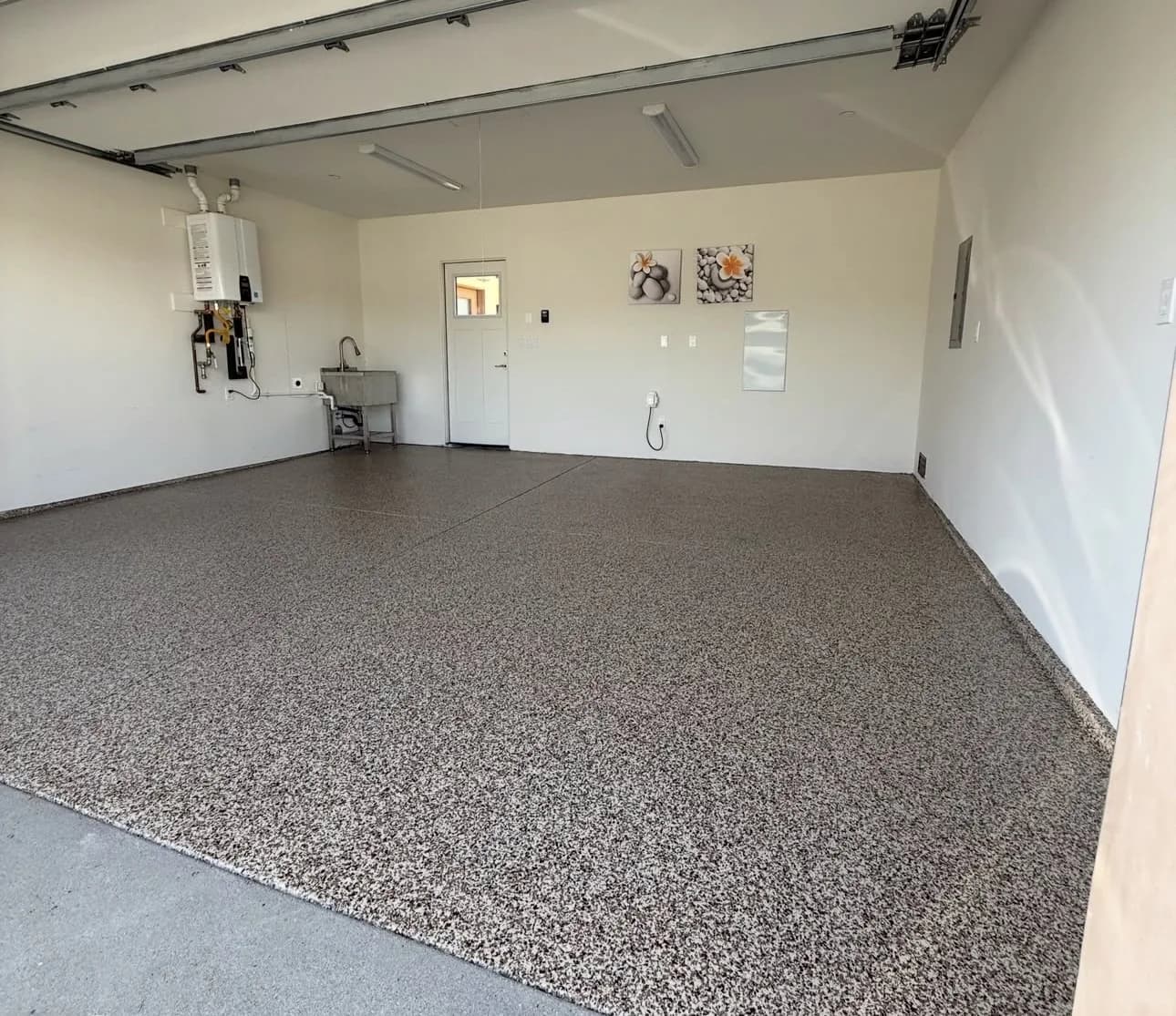
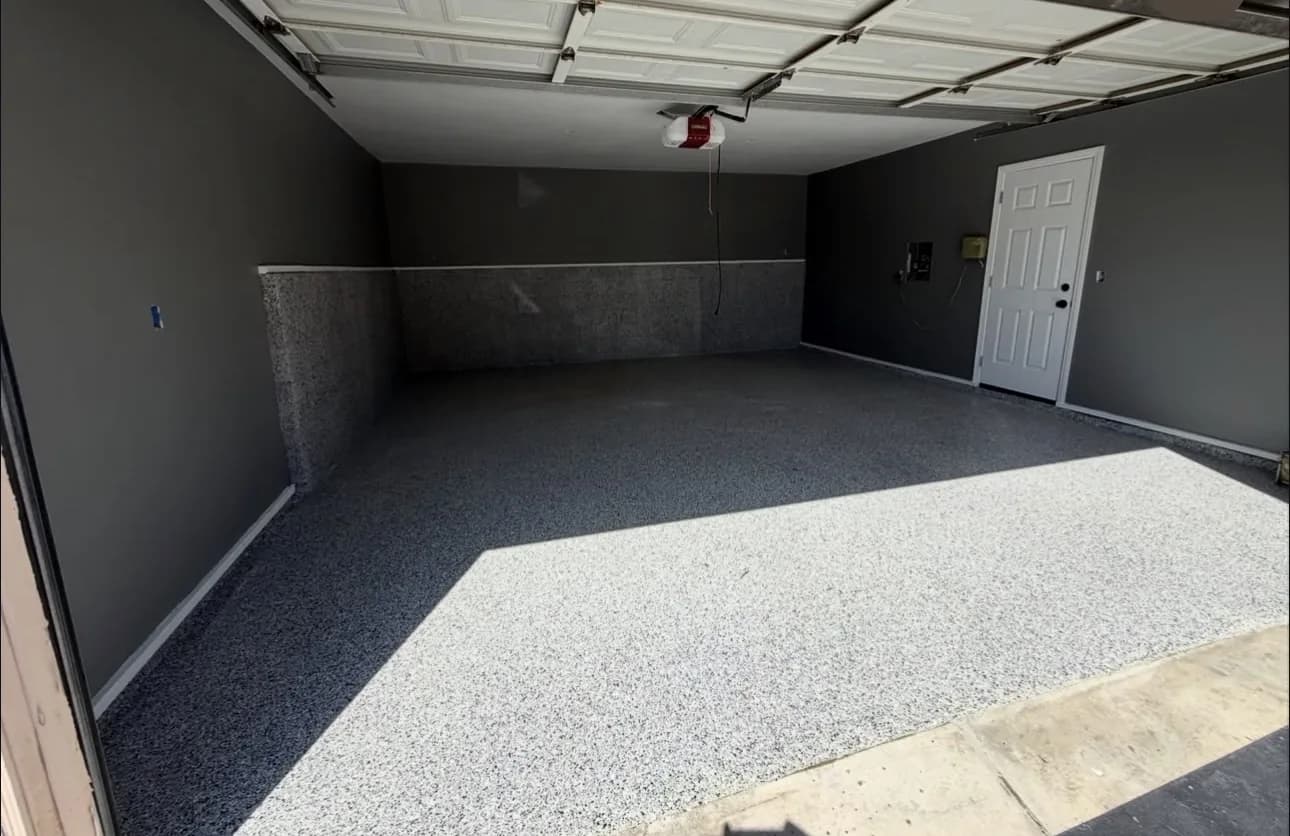
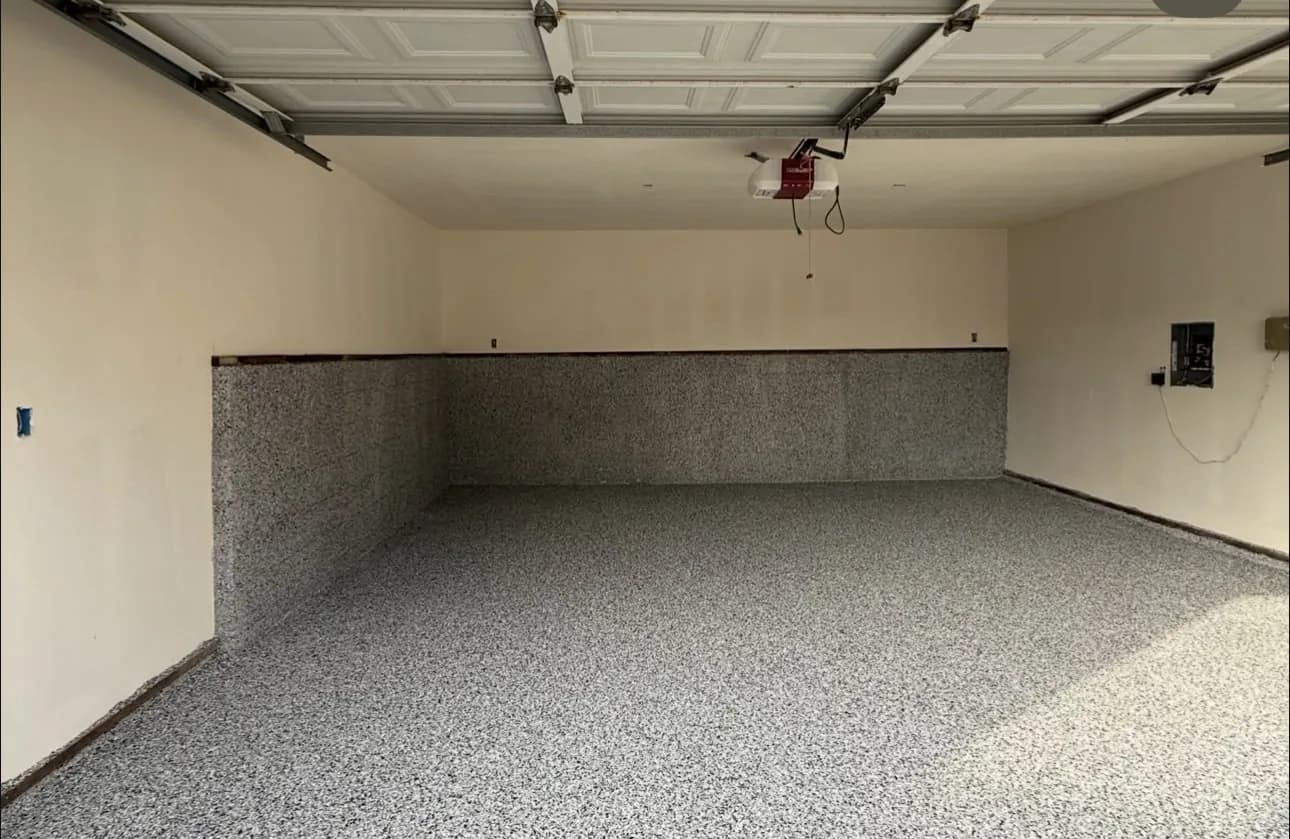
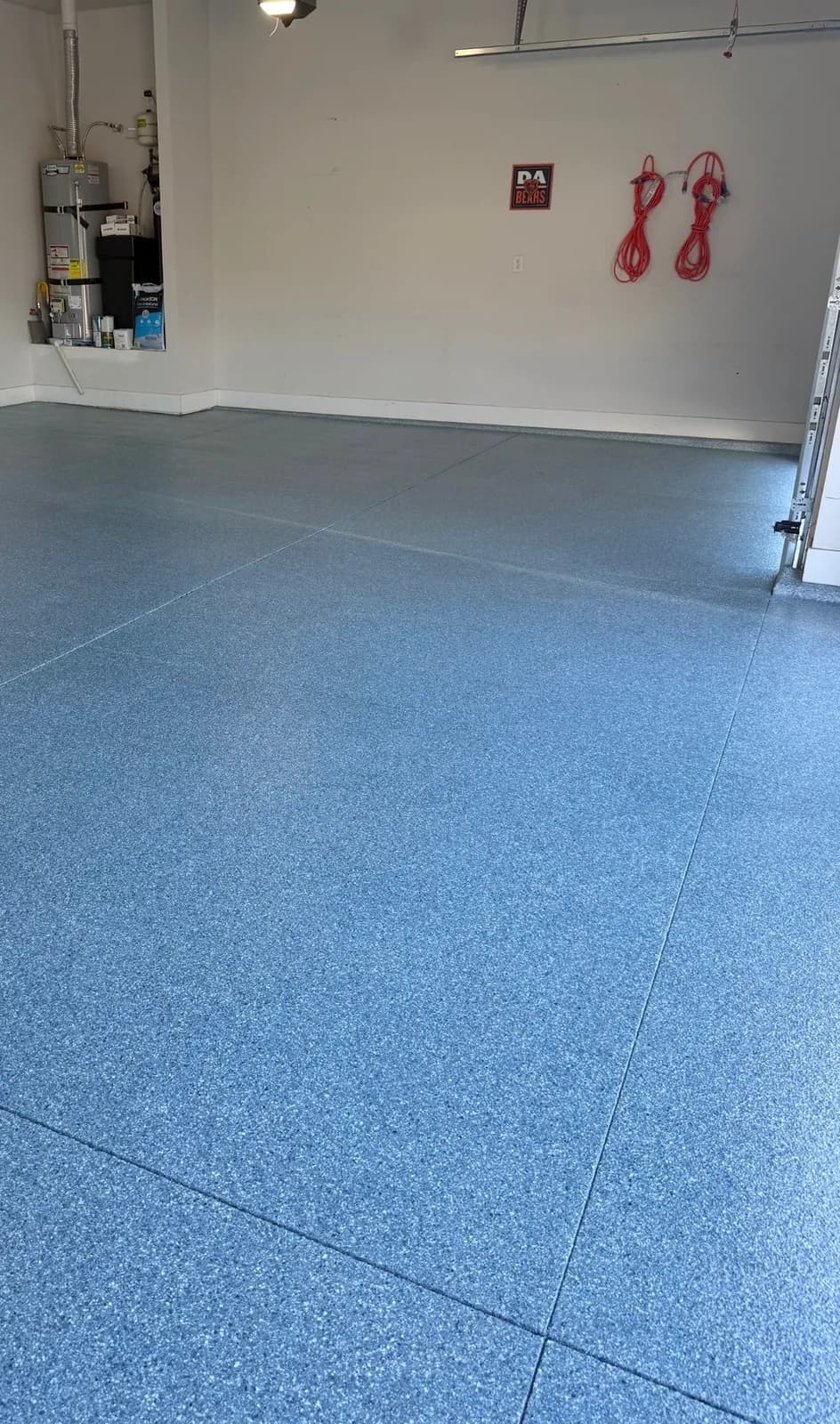
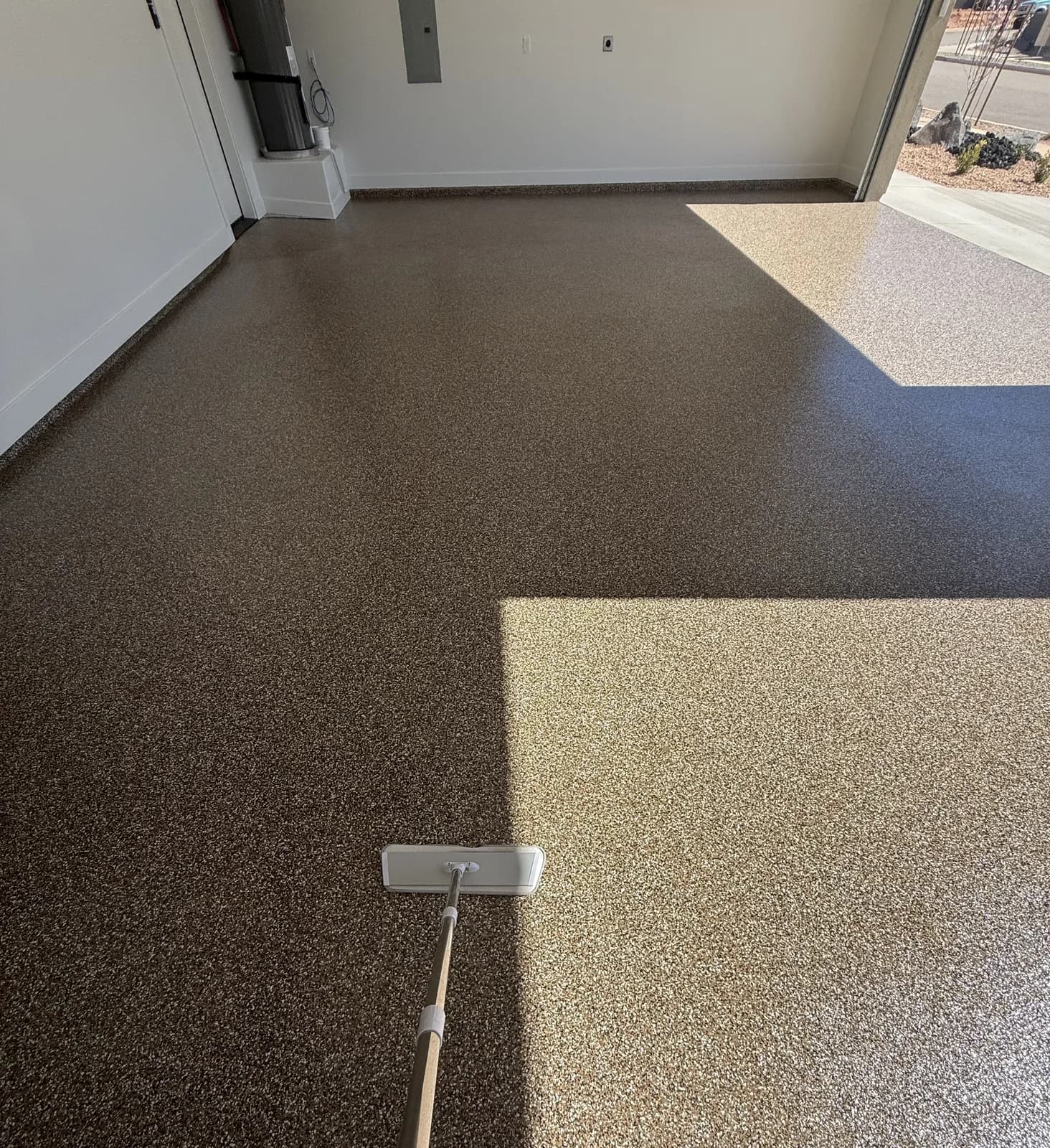
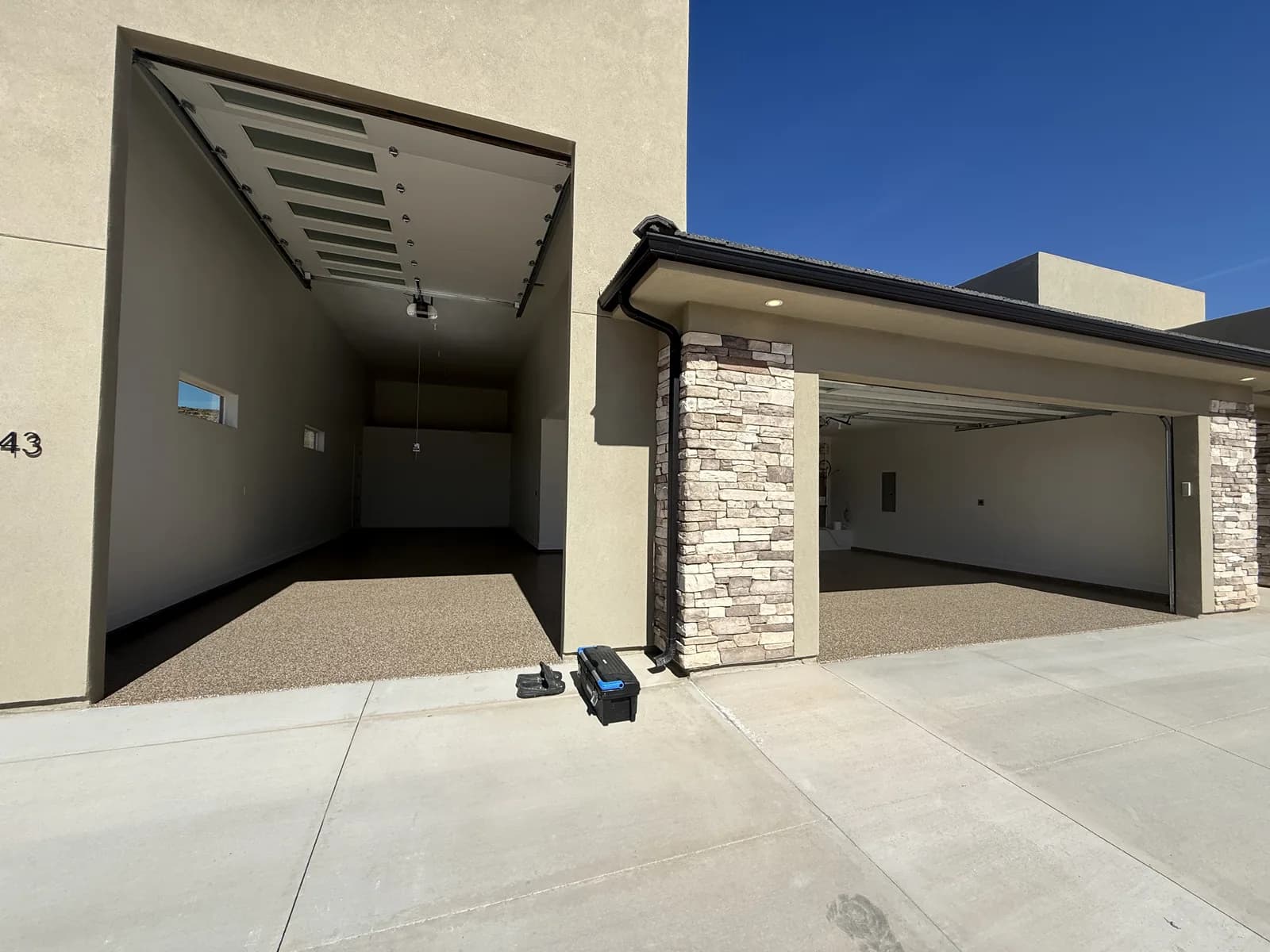
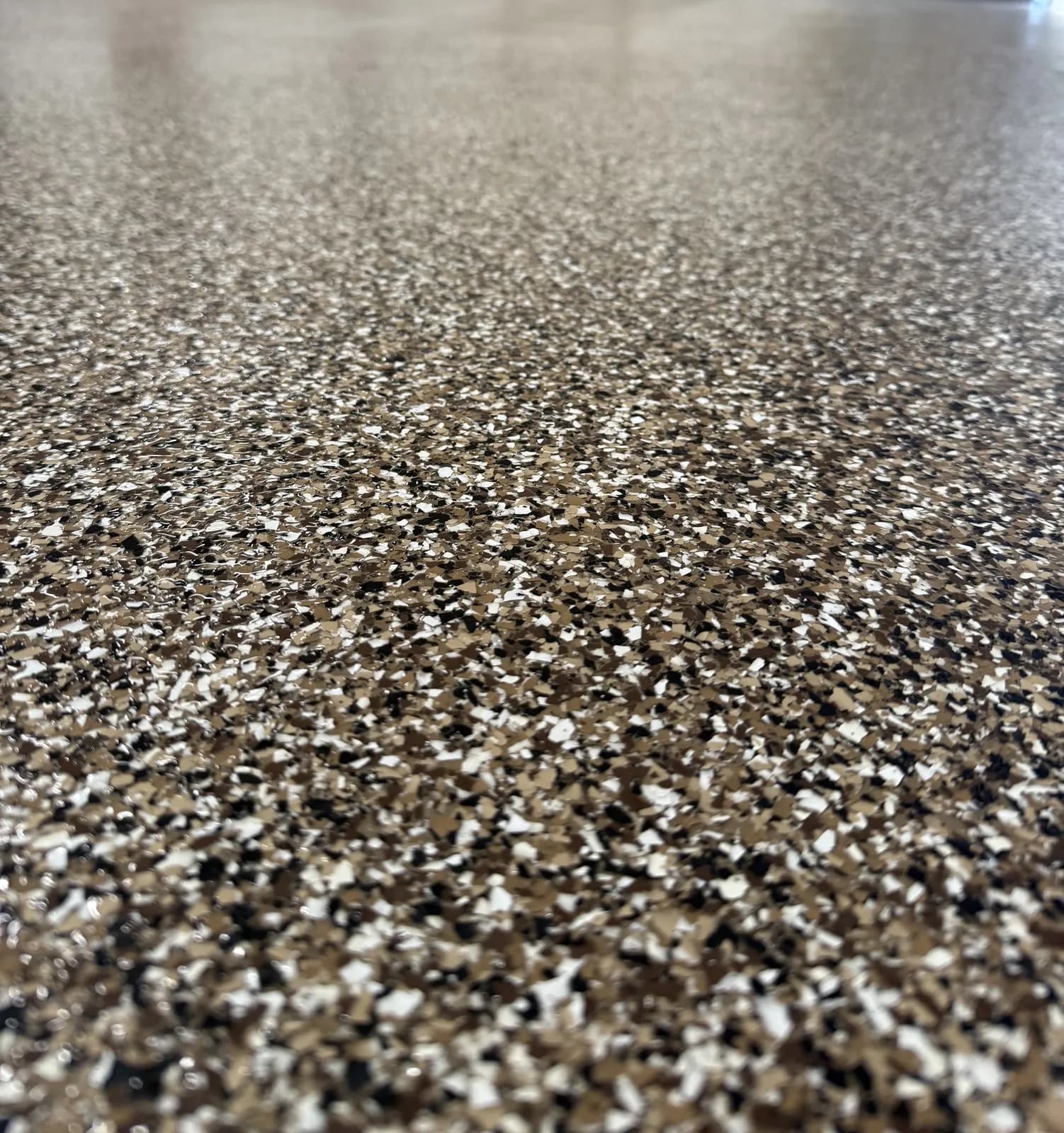
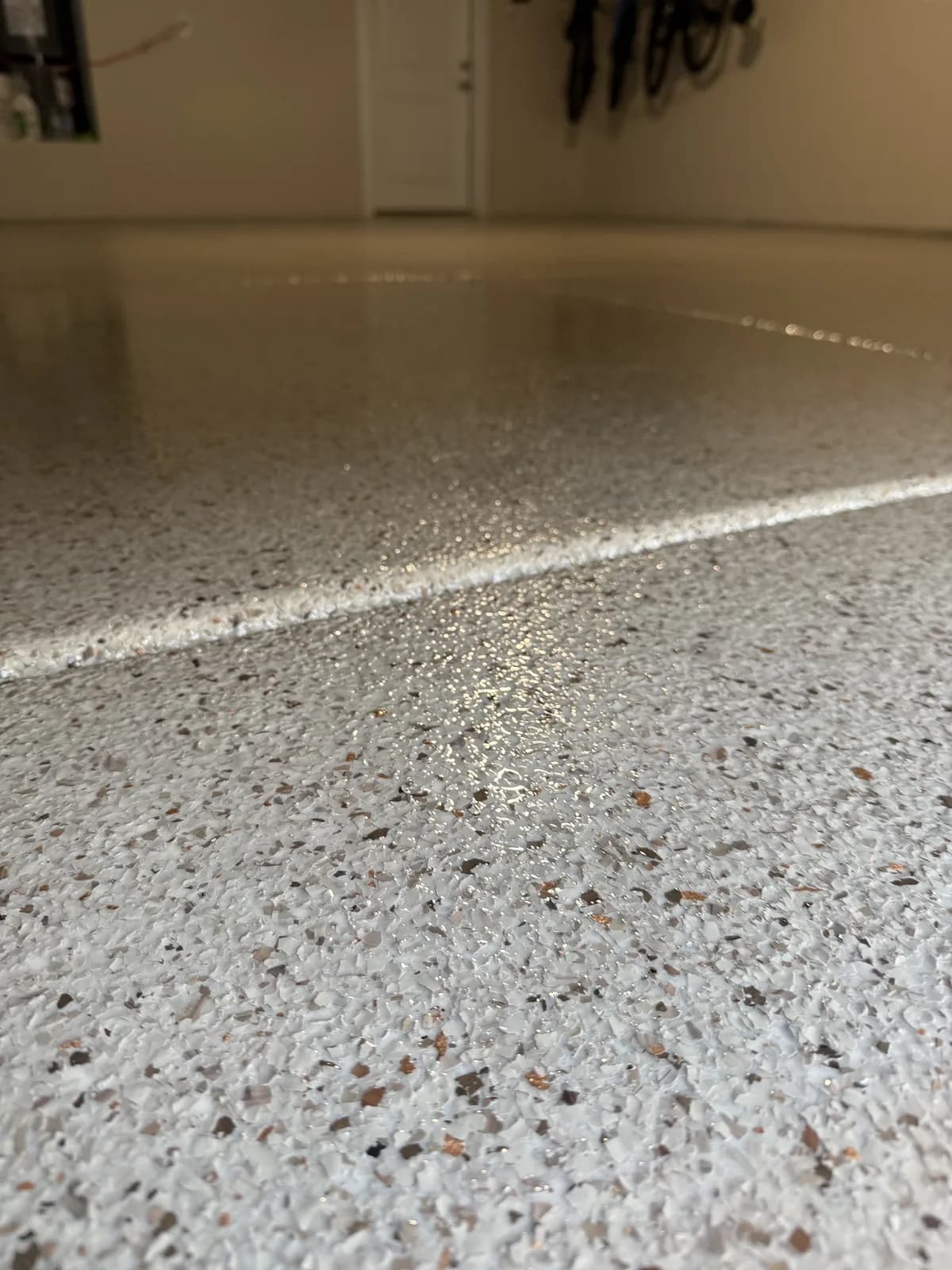
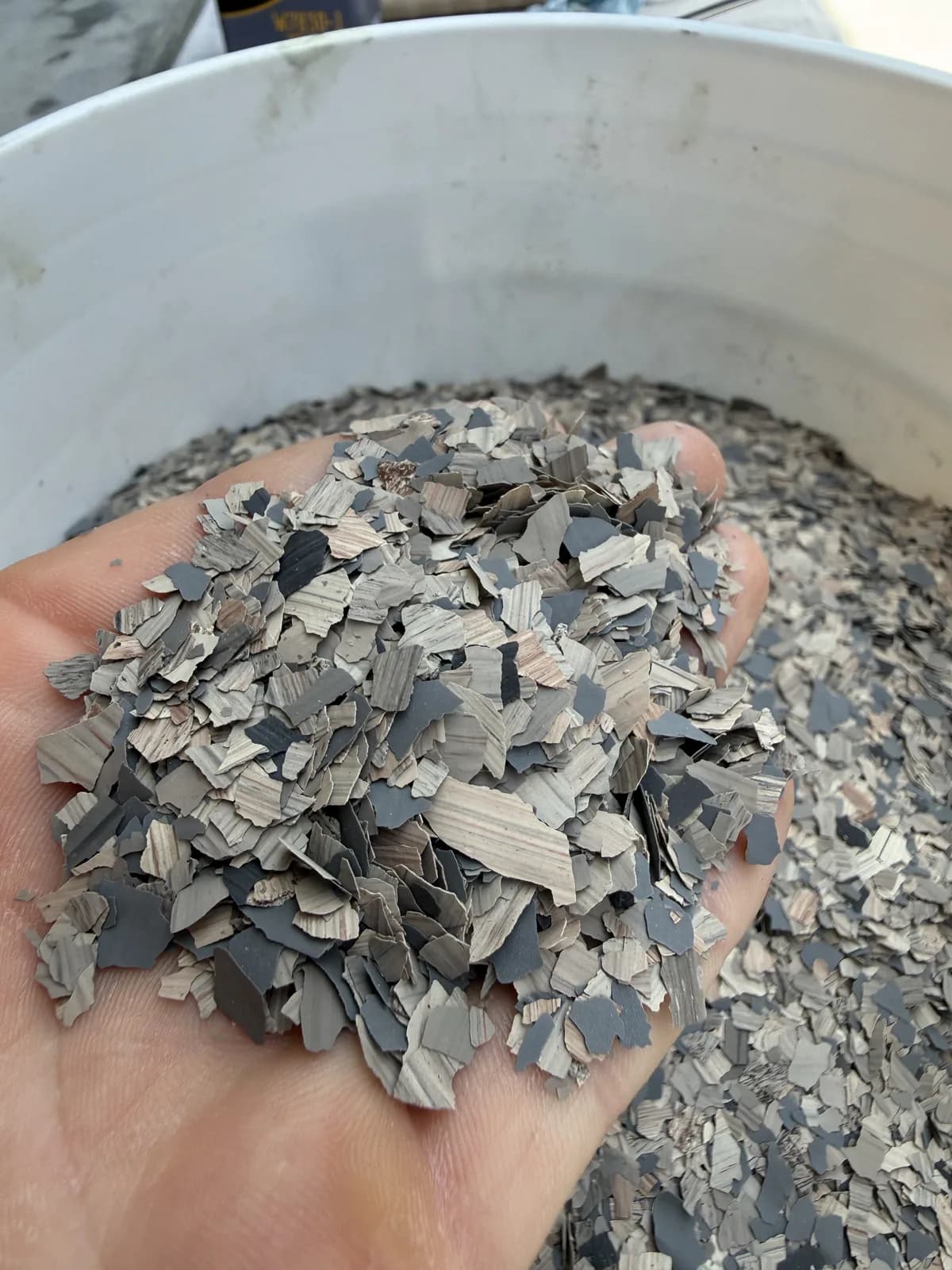
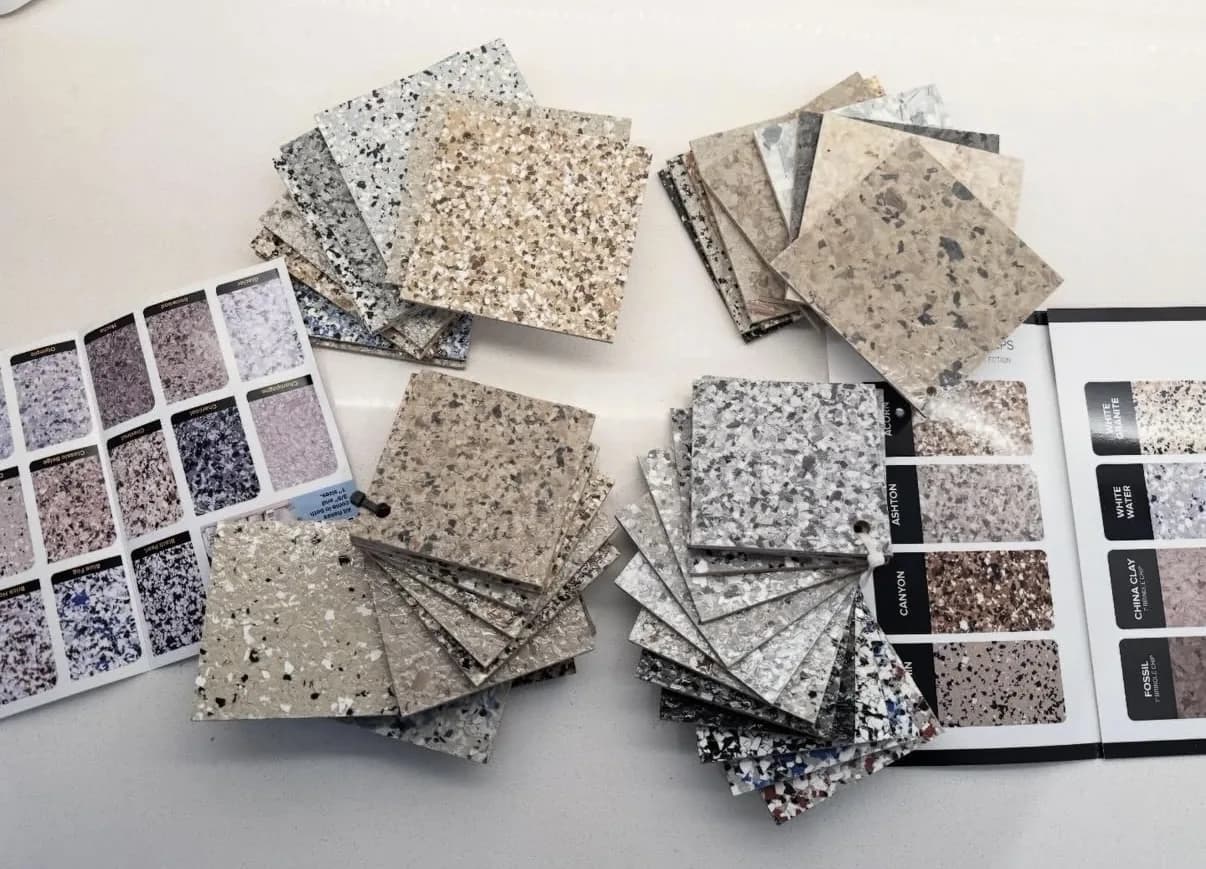
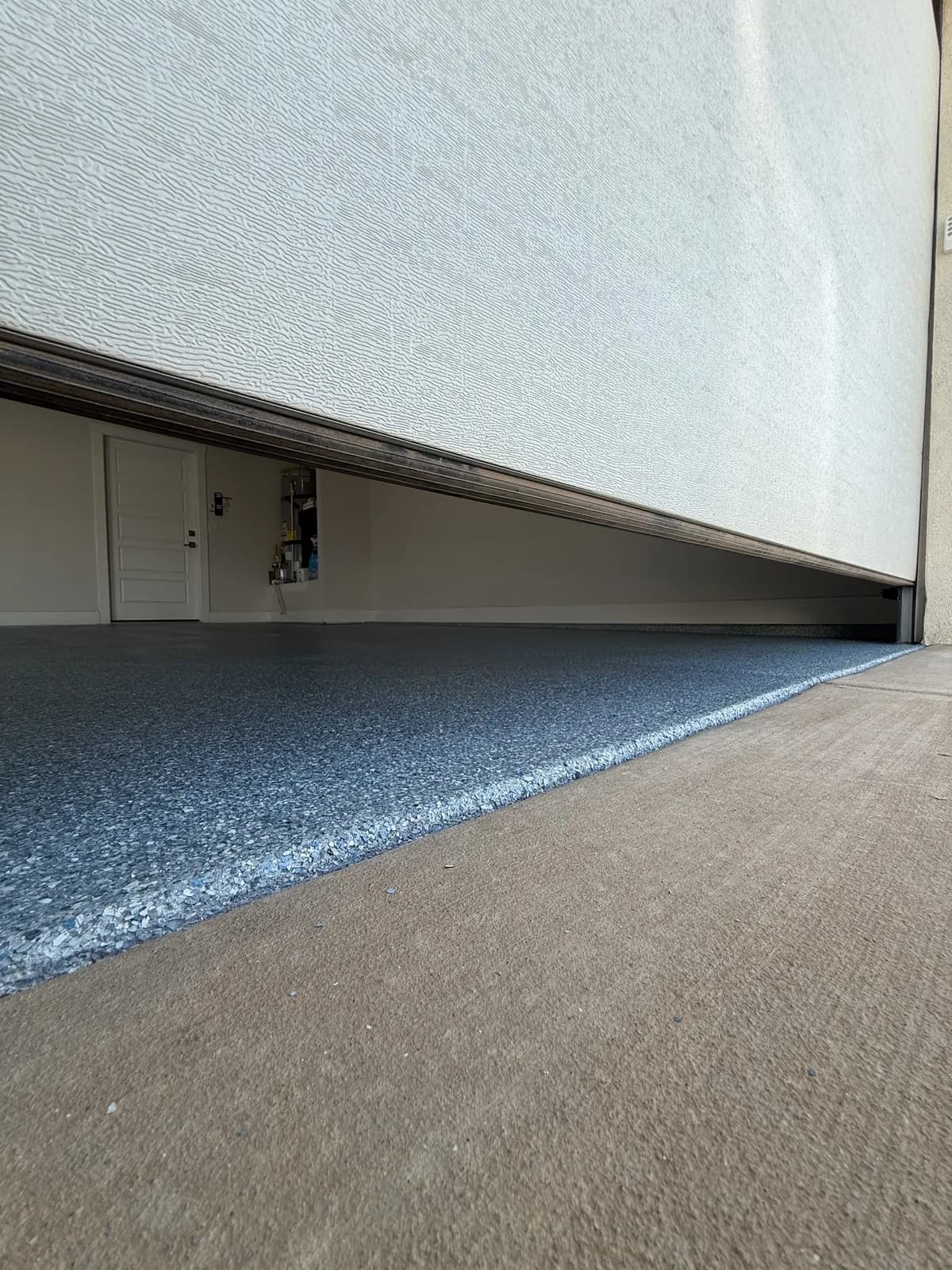
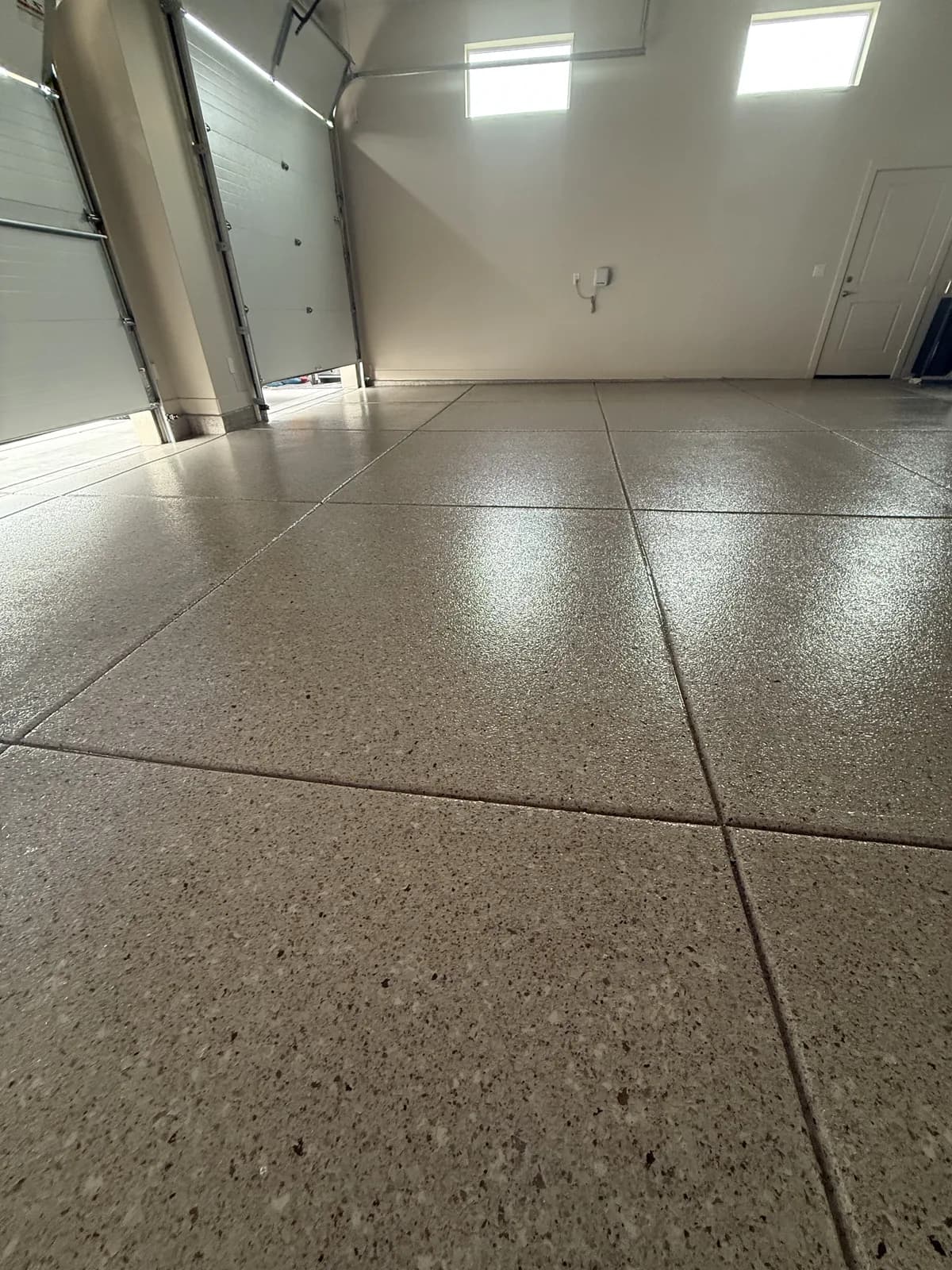
    Vinyl chips broadcast into a wet base coat and locked under a clear top coat. The common finish, and the one in most of the photographs here.

  • Solid color floor

    One color, no chips. The plainest finish, and the one that shows every repair in the slab beneath it.

  • Metallic floor

    A pigmented resin worked while wet so the color moves. No two are the same, which is the point and also the risk.

  • Grind and seal

    The concrete itself is the finish. Ground back, then sealed. Nothing is added on top to fail.

The quote is the number. There is no second number.

Call (801) 680-6859

7 a.m. to 5 p.m., weekdays. Emergency calls answered any hour, every day.