
St. George Home Services

Concrete coatings · Garage floors

Metallic floor

A pigmented resin worked while it is still wet so the color moves and pools. No two are alike, which is the whole appeal and also the reason to be careful about what you are agreeing to.

One flat fee to find out what is wrong. You are told it on the phone before anyone is dispatched, and it comes off the job if you hire us. Read our Plain Terms

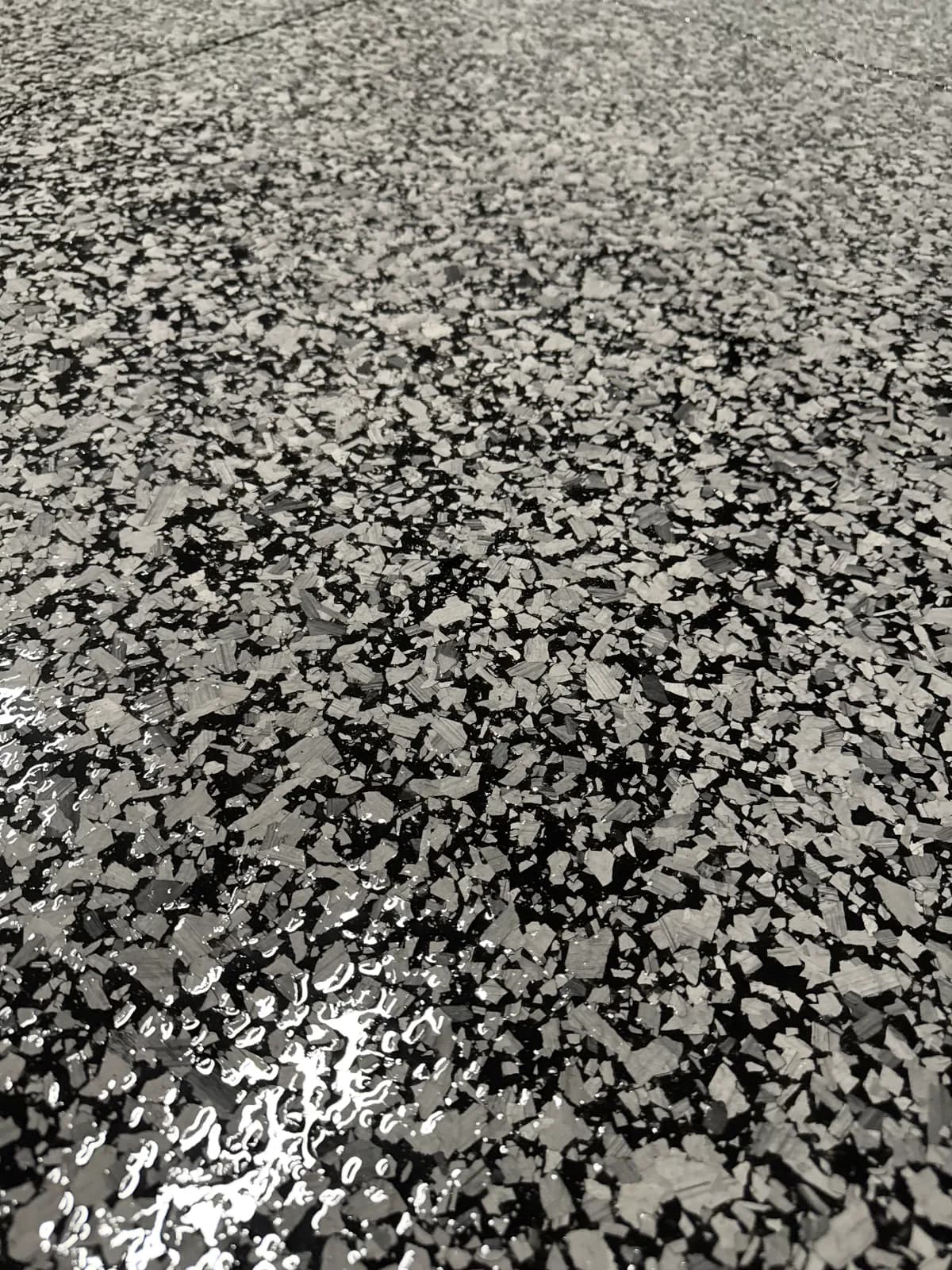
A close view of a black and silver flake floor with a pooled highlight of reflected light in the foreground
A black and silver blend.

What the work is

A metallic floor is made, not applied. The installer moves pigment through a clear resin while it is liquid, and the pattern that results is the floor. It cannot be undone, matched to a sample exactly, or repeated.

That is worth saying plainly because it is the one finish where expectation and outcome part company. A sample board shows the palette and the general character. It does not show your floor. If you need to know exactly what you are getting before it is down, this is the wrong finish and flake is the right one.

It is also the least forgiving finish underfoot: it is smooth, so it is the most slippery of these when wet, and it shows scratches. Indoors, away from water, that is usually fine. On a pool deck it is not, and we will not put it there.

We would rather talk you out of this than install one you are unhappy with, because there is no version of fixing it that is not doing it again.

What is included

  • A sample board in the palette you have chosen, before anything is committed
  • Pigmented metallic resin over a prepared, tested slab
  • Clear top coat
  • A written note of what is and is not predictable about the result

What is not

  • Matching a specific pattern, from a photograph or from another floor
  • Redoing a section because the pattern landed differently there. The whole floor is the unit
  • Metallic on a pool deck or any wet exterior surface. We will decline that one

What to ask anyone quoting this, us included

  • Can I see a sample board in this palette, made by the person who will do my floor?
  • What happens if I do not like the pattern?
  • Is this appropriate for where I want it, or are you just selling it?

What we can show you in writing

Every line traces to a document we read in full. The number after a sentence points to the research below.

  • Concrete substrates must be mechanically prepared to remove cement laitance, existing coatings and curing compounds, and to achieve a profile that is clean, dry and free of dirt, grease and oil. Diamond grinders create that profile and remove high spots and coatings; shot blasting is described as the industry standard for surface preparation of concrete.1

Where this comes from

Every line above traces to a document we read in full. The number after a sentence points to the research below; hover it for the section. If you find a line wrong, tell us and we will fix it and say so.

  1. Concrete coatings research, September 2026 Compiled from ICRI Guideline 310.2R-2013 on concrete surface preparation, the ASTM moisture test standards F2170, F1869 and D4263, ACI 302.2R and NRMCA CIP 29 on slabs and vapor retarders, Sika's published surface preparation guide, Sherwin-Williams product literature on polyaspartic chemistry, and the Utah Geological Survey and Utah DEQ material already cited in the environment research. 1 section cited. Hover a number above for the section.

The rest of garage floors

  • Garage floor coating

    The bay emptied, the slab ground back, and a finish that is bonded to concrete rather than sitting on it.

  • Flake floor

    Vinyl chips broadcast into a wet base coat and locked under a clear top coat. The common finish, and the one in most of the photographs here.

  • Solid color floor

    One color, no chips. The plainest finish, and the one that shows every repair in the slab beneath it.

  • Grind and seal

    The concrete itself is the finish. Ground back, then sealed. Nothing is added on top to fail.

The quote is the number. There is no second number.

Call (801) 680-6859

7 a.m. to 5 p.m., weekdays. Emergency calls answered any hour, every day.