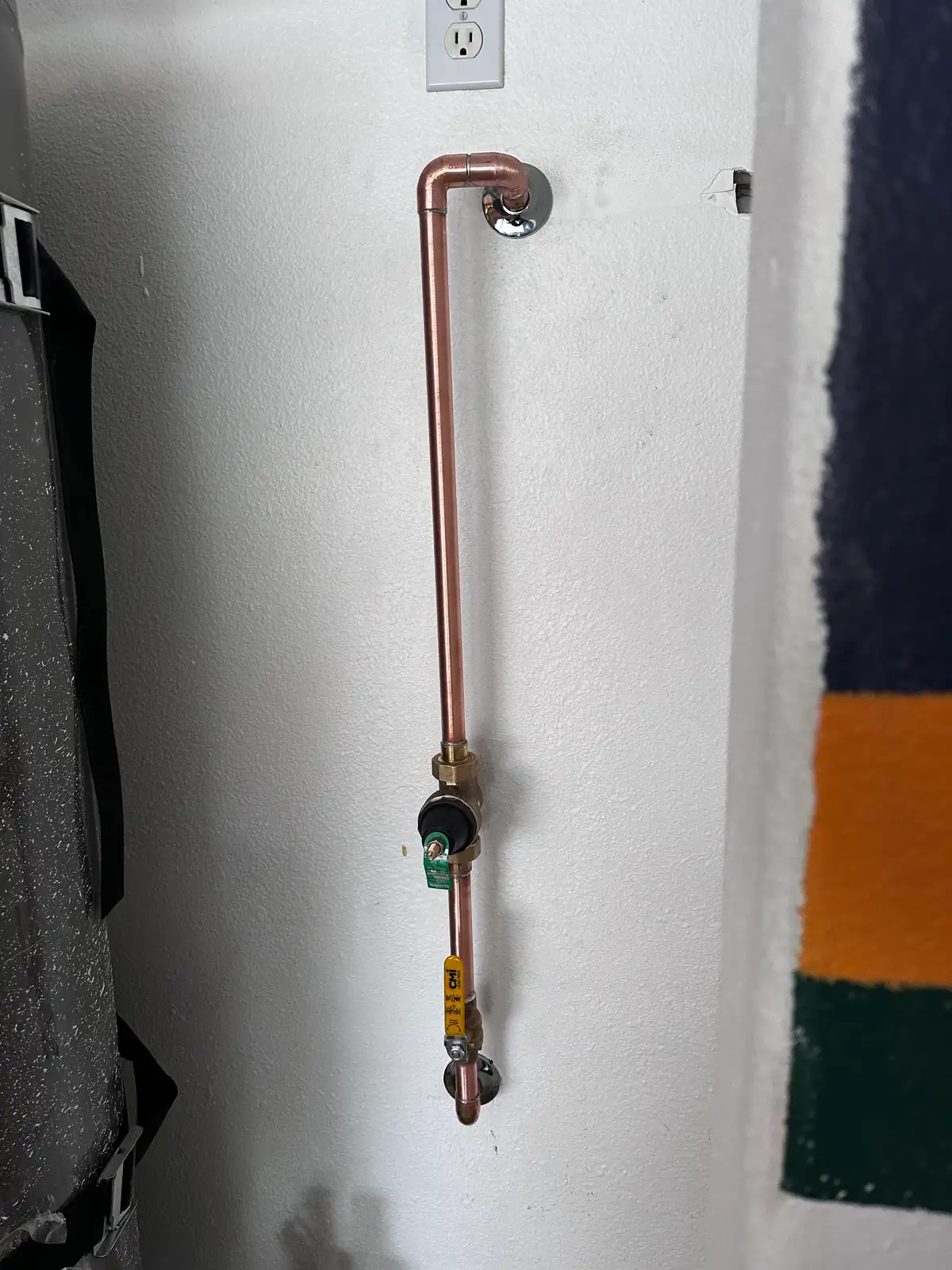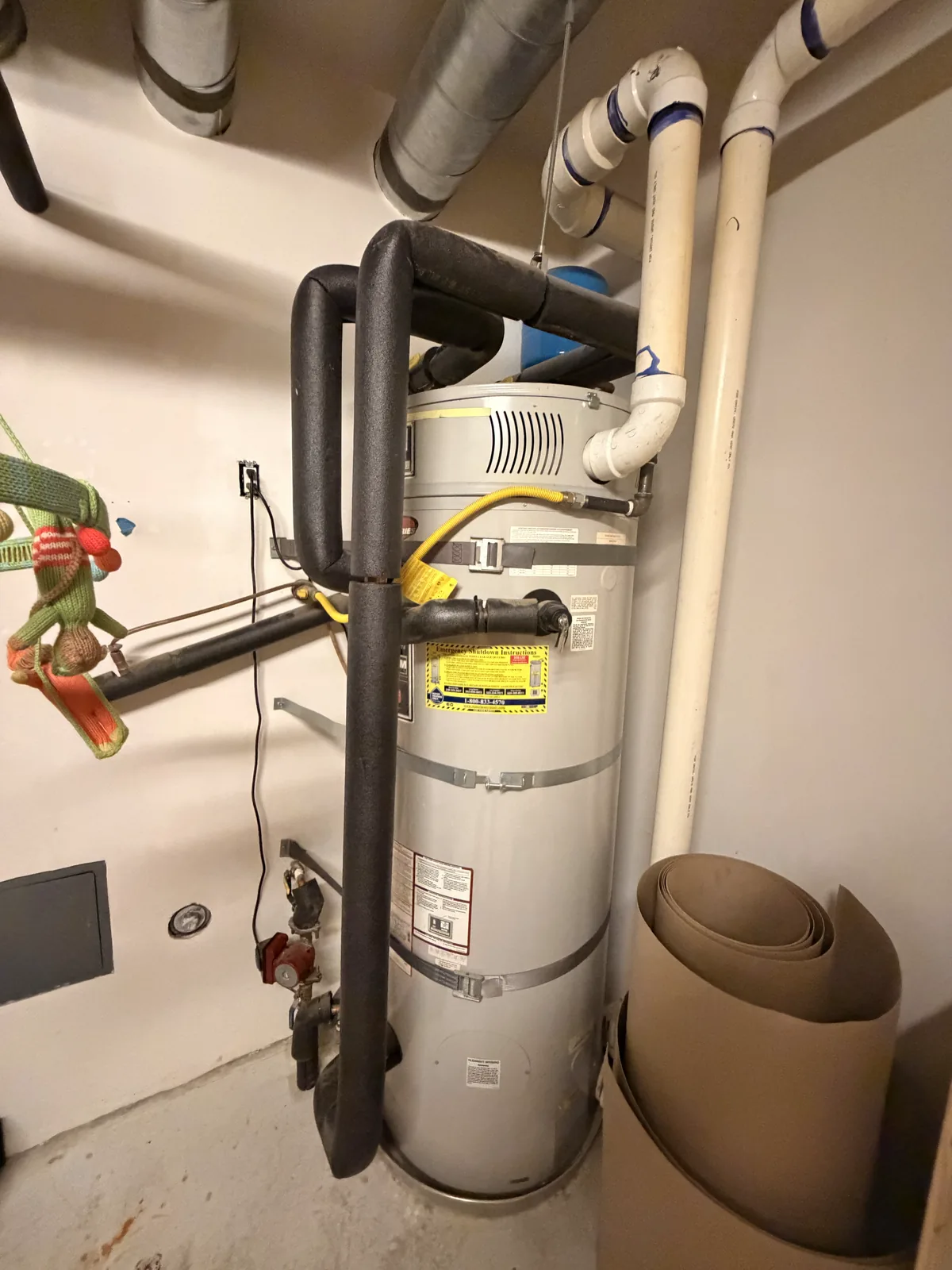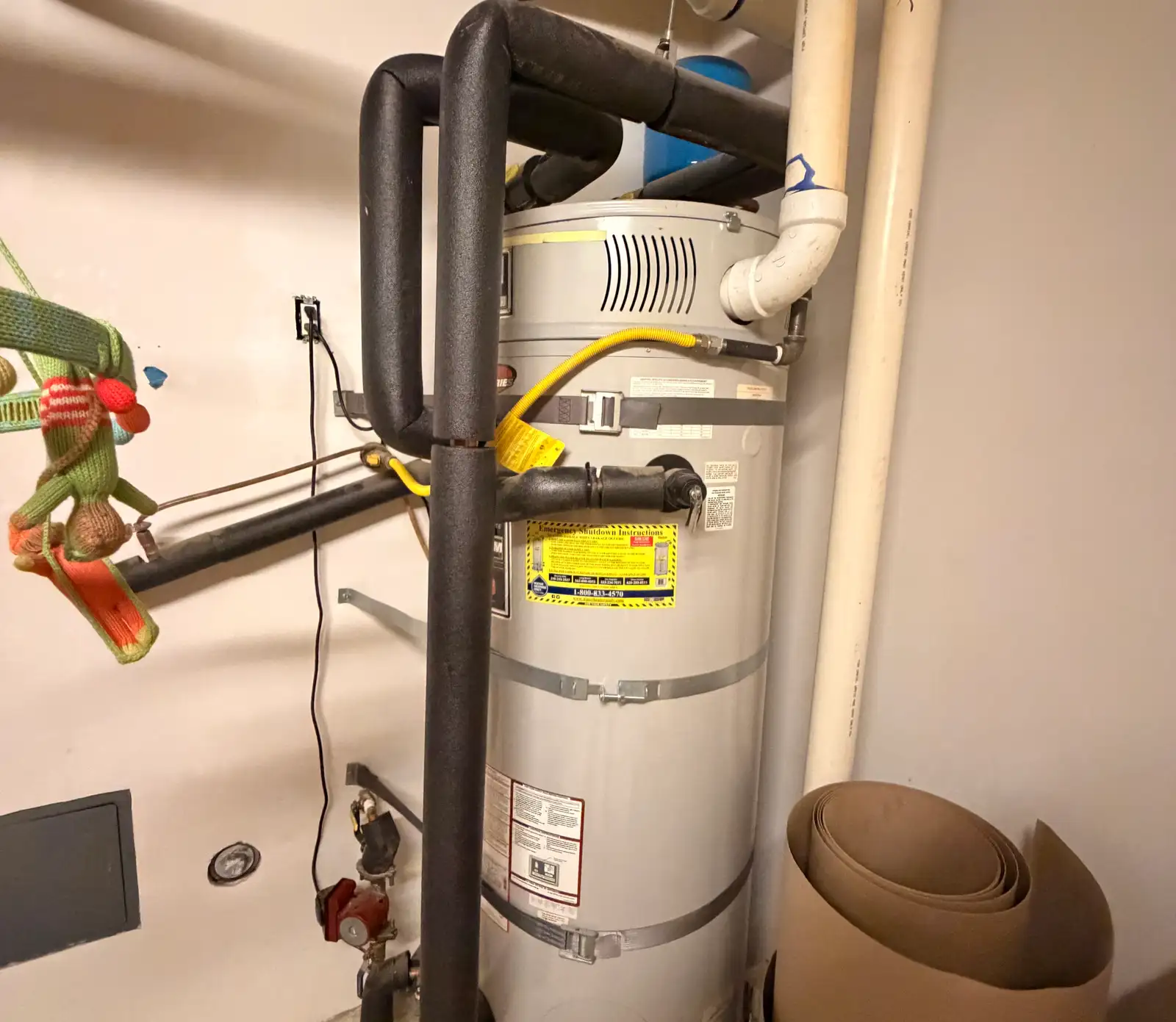
What the work is
When a check valve or a pressure reducing valve sits on the water service, the plumbing becomes a closed system. Heated water expands and has nowhere to go, so pressure spikes every time the heater fires. An expansion tank gives it somewhere to go.
The part that gets done wrong is the charge. The tank's air side has to be set to the actual static pressure on your service before the water is turned on. Set it to the factory number and the tank is a decoration.
So we measure your pressure, set the tank to it, and tell you the number in writing.
What is included
- The tank, correctly sized for the heater
- Tee, support and mounting so the tank is not hanging on the pipe
- Air charge set to your measured static pressure
- The static pressure reported to you in writing
What is not
- A pressure reducing valve, if your incoming pressure turns out to be too high. That is a separate item and we will show you the reading
- Replacing a failed relief valve
If your relief valve drips and then stops
That is the classic sign of thermal expansion with nowhere to go: the valve relieves the spike, then reseats. People replace the valve, and it starts again. The guide below explains the sequence and what actually fixes it.
What to ask anyone quoting this, us included
- What is my measured static pressure?
- What did you set the tank's air charge to?
- Is the tank supported, or hanging on the pipe?