What the work is
Not every slab needs coating. A sound driveway, patio or entry that is simply dirty often needs washing and sealing and nothing else, and that costs a fraction of a coated finish.
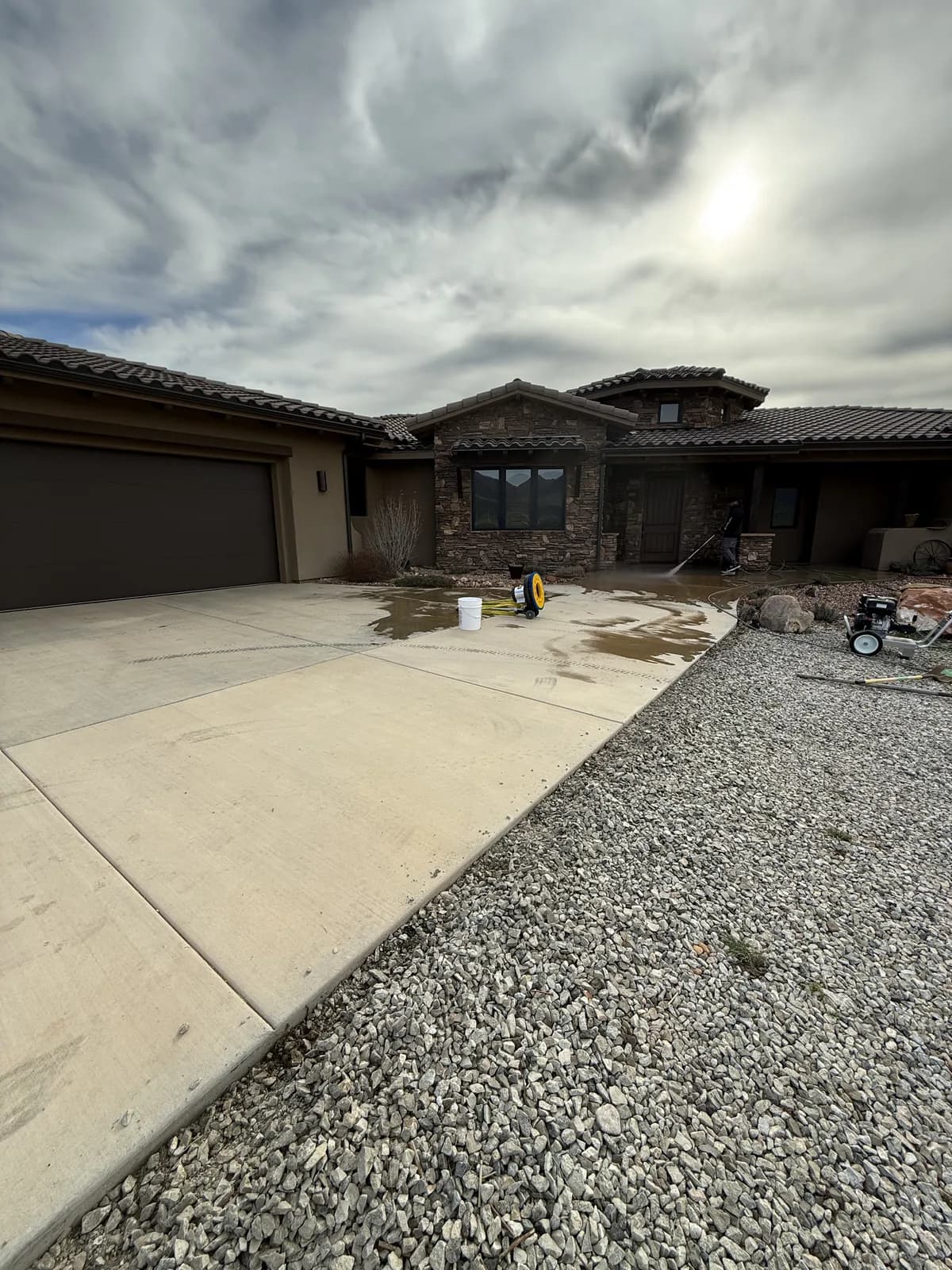
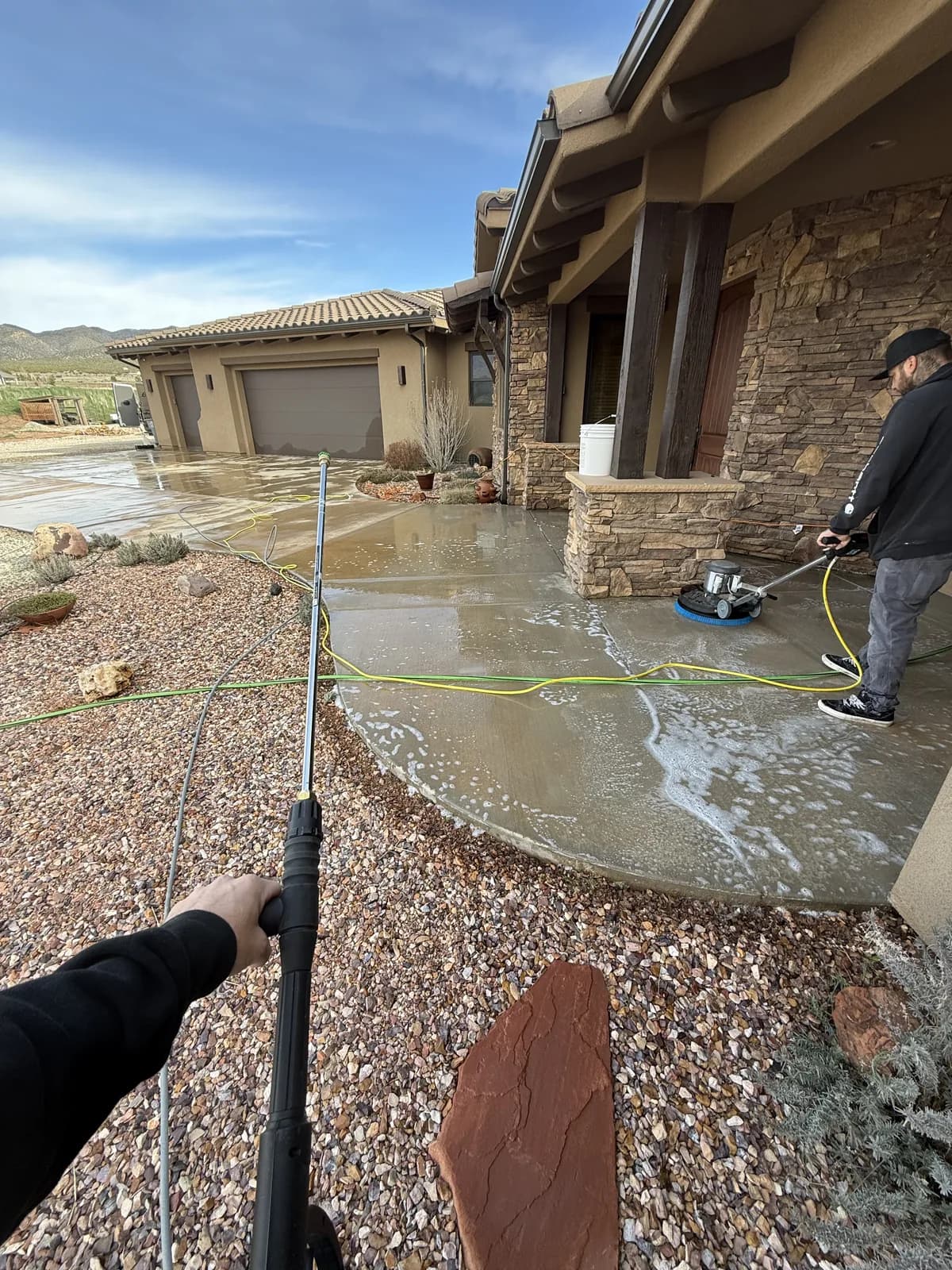
A rotary surface cleaner is what does the work on flatwork. It cleans evenly where a pressure wand leaves stripes, and the stripes are permanent in the sense that they are visible until the whole slab weathers back together.
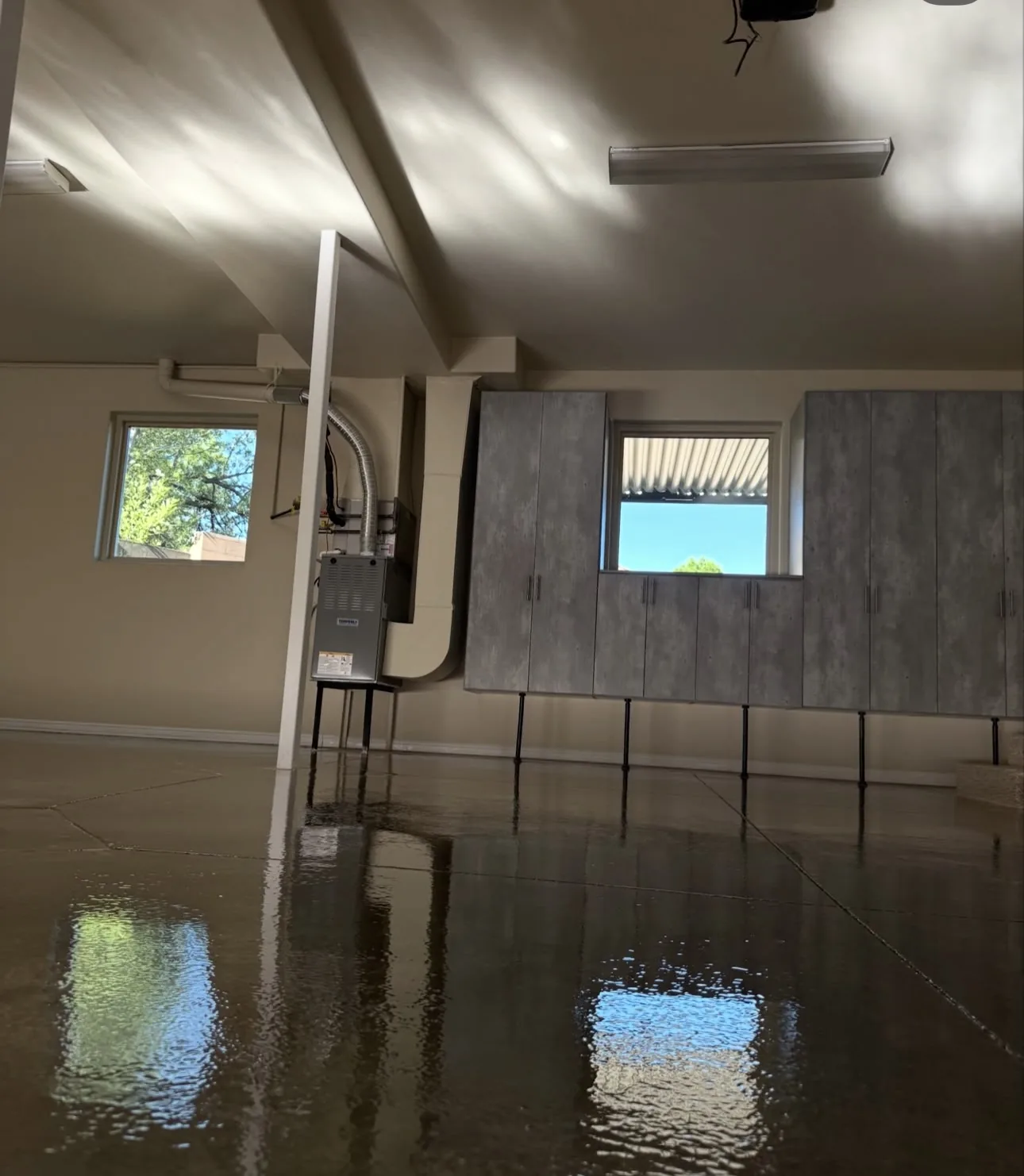
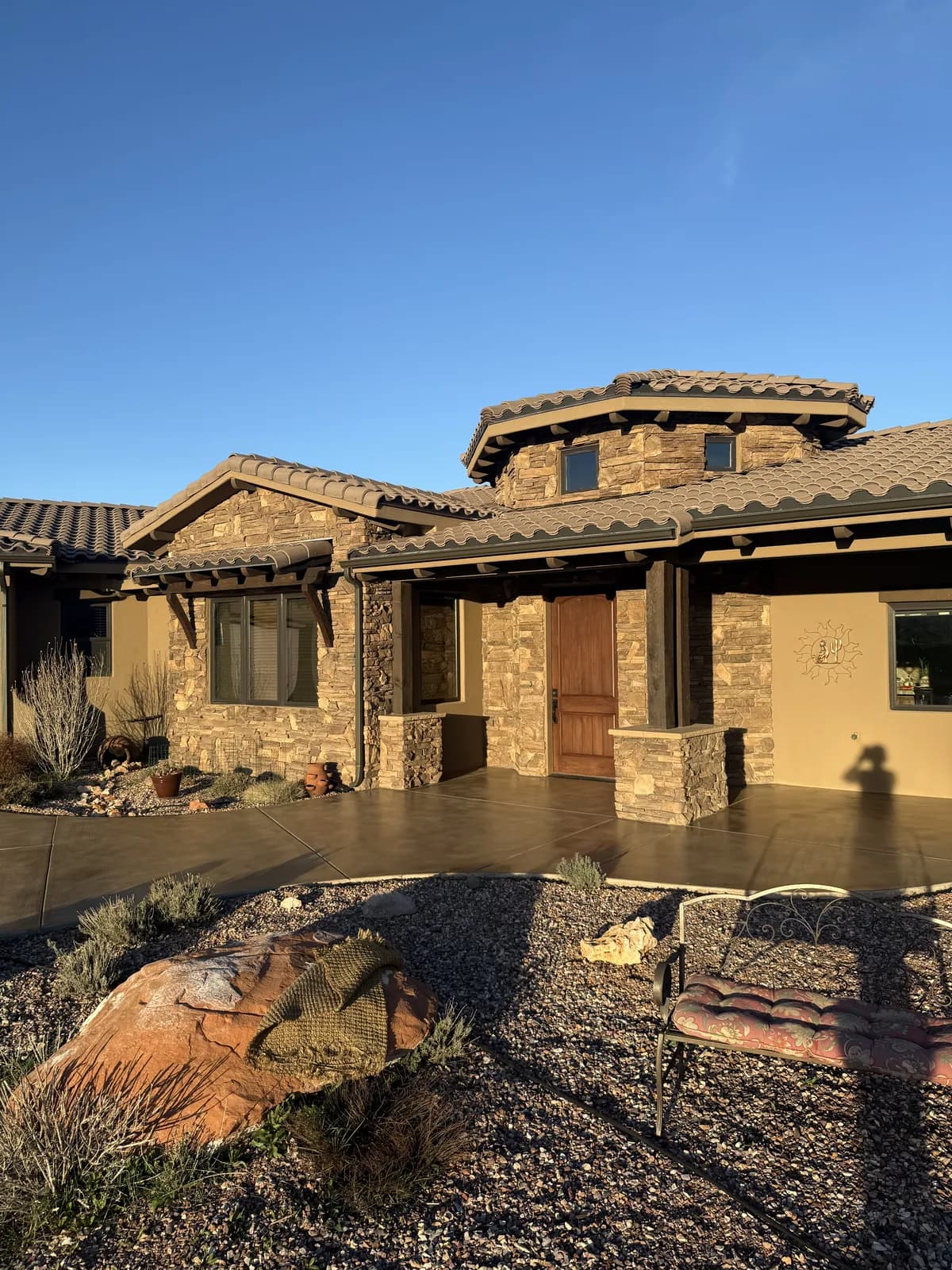
Sealing after washing does two things: it slows the absorption of oil and staining into the concrete, and it darkens and evens the color. Be clear that it darkens. A sealed slab is not the color of a dry unsealed one, and people are sometimes surprised.
This is recurring. Sealer wears, particularly where tires turn and where the sun is directly on it, and it wants doing again. We will tell you roughly when rather than letting you assume it is permanent.
What is included
- Washing with a rotary surface cleaner on flatwork, and by hand at the edges
- A plain account of which stains will lift and which will not
- Sealer applied to a dry slab
- Telling you that it darkens the concrete, before we do it
- Telling you roughly when it will want doing again
What is not
- Removing staining that has penetrated the concrete. Washing takes what is on the surface
- Sealing a slab that is still wet. It has to dry first and that sets the schedule
- Working through wind or rain. Wet sealer holds whatever lands in it
- Asphalt. This is concrete work
Why this is recurring here and not elsewhere
Two local conditions shorten the interval. The first is sun: 98 days at or above 100°F in 2024, the most on record, with an all-time high of 117°F. The second is grit. The Utah Geological Survey maps wind-blown sand as one of nine adverse construction conditions for this area — most counties do not map blowing sand at all — and the Utah Department of Environmental Quality notes that from spring through fall, high winds combined with dry surface conditions produce dust storms that "can lead to extremely high levels of particulate matter".
Sun degrades a sealer from above and wind-driven grit abrades it from the side. That is why sealing here is a maintenance item on a cycle rather than a thing you do once, and anyone who tells you otherwise has not watched a slab here for three summers.
What to ask anyone quoting this, us included
- Will this darken my concrete, and by how much?
- Which of these stains are coming out?
- When will this want doing again?