
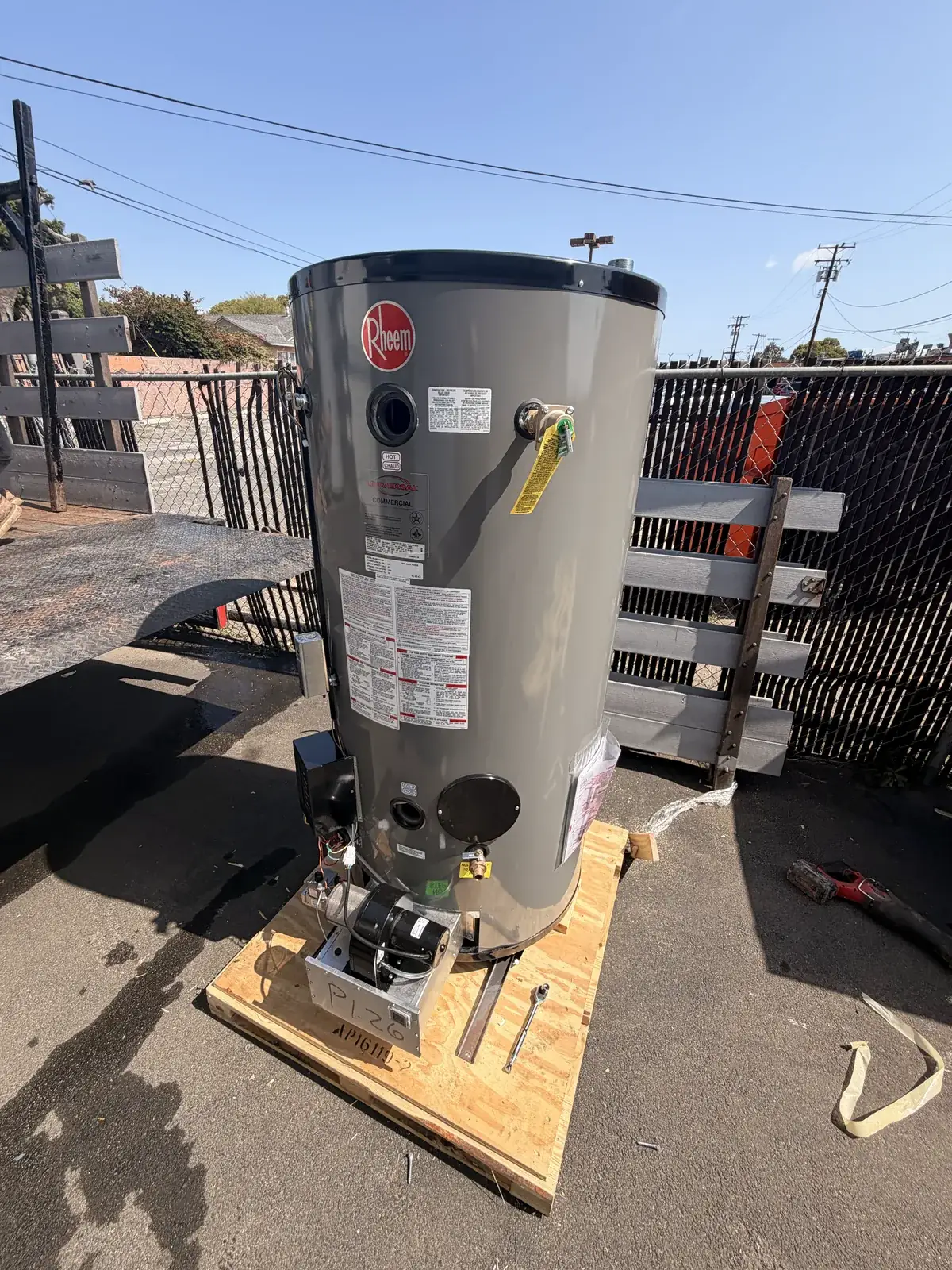
What the work is
A heat pump water heater moves heat instead of making it, which is why it uses a fraction of the energy of a resistance element. It also needs air volume, it makes condensate that has to go somewhere legal, it makes noise, and it cools the space it sits in.
In a Washington County garage, cooling the space is not automatically a benefit and the ambient conditions are not what the rating assumes. We would rather have that conversation with you than sell you a unit that runs on its backup elements half the year.
When it is the right unit, it is clearly the right unit. When it is not, we will say so.
What is included
- The unit, set, connected and commissioned
- Condensate routing to a legal termination
- Drain pan and drain where required
- Expansion tank where the service requires one
- Strapping at the upper and lower third
- The permit and the inspection
- Hauling the old unit away
What is not
- Circuit work beyond a like-for-like connection, which is our licensed electrical partner's
- Adding louvres, ducting or making an enclosure meet the manufacturer's air volume requirement. Quoted separately once we have measured
- A promise about the energy saving. That depends on your house and your habits
The garage question
The manufacturers publish an operating range and a required air volume, and both matter more in a hot garage than in a basement in a cold climate. The guide below works through what actually happens to one of these units in a garage here, using the manufacturers' own published ranges rather than a sales estimate.
What to ask anyone quoting this, us included
- What is the manufacturer's required air volume, and does my space have it?
- Where does the condensate go?
- What happens on the hottest and coldest days?