
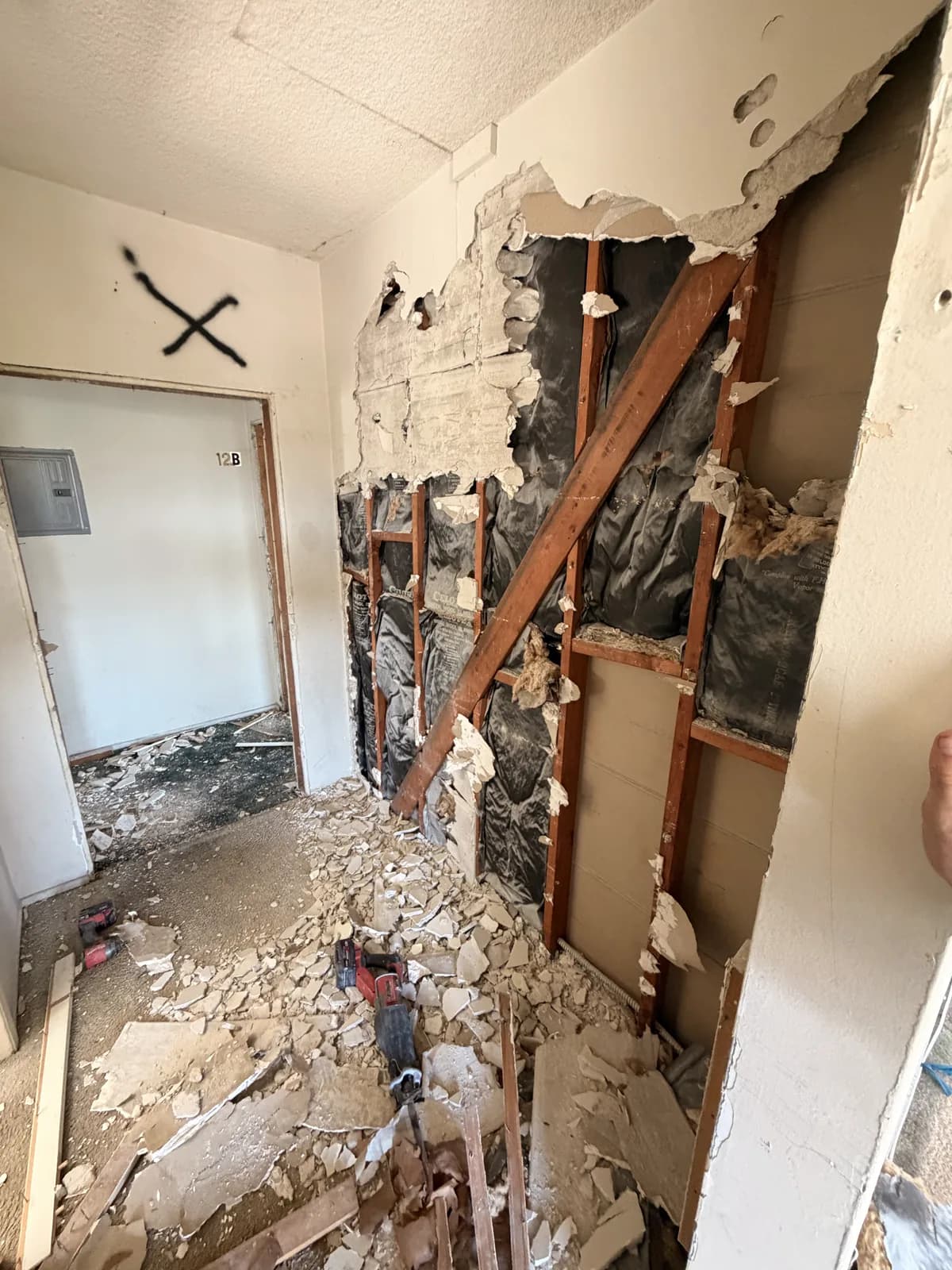
What the work is
A standard interior doorway is often too narrow for a walker or a chair, particularly on an approach that requires turning. Widening it means opening the wall, moving a stud, dealing with the header, and rehanging the door and the casing.
Whether it is a small job or a large one depends on what is in the wall: whether it is load-bearing, and whether there is wiring or plumbing in the way. That gets established before you get a price, not after.
Sometimes the answer is not widening at all. Swing-clear hinges gain almost two inches for a fraction of the cost, and for a lot of doorways that is the whole problem solved.
What is included
- Establishing what is in the wall and whether it is load-bearing, before quoting
- Framing, header and structure as required
- New door and casing, hung and adjusted
- Drywall to a paint-ready finish
- Flooring transition at the threshold
What is not
- Painting
- Relocating electrical or plumbing found in the wall, which is quoted once we know
- Structural work on a bearing wall without an engineer's involvement, which is quoted separately
- Any promise before we have looked inside the wall
Ask about swing-clear hinges first
They move the door fully out of the opening when it is open, recovering close to two inches of clear width. If two inches is all you need, that is an hour's work rather than a construction job, and we would rather sell you the hour.
What to ask anyone quoting this, us included
- Is this wall load-bearing?
- What is in it?
- Would swing-clear hinges solve this instead?