What the work is
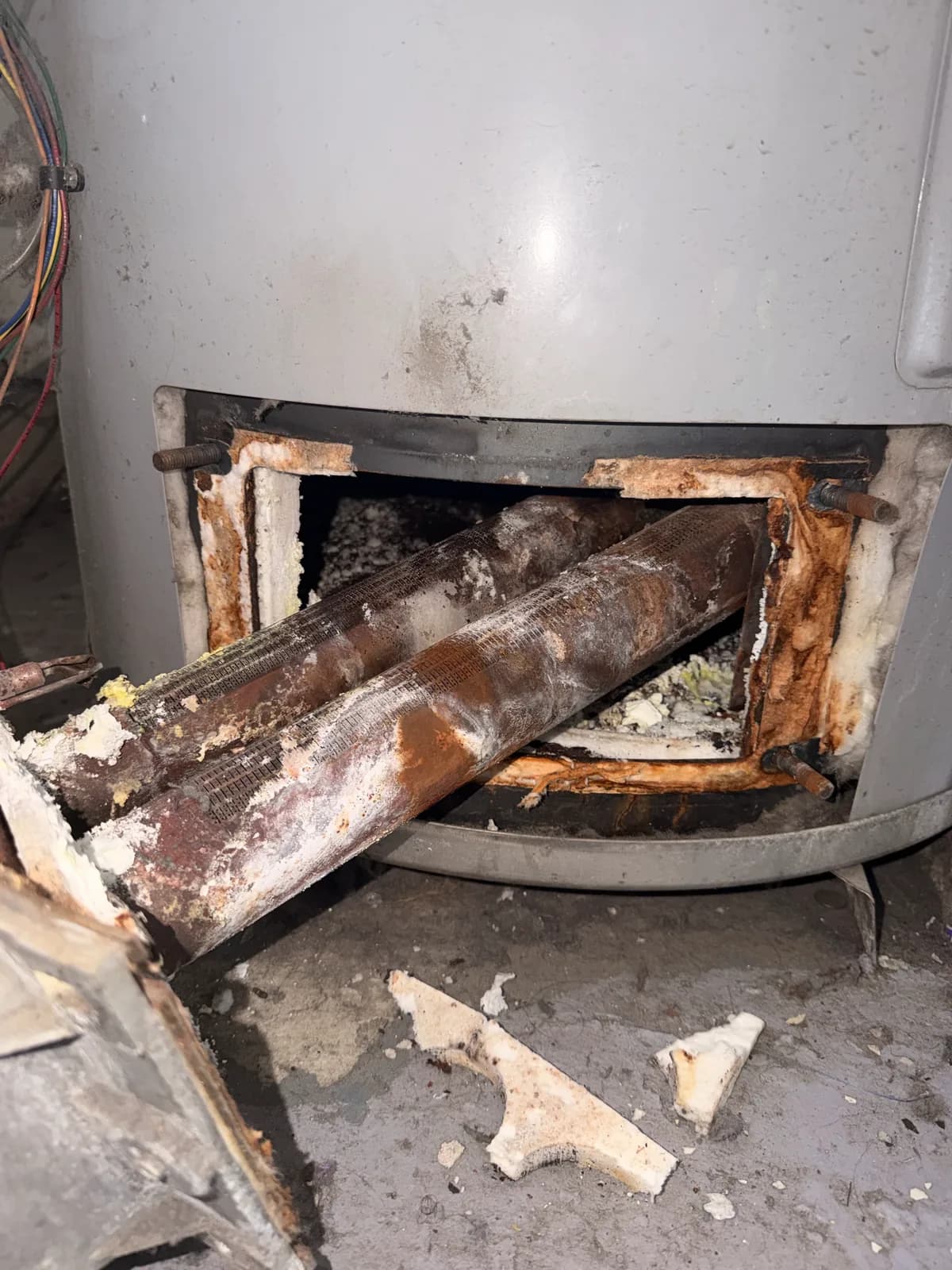
On a tank heater the service is a drain and flush to get the sediment out, an anode inspection, a check of the temperature and pressure relief valve, and a check of the expansion tank's charge against the actual incoming pressure.
It is a small job that most people skip, and the manufacturers write their warranties knowing that. Bradford White's document excludes failure from sediment or lime precipitate in the tank, and excludes maintenance contrary to the written instructions supplied with the unit. Skipping the service is not a neutral choice; it is the thing the exclusion is about.
What is included
- Draining and flushing the tank
- Inspecting the anode rod and reporting its condition
- Testing the temperature and pressure relief valve
- Checking the expansion tank charge against measured incoming pressure
- Reporting the incoming static pressure in writing
What is not
- Replacing the anode rod, which is quoted once we have seen it
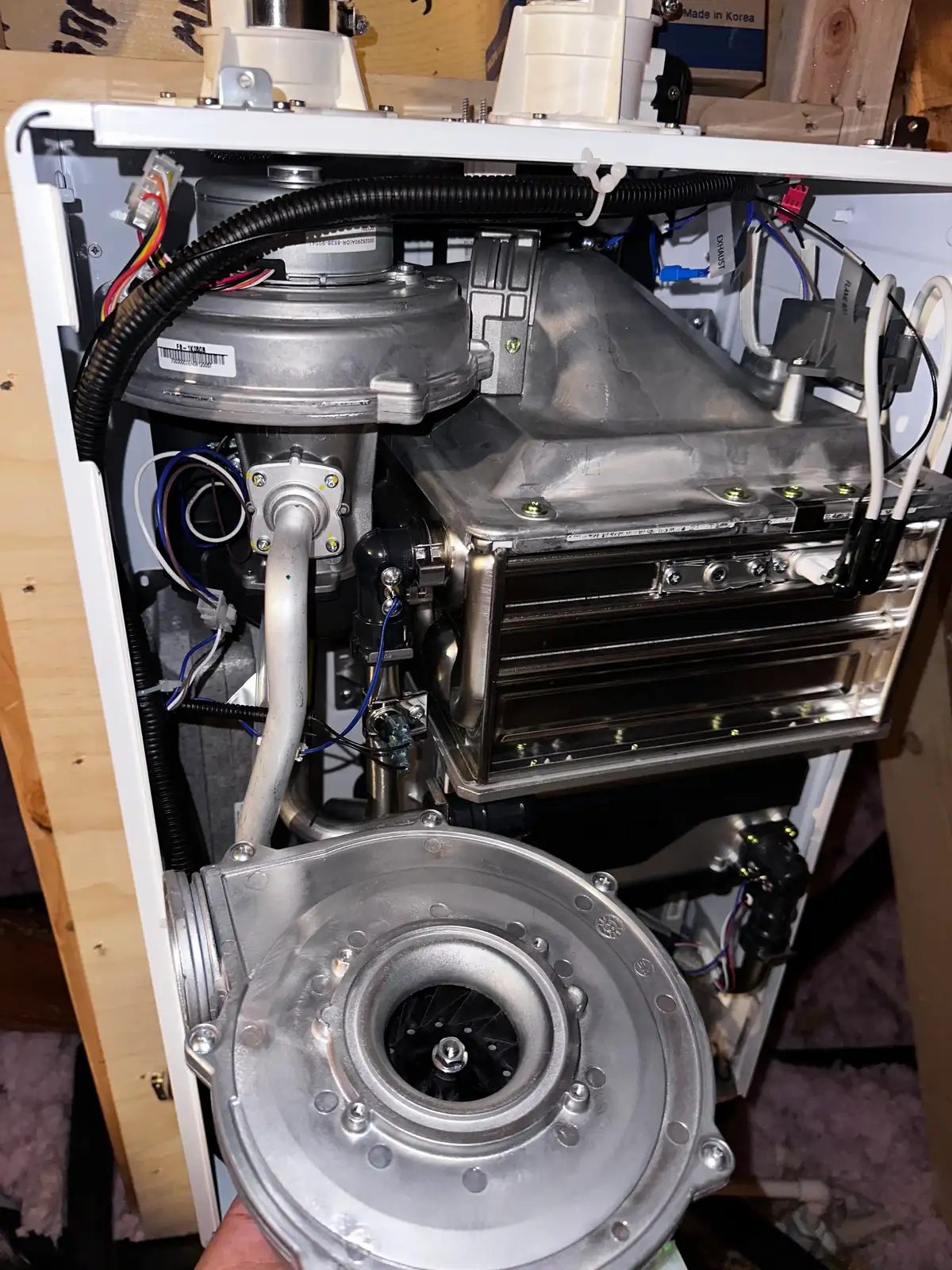
- Descaling a tankless unit, which is its own job
- Repairing a relief valve or expansion tank that fails the check
Two things we check that most flushes do not
- The expansion tank charge against your measured incoming pressure, not against the factory setting. A tank charged wrong is a tank that is not doing anything.
- The static pressure itself. If your relief valve drips and then stops, the guide below explains what that actually is, and it is not usually a bad valve.
What to ask anyone quoting this, us included
- Do you check the expansion tank charge, or just look at it?
- What is my incoming static pressure?
- What condition is the anode in?